
Britannia’s Pricing Strategy: Can It Protect Margins Amid Rising Input Costs?
Introduction
Rising raw material costs have become a significant challenge for India’s packaged food industry, particularly for companies operating in price-sensitive categories. Britannia Industries Limited, one of India’s leading biscuit manufacturers, is facing the challenge of balancing product affordability with profitability. Higher costs of ingredients, packaging materials and industrial fuel have increased pressure on operating margins, prompting the company to adopt selective pricing adjustments and cost-efficiency measures. Although Britannia has maintained healthy sales growth, its latest quarterly performance indicates that rising expenses continue to affect profitability. The company’s ability to recover these costs without weakening consumer demand will remain an important factor in determining its future financial performance.
Company and Sector Overview
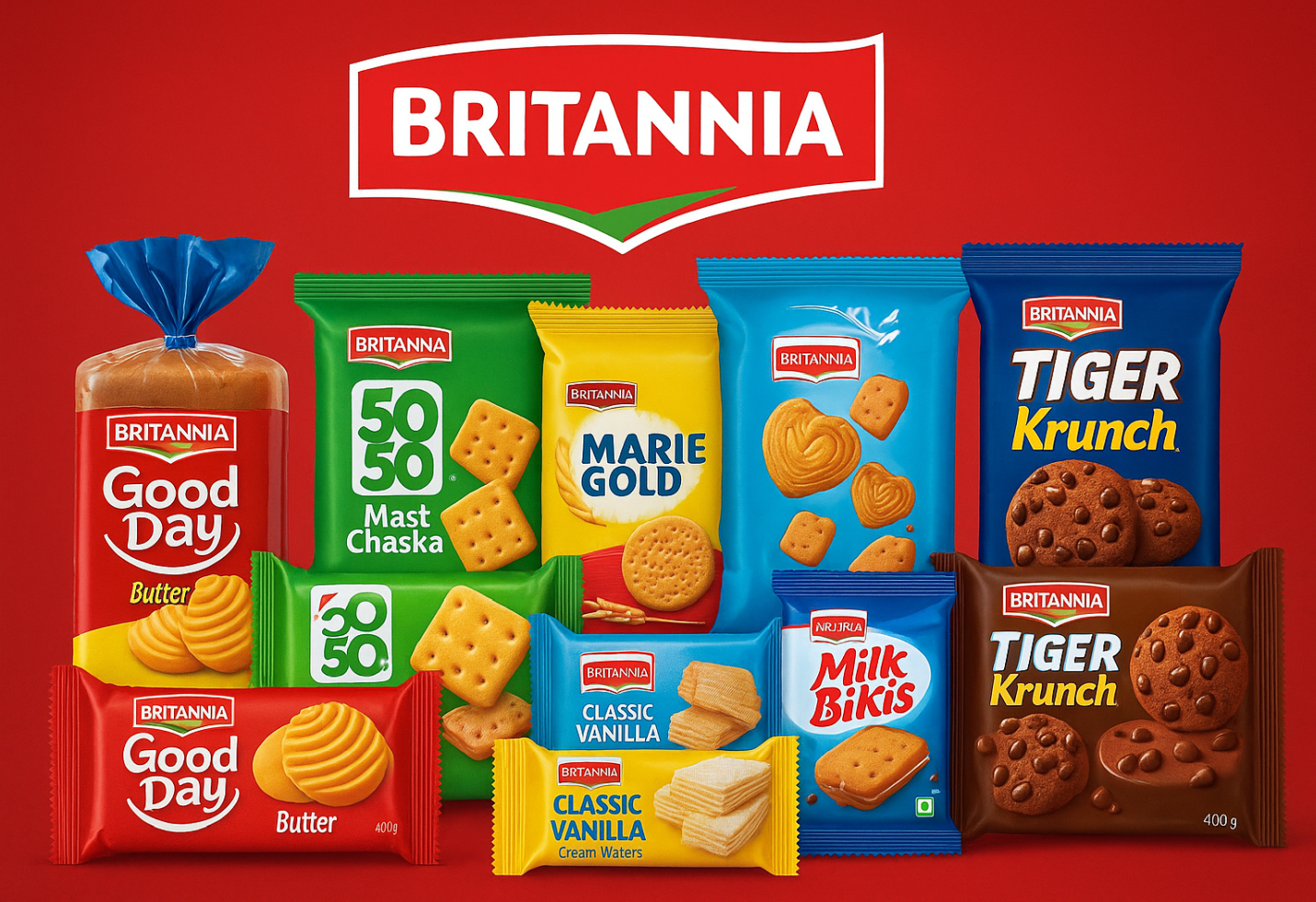
Britannia Industries Limited is an established player in India’s fast-moving consumer goods (FMCG) sector, with a portfolio covering biscuits, cakes, rusks, bread, croissants and dairy products. Its popular brands include Good Day, Marie Gold, Tiger, Milk Bikis, 50-50 and NutriChoice. The company has developed a strong market presence through its extensive distribution network, established brands and products catering to different consumer segments. While biscuits remain central to its business, Britannia has also expanded into adjacent food categories to diversify its revenue streams.
India’s packaged food industry is characterised by strong competition, changing consumer preferences and demand for products across different price points. Affordable packs remain important for reaching price-sensitive consumers, while premium products offer opportunities for higher-value sales. However, fluctuations in the prices of wheat, sugar, edible oils, milk and packaging materials can significantly influence manufacturing expenses. For Britannia, maintaining competitive pricing while managing these costs is essential to sustaining both sales volumes and operating profitability.
Quarterly Result Snapshot
Britannia reported consolidated revenue from operations of ₹5,597.79 crore for the quarter ended September 30, 2026 (Q2FY27), compared with ₹4,840.63 crore in the corresponding quarter of the previous year, representing year-on-year growth of 15.64%. Revenue from product sales increased by 16.6% to approximately ₹5,542 crore, supported by volume growth of 13%. Consolidated net profit increased by 10.82% to ₹725.99 crore from ₹655.06 crore in Q2FY26. The results reflected strong revenue expansion, although profit growth remained slower than sales growth. 
Britannia’s EBITDA increased by approximately 7% year-on-year to ₹1,022 crore. However, its EBITDA margin declined to 18.3% from approximately 19.7% in Q2FY26, representing a contraction of around 147 basis points based on the underlying figures. Gross margin also declined to approximately 39.6%, reflecting the impact of higher input costs. The difference between revenue and operating profit growth indicates that inflationary pressures continued to affect profitability despite the company’s pricing measures.
Performance Drivers and FY26 Implications
Britannia has adopted a measured pricing strategy to manage rising manufacturing expenses without significantly increasing the amount consumers pay for certain products. During Q2FY27, the company implemented an effective price increase of approximately 3.5%, primarily through grammage reductions. This involves reducing the quantity of a product within a pack while maintaining its selling price. Such adjustments are particularly relevant for products sold at popular ₹5 and ₹10 price points, where direct price increases could affect consumer purchasing decisions. However, these measures covered only part of the increase in input costs, limiting their ability to protect operating margins. 
Raw material inflation remained a major factor influencing the company’s profitability. During the September quarter, Britannia continued to face elevated costs for important inputs, including sugar, refined palm oil, flour and industrial fuel. Higher expenses affected gross margins, while the company’s ability to recover these costs through pricing remained constrained by competition and consumer sensitivity. Although pricing adjustments can provide some relief, their effectiveness depends on how quickly they are implemented and whether consumers continue purchasing the same quantities.
Despite these pressures, Britannia maintained healthy demand during Q2FY27. Volume growth of 13% was supported by improving rural consumption and a recovery in the general trade channel. Management also reported broad-based growth across key states and distribution channels, while bakery products, adjacent categories and international operations contributed to business momentum. This performance suggests that Britannia’s brands continued to attract consumers despite changes in product pricing and quantities.
Britannia’s FY26 performance provides an important historical reference for assessing its cost-management capabilities. During that financial year, the company benefited from procurement efficiencies, manufacturing improvements and other cost-optimisation initiatives. However, the renewed inflationary pressures experienced in FY27 demonstrate that operational savings alone may not be sufficient to offset substantial increases in commodity prices. Sustaining profitability will therefore require a combination of effective pricing decisions, cost control and consistent consumer demand.
Future Growth Outlook
Britannia’s future growth prospects remain closely linked to its ability to strengthen its core biscuit business while expanding into complementary packaged food categories. Its established distribution network and improving demand across traditional retail channels provide opportunities for further sales growth. Continued investment in product innovation and brand development could also support consumer engagement and help the company maintain its competitive position.
Premiumisation is another important opportunity for Britannia. Expanding its portfolio of differentiated biscuits, bakery products and other packaged foods could support higher-value sales and improve its overall product mix. The company’s focus on adjacent categories, including cakes, croissants and dairy products, provides additional avenues for growth beyond traditional biscuits. However, the contribution of these categories to profitability will depend on consumer demand, pricing and operating efficiency.
Digital distribution is also becoming increasingly important. According to Axis Securities’ November 2026 research report, e-commerce accounted for approximately 7% of Britannia’s sales. Continued expansion across e-commerce and other alternative distribution channels could improve consumer accessibility and support business growth, particularly in urban markets. Nevertheless, the company will need to balance distribution expansion with the costs associated with servicing these channels.
From a profitability perspective, the outlook remains dependent on commodity price movements and the effectiveness of future pricing actions. Any moderation in raw material inflation could provide some relief to margins, while sustained cost pressures may require additional price or grammage adjustments. Although Britannia’s established brands and cost-efficiency initiatives provide support, the pace of margin recovery remains uncertain. The company’s ability to maintain volume growth while improving profitability will be an important factor to monitor in the coming quarters.
Peer Comparison
Britannia operates in a competitive packaged food market alongside companies such as Parle Products, ITC and Nestlé India. While these businesses differ in their product portfolios and operating structures, they compete in categories where brand recognition, affordability, distribution and product innovation influence consumer purchasing decisions.
Parle Products remains an important competitor in the biscuit segment, particularly in affordable products. Competition at popular consumer price points limits the flexibility available to Britannia when implementing direct price increases. As a result, changes in pack quantities and selective pricing adjustments become important tools for managing costs while remaining competitive. However, repeated grammage reductions could eventually influence consumer perceptions of value and affect purchasing behaviour.
ITC, through its Sunfeast portfolio, competes with Britannia across several biscuit categories, including cookies and cream biscuits. Competition between these brands involves product quality, pricing, innovation and distribution. Nestlé India provides a broader comparison within the branded packaged food industry, where companies also face challenges relating to commodity inflation and consumer demand. However, differences in their product mixes mean that overall company margins cannot be directly compared without considering the profitability of individual business segments.
Britannia’s competitive strengths include its established biscuit brands, extensive distribution and manufacturing capabilities. Nevertheless, its ability to maintain market share while recovering higher input costs remains an important challenge. Continued product innovation and careful pricing decisions will be necessary to sustain its position in an increasingly competitive market.
Conclusion and Synopsis
Britannia’s Q2FY27 performance highlights the strength of its consumer demand alongside the challenges created by rising input costs. The company delivered double-digit revenue growth and healthy volume expansion, but its operating margins declined as higher manufacturing expenses outweighed the benefits of pricing adjustments. This indicates that while its current strategy has helped recover part of the additional costs, it has not fully protected profitability.
For investors, the key consideration is whether Britannia can sustain sales growth while improving its ability to manage cost inflation. Its established brand portfolio, distribution network and expansion into adjacent food categories provide opportunities for long-term growth. However, commodity price volatility, intense competition and consumer sensitivity to pricing remain important risks.
Going forward, Britannia’s margin performance will depend on a combination of calibrated pricing, stable raw material costs, operational efficiencies and a favourable product mix. The company has demonstrated its ability to maintain strong demand, but converting that growth into sustained improvement in profitability will remain the central challenge. Its performance in the coming quarters will help determine whether the current pricing strategy can deliver a more consistent recovery in margins.
The image added is for representation purposes only


LEAVE A COMMENT
You must be logged in to post a comment.