Menu

business update

Bosch Ltd Q2 FY26: Auto Demand Boosts Sales, Profit Inches Up Despite Higher Costs

Remsons Industries Q1 FY26: Consolidated Growth Powers Ahead

Remsons Industries Q1 FY26: Consolidated Growth Powers Ahead

Financial Highlights: Q1 FY26
Remsons Industries, a leading Indian supplier of automotive cables and components, announced robust consolidated financial results for the quarter ended June 2025. Consolidated revenue surged to approximately ₹99.6 crore, reflecting a sharp 30% rise over the previous year. PAT surged 73% year-on-year, coming in at around ₹3.6 crore for the quarter.
Earnings per share also followed this growth trajectory, underscoring the company’s operational discipline and strong demand from global and domestic customers. At the same time, consolidated operating margins crept higher: EBITDA rose by 63% year-on-year, and a healthy 11% operating margin was reported.
However, standalone results painted a contrasting picture. Standalone revenues fell by nearly 8%, and standalone net profit slipped 11% year-on-year, primarily due to persistent softness in domestic core markets.

Strategic Expansion and New Ventures
Remsons’ management has pushed strongly into diversification and external partnerships to insulate it from domestic cyclical weaknesses. The company launched a new subsidiary, Remsons Edge Technologies Private Limited, and completed a significant (35.86%) minority acquisition in Astro Motors Private Limited. These bold moves aim to reinforce Remsons’ portfolio, boost R&D, and add new revenue streams, particularly through electric vehicle and high-value product segments.
Further, Remsons has aggressively broadened its product range and is steadily progressing on its stated ambition to venture into the railway and defense sectors—two markets with promising long-term potential.

Operational Excellence and International Push
Despite muted domestic auto sector trends during the quarter, Remsons outperformed its industry peers thanks to a blend of operational efficiencies, robust export growth, and a shift towards high-value, customized products. Management cited export realization and premium orders as critical drivers for consolidated revenue growth, particularly as overseas markets offered better pricing and stability.
Export growth and diversification not only cushioned against local market headwinds but also helped drive up profitability, as evidenced by the year-on-year expansion in margins.

Chairman’s Perspective: Confidence Amid Uncertainties
Chairman and Managing Director Krishna Kejriwal said the company’s strong results highlight its flexible and resilient business model.
He stressed that, even in a sluggish auto market, the company achieved remarkable results by advancing high-value segments, enhancing operational efficiency, and maintaining a firm focus on creating value for shareholders.
The company aims to reach a revenue milestone of ₹900–1,000 crore by FY29 as part of its medium-term goals. Management’s ongoing commitment to invest in technology, people, and process innovation remains central to this goal.

Challenges: Standalone Softness and Sectoral Risks
The main blemish in Q1’s performance was the dip in standalone revenue and profit. While the reasons include subdued demand from core Indian OEM clients and heightened competition, the company appears confident that its strategic pivots—such as moving further up the value chain and increasing export reliance—will help mitigate these headwinds moving forward.
Remsons also faces the broader cyclical risks affecting the auto sector, including input cost volatility, currency fluctuations, and changing regulatory norms. Nonetheless, its diversified base and strong cash position provide some insulation.

Conclusion: On Track for Ambitious Growth, with Cautious Optimism
Remsons Industries’ Q1 FY26 performance demonstrates the effectiveness of its transformation efforts and diversification into both product lines and geographies. Robust consolidated growth and margin expansion speak to improving competitiveness and operational focus. While soft spots remain in certain business verticals, particularly domestically, the company’s trajectory remains positive.
Management’s medium-term outlook is upbeat, grounded in investments in innovation, new business verticals, and continued global expansion. If Remsons sustains its strategic discipline, further market share gains and profitability improvements are likely.


:


The image added is for representation purposes only

Reliance Retail Writes Off $200 Million Dunzo Investment — A Wake-Up Call for Quick-Commerce in India

Reliance Retail Writes Off $200 Million Dunzo Investment — A Wake-Up Call for Quick-Commerce in India

Reliance Retail Writes Off $200 Million Dunzo Investment — A Wake-Up Call for Quick-Commerce in India

Reliance Retail Writes Off $200 Million Dunzo Investment — A Wake-Up Call for Quick-Commerce in India

From Quick Growth to Quick Collapse
Dunzo’s journey began with a bold vision — delivering groceries, meals, medicines, and everyday essentials in hours, if not minutes. Backed by deep-pocketed investors and growing urban demand, the startup once stood out in India’s crowded delivery market.
By early 2022, Reliance Retail led a $240 million funding round for Dunzo, securing roughly a 26% stake. At its peak, Dunzo’s valuation touched around $770 million, positioning it among India’s most anticipated tech growth stories.
But the optimism didn’t last. Intense competition from Swiggy’s Instamart, Zepto, and Zomato-owned Blinkit drove up customer acquisition costs and operational expenses. Dunzo struggled to match rivals’ aggressive discounts, expansive delivery networks, and better-capitalized war chests.

Financial and Operational Troubles
The company’s financial health deteriorated rapidly:
• Losses tripled from ₹464 crore in FY22 to ₹1,801 crore in FY23.
• Burn rate remained unsustainably high, driven by quick-commerce warehousing, delivery fleet expenses, and marketing.
• Multiple city exits reduced the operational footprint to just parts of Bengaluru.
• Salaries for employees were delayed multiple times, eroding morale.
• Leadership turnover — including the eventual departure of co-founder and CEO Kabeer Biswas to Flipkart — left the company without steady strategic direction.
The collapse in performance sent Dunzo’s valuation into free fall. Reports suggest that potential buyers are now discussing acquisition prices between $25–30 million — barely 3–4% of its peak value.

Why Reliance Pulled the Plug
For Reliance Retail, the write-off was an acknowledgment of reality. With no credible turnaround plan, shrinking market presence, and mounting liabilities, the likelihood of recovering its investment was virtually zero. Continuing to hold the asset on the balance sheet would only misrepresent its financial position.
The decision also reflects a broader shift in Reliance’s priorities. Rather than propping up a failing independent brand, the company may focus on integrating last-mile delivery into its own ecosystem — particularly through JioMart and other in-house ventures — where it can exercise greater control over strategy, capital, and execution.

Lessons for the Quick-Commerce Industry
Dunzo’s decline underlines the fragility of the quick-commerce model, especially in markets where customers are price-sensitive and competition is funded by deep investor pockets. Speed alone is not enough; operational efficiency, sustainable margins, and differentiated services are critical.
Some key takeaways:
1. Cash alone doesn’t buy sustainability — Without a clear path to profitability, even large funding rounds can vanish quickly in the face of market competition.
2. Over-expansion can kill agility — Scaling too fast without stabilizing core markets can stretch operations thin.
3. Loyalty trumps convenience when margins are thin — Rivals that create sticky ecosystems (e.g., subscription programs, integrated payment systems) retain customers more effectively.

Possible Pathways for a Dunzo Revival
While the company’s future remains uncertain, there are still strategic options that could be considered — whether by a new owner or in a restructured form:
1. Niche Market Focus
Instead of competing head-to-head with larger players on mass-market groceries, Dunzo could focus on premium, specialized segments — such as gourmet foods, medicine delivery, or high-value B2B local logistics.
2. Partnership-Driven Model
Collaborating with small and mid-sized retailers who cannot build their own delivery networks could allow Dunzo to become a logistics enabler rather than a direct consumer brand.
3. Cost-First Restructuring
Streamlining warehousing, moving to a lighter inventory model, and focusing on hyperlocal clustering can dramatically reduce cash burn.
4. Tech as a Differentiator
Using AI-driven inventory management, predictive delivery routes, and real-time demand forecasting could help optimize both costs and delivery times.

The Broader Industry Outlook
Quick-commerce in India is not dead — in fact, demand continues to rise in urban centers. But the market is consolidating, with only a handful of well-funded players likely to survive. For smaller or struggling brands, survival will depend on adaptability, partnerships, and a willingness to abandon the “everything for everyone” approach.
Reliance’s decision to cut its losses with Dunzo is both a cautionary tale and a strategic recalibration. It’s a reminder that in fast-moving consumer tech, even marquee names can falter if the fundamentals don’t hold.
The next chapter for Dunzo — whether as a niche service, a logistics partner, or a relic of India’s startup boom — will depend on how decisively and creatively its next stewards act.


:


The image added is for representation purposes only

Lenskart’s IPO: A Clear Vision for India’s Eyewear Future

India’s year-end IPO blitz: risks, rewards and what to watchIndia’s year-end IPO blitz: risks, rewards and what to watch

Lenskart’s IPO: A Clear Vision for India’s Eyewear Future

Lenskart’s IPO: A Clear Vision for India’s Eyewear Future

Lenskart Steps Toward Public Listing

India’s stock market is about to get its first pure-play eyewear listing, with Lenskart gearing up for an IPO that could raise ₹2,150 crore. The offering is designed to give early backers an exit route while channelling fresh funds into expanding company-owned stores.

It’s a milestone headline — but does the business story live up to the excitement? Let’s unpack what’s happening, explore Lenskart’s market position, and see what the road ahead might look like.

A Long-Awaited Move

After recording its first-ever profitable year, Lenskart has filed its Draft Red Herring Prospectus (DRHP) in preparation for going public. The company plans to issue fresh equity worth ₹2,150 crore.

Since its inception, Lenskart has gone through 19 funding rounds, raising about $1.08 billion in total. This IPO will allow some of its earliest investors to cash out while injecting new capital into the business. A significant share of these funds is earmarked for CoCo (company-owned, company-operated) outlets, along with expansion via acquisitions.

What makes this debut particularly noteworthy is that nearly 40% of Lenskart’s revenue already comes from international markets. Unlike most Indian consumer brands focused on domestic dominance, Lenskart is openly chasing global market share — a move that even veteran banker Uday Kotak questioned earlier this year.

The Lenskart Playbook

At first glance, many think of Lenskart as a tech-first brand thanks to its app and website. In reality, the company’s DNA is rooted in physical retail — in India and abroad.

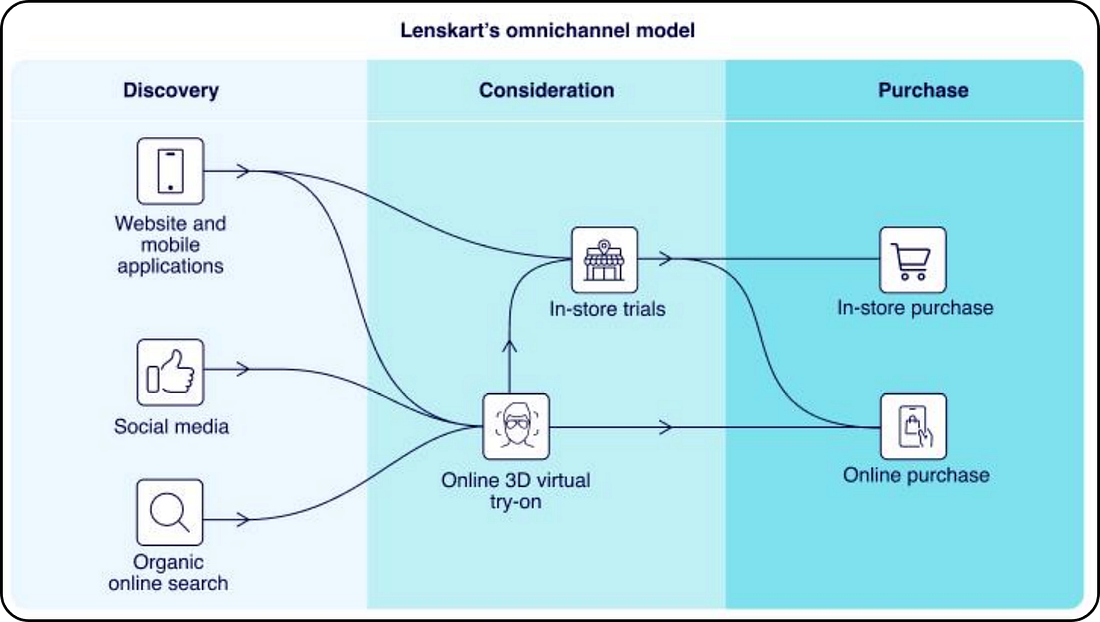
Its operational model is fully vertically integrated: from conceptualising and designing eyewear to manufacturing and direct sales, everything happens in-house. On top of this, Lenskart has adopted an omnichannel approach, blending online reach with offline presence to create a layered customer acquisition strategy.

This combination of control over the value chain and hybrid sales channels gives it a unique edge in an industry where most competitors depend on third-party manufacturing or retail partners.Source: Lenskart Solutions Limited, DRHP

Lenskart’s integration gives it a serious cost edge. No middlemen inflating prices 2.5–4x, and massive scale from selling 27.2 million eyewear units in FY25.

Source: Lenskart Solutions Limited, DRHP

Scaling Smart: How Lenskart Turns Size into Strategy

By operating at a massive scale, Lenskart is able to source frames and lenses at 35–50% lower costs than most competitors. This cost advantage, supported by manufacturing control through facilities in Gurugram, Bhiwadi, and soon Telangana — plus overseas plants in Singapore, the UAE, and a joint venture in China — allows the company to sustain gross margins close to 70%.

But the benefit goes far beyond profitability. Full control over both design and manufacturing gives Lenskart agility — crucial in a category where eyewear doubles as both a medical necessity and a fashion accessory. This integration allows the company to respond quickly to emerging trends, keep products fresh, and strengthen customer stickiness. Evidence? Over 98% of customers make repeat purchases within two years, many also renewing their paid Gold Membership.

The company’s measured approach to international growth further reinforces its base. Instead of rushing into new markets, founder and CEO Peyush Bansal prefers to acquire established players that align with Lenskart’s strengths in India. Today, it operates 656 stores abroad, each chosen with precision, aiming for premium margins in targeted geographies while keeping India as the anchor. This strategy draws parallels to global eyewear leader EssilorLuxottica, which holds about 20% global market share.

A First for Public Investors

With an estimated 25–40% share of India’s organised eyewear market, Lenskart sits well ahead of its nearest competitor. Yet, until now, retail investors had no way to directly invest in a dedicated eyewear business in India. Titan Eye exists, but it’s housed under Titan Company Ltd, where jewellery is the mainstay. Lenskart’s listing changes that — offering a pure-play opportunity in a growing, underpenetrated sector.

The company is financially robust, generating operating cash flow at 1.27 times EBITDA. For investors, this IPO is not just another debut — it represents the market’s first chance to own a focused leader in Indian eyewear.

The Growth Lens

India’s eyewear market is projected to be worth ₹78,800 crore in 2025, expanding at an annual rate of 13.5%. Prescription lenses make up 70% of the market, and demand is set to climb sharply as 62% of the population is expected to suffer from vision issues within five years.

Initially, Lenskart expanded through a franchise-led, asset-light model, which appealed because of quick payback — often just over 10 months, and even shorter in smaller cities. However, strained franchise relationships have prompted a strategic pivot. Now, the company is focusing on expanding company-owned outlets, enhanced with AI-driven tools and remote eye-testing capabilities to boost accessibility.

Final Frame

From a startup to a retail powerhouse with global aspirations, Lenskart has become one of India’s most compelling consumer stories. Whether it evolves into the “EssilorLuxottica of the East” will unfold in time — but for investors, the opportunity to buy into India’s eyewear growth story after 17 years of waiting is finally here.


:


The image added is for representation purposes only
Foreign Investors Pull Back: FPIs Exit Indian Equities for Second Straight Week

Revolut Eyes $65 B Funding Round to Fuel U.S. Expansion

Revolut Eyes $65 B Funding Round to Fuel U.S. Expansion

Revolut Eyes $65 B Funding Round to Fuel U.S. Expansion

London-based fintech titan Revolut is in active discussions to raise around $1 billion in fresh capital under a $65 billion valuation, aiming to supercharge its ambitious expansion in the United States and beyond.

Turning Heads with a New Valuation

Revolut’s management is engaged in talks to mix new share issuance and existing stock sales to bring in about $1 billion. Industry observers expect the round will anchor around a “blended” $65 billion valuation—higher for new issuances, slightly lower for secondary-market transactions FinTech Weekly – Home Page+10AOL.com+10Devdiscourse+10.
This comes after Revolut’s valuation stood at $45 billion in 2024, following a secondary share sale that attracted fresh and existing investors FinTech Weekly – Home Page+7AOL.com+7MarketScreener Canada+7. The significant valuation bump signals strong investor appetite for fintech disruptors.

Big-Name Investors in the Mix
U.S. investment firm Greenoaks is reportedly leading the charge on this funding round, with Mubadala—Abu Dhabi’s sovereign wealth vehicle—also exploring a $100 million addition to its stake Benchmark Beat+6AInvest+6AInvest+6. Both parties have previously shown confidence in Revolut.
Sources indicate Greenoaks is poised to helm the round, though terms are still being negotiated Wikipedia+12AOL.com+12Finance Magnates+12.

Explaining the “Blended” Valuation
The $65 billion figure is not meant to be a straightforward valuation—it’s a blend:
• New shares are priced more optimistically.
• Secondary sales among current shareholders are pegged lower.
This results in a blended headline number FinTech Weekly – Home Page+4Axios+4Financial Times+4Tech Startups+4AInvest+4AOL.com+4MarketScreener Canada.
Such valuation mark-ups are common in fintech funding—consider Stripe, which hit a high-water mark before retreating during its public debut .

Financial Strength & Growth Momentum
Revolut has demonstrated impressive financial firepower:
• In 2023, it reported £1.1 billion in pretax profit, overturning a previous loss Wikipedia+12AInvest+12Benchmark Beat+12MarketScreener Canada+1AOL.com+1.
• That momentum continued into 2024 with net profit doubling to £790 million and revenue roughly £3.1 billion Wikipedia.
• User numbers are climbing fast—it now serves over 60 million customers globally, up from around 50 million in late 2024 AInvest+2Wikipedia+2Finance Magnates+2.
These figures explain why fresh capital is incoming at a heftier valuation.

Expansion Strategy: U.S. Focus, Global Outlook
The fresh funding will help accelerate Revolut’s penetration in the U.S.—a core focus area—as evidenced by partnerships with Sutton Bank and Cross River Bank to support its American banking ambitions Benchmark BeatTechCrunch+10Tech Funding News+10Axios+10.
Additionally, Revolut is diversifying its offer with:
• Expansion into digital mortgages and business lending
• Launching an AI-driven financial assistant, branded ATMs in Spain, and global investment features like ETFs with BlackRock/Vanguard MarketScreener Canada+2AInvest+2Tech Funding News+2.
The offer is steadily evolving into a full-fledged “financial super app.”

CEO Incentives & Exit Strategy Options
Revolut CEO Nik Storonsky stands to benefit substantially from a successful round or future IPO—reportedly topping out at 10 % equity if the company reaches a $150 billion valuation Financial Times+3AInvest+3Benchmark Beat+3.
The firm is also reportedly laying groundwork for an IPO, with a preference for New York based on its global reach AInvest+5AInvest+5Tech Funding News+5. Although a listing isn’t imminent, market dynamics could influence timing.

Market Context & Valuation Trends
This round highlights wider trends in fintech investing. Revolut’s leap from a $45 billion to $65 billion evaluation in under a year reflects growing confidence, especially given its strong profit performance. However, caution is warranted: other fintechs like Stripe have seen valuations contract post-funding Finance Magnates.
Still, with $4 billion in annual revenue and half a billion in profit, Revolut distinguishes itself among peers—attractive to investors on both primary and secondary fronts Tech Funding News.

Regulatory & Competitive Landscape
Revolut faces regulatory scrutiny—which it has addressed with UK and EU banking licenses granted in 2024—and is improving its compliance systems Tech Funding News. Its capability to expand U.S. services hinges on navigating licensing and maintaining robust regulatory relations.
Furthermore, the fintech space is highly competitive: legacy banks and rivals like Wise and Monzo are vying for market share. Revolut’s growth, scale, and product breadth represent its main defense.

What Comes Next?
Expect the following developments:
1. Deal Finalization: Greenoaks and Mubadala are key players; terms and timing remain fluid.
2. U.S. Rollout: Accelerated launch of U.S. banking and lending services.
3. Product Rollout: New mortgages, business credit products, AI financial tools, banking app enhancements.
4. IPO Planning: Potential NYSE listing, timed with market conditions and internal milestones.
5. Valuation Watch: Investors and analysts will track how performance and market sentiment affect valuation.

Final Take: Bold Move with Smart Groundwork
Revolut’s move to raise funding at a lofty valuation underscores its strong financial footing and ambitious global expansion plans. While some may question fintech exuberance, the company’s profitability and growth-backed metrics set it apart. If regulatory and market conditions remain favorable, this funding round could be a powerful springboard for its next phase.


:


The image added is for representation purposes only

IREDA Bonds Gain Tax Benefits to Promote Green Energy

Temasek Targets Europe with $25 Billion Investment Surge Strategy

Temasek Targets Europe with $25 Billion Investment Surge Strategy

Temasek Targets Europe with $25 Billion Investment Surge Strategy

Singapore’s state-backed investment giant Temasek is sharpening its focus on Europe, following a record-breaking year of capital deployment in the region. With a $7.8 billion investment in European assets during the last financial year, the firm now sees even more potential opportunities opening up across the continent due to lower company valuations and favorable market conditions.

A Strategic Shift Toward European Markets
Temasek’s increased interest in Europe is part of a broader strategic pivot that reflects shifting global dynamics. According to Nagi Hamiyeh, who leads Temasek’s operations in Europe, the Middle East, and Africa (EMEA), market volatility, inflation, and geopolitical uncertainty have made European companies more attractively priced than they were in previous years. This, in turn, has created an entry point for long-term investors like Temasek.
“Because of the economic environment and valuation corrections, many European firms are now available at fair prices, whereas earlier they were overvalued,” Hamiyeh said.
While the U.S. remains an important market, the valuation gap between European and American firms has widened, making Europe an increasingly attractive hunting ground for fresh investments.

Record-Breaking Portfolio Growth
Temasek experienced a significant rise in the overall worth of its investment portfolio by the end of the financial year closing on March 31, 2025.. The investment firm’s net portfolio value rose 11.6% year-over-year, reaching a historice high of S$434 billion (roughly $321 billion USD). This marks a strong rebound for the fund, especially following a challenging prior year where market fluctuations negatively impacted returns.
Out of the S$25 billion Temasek has planned to invest in Europe over a five-year period, S$10 billion has already been deployed—indicating that the fund is moving faster than expected in seizing opportunities across the continent.

Where Temasek Is Placing Its Bets Temasek’s investments in Europe are spread across a mix of sectors that align with its long-term themes such as digitization, sustainable living, future mobility, and healthcare. Some of the notable investments include:
• Renewable Energy: Temasek has increased its stake in Neoen, a French renewable energy company focused on solar, wind, and battery storage projects. This aligns with Temasek’s vision for environmental responsibility and reinforces its dedication to advancing renewable energy initiatives.
• Gaming and Tech Services: The fund invested in Keywords Studios, an Irish company that provides services to global video game developers. This initiative reflects Temasek’s strategic drive to strengthen its presence in the evolving digital landscape.
• Industrial and Financial Services: The company continues to show interest in industrial manufacturing, logistics, fintech, and financial platforms, especially those in early growth stages.
• Consumer Goods and Family Businesses: Temasek is also targeting well-established, often family-run businesses in countries such as Germany, Italy, and Scandinavia, which have proven business models and room ford modernization.

Europe vs. U.S.: Valuation and Risk-Reward Balance
While American markets have generally commanded higher valuations due to their tech-heavy composition and investor optimism, Europe now presents a better value proposition, particularly for long-term investors seeking quality assets at discounted prices. The price-to-earnings ratios and other valuation metrics for many European firms have declined in recent months, giving investors like Temasek more bargaining power.
Hamiyeh noted that Temasek isn’t looking to pull back from Asia or North America, but rather to diversify in a way that balances its global exposure. Europe’s unique combination of attractive pricing, economic resilience, and forward-thinking industries makes it an ideal match for Temasek’s shifting investment strategy.

Riding Out the Global Uncertainty
Temasek’s strategy also reflects a deeper confidence in riding out global macroeconomic headwinds. From interest rate changes to global trade disruptions and inflationary pressures, the current landscape is uncertain. However, Temasek sees this uncertainty not as a deterrent, but as a potential source of value.
Rather than waiting on the sidelines, the investment firm is leaning in—deploying capital where it sees long-term growth potential. With a patient capital approach, Temasek is less concerned about short-term volatility and more focused on strategic positioning for the decades ahead.

Future Outlook: Scaling Up European Exposure
Looking forward, Temasek is expected to continue allocating more capital to Europe, particularly in regions where it already has a stronghold—such as France, Italy, Germany, and Scandinavian countries. The firm is also actively exploring new sectors including advanced manufacturing, agri-tech, digital healthcare, and sustainable infrastructure.
Temasek still retains nearly 60% of its planned five-year capital allocation for Europe, giving it substantial financial capacity to further grow and diversify its investments across the continent.. The current pace suggests that the fund may exceed its original targets if market conditions remain favorable.

Conclusion: A Long-Term Play in a Rebounding Market
Temasek’s aggressive move into European markets marks a transformative turn in global investment dynamics.While many investors remain cautious amid rising geopolitical tensions and economic uncertainty, Temasek is taking a proactive stance—investing in businesses that are poised for recovery and long-term growth.
By capitalizing on current valuation gaps and focusing on high-quality companies, Temasek is not just weathering the storm—it’s building for the future. For Europe, this could mean an influx of long-term capital from one of the world’s most respected institutional investors.


:


The image added is for representation purposes only

IREDA Bonds Gain Tax Benefits to Promote Green Energy

Bharti Airtel Supercharges 5G FWA Expansion with Ericsson’s Compact Core Technology

Bharti Airtel Supercharges 5G FWA Expansion with Ericsson’s Compact Core Technology

Bharti Airtel Supercharges 5G FWA Expansion with Ericsson’s Compact Core Technology

In a strategic alliance, Bharti Airtel adopts Ericsson’s next gen core infrastructure to enhance Fixed Wireless Access and accelerate its 5G standalone rollout.

Strengthening 5G Infrastructure: A Strategic Upgrade

Bharti Airtel and Ericsson have once again fortified their long-standing partnership with a fresh agreement centered on enhancing Airtel’s Fixed Wireless Access (FWA) services. The duo is integrating Ericsson’s latest Core network solution, designed to significantly upgrade capacity, reliability, and cost efficiency across India.
This partnership not only reinforces Airtel’s commitment to a unified 5G Standalone (SA) architecture but also expands upon the existing dual mode 5G Core infrastructure previously implemented by both companies.

What’s New: Cutting Edge Core for FWA

Ericsson has unveiled a next-generation Local Packet Gateway (LPG) designed to deliver high capacity while minimizing space requirements and lowering overall ownership costs. This LPG not only scales to accommodate growing user demand but does so with impressive efficiency—delivering enhanced performance without requiring bulky hardware.

By refining Airtel’s packet core infrastructure, this initiative empowers the operator to provide faster, more reliable wireless broadband, making it an effective alternative to traditional wired connectivity.

Meeting the Surge: Data Demand and Digital Inclusion

Airtel’s CTO, Randeep Sekhon, emphasized that the new deployment is engineered to meet surging data traffic, guaranteeing consistent connectivity even during peak usage periods. Ericsson highlighted the collaboration as a pivotal move toward unlocking 5G revenue potential via Fixed Wireless Access, driving broader digital access across India. The country’s FWA segment is witnessing rapid growth, reaching nearly 6.77 million users in the first quarter of 2025 alone. Leveraging FWA is thus an essential strategy for Airtel to expand internet access in underserved regions, bridging the digital divide.

Scaling Up: From Pilot to Nationwide Rollout

This upgraded core infrastructure is not just a technical augmentation—it’s a foundational move in Airtel’s broader 5G strategy. The groundwork laid by the dual mode core deployment earlier this year enables a swift transition to full 5G SA functionality.

By opting for an agile, compact core solution, Airtel is strategically positioned to rapidly scale its FWA deployment, ensuring seamless service delivery in both urban hubs and rural communities.

Beyond FWA: A Holistic Network Approach

This agreement is part of a wider tapestry involving multi-year arrangements between Airtel and Ericsson. Earlier this July, they cemented a multi-year Network Operations Centre (NOC) managed services contract, entrusting Ericsson with end-to-end management of Airtel’s 4G, 5G NSA and SA, FWA, private networks, and network slicing infrastructure.

Such alignment across network deployment and operations underscores their mutual dedication to network reliability, efficiency, and innovation.

Strategic Growth: Why It Matters

From Airtel’s standpoint, this deployment enhances its 5G monetization strategy. By utilizing FWA with advanced packet core capabilities, it can attract high-value broadband customers while avoiding the capex-heavy traditional wired infrastructure.
For Ericsson, India remains a critical market. The country’s surging 5G demand helps balance slower sales in other regions, reinforcing its global leadership in core network technologies.

Final Thoughts

Bharti Airtel’s tie-up with Ericsson for enhanced 5G Core infrastructure reflects a thoughtfully executed strategy to scale FWA, strengthen its 5G SA architecture, and broaden broadband access throughout India. By deploying a compact, high-performance packet gateway, Airtel optimizes its capex while ensuring peak-era durability—essential in meeting the nation’s surging data appetite.

This development also highlights Ericsson’s ongoing commitment within the Indian telecom ecosystem—from managed services to core upgrades—underlining a multi-faceted and future-driven partnership. With India’s FWA subscriber base rapidly expanding, this move positions Airtel to harness the full potential of wireless broadband, enabling more users and communities to benefit from high-speed connectivity.


:


The image added is for representation purposes only

IREDA Bonds Gain Tax Benefits to Promote Green Energy

TCS Q1 FY26: Profit Up 4.4%, Declares ₹11 Dividend

TCS Q1 FY26: Profit Up 4.4%, Declares ₹11 Dividend

TCS Q1 FY26: Profit Up 4.4%, Declares ₹11 Dividend

Tata Consultancy Services posts a resilient Q1FY26 with higher profitability, even as revenue dips 1.6% QoQ due to currency fluctuations and macro uncertainties; shareholders rewarded with ₹11 per share interim dividend.

Summary:
Tata Consultancy Services (TCS) reported a 4.4% sequential rise in net profit at ₹12,760 crore for the first quarter of FY26, even as revenue fell 1.6% to ₹63,437 crore. Revenue in dollar terms also slipped marginally to $7.42 billion. Despite macroeconomic headwinds, the IT giant managed to protect margins and declared an interim dividend of ₹11 per share, signaling strong fundamentals and shareholder commitment.

TCS Q1 FY26 Results: Profit Up, Revenue Down — A Mixed Start to the Fiscal Year
India’s largest IT services company, Tata Consultancy Services (TCS), kicked off the new fiscal year with a mixed performance. For the quarter ended June 30, 2025 (Q1FY26), the company reported a net profit of ₹12,760 crore, marking a 4.4% quarter-on-quarter (QoQ) increase from ₹12,434 crore reported in Q4FY25.
However, consolidated revenue from operations fell 1.6% sequentially to ₹63,437 crore, down from ₹64,479 crore in the previous quarter. On a year-on-year (YoY) basis, revenue grew marginally, reflecting the overall resilience of the IT sector amid global macroeconomic turbulence.

Revenue in Dollar Terms Shows Marginal Contraction
TCS reported revenues of $7.421 billion, reflecting a 0.6% decrease quarter-over-quarter from the previous $7.465 billion. This drop was largely attributed to currency headwinds and slower decision-making cycles in key markets like the US and Europe.
TCS CFO Samir Seksaria noted that the revenue decline was partly seasonal, coupled with some softness in discretionary spending across sectors like retail, BFSI (Banking, Financial Services & Insurance), and manufacturing. Despite these challenges, the company managed to maintain its operational efficiency, which contributed to margin stability and profit growth.

Dividend Declaration: ₹11 Interim Dividend for Shareholders
TCS has announced an interim dividend of ₹11 per share, reaffirming its dedication to benefiting shareholders. The record date for the dividend payout is set for July 20, 2025, and the payment will be made on or before August 5, 2025.
This dividend announcement aligns with TCS’s track record of consistent shareholder returns and strong cash generation, further underscoring the financial stability of the company despite revenue headwinds.

Key Financial Metrics – Q1 FY26 vs Q4 FY25
Particulars Q1 FY26 Q4 FY25 Change (QoQ)
Revenue (₹ crore) 63,437 64,479 -1.6%
Net Profit (₹ crore) 12,760 12,434 +4.4%
Revenue ($ million) 7,421 7,465 -0.6%
Operating Margin ~24.2% (Est.) ~23.9% (Est.) +30 bps approx.
Dividend per Share ₹11 ₹28 (Final FY25) –

Operational Performance & Segment Highlights
Despite the revenue contraction, TCS reported strong deal wins across key geographies, particularly in North America and the UK. The total contract value (TCV) for Q1FY26 stood at $10.2 billion, signaling robust client demand for cost-optimization and digital transformation initiatives.
Geographical Insights:
North America: Saw marginal weakness in discretionary spending.
UK & Continental Europe: Demonstrated relatively better demand resilience.
India: Continued momentum in government and public sector projects.
Vertical Performance:
The BFSI sector continues to face challenges due to postponed approvals for IT budgets.
Retail & CPG: Softness due to reduced discretionary tech spending.
Healthcare & Life Sciences: A standout performer with double-digit growth.
Manufacturing: Slight decrease due to temporary softness in demand.

Commentary from Management
K Krithivasan, the Chief Executive Officer and Managing Director of TCS, commented:
“We’ve started FY26 on a solid note with strong profitability and healthy deal wins. While the revenue softness is concerning, especially in BFSI and retail, we remain optimistic about the second half of the fiscal year as client confidence improves.”
He further emphasized the company’s commitment to AI investments, including GenAI labs and partnerships, as critical growth drivers in the upcoming quarters.

Hiring & Attrition Trends
In a positive sign for the IT workforce, TCS reported:
Net headcount addition of 2,200 employees.
LTM (Last Twelve Months) attrition rate declined to 13.4%, down from 14.7% in Q4FY25.
The management stated that fresher onboarding and lateral hiring would continue in a calibrated manner based on project pipelines and client requirements.

Analyst & Market Reaction
Market analysts had a muted to slightly positive outlook on the Q1 results. While the revenue decline was anticipated due to seasonality, the profit beat and margin improvement came as a positive surprise.
Brokerages like Motilal Oswal, ICICI Securities, and Axis Capital maintained a ‘Buy’ to ‘Hold’ rating, with a 12-month target price in the range of ₹4,200–₹4,500, depending on future deal conversion and margin sustainability.

Outlook for FY26
With macro pressures expected to persist in the short term, TCS aims to:
Strengthen its AI and cloud offerings.
Focus on operational efficiencies to protect margins.
Invest in upskilling its workforce and enhancing automation across delivery centers.
The company’s robust order book and expanding GenAI services portfolio could help offset the ongoing demand challenges and currency fluctuations in global markets.

Conclusion
TCS’s Q1FY26 results reflect financial resilience and operational strength, despite headwinds in revenue. By sustaining profit growth and maintaining its dividend policy, the company reinforces its status as a bellwether of India’s IT industry. The next few quarters will be critical as TCS banks on its innovation pipeline and deal momentum to navigate a cautious global environment.


:


The image added is for representation purposes only

Orient Cables Targets ₹700 Crore IPO for Growth

India’s year-end IPO blitz: risks, rewards and what to watchIndia’s year-end IPO blitz: risks, rewards and what to watch

Orient Cables Targets ₹700 Crore IPO for Growth

Orient Cables Targets ₹700 Crore IPO for Growth

The cable and wire manufacturer has submitted draft papers to SEBI for its ₹700 crore initial public offering, comprising a fresh issue and an offer for sale by promoters, aimed at funding expansion and improving financial health.

Summary:
Orient Cables India Limited, a key player in the power and communication cable manufacturing sector, has filed draft papers with the Securities and Exchange Board of India (SEBI) to raise ₹700 crore through an Initial Public Offering (IPO). The IPO includes a mix of fresh equity issues and an offer for sale (OFS) by existing promoters. The proceeds will be used to finance capital expenditure for capacity expansion and reduce outstanding debt, positioning the company for long-term growth in India’s rapidly electrifying infrastructure landscape.

Orient Cables Plans to Raise ₹700 Crore Through IPO, Submits Draft Documents to SEBI
Orient Cables India Limited, a homegrown manufacturer of power cables, control cables, and optical fiber solutions, has taken a significant step toward entering the public markets. The company has submitted its Draft Red Herring Prospectus (DRHP) to the Securities and Exchange Board of India (SEBI) for an initial public offering (IPO) aimed at raising as much as ₹700 crore.
The proposed IPO will comprise two components:
A fresh issue of equity shares, the proceeds of which will be utilized to support capital expenditure plans and debt reduction.
An Offer for Sale (OFS) by existing promoters and shareholders, allowing them to partially divest their holdings and enhance liquidity.
The IPO marks a major milestone in Orient Cables’ journey, as the company seeks to harness public capital to bolster its growth trajectory amid increasing demand for reliable cable infrastructure in India’s expanding energy and digital ecosystem.

Breaking Down the ₹700 Crore IPO Structure
While the exact size of the fresh issue and OFS will be detailed in the final offer document, market insiders suggest that a substantial portion of the IPO—estimated around ₹400–₹450 crore—could go toward the fresh issue. The remaining ₹250–₹300 crore will likely be raised through the OFS route, allowing promoters to offload part of their stakes.
Prominent promoter groups involved in the OFS are expected to include founding family members and strategic investors who backed the company in its early expansion years.

Utilization of Proceeds: Fueling Growth, Reducing Leverage
As per the draft filings, Orient Cables plans to deploy the proceeds from the fresh issue for the following purposes:
Capital Expenditure (Capex):
A significant portion of the funds will go toward expanding manufacturing capacity at its existing plants located in Gujarat and Maharashtra. The company also aims to modernize machinery, add automation systems, and increase its output of high-margin specialized cables such as fire-retardant, low-smoke halogen, and solar cables.
Debt Repayment:
Orient Cables, like many mid-sized manufacturers, has relied on structured debt to fuel its rapid growth. The company plans to utilize part of the IPO proceeds to reduce its debt burden, thereby improving its debt-to-equity ratio and freeing up cash flow for operational and strategic initiatives.
Working Capital & General Corporate Purposes:
A portion of the funds will also support day-to-day working capital needs and other general corporate activities, including branding, research & development, and talent acquisition.

Riding the Wave of India’s Infrastructure Boom
The timing of the IPO fits perfectly with India’s significant focus on infrastructure development. With the government’s focus on electrification, renewable energy, smart cities, and 5G rollouts, the demand for high-quality cables across the power, telecom, and construction sectors is on the rise.
Orient Cables is well-positioned to take advantage of this demand. The company’s product portfolio includes:
Power cables (HT/LT)
Control and instrumentation cables
Communication cables
Fiber optic solutions
Wires for residential and industrial use
With a pan-India distribution network, strong relationships with EPC contractors, and a growing export base, the company is already serving diverse sectors including power transmission, telecom, railways, and real estate.

Financial Snapshot & Market Position
Though the DRHP is yet to publicly disclose the audited financials, industry reports suggest that Orient Cables has recorded:
Revenue CAGR of ~15–18% over the last three years.
Improving EBITDA margins, especially after the commissioning of new production lines.
A steady increase in order book size, with healthy contributions from public sector contracts and private EPCs.
The company is believed to be targeting a valuation of ₹2,000–₹2,400 crore in the IPO, depending on market conditions and investor appetite.

Industry Landscape and Competitive Edge
The Indian cable and wire sector is quite diverse, featuring key companies like Polycab, KEI Industries, Finolex, and Havells at the forefront of the market. However, rising infrastructure investment and customer demand for quality, safety, and compliance are creating room for mid-tier manufacturers like Orient Cables to scale rapidly.
Orient Cables’ competitive advantages include:
ISO-certified plants with in-house R&D capabilities
Cost efficiency through backward integration
Strong after-sales support and turnkey project capabilities
Expansion into solar and green energy cables, which are gaining traction amid ESG goals

IPO Outlook and Market Sentiment
The IPO market in India has been witnessing robust activity in 2025, with several industrial, fintech, and EV companies tapping the primary markets. Analysts believe that Orient Cables’ strong fundamentals, coupled with its relevance in infrastructure growth, could make the offering attractive to institutional and retail investors alike.
With the draft prospectus now under SEBI review, the IPO is expected to launch in the next 3–4 months, subject to regulatory approvals and favorable market conditions.

Conclusion
Orient Cables’ planned ₹700 crore IPO is not just a fundraising event—it signals a broader ambition to become a significant player in India’s infrastructure value chain. By investing in capacity, technology, and debt reduction, the company is laying the groundwork for sustainable, long-term growth. If successful, this IPO could mark the start of a new chapter for Orient Cables and further energize India’s already vibrant public markets.


:


The image added is for representation purposes only

Clean Fanatics Raises $2M to Transform Home Services

Clean Fanatics Raises $2M to Transform Home Services

Clean Fanatics Raises $2M to Transform Home Services

Clean Fanatics Raises $2M to Transform Home Services

Inflection Point Ventures leads the investment in Clean Fanatics to accelerate tech-driven home services, scale operations, and enter the high-potential renovation and civil construction market.

Summary:
Clean Fanatics, a high-end marketplace for home services, has successfully secured $2 million in seed funding, with Inflection Point Ventures (IPV) leading the round. The capital infusion will support team expansion, technology upgrades, and entry into the booming civil construction and home renovation sectors. With over 2,500 homes served monthly and India’s home services market projected to reach $20 billion, Clean Fanatics is poised to disrupt the segment through high-quality, tech-enabled solutions.

Clean Fanatics Secures $2 Million in Seed Funding from Inflection Point Ventures
In a significant development for India’s rapidly evolving home services industry, Clean Fanatics, a Bengaluru-based premium home services startup, has raised $2 million in seed funding, spearheaded by Inflection Point Ventures (IPV). The funding round also saw participation from several high-net-worth individuals and strategic investors keen to tap into India’s burgeoning on-demand services economy.
This financial boost marks a critical milestone for Clean Fanatics, as it prepares to accelerate its expansion strategy, invest in technology upgrades, and grow its operational team. More importantly, the company is gearing up to venture into civil construction and home renovation services—sectors ripe for disruption in India’s $20 billion home services market.

From a Modest Start to 2,500 Homes a Month
Founded with a vision to offer reliable, professional, and top-tier home services, Clean Fanatics has quickly gained customer trust, especially in urban hubs. From deep cleaning to pest control, appliance repair, and home maintenance, the company has built a reputation for quality and punctuality.
Currently serving 2,500 homes per month, Clean Fanatics aims to expand this reach significantly by penetrating new cities and enhancing its existing portfolio. With the new capital, the startup intends to double down on its tech-enabled operations, improve customer experience, and bring efficiency into traditionally unorganized service verticals.

Inflection Point Ventures: Betting on Tech-Enabled Marketplaces
IPV, one of India’s most active angel investment networks, has consistently backed early-stage startups that demonstrate a blend of scalability, market opportunity, and tech-driven efficiency. Speaking on the investment, Vinay Bansal, Founder & CEO of Inflection Point Ventures, noted:
“Clean Fanatics is solving a very real problem that urban India faces—access to reliable, high-quality home services. Their customer-first approach, strong repeat business, and a clear vision to integrate tech in service delivery made this investment an easy decision.”
IPV’s investment philosophy centers around backing companies that can organize fragmented markets and unlock value through digital platforms, making Clean Fanatics a natural fit in their portfolio.

Entering the $20 Billion Home Services Opportunity
The Indian home services market, encompassing everything from cleaning and electrical work to plumbing, painting, and now home renovation, is projected to touch $20 billion in value by the end of the decade. Yet, it remains largely unorganized, with inconsistent service quality, lack of trust, and pricing transparency being major consumer pain points.
Clean Fanatics intends to address these issues by building a standardized service model, training service professionals, and deploying technology across the value chain—from booking and scheduling to execution and feedback. The company’s long-term vision includes becoming the go-to platform for every home service need, especially in the mid- to premium-income segments.

Expansion into Civil Construction and Renovation
Perhaps the most ambitious aspect of Clean Fanatics’ roadmap is its planned foray into civil construction and home renovation. These verticals represent massive untapped opportunities in India’s real estate and infrastructure boom, but are riddled with trust and quality challenges.
By entering this space, Clean Fanatics aims to bring the same level of professionalism and reliability it has established in home services to home makeovers and minor construction projects. The funding will help set up dedicated teams, onboard civil engineers and project managers, and establish vendor partnerships to execute high-value, multi-week projects with guaranteed quality.

Tech and Talent: The Growth Catalysts
A substantial portion of the funding will be used to strengthen the engineering and product teams. Clean Fanatics plans to develop AI-driven scheduling, dynamic pricing engines, and quality monitoring dashboards that will further enhance the customer and technician experience.
Additionally, the company will expand its training infrastructure, ensuring every technician is skilled, certified, and evaluated regularly. The idea is to shift from a gig-worker model to a certified service provider network, setting new benchmarks in an industry plagued by informal practices.

Customer-Centric DNA
What sets Clean Fanatics apart in a crowded marketplace is its customer-first mindset. The platform ensures transparent pricing, punctual service, feedback loops, and a 100% satisfaction guarantee—factors that have helped the startup build a strong base of repeat customers and word-of-mouth referrals.
Its mobile app, soon to be revamped, will allow users to:
Book services instantly
Track real-time technician location
Access service history and reports
Rate and review technicians
Schedule recurring services seamlessly

Future Outlook
With the infusion of $2 million, Clean Fanatics is now primed for its next growth phase. The startup plans to:
Expand to 5 new Tier-1 and Tier-2 cities
Launch civil and renovation services in metro cities
Hire 100+ team members across operations, tech, and marketing
Strengthen its backend tech stack for scalability
As India’s urban households continue to demand convenient, trustworthy, and professional services, Clean Fanatics aims to become the market leader in not just cleaning and maintenance but also home transformation and construction.


:


The image added is for representation purposes only

Indian Oil Enhances Panipat Refinery for Aviation Fuel

Z47 Launches $400M Fund for India's Tech Boom

Z47 Launches $400M Fund for India's Tech Boom

Z47 Launches $400M Fund for India’s Tech Boom

The rebranded venture capital firm Z47, formerly Matrix Partners India, prepares for its first independent fundraise post-separation, targeting India’s thriving tech startup ecosystem.

Summary:
Venture capital firm Z47, which spun off from its US-based parent Matrix Partners last year, is preparing to raise a maiden fund in the range of $300–400 million. The firm is in early-stage discussions and aims to deploy the new fund into India’s fast-growing tech and innovation sectors. This fund will mark its first independent investment vehicle since the split and is expected to launch in 2026.

Z47 Pursues Its Own Course with a $300–400 Million Fundraising Effort
In a significant shift within the Indian venture capital scene, Z47, which has recently undergone rebranding from Matrix Partners India, is aiming to raise its inaugural independent fund following its separation from its US parent company. Multiple sources familiar with the matter confirmed that discussions for the fundraise are underway, with the target corpus estimated between $300 million and $400 million.
The fund is expected to be formally launched sometime in 2026, depending on the market climate and LP (Limited Partner) engagement. With this move, Z47 aims to double down on its belief in India’s technology-led entrepreneurial ecosystem, while also cementing its new identity as an autonomous investment house.

From Matrix to Z47: The Story Behind the Split
The transition of Matrix Partners India to Z47 in late 2023 signified the conclusion of its enduring partnership with the Silicon Valley venture capital firm Matrix Partners. While both entities shared a common lineage and investment ethos, their strategic goals began to diverge over the years.
The separation was friendly and strategically planned. It enabled the Indian team, which had established a robust local presence and gained valuable insights over nearly twenty years, to operate with more independence and pursue its own direction without being limited by a global brand framework.
The new designation, Z47, embodies a daring and forward-looking vision, with “Z” symbolising a new start and “47” likely hinting at India’s innovative path following independence, which commenced in 1947.

A Strong Track Record in Indian Tech
Even before the rebranding, Matrix Partners India (now Z47) had established itself as a formidable force in Indian early- and growth-stage venture capital. Its portfolio features some of the biggest success stories in India’s startup ecosystem, including:
Ola (ride-hailing)
Razorpay (fintech)
Dailyhunt (news & content)
OfBusiness (B2B commerce)
Stanza Living (co-living)
Zetwerk (manufacturing tech)
Over the years, the firm has built deep sectoral expertise across fintech, consumer tech, SaaS, healthtech, and mobility, among others. With the upcoming fund, Z47 is likely to continue focusing on these verticals while expanding into newer emerging areas such as climate tech, deeptech, and generative AI.

Strategy for the New Fund: Double Down on Indian Innovation
The maiden Z47 fund will largely continue its India-first thesis, betting on early-stage companies that are solving complex problems through tech-enabled models. The fund’s structure is expected to follow a multi-stage approach, allowing Z47 to back companies from seed to Series B and beyond.
According to people close to the development, Z47 is already in talks with existing LPs, including institutional investors and family offices who had backed Matrix’s earlier India-specific funds. The firm is also exploring new LP relationships, particularly in the Middle East and Southeast Asia, regions that are increasingly interested in India’s startup boom.

India’s VC Landscape: A New Cycle Emerging
Z47’s fundraise comes at a time when India’s venture capital landscape is in flux. Following a correction in startup valuations and a funding slowdown over the past 18 months, the market is now showing early signs of recovery.
As of mid-2025, investors have returned to the table, albeit with a more cautious and metrics-driven approach. According to data from Tracxn, Indian startups raised $7.5 billion in the first half of 2025, a 15% uptick compared to H2 2024.
Z47 seems well-positioned to capitalise on the next investment cycle, leveraging its brand independence, local team expertise, and sectoral experience.

Team Continuity and Leadership Vision
Z47 is led by a team of seasoned investors who have remained with the firm through its transition. This includes partners who were instrumental in early investments in unicorns like Ola and Razorpay. The team brings not only capital but also mentorship, operational guidance, and strategic clarity to its portfolio companies.
The firm is known for being founder-friendly, maintaining long-term relationships and helping startups navigate regulatory, hiring, and global scaling challenges.

What to Expect in the Coming Months
If the discussions proceed as planned, Z47 could announce the first close of its fund in early to mid-2026. The firm will likely make bridge investments or continue participating in follow-ons using internal reserves or co-investment vehicles until then.
Given its strong pipeline and deep portfolio access, Z47 is also expected to participate in secondary transactions, providing liquidity to early-stage founders and angel investors—a growing trend in India’s maturing startup ecosystem.

Conclusion
Z47’s move to raise a maiden $300–400 million fund is more than just a financial milestone—it is a declaration of intent. With a clear break from its global parent and an unwavering focus on India’s tech future, Z47 is ready to play a leading role in shaping the next generation of Indian unicorns.
This fundraiser will be closely watched by stakeholders across the startup and VC spectrum—not just for its size, but for what it represents: a new era of homegrown, independent venture capital leadership in India.


:


The image added is for representation purposes only

Apollo Hospitals Boosts Digital Oncology with Acquisition