Menu

Author Archives: Equity Right

Results for Q4 FY25 of Indian Oil Corporation: Excellent Results During Strategic Expansion

Results for Q4 FY25 of Indian Oil Corporation: Excellent Results During Strategic Expansion

Results for Q4 FY25 of Indian Oil Corporation: Excellent Results During Strategic Expansion


Company Profile

One of India’s biggest integrated oil and gas networks is run by Indian Oil Corporation, which was founded in 1959. Refining, pipeline transportation, petroleum product marketing, gas and crude oil production and exploration, petrochemicals, and alternative energy sources like electric vehicles and biofuels are all part of its operations. Playing a vital role in India’s energy stability, IOCL manages 11 refineries along with an extensive distribution network.

Financial Performance: FY25 vs FY24

Higher refining margins and efficient cost controls propelled Indian Oil Corporation Ltd.’s (IOCL) robust year-over-year financial performance in Q4 FY25. A considerable gain over the previous fiscal year was demonstrated by the company’s ₹10,795 crore Profit Before Tax (PBT) and ₹8,102 crore Profit After Tax (PAT). Additionally, compared to FY24, the EBITDA contribution increased significantly, highlighting operational efficiency. Interest income was ₹425 crore, while interest expenses totaled ₹2,046 crore. Furthermore, IOCL’s core refining operation continued to be profitable, as seen by its Gross Refining Margin (GRM), which came in at US$7.85 per barrel.

Revenue from Key Segments

Throughout the quarter, Indian Oil Corporation Ltd. (IOCL), which works in a number of verticals, showed excellent success in each. The company demonstrated operational excellence in refinery operations by achieving a throughput of 18.5 MMT, a distillate yield of 79.7%, and a capacity utilization of 107.1%. With a flow of 25.8 MMT, pipeline operations demonstrated excellent dependability and efficiency. 3.88 MMT of LPG, 3.87 MMT of Motor Spirit (MS), and 9.32 MMT of High-Speed Diesel (HSD) were among the 21.87 MMT of petroleum products sold domestically by IOCL in marketing activities. Additionally, the business recorded 4.57 MMT in other sales, which included gas, petrochemicals, and associated products, and exported 1.33 MMT. With a 25.95 MMT total sales volume, IOCL strengthened its robust distribution network in both the Indian and foreign markets.

Strategic Developments

Indian Oil Corporation Ltd. (IOCL) made great strides in improving its long-term competitiveness in Q4 FY25 by implementing strategic initiatives in a number of areas. With consistent investments in ethanol blending, green hydrogen, and electric vehicle (EV) infrastructure, the corporation kept moving forward with its green energy goal. Furthermore, by increasing its downstream capacity to generate more value-added products, IOCL concentrated on petrochemical expansion. With efforts focused on enhancing supply chain effectiveness and customer interaction through cutting-edge digital platforms, digital transformation continued to be a top goal. According to the updated Ministry of Corporate Affairs (MCA) guidelines, IOCL’s debt level was manageable at ₹1,34,466 crore, excluding lease liabilities. Additionally, the corporation had strong cash support from its oil bond holdings, which had a face value of ₹3,167 crore.

Key Financial Ratios

Indian Oil Corporation Ltd. (IOCL) showed strong financial health in Q4 FY25, supported by strong operational performance and careful budgetary management. IOCL sustained a strong financial footing with a stable debt-to-equity ratio of 0.75. With a Return on Capital Employed (ROCE) of 8.73%, the company showcased its ability to optimize capital utilization effectively.

The EBITDA margin stood at 5.03%, supported by stable product pricing and improved gross refining margins (GRM). The interest coverage ratio increased from 4.11x to 4.36x during the preceding fiscal year, indicating improved debt payment capacity and increased profitability.

These financial indicators highlight IOCL’s robust balance sheet and effective operations, setting the business up for long-term success in the changing energy industry.


Metric Q4 FY24 Q4 FY25 Change / Insight
Sales (₹ Cr) 198,650 195,270 Slight decline (−1.7%)
Gross Margin (%) 14.00% 16.00% Improved, indicating better cost control
Operating Profit (₹ Cr) 11,975 15,029 ↑ Strong recovery in core operations
OPM (%) 6% 8% ↑ Operational efficiency improved
EBIT (₹ Cr) 9,567 12,223 ↑ Higher earnings before interest & tax
Profit Before Tax (₹ Cr) 7,420 10,045 ↑ 35.3% growth, aided by better margins
Net Profit (₹ Cr) 5,488 8,368 ↑ 52.4% YoY growth in bottom-line
Net Margin (%) 2.76% 4.29% ↑ Reflects improved profitability
EPS (₹) 3.65 5.75 ↑ Strong earnings growth per share

 Market Insights

Fuel consumption in India has steadily increased in the post-COVID era due to increased use in the industrial, transportation, and aviation sectors. Indian Oil Corporation Ltd. (IOCL) was able to attain substantial export quantities and strong inland sales by making good use of this momentum. The company’s varied product line, which includes natural gas and petrochemicals, protects against fluctuations in the price of crude oil and guarantees steady revenue. Additionally, IOCL’s capacity to process a significant amount of high-sulfur crude—55.2%—emphasizes its flexibility in refining and its ability to acquire oil at a reasonable price, which improves overall operational resilience.

Outlook

With sustained demand, favorable GRM, and strategic investments in clean energy, IOCL is well-positioned for FY26. The government’s continued push for energy transition, along with the company’s green energy initiatives, will likely unlock long-term value.


The image added is for representation purposes only

TVS Motor Company Limited – Q4 FY25 Financial Results Report

Zepto Eyes ₹1,500 Crore Debt at $5B Valuation

Zepto Eyes ₹1,500 Crore Debt at $5B Valuation

Zepto Eyes ₹1,500 Crore Debt at $5B Valuation


The quick-commerce unicorn eyes a high-interest debt deal led by Edelweiss with an equity-linked upside, signalling confidence in its aggressive growth strategy.

Summary:
Zepto, India’s fastest-growing quick-commerce player, is reportedly in advanced talks to raise ₹1,500 crore in structured debt at a soaring valuation of nearly $5 billion. The proposed deal, led by Edelweiss, includes a minimum interest rate of 16% and an equity-linked upside, potentially enhancing returns to 18%. This reflects rising investor confidence and Zepto’s ambitious expansion drive.

zepto’s Strategic Debt Move Amid Rapid Expansion

Zepto, the rapid grocery delivery service founded by young entrepreneurs Aadit Palicha and Kaivalya Vohra, is once again in the news for its promise of 10-minute delivery. This time, the company is not chasing another equity round but is reportedly in the final stages of securing structured debt financing worth ₹1,500 crore. The move is critical as the startup continues its aggressive expansion across metro cities while eyeing profitability.
Edelweiss is taking the lead in the funding negotiations and has presented a binding offer. The debt, structured with fixed returns and equity-linked components, is designed to offer returns of 16% minimum, climbing up to 18% when equity upside is factored in. This approach gives Zepto the dual advantage of accessing capital without immediate dilution of ownership while still allowing lenders a stake in potential future growth.

A High-Interest, High-Stakes Deal

At the heart of this transaction is the structure of the debt agreement. The arrangement may seem steep, with the reported interest rate at 16%, significantly higher than conventional debt rates in the startup ecosystem. Zepto’s choice is based on a strategic desire to prevent equity dilution in the existing high-valuation landscape.
Sources suggest the total return for lenders may cross 18% due to the inclusion of an equity-linked upside—likely in the form of warrants or convertible instruments. This gives lenders a share in the company’s potential value appreciation, making the deal more lucrative without burdening Zepto with large cash outflows upfront.
The deal also signals the growing maturity of India’s startup debt market, where high-growth ventures increasingly seek alternative funding instruments beyond equity.

Valuation Nears $5 Billion: A Vote of Confidence.

The structured debt raise is taking place at an impressive valuation of nearly $5 billion, significantly up from Zepto’s last valuation of $3.6 billion during its previous funding round in 2023. This notable increase in valuation highlights the optimistic outlook regarding Zepto’s business model and its ability to execute effectively.
The jump in valuation is primarily attributed to Zepto’s successful expansion into multiple cities, improved unit economics, and the establishment of efficient dark store networks that have reduced delivery times and costs. Moreover, the company’s ability to maintain order density and repeat purchase behaviour has reassured investors about its path to profitability.

Why Debt Instead of Equity?

Raising structured debt instead of traditional equity funding is a calculated move. For one, it allows Zepto to access funds while retaining its existing cap table. Secondly, it signals that the company is confident about its revenue and cash flow trajectory in the short to medium term, sufficient to service interest payments on such debt.
By taking on structured debt at this stage, Zepto may soon open the door for a larger equity round at a higher valuation—possibly from global sovereign funds or late-stage investors seeking stakes in profitable Indian startups ahead of IPOs.

Market Context and Competitive Landscape

Zepto’s move comes when the quick-commerce sector is witnessing heightened competition and funding challenges. Competitors such as Blinkit (owned by Zomato), Swiggy Instamart, and BigBasket’s BB Now are all vying for market share in the instant delivery sector, frequently working with very narrow profit margins.
However, Zepto has carved out a niche by maintaining consistent delivery timelines and a tech-driven backend that efficiently manages inventory and delivery logistics. Its robust operations have allowed it to outpace rivals in key metros like Mumbai, Delhi, and Bengaluru. It has positioned it as a leader in India’s nascent but growing quick-commerce market.

What’s Next for Zepto?

With the structured debt raise likely to be closed soon, the proceeds are expected to be deployed toward:
Enhancing its dark store network.
Improving supply chain and cold storage facilities.
Enhancing technological skills to improve last-mile delivery efficiency.
If done successfully, the debt raise could provide Zepto with a substantial financial reserve without giving up equity at its current valuation. This would help the company move closer to profitability while gearing up for a possible IPO in the next few years.

Conclusion: A Bold Bet on Future Growth

Zepto’s decision to opt for high-interest structured debt reflects confidence and urgency. As it accelerates its growth in a fiercely competitive market, the deal structure allows it to balance immediate capital needs with long-term strategic goals. With strong investor optimism and efficient scaling of operations, Zepto could be positioning itself to become India’s first quick-commerce IPO success story.


The image added is for representation purposes only
Servotech’s Stock Climbs: New Subsidiary Sparks Investor Excitement

TVS Leads EV Two-Wheelers; Ather Overtakes Ola

TVS Motor Company Limited – Q4 FY25 Financial Results Report

TVS Motor Company Limited – Q4 FY25 Financial Results Report


Executive Summary

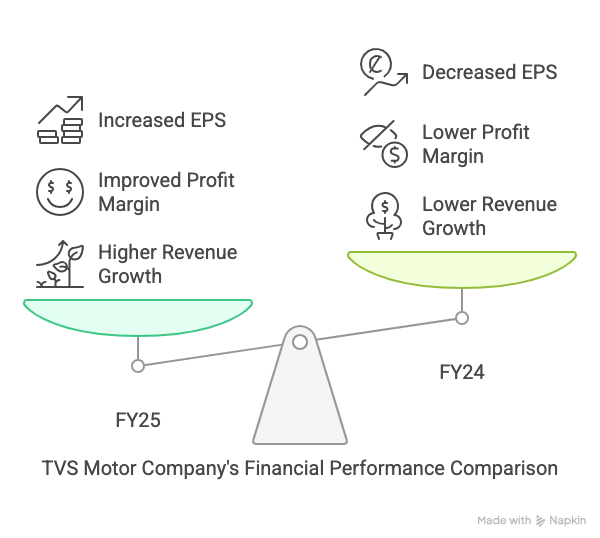
TVS Motor Company concluded FY25 with a robust financial performance marked by strong growth in revenues and profitability across both its automotive and financial services businesses. The company demonstrated operational resilience, disciplined capital allocation, and effective cost control, despite macroeconomic challenges. Consolidated revenue grew to over ₹44,000 crore, while net profit for the year stood at ₹2,379.81 crore—an increase of 33.7% over FY24. The company declared an interim dividend of ₹10 per share (1000%) earlier in March 2025.

Consolidated Financial Highlights – Q4 FY25

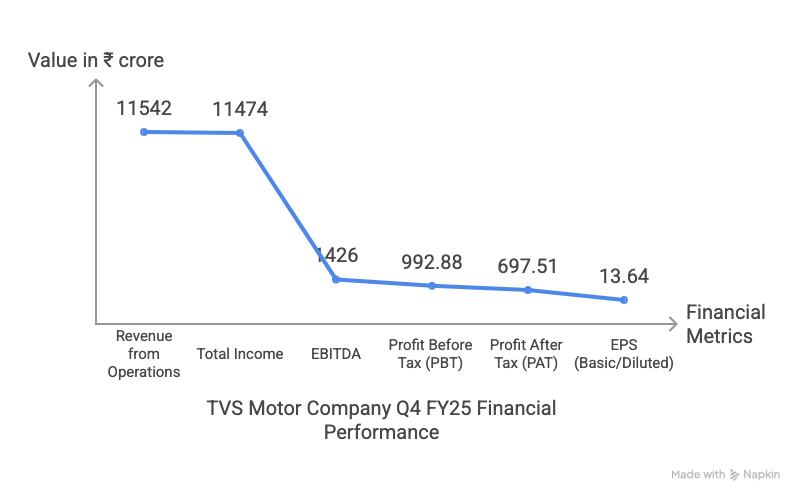
Metric Q4 FY25 Q4 FY24 YoY Growth
Revenue from Operations ₹11,542 crore ₹9,942 crore 16.1%
Total Income ₹11,474 crore ₹9,899 crore 15.9%
EBITDA (approx. from margins) ₹1,426 crore ₹1,020 crore ~40%
Profit Before Tax (PBT) ₹992.88 crore ₹637.35 crore 55.8%
Profit After Tax (PAT) ₹697.51 crore ₹411.53 crore 69.5%
EPS (Basic/Diluted) ₹13.64 ₹8.15 67.4%

Profit includes ₹10.81 crore from discontinued operations related to divested divisions in a subsidiary.


Full Year Consolidated Performance – FY25

Metric FY25 FY24 YoY Growth
Revenue from Operations ₹44,089.01 crore ₹38,778.82 crore 13.7%
Total Income ₹44,158.57 crore ₹38,884.64 crore 13.6%
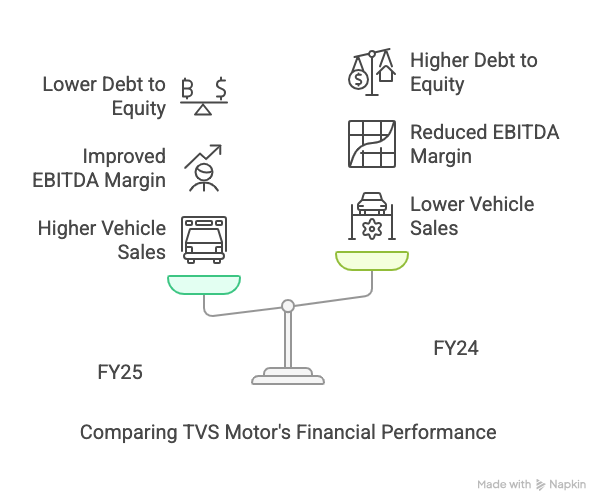
EBITDA Margin 10.8% 9.9% +90 bps
Net Profit After Tax ₹2,379.81 crore ₹1,778.54 crore 33.7%
Net Profit Margin (%) 5.4% 4.5% +90 bps
EPS (Basic/Diluted) ₹47.05 ₹35.50 32.5%


Segmental Performance (FY25)

 A. Automotive Vehicles & Parts

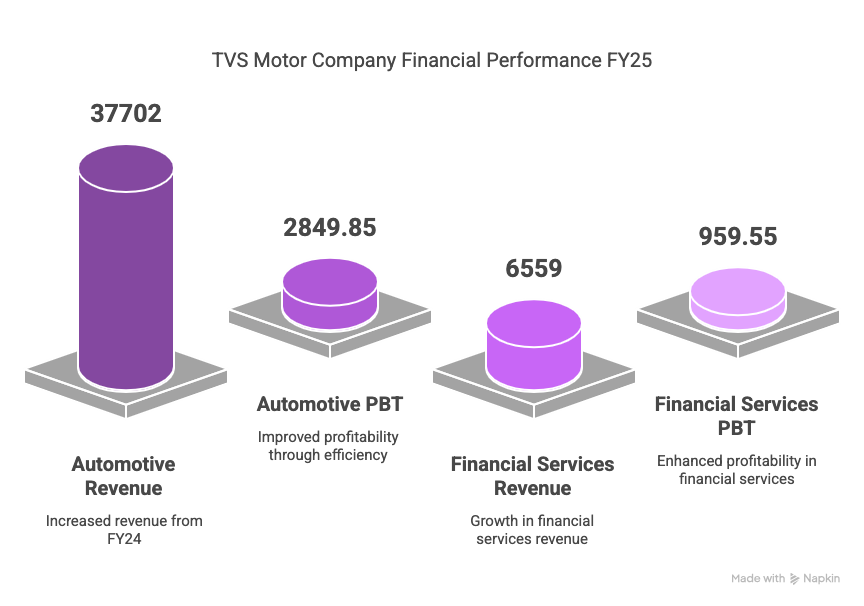
The company reported revenue of ₹37,702 crore, up from ₹33,188 crore in FY24. Profit Before Tax (PBT) stood at ₹2,849.85 crore. Operating leverage improved through volume growth and cost optimization


B. Financial Services

The company’s revenue climbed to ₹6,559 crore in FY25, marking an increase from ₹5,791 crore in the previous fiscal year. Profit Before Tax (PBT) stood at ₹959.55 crore. Interest service coverage improved to 14.57x, compared to 10.53x in FY24.


            Key Operational Metrics

Metric FY25 FY24
Vehicle Sales Volume 47.44 lakh units 41.91 lakh units
EBITDA Margin 10.8% 9.9%
Net Debt to Equity (Consolidated) 2.76x 3.38x
Debtors Turnover 24.8x 25.3x
Inventory Turnover 11.5x 11.7x


                Cash Flow Highlights (FY25)

Particulars Standalone (₹ Cr) Consolidated (₹ Cr)
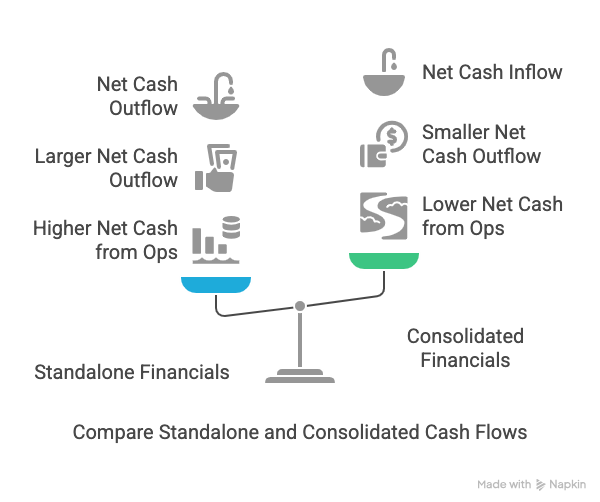
Net Cash from Ops 4,266 3,503
Net Cash from Investing (3,871) (2,899)
Net Cash from Financing (587) 1,155
Net Change in Cash (192) 1,759
Closing Cash Balance ₹294 crore ₹4,115 crore


Notable Updates

The FY25 PLI incentive was accounted for in accordance with the Standard Operating Procedure (SOP) established by the Ministry of Heavy Industries (MHI). A fair value loss of ₹89.08 crore was recorded in Q4 due to the revaluation of investments. Additionally, the company undertook subsidiary realignment, which included divestment in ION Mobility and other associates, the addition of new subsidiaries such as DriveX Mobility, and the reclassification of certain divisions like Injection Moulding and Seating as discontinued operations.

Balance Sheet Snapshot (Consolidated)

As on 31st March 2025 ₹ Crore
Total Assets ₹47,937
Total Equity ₹9,442
Total Liabilities ₹38,495
Net Worth ₹8,481
Total Borrowings ₹27,616
  • Asset base supported by investments in EVs, overseas businesses, and finance arms
  • High cash reserves: ₹4,115 crore (Consolidated)


Subsidiaries & Global Footprint

TVS Motor’s consolidated results include contributions from its Financial and Mobility Services segment, comprising TVS Credit, DriveX, Harita ARC, and TVS Housing Finance. The company’s global operations extend across India, the UK, Europe, Indonesia, Singapore, and Dubai

Outlook

TVS Motor continues to execute a strategic blend of traditional ICE vehicle dominance with electric mobility investments. International subsidiaries, financial services, and product innovation across the value chain remain key drivers for FY26. With reduced debt leverage, strong free cash flows, and operational discipline, the company is well-positioned for future resilience and expansion.


The image added is for representation purposes only
Vishal Mega Mart’s Strong FY25 Growth and Outlook for Market Expansion


A New Chapter for Vishal Mega Mart: Major Stake Trim and a $588 Million Deal on the Horizon

Vishal Mega Mart's Strong FY25 Growth and Outlook for Market Expansion

Vishal Mega Mart’s Strong FY25 Growth and Outlook for Market Expansion


Company Profile:

Vishal Mega Mart is a leading retail chain in India, founded in 2001.It provides a diverse selection of budget-friendly apparel, general merchandise, and FMCG products. As of March 31, 2025, the company operates 696 stores across 458 cities, with a total retail area of ~12.2 million square feet. Vishal Mega Mart also serves over 145 million consumers and has a growing presence in quick commerce.

Quarterly Performance (Q3 FY25 vs Q4 FY25):

Vishal Mega Mart reported a decline in performance in Q4 FY25 compared to Q3. Revenues dropped by 18.74%, from ₹3,136 crore in December 2024 to ₹2,548 crore in March 2025. This contraction in sales led to a 29.31% fall in operating profit, while Profit Before Tax (PBT) saw a steep decline of 55.68%. Net profit declined from ₹263 crore to ₹115 crore, a sharp fall of 56.27%. Earnings Per Share (EPS) also reduced significantly by 56.90%, dropping to ₹0.25. The quarter indicates pressure on margins and profitability, potentially due to reduced consumer spending, seasonal factors, or cost challenges.

Annual Performance (FY24 vs FY25):

Despite a demanding quarter, Vishal Mega Mart delivered strong annual growth in FY25, with sales climbing 20.26% to ₹10,716 crore, up from ₹8,912 crore in FY24. Operating profit increased by 19.88%, and more impressively, PBT and net profit grew by 36.68% and 36.80%, respectively. EPS for the full year improved from ₹1.02 to ₹1.37, representing a 34.31% increase, signaling enhanced value creation for shareholders. The company managed to scale its business while improving efficiency and profitability over the fiscal year.

Key operational highlights

• As of March 31, 2025, the company operates 696 stores across 458 cities, covering a retail space of approximately 12.2 million square feet.
• For FY25, the revenue breakdown by category was as follows: 44% from Apparel, 28% from General Merchandise, and 28% from FMCG.
• The company boasts a large and loyal customer base of around 145 million as of March 31, 2025.
• The proportion of revenue from the company’s proprietary brands increased to 73.1% in FY25, up from 71.8% in FY24.
• In addition, the company has made consistent progress in its quick commerce initiative, which is now available in 656 stores across 429 cities, with a registered user base of 8.7 million.

Market Reaction:

On April 30, 2025, Vishal Mega Mart’s stock surged by 9%, reflecting positive investor sentiment and confidence following the company’s strong financial performance and operational growth. The rise in stock price highlights investor optimism regarding the company’s future prospects, particularly in its expanding retail network and successful quick commerce initiative.

Final Take:

Vishal Mega Mart has demonstrated strong performance in FY25, with notable growth in sales, operating profit, and net profit, driven by its diverse product categories and expanding store network. The company has also made significant progress in its quick commerce initiative, further enhancing its market position.
Despite a challenging Q4 FY25, where sales and profits saw a decline, the company’s overall performance for the full year reflects resilience and strategic growth. The increase in the contribution of its own brands to revenue highlights the company’s growing brand equity and consumer loyalty.
The positive market reaction, with a 9% rise in stock price on April 30, 2025, signals strong investor confidence in Vishal Mega Mart’s long-term prospects, particularly as it continues to innovate and expand its presence across India.
In conclusion, Vishal Mega Mart remains well-positioned for continued growth, with its strong consumer base, expanding retail footprint, and increasing focus on digital and quick commerce services.


The image added is for representation purposes only

Star Health Q4 FY25: Profits Drop, Claims Surge!


Star Health Q4 FY25: Profits Drop, Claims Surge!

Star Health Q4 FY25: Profits Drop, Claims Surge!

Star Health Q4 FY25: Profits Drop, Claims Surge!


Despite robust double-digit growth in gross written premiums and a broader rural footprint, Star Health’s Q4 performance highlights rising claims expenses and a dramatic total collapse in net profit.

Summary:

Star Health and Allied Insurance reported a sharp decline in profits for Q4 FY25, recording an underwriting loss of ₹378 crore. The company’s combined ratio increased to 101.1%, climbing from 97.3% in the prior year, signaling a worrisome shift. Although the insurer saw a 10% YoY increase in Gross Written Premium and robust digital expansion, higher medical inflation and claim payouts led to significant financial strain.

A Disappointing Quarter for Star Health

Star Health and Allied Insurance Company Ltd. has reported a dramatic decline in its profitability for the fourth quarter and full year ended March 31, 2025. The standalone net profit plummeted by almost 100%, with the insurer posting an underwriting loss of ₹378 crore in FY25, compared to a modest ₹89 crore profit in FY24.
Profit after tax (PAT) fell to ₹646 crore under IGAAP and ₹787 crore under IFRS, down from ₹845 crore and ₹1,103 crore, respectively, in the previous year. The decline was caused by a rise in claims, healthcare cost inflation, and an increase in the combined ratio to 101.1%, surpassing the critical 100% mark. This suggests that the company’s claim payouts and operational costs exceed the revenue generated from premium collections.

Claims Surge and Expense Pressure

During FY25, the company paid over ₹10,350 crore in claims, a significant rise from previous years. Speciality categories such as orthopaedics, cardiology, cancer, and infectious diseases consumed close to ₹1,000 crores in payouts, with ₹2,000 crores paid out to senior citizens alone. The net incurred claim ratio rose to 70.3% under IGAAP and 70.7% under IFRS, indicating a surge in claim volumes beyond projections.
Operating expenses remained elevated at 30.4%, with administrative and distribution costs remaining high despite technology-led efficiency initiatives.

GWP Growth Strong, but Profitability Concerns Mount

Even though the bottom-line figures were disappointing, the company reported consistent growth in its top-line metrics. Gross Written Premium (GWP) rose 10% YoY to ₹16,781 crore under the new 1/n accounting norm and 15% to ₹17,553 crore without the 1/n adjustment. Retail health, contributing 93% of total GWP, remained the company’s core growth engine.
Renewal premium retention also stayed healthy at 97%, reflecting continued trust from existing policyholders.

Digital and Rural Expansion Pay Off

A highlight for the quarter was the company’s continued investment in digital and rural outreach. Star Health’s digital platform saw a 71% increase in fresh business through digital channels, 89% of policies were sourced digitally, and over 63% of renewals were done without human intervention.
Moreover, 51% of all insured people who lived during FY25 came from semi-urban and rural India. Notably, 60% of the retail claims settled were from these non-metro areas, aligning with Star Health’s aim of inclusive coverage.

Solvency and Investment Performance Remain Stable

The company demonstrated robust financial health with a solvency ratio 2.21x, well above the IRDAI requirement of 1.5x. This highlights a strong ability to meet sustained obligations over time. Additionally, total investment assets impressively reached ₹17,898 crore, reflecting a solid investment strategy. Furthermore, the investment yield experienced a marginal increase, rising to 7.8% from 7.7% in the previous fiscal year (FY24), highlighting the effectiveness of the company’s investment operations.

Management Commentary and Outlook

In a recent statement, Managing Director and CEO Anand Roy emphasized Star Health’s unwavering commitment to broadening its retail business, particularly in historically underserved regions. He outlined a range of forthcoming initiatives to promote customer-focused care models, innovative wellness programs, and accessible home healthcare services designed to enhance patient experiences.

Roy acknowledged the persistent challenges posed by rising inflation in healthcare costs, creating a more complicated landscape for service delivery. Nevertheless, he expressed confidence that the path forward lies in leveraging technology to drive efficiency and implementing prudent risk management strategies to navigate these economic pressures effectively. His insights paint a picture of a forward-thinking organization dedicated to adapting and thriving in a changing healthcare environment.

Conclusion: A Tough Quarter, But Not Without Silver Linings

Star Health’s Q4 and full-year FY25 performance presents a classic case of substantial growth marred by cost escalation and margin erosion. While the company’s leadership in retail health and strong solvency offer stability, sustained profitability will depend on effective underwriting, prudent pricing, and sharper cost controls. The year ahead is likely crucial as the company works to return to a healthier profit trajectory.


The image added is for representation purposes only
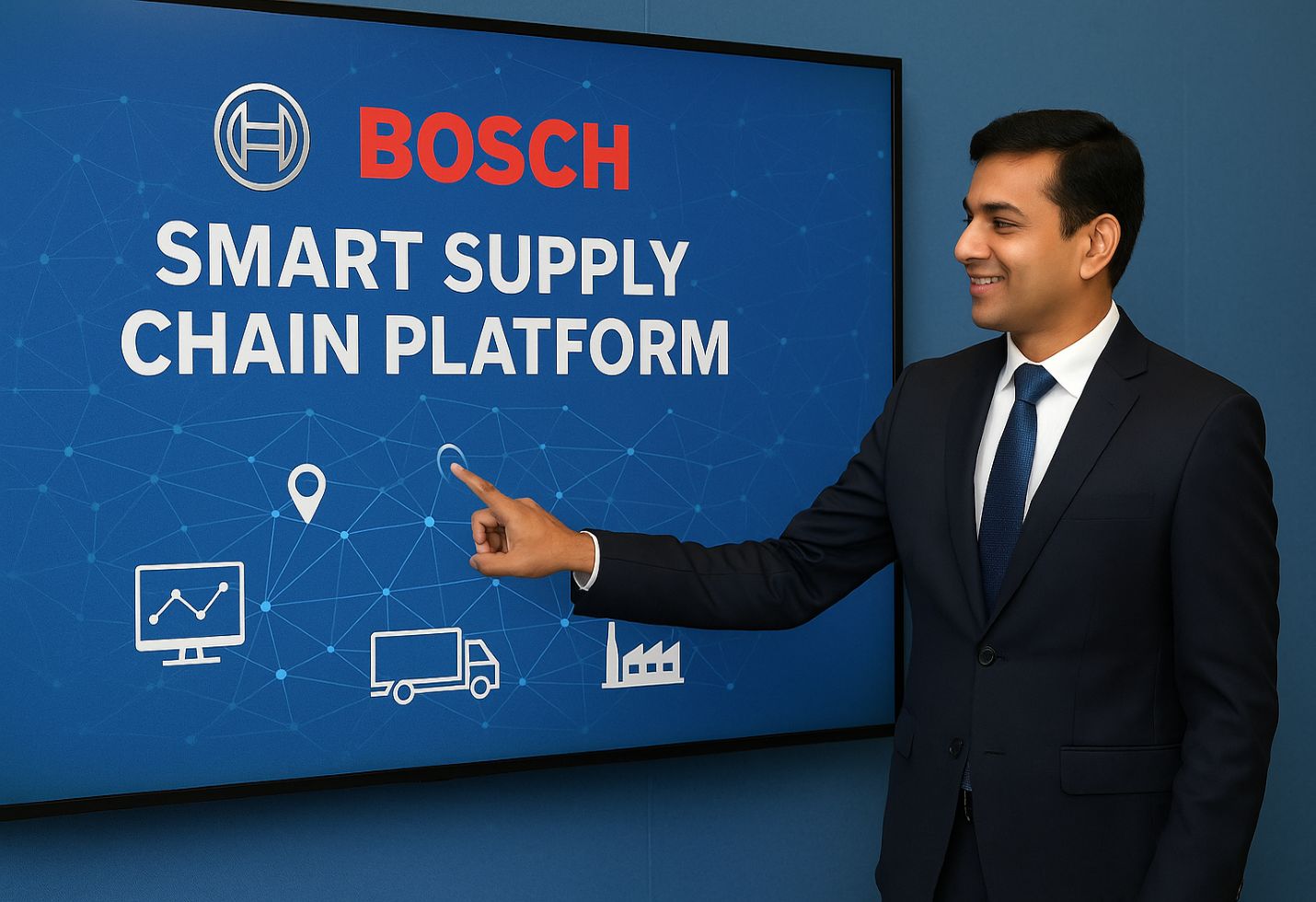
In India, Bosch Launches a Smart Supply Chain Platform


In India, Bosch Launches a Smart Supply Chain Platform

In India, Bosch Launches a Smart Supply Chain Platform

In India, Bosch Launches a Smart Supply Chain Platform


The Digital Supply Chain Management (DSCM) platform from Bosch, a world leader in engineering and technology solutions, has launched in India. In line with India’s drive for smarter and more connected industrial systems under the “Digital India” and “Make in India” agendas, the move represents a significant step towards modernizing supply chain operations in one of the fastest-growing economies in the world.
By combining cutting-edge technology like artificial intelligence (AI), cloud computing, the Internet of Things (IoT), and predictive analytics, the recently launched platform seeks to completely transform how companies in India manage, track, and improve their supply chains. It aims to provide seamless collaboration, automated procedures, and real-time supply chain insight.

Overcoming Supply Chain Difficulties

Despite its size and diversity, India’s supply chain ecosystem nevertheless faces a number of operational challenges. These include disjointed logistical networks, a lack of transparency, a failure to integrate data across stakeholders, and uncertain delivery schedules—problems that were made worse by the COVID-19 epidemic and the ensuing world upheavals.
By providing companies with a powerful digital tool to precisely estimate demand, manage inventories in real time, trace shipments, and save operating costs through automation and data-driven insights, Bosch hopes to address these inefficiencies with its Digital Supply Chain Management platform.
“Our goal is to empower Indian enterprises—whether in manufacturing, logistics, or retail—with a scalable, secure, and smart supply chain solution,” said Soumitra Bhattacharya, Managing Director of Bosch Limited India, in response to the launch. Through the utilization of Bosch’s worldwide experience and profound comprehension of Indian market conditions, we are offering a platform that not only streamlines operations but also equips companies for the future.

The Digital Supply Chain Management Platform’s attributes

Bosch’s DSCM platform has a number of features designed specifically for Indian companies in several industries:
• End-to-End Visibility: Using GPS tracking and IoT-enabled devices, real-time tracking of items from suppliers to final consumers.
• Demand Forecasting: Predictive models powered by AI assist in foreseeing supply concerns, seasonal patterns, and customer demands.
• Inventory optimization: automated insights and warnings to minimize overstock or stockouts in warehouses and retail locations.
• Supplier Collaboration: Order placement, confirmation, invoicing, and payment administration are all accomplished through digital connection with suppliers.
• Analytics Dashboard: Adaptable dashboards with efficiency measurements, danger warnings, and key performance indicators (KPIs).
• Smooth Integration: Compatible with current supply chain software and top enterprise resource planning (ERP) systems.

Specifically designed for the Indian market

In contrast to off-the-shelf global solutions, Bosch developed this platform with consideration for the unique supply chain complexity in India, which includes multi-layered vendor networks, regional logistics limitations, and differences in the level of digital adoption among SMEs
The platform provides cloud-based and on-premise deployment choices, is mobile-friendly, and supports interfaces in multiple languages. Bosch has also partnered with logistics firms and government-sponsored digital infrastructure projects to broaden the platform’s reach, particularly in Tier 2 and Tier 3 cities.

Applications in Industry

The platform is expected to benefit a wide range of industries, including fast-moving consumer goods (FMCG), pharmaceuticals and healthcare, automotive and auto components, e-commerce and retail, and industrial manufacturing.
Bosch cites significant improvements in inventory accuracy, lead time reduction, and supply chain responsiveness from a prototype version of the DSCM platform that was already deployed with a few manufacturing enterprises in India in 2024.

Bosch’s More Comprehensive Digital Approach

This introduction is a component of Bosch’s larger digital transformation plan in India, where the business has made significant investments in digital transportation, AI research, and smart manufacturing (Industry 4.0). Bosch’s digital innovation hub in Bengaluru will oversee the recently developed platform, and integration and support services will be provided nationwide.
Bosch is also collaborating with startups and academic institutions to co-develop features and analytics tools that might improve the platform’s functionality.

Prospective Roadmap

In future iterations of the platform, Bosch intends to incorporate carbon footprint tracking, sophisticated cybersecurity mechanisms, and blockchain-based supply chain authentication. These improvements are intended to meet changing regulatory requirements, improve openness, and promote sustainability goals.
Bosch’s new product comes at a critical juncture, as India’s economy is expected to grow to $5 trillion in the near future and supply chain resilience is emerging as a major business concern worldwide.
Such platforms, according to industry analysts, will be essential for future-proofing companies, particularly as India integrates more fully into global value chains.


The image added is for representation purposes only
Green Growth: Ambuja’s Capacity Surge and Record Earnings


Ambuja Cements Q2 FY26: Volume & Margin Drive Deliver a Strong Surge

Green Growth: Ambuja's Capacity Surge and Record Earnings

Green Growth: Ambuja’s Capacity Surge and Record Earnings


Adani Group’s Ambuja achieves 100 MTPA milestone, posts highest-ever profit fueled by volume, strategic moves, and commitment to sustainability.

Ambuja Cements, a prominent entity within the Adani Group, has achieved a major milestone in the cement sector, now boasting a production capacity that exceeds 100 million tonnes annually. The company also announced its highest-ever annual profit after tax (PAT) of ₹5,158 crore, demonstrating a robust 9% year-on-year (YoY) increase for the fiscal year concluding on March 31, 2025.

This noteworthy accomplishment propels Ambuja Cements to become the ninth-largest cement producer worldwide based on its production capabilities. The company’s exceptional financial performance throughout FY25 was propelled by substantial growth in sales volumes, strategically advantageous acquisitions, and enhanced operational efficiencies implemented across its various units. Throughout the entirety of fiscal year 2025, Ambuja Cements registered its peak annual sales volume to date, hitting 65.2 million tonnes, a substantial 10% rise year-over-year. The company also celebrated a record annual revenue figure of ₹35,045 crore, demonstrating a robust 6% growth from the prior fiscal year.

In his remarks on this notable milestone, Vinod Bahety, the Whole Time Director & CEO of Ambuja Cements, stated, “Exceeding the 100 million tonnes per year production mark is a truly momentous occasion for Ambuja Cements.” This milestone underscores our inherent strength, our ambitious plans for growth, and our steadfast commitment to the progress of India’s infrastructure.” This milestone puts us on a firmer path towards our ambition of reaching a production capacity of 140 MTPA by the financial year ending 2028.

Strong Fourth-Quarter Performance and Operational Highlights

In the final quarter of fiscal year 2025, Ambuja Cements exhibited significant momentum, announcing a standalone profit after tax (PAT) of ₹929 crore, marking a considerable 75% increase compared to the corresponding period in the previous year. The company’s Earnings Before Interest, Taxes, Depreciation, and Amortization (EBITDA) for the fourth quarter stood at ₹1,868 crore, with an impressive EBITDA per tonne (PMT) of ₹1,001 and healthy EBITDA margins of 18.9%. Quarterly cement sales volume reached an all-time high of 18.7 million tonnes, reflecting a strong 13% increase on a year-over-year basis. Notably, Ambuja Cements continues to maintain a debt-free status, with a robust net worth of ₹63,811 crore and substantial cash reserves amounting to ₹10,125 crore.

Growth Fueled by Environmental and Digital Initiatives

Demonstrating a strong commitment to sustainability, Ambuja Cements has made substantial progress in its renewable energy transition, with 299 MW of green power capacity now operational, including 200 MW from solar sources and 99 MW from wind energy. This is part of a larger strategy to reach 1 GW of renewable capacity, with the remaining portion expected to be operational by the end of fiscal year 2026.

Consequently, the share of green power in the company’s energy mix has risen to 26.1%, with an ambitious target of reaching 60% by FY28. Furthermore, the company’s proactive implementation of cost-saving measures across various operational areas, including logistics, fuel consumption, and manpower optimization, has contributed significantly to maintaining its industry-leading profit margins.

The strategic acquisition of Orient Cement and the successful operational stabilization of the recently acquired Penna and Sanghi cement assets have played a crucial role in enhancing the company’s overall scale of operations and realizing significant synergy benefits. Ambuja Cements is also actively investing in digital transformation across its value chain, incorporating AI-driven operational processes, implementing smart logistics solutions, and enhancing customer engagement through user-friendly mobile applications such as OneConnect and Reward Connect.

Industry analysis indicates that India’s overall cement consumption experienced a growth rate of approximately 6.5-7% in the fourth quarter of FY25, supported by increased construction, rural demand, and infrastructure investments. Looking ahead to FY26, market forecasts project a further growth in cement demand of 7-8%, primarily driven by a pro-infrastructure focus in the government’s budget allocations and a positive outlook for the residential housing sector.

Commitment to Sustainability and Industry Recognition

Ambuja Cements continues to be recognized as a leader in sustainability within the industry, achieving significant water positivity and plastic negativity ratios. A substantial portion of its product mix comprises blended cement. The company has also pledged to plant 8.3 million trees by 2030, aligning with the Adani Group’s broader environmental goals. The company’s commitment has been acknowledged through awards like the Golden Peacock Award 2024 for ESG excellence and an ‘A-’ rating in the CDP Climate Leadership Score. TRA Research has also named Ambuja Cements as ‘India’s Most Trusted Cement Brand’ for the second consecutive year.

Final Thoughts:

Ambuja Cements Solidifies Market Position Through Capacity Expansion, Profitability, and Sustainable Practices

Ambuja Cements’ achievement of surpassing 100 MTPA in production capacity, coupled with its record-breaking annual profit, underscores its strong operational execution and strategic growth initiatives within India’s dynamic cement sector. The company’s commitment to expanding its green energy footprint and embracing digital transformation further positions it for sustainable and efficient growth. Its proactive approach to cost management, strategic acquisitions, and focus on meeting the growing demand have been key drivers of its success. Furthermore, Ambuja Cements’ consistent recognition for its ESG efforts and brand trust reinforces its position as a responsible and leading player in the industry. As India’s infrastructure development and housing sector continue to grow, Ambuja Cements appears well-positioned to capitalize on these opportunities while maintaining its focus on sustainability and innovation.


The image added is for representation purposes only
RBL Bank Q4 Results


RBL Bank Q4 Results

RBL Bank Q4 Results

RBL Bank Q4 Results

Executive Summary

Bank continued to maintain strong capital , stable asset quality. A key development in FY2025 was the strategic adoption of revised RBI investment guidelines, which enhanced the bank’s net worth and accounting clarity.

Key Financial Highlights (Standalone)

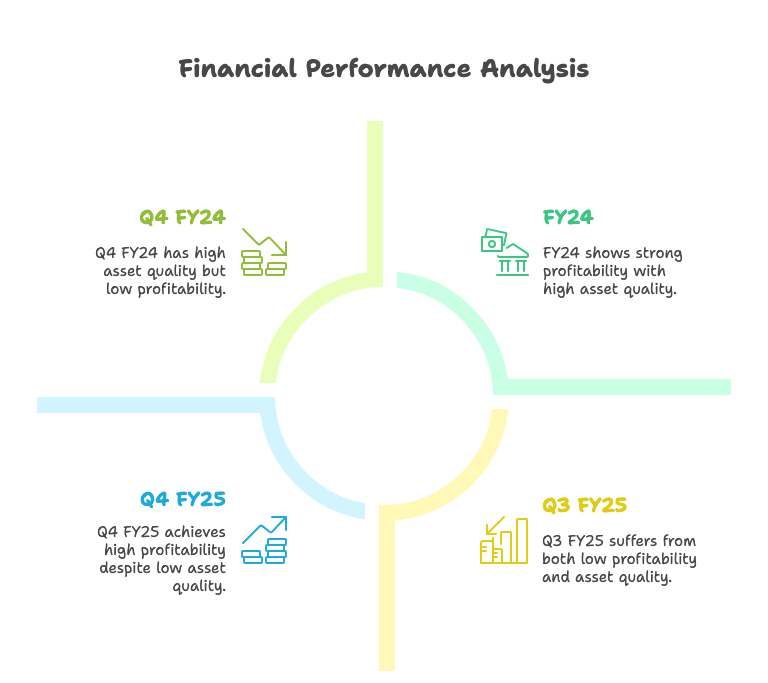
Particulars (₹ in crore) Q4 FY25 Q3 FY25 Q4 FY24 FY25 FY24
Interest Earned 3,476 3,536 3,339 14,039 12,394
Other Income 1,000 1,073 875 3,806 3,043
Total Income 4,476 4,610 4,215 17,845 15,437
Operating Profit (before prov.) 861 997 887 3,627 3,030
Provisions (other than tax) 785 1,189 414 2,959 1,778
Net Profit 69 33 353 695 1,168
Capital Adequacy Ratio (Basel III) 15.54% 16.18% 15.54% 16.18%
Gross NPA (%) 2.60% 2.92% 2.65% 2.60% 2.65%
Net NPA (%) 0.29% 0.53% 0.74% 0.29% 0.74%
Return on Assets (RoA) 0.20% 0.09% 1.08% 0.51% 0.96%


Segment Performance Breakdown

Retail banking contributed ₹1,613 crore in revenue, dominating the segment mix. Corporate banking and treasury brought in ₹672 crore and ₹975 crore respectively. Retail banking faced losses due to heightened provisioning from the JLG portfolio.

Strategic Accounting Changes (FY25)

The bank adopted RBI’s revised investment guidelines from April 2024, resulting in a ₹75.58 crore transfer to general reserve and fair value adjustment across AFS and FVTPL portfolios, enhancing transparency.

Cash Flow Summary (Standalone)

Operating cash flow was negative at ₹84.18 crore due to growth in advances. Cash and cash equivalents ended at ₹1,251.68 crore, down from ₹1,412.46 crore a year ago.

Consolidated View

Consolidated net profit was ₹71.71 crore for FY2025. The bank’s net worth rose to ₹1,506 crore, and deposits closed at ₹11,093 crore, backed by consistent credit growth and stable capital ratios.

VIII. Capital and Shareholder Updates

RBL declared a ₹1 per share dividend. The bank allotted 2.78 million shares under ESOP schemes during the year, reflecting long-term talent investment.

Key Financial Ratios

Earnings per Share stood at ₹11.45 (basic) and ₹11.40 (diluted) on a standalone basis. Debt-equity ratio stood 0.88 and total debt to total assets was at 9.36%.

Outlook and Conclusion

The conservative provisioning approach, improved asset quality, and regulatory compliance put the bank on a solid foundation for sustainable growth into FY2026.

Market Insights on Q4 FY2024 Performance

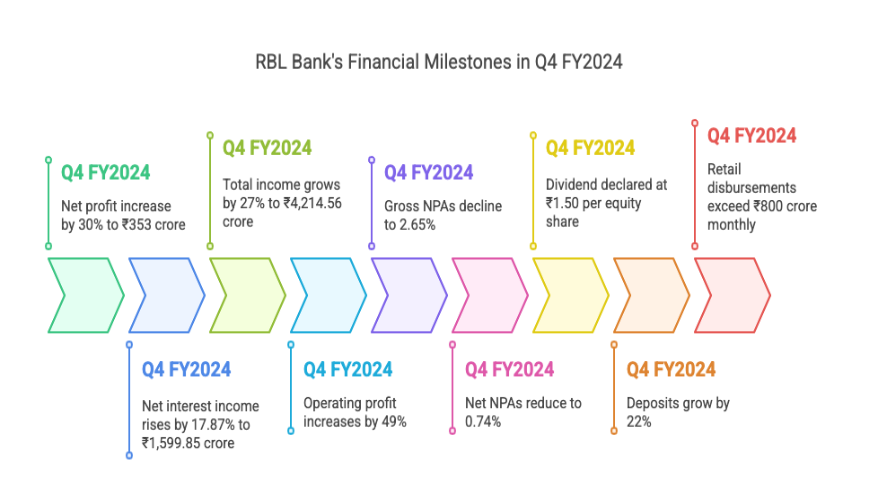
In Q4 FY2024, RBL Bank’s financial performance received considerable media attention, highlighting its strategic gains and sound fundamentals. The bank recorded a net profit of ₹353 crore, a 30% year-on-year increase, driven by a solid 17.87% rise in net interest income (NII), which stood at ₹1,599.85 crore. Total income for the quarter grew by 27%, reaching ₹4,214.56 crore, while operating profit rose 49% from the previous year.

Improvement in asset quality was evident with gross NPAs declining to 2.65% and net NPAs reducing to 0.74%. Net interest margin (NIM) was maintained at a healthy 5.45%, indicating efficient interest spread management.

The bank declared a dividend of ₹1.50 per equity share for FY2024, reflecting its strong financial position and shareholder commitment. A 22% year-on-year growth in deposits further enabled strong credit disbursement, particularly in the retail segment, where monthly disbursements exceeded ₹800 crore, encompassing business, home, and rural vehicle loans.

Challenges were also noted, with a slight increase in asset slippages to 0.56%, primarily from unsecured and microfinance segments. Despite this, RBL’s prudent provisioning policies ensured the bottom line remained protected.

Overall, media coverage emphasized RBL Bank’s solid execution and steady recovery in FY2024, reaffirming its resilience and readiness to navigate upcoming market dynamics.

 Investor Presentation Highlights – Q4 & FY2025

The investor presentation for Q4 & FY2025 offered a comprehensive view of RBL Bank’s operational resilience, strategic focus, and performance outcomes. Despite reporting a moderate net profit of ₹69 crore in Q4 FY25, the bank made a 100% provision on gross NPAs in its JLG (Joint Liability Group) portfolio, demonstrating a prudent approach to risk management.

Net Interest Income (NII) for the quarter declined by 2% year-on-year to ₹1,563 crore, with Net Interest Margin (NIM) at 4.89%. On the other hand, the bank recorded a 14% growth in other income to ₹1,000 crore, aided by a 17% increase in core fee income. Operating profit stood at ₹861 crore.


 Growth was primarily retail-led:

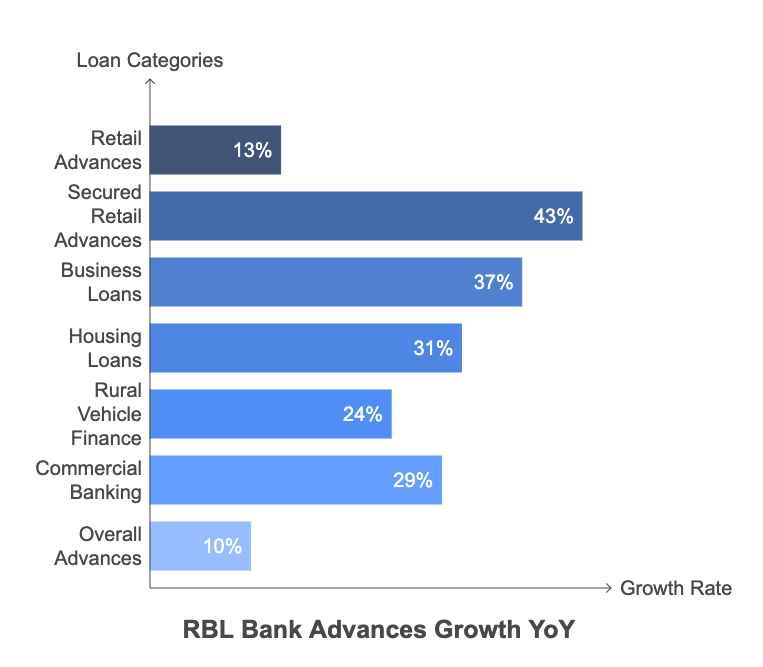
  • Retail advances grew 13% YoYto ₹55,703 crore.
  • Secured retail advances surged 43% YoY, led by:
  • Business loans: ↑ 37%
  • Housing loans: ↑ 31%
  • Rural vehicle finance: ↑ 24%
    • Commercial banking(mid-corporates/SME) within wholesale banking grew by a notable 29% YoY.
    • Overall advances reached ₹92,618 crore (↑10% YoY).

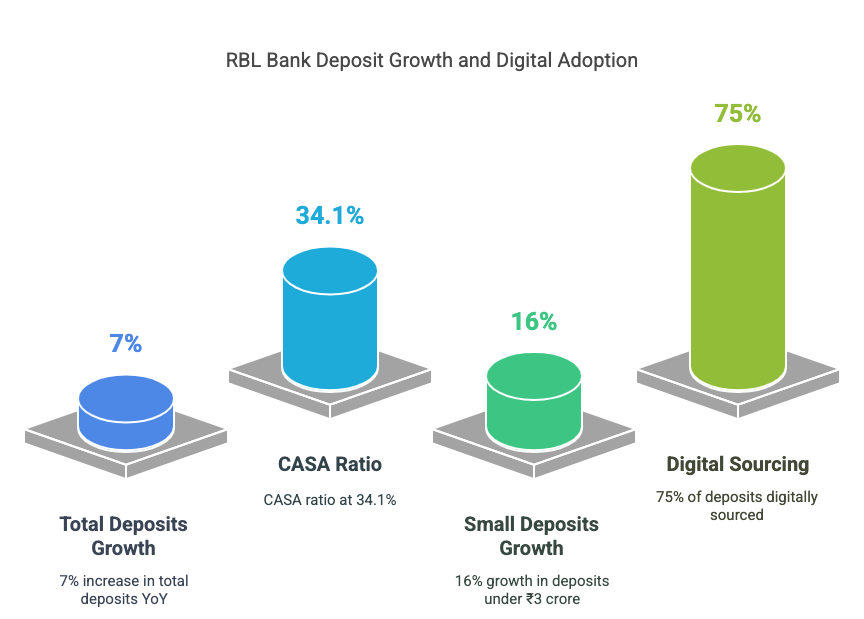
    Deposit traction and granularity improved:

  • Total deposits grew 7% YoY to ₹110,944 crore.
  • CASA ratio stood at 34.1%.
  • Deposits under ₹3 crore grew 16% YoY and now represent ~50% of total deposits.
  • Over 75% of fixed deposits and savings accounts were digitally sourced, highlighting strong digital adoption.


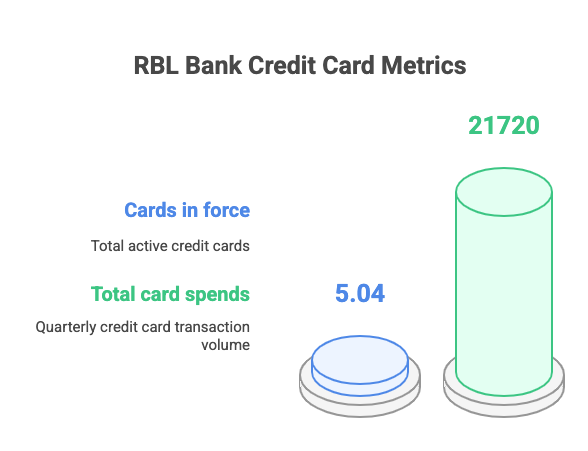
Credit cards remained a high-volume portfolio:

  • Cards in force: 5.04 million
  • Total card spends: ₹21,720 crore (Q4)
  • Receivables remained stable, with portfolio expansion outside Tier-1 cities.

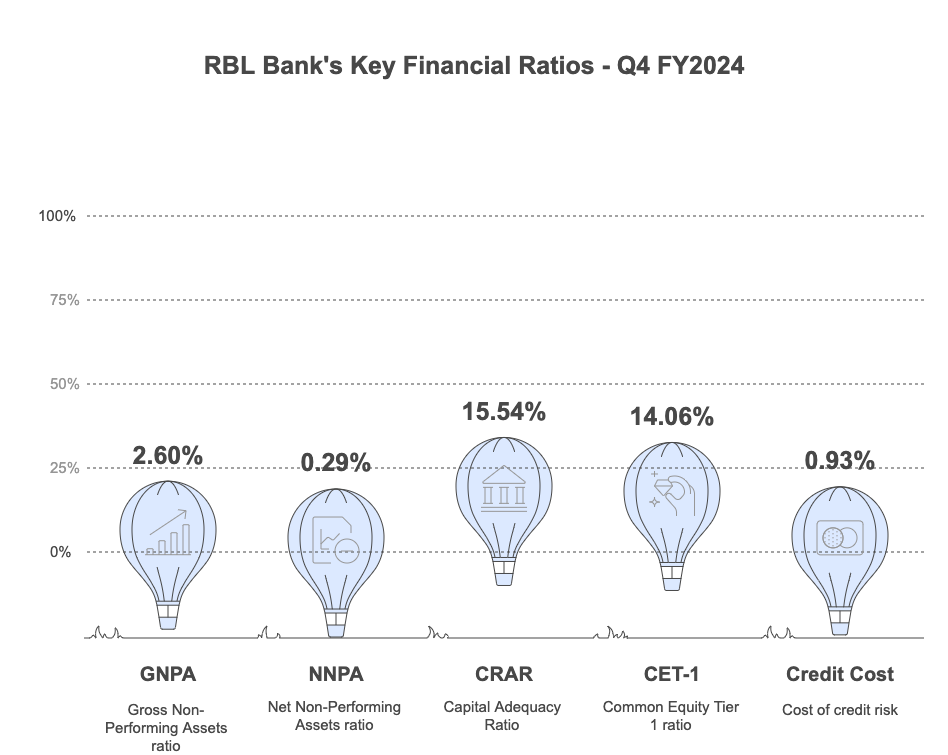
 Asset Quality & Capital:

  • GNPA improved to 2.60% (↓32 bps QoQ)
  • NNPA declined to 0.29% (↓24 bps QoQ)
  • Capital Adequacy Ratio (CRAR): 15.54%
  • CET-1 ratio: 14.06%
  • Credit cost for Q4 was 93 bps.


Digital & Tech Advancements:

  • 5 million customers use RBL’s mobile apps.
  • Daily API calls exceed 1 million, with live end-to-end onboarding for open banking clients.
  • Key features launched include WhatsApp-based account opening, assisted journeys, and digital FD overdraft access.
  • 86% of recurring deposits and 66% of fixed deposits are now booked digitally.

 Sustainability & ESG Focus:

  • Voluntary climate risk policies adopted; target to eliminate coal exposure by FY2034.
  • Strong focus on financial literacy for rural women.
  • Recognized as India’s Best Bank for CSR (AsiaMoney) and awarded for technology innovation by IBA.


The image added is for representation purposes only
Zepto Eyes ₹1,500 Crore Debt at $5B Valuation


Servotech's Stock Climbs: New Subsidiary Sparks Investor Excitement

Servotech's Stock Climbs: New Subsidiary Sparks Investor Excitement

Servotech’s Stock Climbs: New Subsidiary Sparks Investor Excitement


Company’s stock rises as it incorporates a subsidiary, signaling a strategic move beyond renewable energy and into a new market.

Expansion into Sports and Entertainment Sector Drives Investor Optimism

Shares of Servotech Renewable Power System, a prominent provider of solar energy solutions, are experiencing increased attention in the market following the company’s announcement of a newly incorporated, wholly-owned subsidiary. This strategic move has sparked positive momentum in the company’s stock performance, indicating growing investor confidence.

Servotech Renewable Power System, a company listed on the National Stock Exchange (NSE), is primarily involved in the manufacture of electric vehicle (EV) chargers, solar products, and energy-efficient lighting solutions. The company’s decision to diversify its interests through the establishment of this subsidiary has been viewed favorably by investors, contributing to the recent stock surge.

Stock Market Reaction

Initial trading activity saw Servotech Renewable Power System’s stock open lower at Rs 122.20, compared to the previous day’s closing price of Rs 124.04. Despite the initial decline, the stock swiftly rebounded, indicating its resilience and a positive underlying market sentiment. The stock not only recouped its losses but also gained ground, reaching an intraday high of Rs 126.21.

By 3 PM, the company’s stock had reached Rs 126.01, showing a gain of 1.59 percent. This upward trend was accompanied by a notable rise in delivery volume, with data indicating an approximate 40 percent increase in the 5-day average delivery volume compared to the figures from the preceding Friday. The increased delivery volume suggests stronger investor participation and a growing interest in the stock.

Subsidiary Details and Purpose

The positive shift in the stock’s performance can be attributed to Servotech Renewable Power System’s announcement regarding the incorporation of a wholly-owned subsidiary, Servotech Sports and Entertainment Pvt Ltd.

According to the company’s official filing, this newly formed subsidiary is set to engage in a wide array of activities within the sports and entertainment industry. These activities will include the operation, promotion, establishment, and enhancement of various sports and games. The subsidiary may also be involved in managing teams, players, franchises, and leagues. The company has clarified that this subsidiary is structured as a Special Purpose Vehicle (SPV) of its holding company.

Company’s Core Business

Servotech Renewable Power System has established itself as a key player in the renewable energy sector. The company operates as a leading provider of comprehensive solar energy solutions, with a diverse portfolio of products and services. Its primary business activities include the manufacturing of EV chargers, solar products, and energy-efficient lighting solutions, catering to the increasing demand for sustainable energy infrastructure.

Recent Solar Project Acquisition

In addition to its expansion into sports and entertainment, Servotech Renewable Power System has also been active in strengthening its core business. The company recently secured a significant order for a 4.1 MW on-grid rooftop solar project. This project, valued at Rs 15.8 crore, was awarded by the Waltair Division of the East Coast Railway, located in Visakhapatnam, Andhra Pradesh.

Under the terms of this contract, Servotech Renewable Power System will be responsible for the complete scope of work, encompassing the design, manufacturing, supply, installation, testing, and commissioning of on-grid Solar Photovoltaic (PV) plants. These plants will be installed across multiple sites within the Waltair division and will have varying capacities, contributing to the railway division’s adoption of clean energy.

Stock Performance and Market Capitalization

While Servotech Renewable Power System’s shares have experienced a year-to-date (YTD) decline of 24 percent, the company has demonstrated strong long-term growth. Over the past year, the stock has delivered a substantial return of 44 percent. Furthermore, the company has provided exceptional returns to its investors over longer periods, with returns of 1433 percent over three years and an impressive 15967 percent over five years.

With a present market capitalization of ₹2765 crore, Servotech Renewable Power System is categorized as a small-cap firm.

Servotech’s Strategic Diversification and Market Outlook

Servotech Renewable Power System’s strategic decision to incorporate a subsidiary focused on sports and entertainment represents a significant diversification effort. This move has been well-received by the market, as evidenced by the positive stock reaction. The company’s expansion beyond its core renewable energy offerings into a new sector signals its intent to pursue growth and capitalize on new opportunities. While the company’s core business in EV chargers, solar products, and energy-efficient lighting remains strong, this new venture has the potential to open new revenue streams and increase overall profitability. Servotech’s recent acquisition of a substantial on-grid solar project further demonstrates its continued success within the renewable energy sector. The company’s long-term stock performance reflects its growth trajectory, although short-term volatility is typical for small-cap companies.


The image added is for representation purposes only
UltraTech Cement Q4: Strong Growth, Steady Margins

UltraTech Cement Q4: Strong Growth, Steady Margins

UltraTech Cement Q4: Strong Growth, Steady Margins

UltraTech Cement Q4: Strong Growth, Steady Margins


Strong volume growth and strategic acquisitions are poised to boost UltraTech’s Q4 earnings despite pricing pressures.

Summary:
UltraTech Cement is expected to deliver a strong performance in Q4FY24, supported by significant volume growth, strategic acquisitions, and effective cost management. Revenue is anticipated to grow by 12% YoY, while net profit may see an 8% uptick, although pricing pressures and a high base could limit the overall upside.

Introduction: Building Momentum Amid Challenges

As India’s largest cement producer, UltraTech Cement is expected to report healthy numbers for the quarter ended March 2024 (Q4FY24). Analysts forecast that the company’s earnings will be driven primarily by double-digit volume growth, successful integration of recent acquisitions, and relatively stable operating margins. However, a high base effect, regional pricing pressures, and input cost dynamics may pose minor hurdles to margin expansion.

Volume Growth: The Primary Growth Catalyst

Industry experts predict that UltraTech Cement’s domestic sales volumes will rise by approximately 10 to 12% annually. The increase stems from strong demand for rural housing, infrastructure push under government schemes like PM Gati Shakti and Smart Cities Mission, and sustained urban real estate momentum.
The company’s proactive expansion of capacity and its acquisition of smaller regional firms in recent quarters has enhanced its distribution network, significantly increasing deliveries in key areas such as Central and Eastern India.
Moreover, favourable weather conditions during January–March — traditionally the busiest construction season — supported sustained demand, reinforcing volume growth expectations.

Financial Forecast: Revenue and Profit Growth to Remain Resilient

Revenue:
UltraTech’s consolidated revenue for Q4FY24 is expected to rise by around 12% year-on-year, aided by higher sales volumes and the scaling of newly acquired capacities.
Profitability:
Net profit could grow by approximately 8% yearly, reflecting better cost management, economies of scale from acquisitions, and marginal improvement in blended realizations.
The company’s EBITDA (earnings before interest, tax, depreciation, and amortization) margin is projected to remain broadly stable around 19–20%, compared to the year-ago period. The steadiness is attributed to internal cost-control measures, higher operational efficiencies, and moderating input costs like pet coke and diesel.

Margins: Steady but Sensitive to Price and Costs

While cost rationalization has benefited UltraTech Cement, regional pricing variations — especially in South and West India — have capped realizations. Although input costs like coal and pet coke have declined sequentially, fierce competition in key markets has prevented significant price hikes.
Management’s strategic focus on improving logistics efficiency (e.g., using captive power plants and optimising lead distances) has helped offset some energy and freight cost inflation.
Even if average cement prices stay stable, UltraTech’s profit margins are anticipated to remain consistent rather than see significant growth this quarter.

Key Risks: High Base, Pricing Pressures, and Inflation

Despite strong fundamentals, certain risks continue to hover over UltraTech’s Q4 results:
High Base Effect:
Last year’s strong Q4 performance sets a tough comparison benchmark, particularly for margin expansion.
Regional Pricing War:
Aggressive price competition in Southern and Western markets may limit realization-led earnings growth.
Cost Pressures:
Although easing, energy and transportation costs remain volatile and could impact the company’s EBITDA if not efficiently managed.

Strategic Outlook: Well-Positioned for Long-Term Growth
Looking beyond Q4, UltraTech Cement appears well-positioned for sustainable growth:
Capacity Expansion:
The company’s strategy to increase capacity from 137 MTPA to over 160 MTPA by FY25 through brownfield and greenfield projects remains on track.
Diversification:
Investment in green energy (Waste Heat Recovery Systems and Renewable Power Projects) will reduce dependency on fossil fuels and lower energy costs in the long run.
Government Infrastructure Push:
Ongoing government investment in infrastructure, along with rising urbanization and growing housing demands, creates a favourable environment for the cement industry, positively impacting UltraTech.
Moreover, UltraTech’s robust balance sheet, leadership in the industry, and swift approach to acquisitions will help it maintain its stronghold in the Indian cement market while also considering selective opportunities abroad.

Conclusion: Solid But Balanced Expectations

In conclusion, while volume growth and operational efficiency will drive UltraTech Cement’s earnings growth in Q4FY24, investors should temper expectations given pricing challenges and the high base effect. Nevertheless, the company’s long-term prospects remain highly attractive, making it a key player poised to benefit from India’s structural infrastructure and housing boom.


The image added is for representation purposes only

Analysts Discontinue to Trust Jio’s valuation amid rising costs and slower revenue growth