Menu

IndianStockMarket

IOC Q1 FY2026 Results: Strong Profit Growth Amid Mixed Revenue Trends

IOC Q1 FY2026 Results: Strong Profit Growth Amid Mixed Revenue Trends

IOC Q1 FY2026 Results: Strong Profit Growth Amid Mixed Revenue Trends

Indian Oil Corporation posts robust profit surge with improved refinery utilization despite slight revenue dip in Q1 FY2026.

Key Financial Highlights
Indian Oil Corporation (IOC), India’s largest oil refiner and fuel retailer, delivered a solid performance in the first quarter of fiscal year 2026 (Q1 FY2026), with notable growth in profitability and there is efficiency in operations.
• Total Income: ₹192,924 crore, down 3.6% QoQ and 0.7% YoY
• Profit Before Tax (PBT): ₹7,602 crore, up 5.8% QoQ and 78% YoY
• Profit After Tax (PAT): ₹6,808 crore, up 24.1% QoQ and 82.9% YoY
• EPS: ₹4.95, up 32.4% QoQ and 93.4% YoY increase can be seen
• EBITDA: ₹14,746 crore
These results underscore IOC’s profitability resilience driven by refining margin expansion and improving refinery efficiencies, positioning the company well for growth amid evolving market dynamics.

Revenue and Expenses Dynamics
IOC’s total income in Q1 FY2026 stood at ₹192,923.90 crore, just slightly below the previous quarter’s ₹200,103.28 crore and last year’s ₹194,377.56 crore. This minor decline reflects fluctuating crude oil prices and changes in product demand patterns globally and domestically.
On the expenses front, IOC managed to reduce total costs by 3.9% QoQ to ₹185,322 crore, marking continued focus on cost control and operational efficiencies. Year-over-year expenses also declined by 2.4%, helping bolster overall profitability despite top line challenges. Tax expenses rose 0.6% QoQ but surged 73.7% YoY to ₹1,942 crore, consistent with the sharp rise in profits.

Operational Efficiency and Refinery Utilization
A highlight for the quarter was refinery throughput reaching 18.7 million metric tonnes (MMT), surpassing capacity limits with a 107.1% utilization rate compared to 95-100% typically seen in prior quarters. This demonstrates IOC’s operational expertise and capacity to meet rising fuel demand efficiently.
This strong throughput translated into improved refining margins and higher earnings before interest, tax, depreciation, and amortization (EBITDA) of ₹14,746 crore, underpinning the profitability surge. In Q1, Russian crude accounted for about 22–23% of IOC’s total processing, remaining a crucial component in its feedstock strategy.

Marketing and Sales Performance
IOC recorded record quarterly sales volumes of 26.32 MMT, a 4.2% increase YoY, highlighting growing domestic consumption, particularly in diesel and petrol segments. Institutional diesel sales were up by over 40%, showing strength in commercial demand.
Gross refining margins (GRM) faced pressure, falling to $2.15 per barrel from $6.39 in the previous year, mainly due to volatile global oil markets and inventory losses amounting to ₹6,465 crore. Despite this, IOC managed to maintain strong profitability through strategic cost management and blending strategies.

Strategic Developments and Outlook
The company scheduled an analyst meet on August 18, 2025, to discuss detailed results and strategic outlook for the year. Likely focus areas include refining capacity expansions, integration of renewable energy initiatives, and continued optimization of supply chain and import mix.
IOC’s ability to sustain refinery utilization above 100% signals strong demand visibility. The company’s robust marketing network and government backing provide resilience amid fluctuating crude prices and regulatory environments.

Conclusion
Indian Oil Corporation’s Q1 FY2026 results reflect a balanced financial and operational performance marked by excellent profit growth and exceptional refinery throughput. While revenues saw a slight decline year-on-year, the company’s operational efficiencies, cost control, and strong market demand enabled significant earnings growth and enhanced shareholder value.
Staying adaptive to global energy markets and domestic consumption trends, IOC is well positioned to continue driving sustainable growth while investing in cleaner energy options and technology innovation. The upcoming analyst meet will provide further insights into the company’s medium-term strategy amid evolving energy sector challenges.

:


The image added is for representation purposes only

S&P Global Upgrades India’s Credit Rating: A New Era for Growth

STL Networks’ Shares Jump on ₹360 Crore PowerGrid Teleservices Contract

Kore Digital Q1 FY2026 Results: Robust Growth Driven by Telecom Infrastructure Demand

Kore Digital Q1 FY2026 Results: Robust Growth Driven by Telecom Infrastructure Demand

Kore Digital registers strong quarter with impressive revenue and profit growth amid expanding telecom infrastructure sector.

Overview of Kore Digital’s Q1 FY2026 Performance
Kore Digital delivered a strong financial performance for the quarter ending June 30, 2025, signaling a new phase of solid growth. The company’s revenue surged by approximately 35% quarter-on-quarter (QoQ) to ₹157 crore, compared to ₹116.5 crore in the previous quarter. This growth reflects heightened demand for telecom infrastructure services, bolstered by ongoing digitalization initiatives and network expansion activities across India.
Key financial highlights for the quarter include:
• Revenue: ₹157.01 crore (up 34.69% QoQ)
• EBITDA: ₹19.93 crore (up 15.54% QoQ)
• PAT: ₹13.51 crore, its 15.37% QoQ increase
• Basic Earnings Per Share (EPS): ₹11.44
These figures establish Kore Digital’s foundational strength in executing telecom infrastructure projects and are indicative of the company’s ability to capitalize on India’s accelerating digital growth and network rollout strategies.

Drivers of Growth
Telecommunication Infrastructure Demand
The telecom sector continues to be a key driver of Kore Digital’s growth. Increasing investments to strengthen 4G/5G networks, rollout of new fiber optic cables, and expanding data penetration have fueled demand for infrastructure solutions. Kore Digital’s focus on high-quality fibre and connectivity projects for large telecom operators and government infrastructure initiatives is clearly paying off.

Operational Efficiency and Margin Expansion
While revenues posted remarkable gains, EBITDA grew at a more moderate 15.5%, reflecting disciplined operational cost management amid rising expenses. The EBITDA margin was 11.63%, while the net profit margin came in at 8.6%. The company showed an encouraging trend in controlling operating expenses, positioning itself well for sustained margin expansion as scale improves.

New Contracts and Long-Term Outlook
Kore Digital announced new contracts, including connectivity work on the prestigious Samruddhi Mahamarg project, expected to begin generating revenues from December 2025. These strategic projects are expected to fortify earnings in upcoming quarters, providing visibility for growth beyond the current fiscal year.
Financial Health and Balance Sheet Strength
Kore Digital’s balance sheet reflects healthy capital deployment aimed at supporting expansion. Equity capital and reserves total around ₹106 crore, while total assets stand at about ₹246 crore. The company maintains a stable working capital cycle, and positive cash flows are anticipated with the ramp-up of new projects. Investor confidence remains strong, with promoter holding at approximately 63%.

Market Reaction and Analyst Views
The financial markets responded positively to Kore Digital’s quarterly results. The stock showed price gains post-results announcement, fueled by optimistic analyst commentary projecting continued telecom capex driving revenues and profitability. Analysts highlight Kore Digital’s well-diversified project portfolio, strong client relationships, and operational execution as key competitive advantages.
Analysts recommend monitoring margins and working capital performance closely, as well as successful execution of the upcoming Samruddhi Mahamarg connectivity project, which could serve as a major catalyst for medium-term growth.

Challenges and Risks
• Project Delays: Execution speed and regulatory approvals for large infrastructure projects can impact revenue visibility and cash flows.
• Competitive Pressure: The telecom infrastructure space is becoming increasingly competitive, potentially affecting pricing power and margins.
• Macro Headwinds: Supply chain disruptions or changes in government policies could slow investment pace.
Kore Digital’s management is focused on risk mitigation through contractual safeguards and maintaining operational agility to adapt to changing market dynamics.

Conclusion
Kore Digital’s Q1 FY2026 financial results demonstrate a solid leap forward, powered by robust telecom infrastructure demand and operational discipline. With revenues up 35% and net profit growing 15%, the company is well-positioned to leverage India’s digital infrastructure boom. Upcoming strategic projects, such as the Samruddhi Mahamarg connectivity, add confidence for sustained growth and investor interest.
While challenges persist, Kore Digital’s strong execution track record and market position form a sound foundation for future success. The quarter’s results confirm it as a key player in India’s telecom infrastructure services landscape with promising growth prospects in FY2026 and beyond.


:


The image added is for representation purposes only

Coastal Corporation Q1 2026: Robust Performance and Rising Profits

India’s year-end IPO blitz: risks, rewards and what to watchIndia’s year-end IPO blitz: risks, rewards and what to watch

Lenskart’s IPO: A Clear Vision for India’s Eyewear Future

Lenskart’s IPO: A Clear Vision for India’s Eyewear Future

Lenskart Steps Toward Public Listing

India’s stock market is about to get its first pure-play eyewear listing, with Lenskart gearing up for an IPO that could raise ₹2,150 crore. The offering is designed to give early backers an exit route while channelling fresh funds into expanding company-owned stores.

It’s a milestone headline — but does the business story live up to the excitement? Let’s unpack what’s happening, explore Lenskart’s market position, and see what the road ahead might look like.

A Long-Awaited Move

After recording its first-ever profitable year, Lenskart has filed its Draft Red Herring Prospectus (DRHP) in preparation for going public. The company plans to issue fresh equity worth ₹2,150 crore.

Since its inception, Lenskart has gone through 19 funding rounds, raising about $1.08 billion in total. This IPO will allow some of its earliest investors to cash out while injecting new capital into the business. A significant share of these funds is earmarked for CoCo (company-owned, company-operated) outlets, along with expansion via acquisitions.

What makes this debut particularly noteworthy is that nearly 40% of Lenskart’s revenue already comes from international markets. Unlike most Indian consumer brands focused on domestic dominance, Lenskart is openly chasing global market share — a move that even veteran banker Uday Kotak questioned earlier this year.

The Lenskart Playbook

At first glance, many think of Lenskart as a tech-first brand thanks to its app and website. In reality, the company’s DNA is rooted in physical retail — in India and abroad.

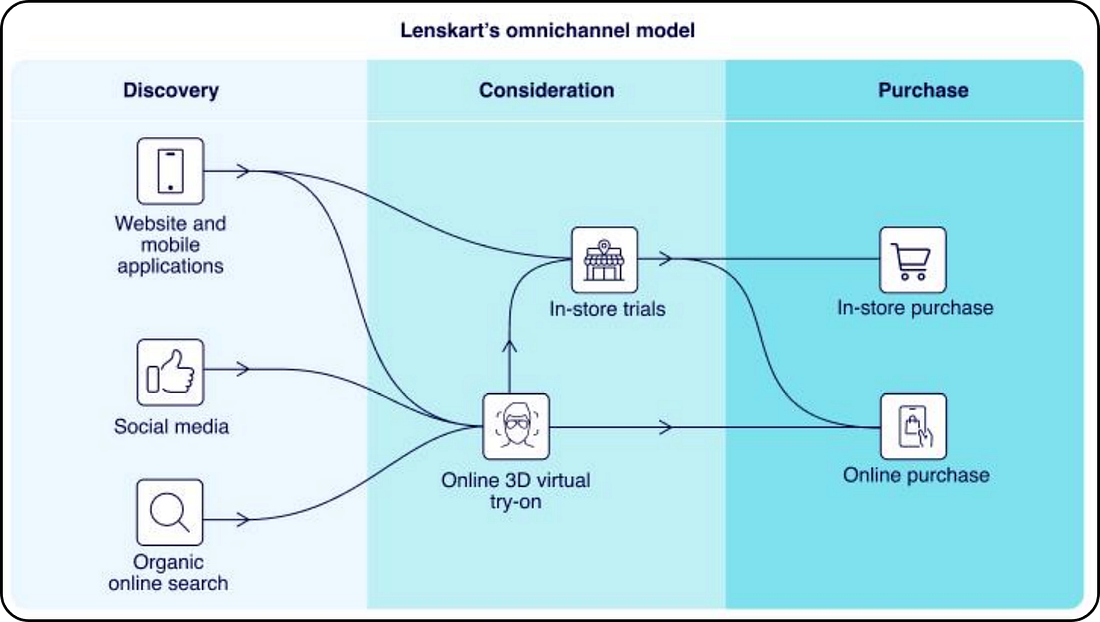
Its operational model is fully vertically integrated: from conceptualising and designing eyewear to manufacturing and direct sales, everything happens in-house. On top of this, Lenskart has adopted an omnichannel approach, blending online reach with offline presence to create a layered customer acquisition strategy.

This combination of control over the value chain and hybrid sales channels gives it a unique edge in an industry where most competitors depend on third-party manufacturing or retail partners.Source: Lenskart Solutions Limited, DRHP

Lenskart’s integration gives it a serious cost edge. No middlemen inflating prices 2.5–4x, and massive scale from selling 27.2 million eyewear units in FY25.

Source: Lenskart Solutions Limited, DRHP

Scaling Smart: How Lenskart Turns Size into Strategy

By operating at a massive scale, Lenskart is able to source frames and lenses at 35–50% lower costs than most competitors. This cost advantage, supported by manufacturing control through facilities in Gurugram, Bhiwadi, and soon Telangana — plus overseas plants in Singapore, the UAE, and a joint venture in China — allows the company to sustain gross margins close to 70%.

But the benefit goes far beyond profitability. Full control over both design and manufacturing gives Lenskart agility — crucial in a category where eyewear doubles as both a medical necessity and a fashion accessory. This integration allows the company to respond quickly to emerging trends, keep products fresh, and strengthen customer stickiness. Evidence? Over 98% of customers make repeat purchases within two years, many also renewing their paid Gold Membership.

The company’s measured approach to international growth further reinforces its base. Instead of rushing into new markets, founder and CEO Peyush Bansal prefers to acquire established players that align with Lenskart’s strengths in India. Today, it operates 656 stores abroad, each chosen with precision, aiming for premium margins in targeted geographies while keeping India as the anchor. This strategy draws parallels to global eyewear leader EssilorLuxottica, which holds about 20% global market share.

A First for Public Investors

With an estimated 25–40% share of India’s organised eyewear market, Lenskart sits well ahead of its nearest competitor. Yet, until now, retail investors had no way to directly invest in a dedicated eyewear business in India. Titan Eye exists, but it’s housed under Titan Company Ltd, where jewellery is the mainstay. Lenskart’s listing changes that — offering a pure-play opportunity in a growing, underpenetrated sector.

The company is financially robust, generating operating cash flow at 1.27 times EBITDA. For investors, this IPO is not just another debut — it represents the market’s first chance to own a focused leader in Indian eyewear.

The Growth Lens

India’s eyewear market is projected to be worth ₹78,800 crore in 2025, expanding at an annual rate of 13.5%. Prescription lenses make up 70% of the market, and demand is set to climb sharply as 62% of the population is expected to suffer from vision issues within five years.

Initially, Lenskart expanded through a franchise-led, asset-light model, which appealed because of quick payback — often just over 10 months, and even shorter in smaller cities. However, strained franchise relationships have prompted a strategic pivot. Now, the company is focusing on expanding company-owned outlets, enhanced with AI-driven tools and remote eye-testing capabilities to boost accessibility.

Final Frame

From a startup to a retail powerhouse with global aspirations, Lenskart has become one of India’s most compelling consumer stories. Whether it evolves into the “EssilorLuxottica of the East” will unfold in time — but for investors, the opportunity to buy into India’s eyewear growth story after 17 years of waiting is finally here.


:


The image added is for representation purposes only
Foreign Investors Pull Back: FPIs Exit Indian Equities for Second Straight Week

Dharani Sugars Q1 FY2026: Challenges Amid Industry Headwinds

Tata Elxsi Q1 FY26 Net Profit Drops 22% Amid Global Headwinds

Tata Elxsi Q1 FY26 Net Profit Drops 22% Amid Global Headwinds

A challenging macroeconomic environment dampened Tata Elxsi’s financial performance in the first quarter of FY26, with notable declines in both profit and revenue.
Tata Elxsi, a leading provider of design and technology services across industries such as automotive, healthcare, and media, reported a steep decline in its earnings for the April–June 2025 quarter. The company’s consolidated profit after tax (PAT) dropped by 22% year-on-year to ₹144 crore from ₹184 crore in the corresponding quarter of the previous fiscal. The fall in earnings reflects the broader slowdown in global demand, particularly in the transportation and media sectors, which form a significant portion of Tata Elxsi’s business portfolio.

Revenue Falls as Client Spending Weakens

Tata Elxsi also saw its operating revenue slip by 3.7% to ₹892 crore compared to ₹926 crore in Q1 FY25. The fall in revenue is attributed to reduced discretionary spending by global clients, especially in the automotive and media & entertainment domains. With inflationary pressures, tight capital allocation, and prolonged decision-making cycles at the client end, new business opportunities have taken longer to convert, thereby slowing the overall topline growth.
Sequentially, however, the company managed to maintain a relatively flat performance, with some recovery seen in its transportation vertical, which registered a 3.7% quarter-on-quarter growth in volume terms.

EBITDA and Margins Under Pressure

Operating performance also took a hit during the quarter. Earnings before interest, taxes, depreciation, and amortization (EBITDA) fell approximately 26% year-on-year to ₹187 crore. EBITDA margins contracted to 20.9% from 27.2% in the year-ago period. The drop in margin was due to higher operational expenses, salary adjustments, and a weaker revenue base.
Profit before tax (PBT) came in at ₹196 crore, marking a 22.2% decline from the ₹252 crore reported in Q1 FY25. The margin pressure suggests that Tata Elxsi is facing difficulty balancing growth with cost optimization in the current environment.

Transportation Segment Shows Resilience

Despite overall weakness, the company’s largest business segment — transportation — displayed signs of recovery. This vertical, which contributes more than 50% of the firm’s revenue, recorded steady growth on a sequential basis. Although it remained flat on a constant currency basis, management expressed optimism that the transportation business would see an uptick in the second half of the year as delayed client projects resume.
On the other hand, segments like media & communications and healthcare remained sluggish due to lower tech investments by clients and ongoing budget constraints. The company continues to diversify its offerings to reduce dependency on any single vertical.

Strategic Deal Wins Highlight Growth Potential

Amid the earnings pressure, Tata Elxsi secured several strategic deals that could boost its performance in the coming quarters. Notably, the company signed a multi-million-dollar agreement with a prominent U.S.-based technology firm to support AI-driven product design and digital engineering. Additionally, it has forged a partnership in the medical devices space focused on cardiovascular testing and regulatory compliance.
These deal wins underline Tata Elxsi’s strength in innovation-led offerings and its ability to adapt to emerging industry needs such as AI, automation, and next-gen product development.

Management’s Outlook: Cautious Optimism

CEO and Managing Director Manoj Raghavan acknowledged the difficult quarter, citing macroeconomic headwinds, delayed client decisions, and weaker R&D spending. However, he emphasized that the company remains committed to long-term growth and is confident about improving performance in the second half of FY26.
He also noted that the current pipeline of opportunities remains strong, with clients increasingly engaging in discussions around digital transformation, autonomous systems, and cloud integration — all of which align with Tata Elxsi’s core strengths.

Stock Market Reaction Reflects Investor Concern

Tata Elxsi’s stock reacted negatively to the Q1 results. The shares dropped nearly 7% intraday following the earnings announcement, reflecting investor concerns about the decline in profit and revenue. The stock touched a low of around ₹5,660 during trading and ended the day among the top losers on the Nifty Midcap index.
Despite short-term volatility, analysts believe that Tata Elxsi remains fundamentally strong but may face continued margin pressure unless macro conditions improve or deal conversions accelerate. Some brokerages have issued a “sell” or “underperform” rating, citing valuation concerns and earnings risks in the near term.

Future Growth Hinges on H2 Recovery

Tata Elxsi’s performance in the first quarter underscores the challenges posed by a volatile global economic climate. However, with new client wins, a growing focus on high-value segments like AI and medical devices, and signs of revival in the transportation domain, the company is laying the groundwork for a rebound.
The second half of FY26 will be crucial in determining whether Tata Elxsi can convert its strong pipeline into tangible revenue growth and margin expansion. If macro conditions stabilize and clients resume their digital investment cycles, the firm may well return to a positive trajectory.


:


The image added is for representation purposes only

IREDA Bonds Gain Tax Benefits to Promote Green Energy

TCS Q1 FY26: Profit Up 4.4%, Declares ₹11 Dividend

TCS Q1 FY26: Profit Up 4.4%, Declares ₹11 Dividend

TCS Q1 FY26: Profit Up 4.4%, Declares ₹11 Dividend

Tata Consultancy Services posts a resilient Q1FY26 with higher profitability, even as revenue dips 1.6% QoQ due to currency fluctuations and macro uncertainties; shareholders rewarded with ₹11 per share interim dividend.

Summary:
Tata Consultancy Services (TCS) reported a 4.4% sequential rise in net profit at ₹12,760 crore for the first quarter of FY26, even as revenue fell 1.6% to ₹63,437 crore. Revenue in dollar terms also slipped marginally to $7.42 billion. Despite macroeconomic headwinds, the IT giant managed to protect margins and declared an interim dividend of ₹11 per share, signaling strong fundamentals and shareholder commitment.

TCS Q1 FY26 Results: Profit Up, Revenue Down — A Mixed Start to the Fiscal Year
India’s largest IT services company, Tata Consultancy Services (TCS), kicked off the new fiscal year with a mixed performance. For the quarter ended June 30, 2025 (Q1FY26), the company reported a net profit of ₹12,760 crore, marking a 4.4% quarter-on-quarter (QoQ) increase from ₹12,434 crore reported in Q4FY25.
However, consolidated revenue from operations fell 1.6% sequentially to ₹63,437 crore, down from ₹64,479 crore in the previous quarter. On a year-on-year (YoY) basis, revenue grew marginally, reflecting the overall resilience of the IT sector amid global macroeconomic turbulence.

Revenue in Dollar Terms Shows Marginal Contraction
TCS reported revenues of $7.421 billion, reflecting a 0.6% decrease quarter-over-quarter from the previous $7.465 billion. This drop was largely attributed to currency headwinds and slower decision-making cycles in key markets like the US and Europe.
TCS CFO Samir Seksaria noted that the revenue decline was partly seasonal, coupled with some softness in discretionary spending across sectors like retail, BFSI (Banking, Financial Services & Insurance), and manufacturing. Despite these challenges, the company managed to maintain its operational efficiency, which contributed to margin stability and profit growth.

Dividend Declaration: ₹11 Interim Dividend for Shareholders
TCS has announced an interim dividend of ₹11 per share, reaffirming its dedication to benefiting shareholders. The record date for the dividend payout is set for July 20, 2025, and the payment will be made on or before August 5, 2025.
This dividend announcement aligns with TCS’s track record of consistent shareholder returns and strong cash generation, further underscoring the financial stability of the company despite revenue headwinds.

Key Financial Metrics – Q1 FY26 vs Q4 FY25
Particulars Q1 FY26 Q4 FY25 Change (QoQ)
Revenue (₹ crore) 63,437 64,479 -1.6%
Net Profit (₹ crore) 12,760 12,434 +4.4%
Revenue ($ million) 7,421 7,465 -0.6%
Operating Margin ~24.2% (Est.) ~23.9% (Est.) +30 bps approx.
Dividend per Share ₹11 ₹28 (Final FY25) –

Operational Performance & Segment Highlights
Despite the revenue contraction, TCS reported strong deal wins across key geographies, particularly in North America and the UK. The total contract value (TCV) for Q1FY26 stood at $10.2 billion, signaling robust client demand for cost-optimization and digital transformation initiatives.
Geographical Insights:
North America: Saw marginal weakness in discretionary spending.
UK & Continental Europe: Demonstrated relatively better demand resilience.
India: Continued momentum in government and public sector projects.
Vertical Performance:
The BFSI sector continues to face challenges due to postponed approvals for IT budgets.
Retail & CPG: Softness due to reduced discretionary tech spending.
Healthcare & Life Sciences: A standout performer with double-digit growth.
Manufacturing: Slight decrease due to temporary softness in demand.

Commentary from Management
K Krithivasan, the Chief Executive Officer and Managing Director of TCS, commented:
“We’ve started FY26 on a solid note with strong profitability and healthy deal wins. While the revenue softness is concerning, especially in BFSI and retail, we remain optimistic about the second half of the fiscal year as client confidence improves.”
He further emphasized the company’s commitment to AI investments, including GenAI labs and partnerships, as critical growth drivers in the upcoming quarters.

Hiring & Attrition Trends
In a positive sign for the IT workforce, TCS reported:
Net headcount addition of 2,200 employees.
LTM (Last Twelve Months) attrition rate declined to 13.4%, down from 14.7% in Q4FY25.
The management stated that fresher onboarding and lateral hiring would continue in a calibrated manner based on project pipelines and client requirements.

Analyst & Market Reaction
Market analysts had a muted to slightly positive outlook on the Q1 results. While the revenue decline was anticipated due to seasonality, the profit beat and margin improvement came as a positive surprise.
Brokerages like Motilal Oswal, ICICI Securities, and Axis Capital maintained a ‘Buy’ to ‘Hold’ rating, with a 12-month target price in the range of ₹4,200–₹4,500, depending on future deal conversion and margin sustainability.

Outlook for FY26
With macro pressures expected to persist in the short term, TCS aims to:
Strengthen its AI and cloud offerings.
Focus on operational efficiencies to protect margins.
Invest in upskilling its workforce and enhancing automation across delivery centers.
The company’s robust order book and expanding GenAI services portfolio could help offset the ongoing demand challenges and currency fluctuations in global markets.

Conclusion
TCS’s Q1FY26 results reflect financial resilience and operational strength, despite headwinds in revenue. By sustaining profit growth and maintaining its dividend policy, the company reinforces its status as a bellwether of India’s IT industry. The next few quarters will be critical as TCS banks on its innovation pipeline and deal momentum to navigate a cautious global environment.


:


The image added is for representation purposes only

Orient Cables Targets ₹700 Crore IPO for Growth

India’s year-end IPO blitz: risks, rewards and what to watchIndia’s year-end IPO blitz: risks, rewards and what to watch

Orient Cables Targets ₹700 Crore IPO for Growth

Orient Cables Targets ₹700 Crore IPO for Growth

The cable and wire manufacturer has submitted draft papers to SEBI for its ₹700 crore initial public offering, comprising a fresh issue and an offer for sale by promoters, aimed at funding expansion and improving financial health.

Summary:
Orient Cables India Limited, a key player in the power and communication cable manufacturing sector, has filed draft papers with the Securities and Exchange Board of India (SEBI) to raise ₹700 crore through an Initial Public Offering (IPO). The IPO includes a mix of fresh equity issues and an offer for sale (OFS) by existing promoters. The proceeds will be used to finance capital expenditure for capacity expansion and reduce outstanding debt, positioning the company for long-term growth in India’s rapidly electrifying infrastructure landscape.

Orient Cables Plans to Raise ₹700 Crore Through IPO, Submits Draft Documents to SEBI
Orient Cables India Limited, a homegrown manufacturer of power cables, control cables, and optical fiber solutions, has taken a significant step toward entering the public markets. The company has submitted its Draft Red Herring Prospectus (DRHP) to the Securities and Exchange Board of India (SEBI) for an initial public offering (IPO) aimed at raising as much as ₹700 crore.
The proposed IPO will comprise two components:
A fresh issue of equity shares, the proceeds of which will be utilized to support capital expenditure plans and debt reduction.
An Offer for Sale (OFS) by existing promoters and shareholders, allowing them to partially divest their holdings and enhance liquidity.
The IPO marks a major milestone in Orient Cables’ journey, as the company seeks to harness public capital to bolster its growth trajectory amid increasing demand for reliable cable infrastructure in India’s expanding energy and digital ecosystem.

Breaking Down the ₹700 Crore IPO Structure
While the exact size of the fresh issue and OFS will be detailed in the final offer document, market insiders suggest that a substantial portion of the IPO—estimated around ₹400–₹450 crore—could go toward the fresh issue. The remaining ₹250–₹300 crore will likely be raised through the OFS route, allowing promoters to offload part of their stakes.
Prominent promoter groups involved in the OFS are expected to include founding family members and strategic investors who backed the company in its early expansion years.

Utilization of Proceeds: Fueling Growth, Reducing Leverage
As per the draft filings, Orient Cables plans to deploy the proceeds from the fresh issue for the following purposes:
Capital Expenditure (Capex):
A significant portion of the funds will go toward expanding manufacturing capacity at its existing plants located in Gujarat and Maharashtra. The company also aims to modernize machinery, add automation systems, and increase its output of high-margin specialized cables such as fire-retardant, low-smoke halogen, and solar cables.
Debt Repayment:
Orient Cables, like many mid-sized manufacturers, has relied on structured debt to fuel its rapid growth. The company plans to utilize part of the IPO proceeds to reduce its debt burden, thereby improving its debt-to-equity ratio and freeing up cash flow for operational and strategic initiatives.
Working Capital & General Corporate Purposes:
A portion of the funds will also support day-to-day working capital needs and other general corporate activities, including branding, research & development, and talent acquisition.

Riding the Wave of India’s Infrastructure Boom
The timing of the IPO fits perfectly with India’s significant focus on infrastructure development. With the government’s focus on electrification, renewable energy, smart cities, and 5G rollouts, the demand for high-quality cables across the power, telecom, and construction sectors is on the rise.
Orient Cables is well-positioned to take advantage of this demand. The company’s product portfolio includes:
Power cables (HT/LT)
Control and instrumentation cables
Communication cables
Fiber optic solutions
Wires for residential and industrial use
With a pan-India distribution network, strong relationships with EPC contractors, and a growing export base, the company is already serving diverse sectors including power transmission, telecom, railways, and real estate.

Financial Snapshot & Market Position
Though the DRHP is yet to publicly disclose the audited financials, industry reports suggest that Orient Cables has recorded:
Revenue CAGR of ~15–18% over the last three years.
Improving EBITDA margins, especially after the commissioning of new production lines.
A steady increase in order book size, with healthy contributions from public sector contracts and private EPCs.
The company is believed to be targeting a valuation of ₹2,000–₹2,400 crore in the IPO, depending on market conditions and investor appetite.

Industry Landscape and Competitive Edge
The Indian cable and wire sector is quite diverse, featuring key companies like Polycab, KEI Industries, Finolex, and Havells at the forefront of the market. However, rising infrastructure investment and customer demand for quality, safety, and compliance are creating room for mid-tier manufacturers like Orient Cables to scale rapidly.
Orient Cables’ competitive advantages include:
ISO-certified plants with in-house R&D capabilities
Cost efficiency through backward integration
Strong after-sales support and turnkey project capabilities
Expansion into solar and green energy cables, which are gaining traction amid ESG goals

IPO Outlook and Market Sentiment
The IPO market in India has been witnessing robust activity in 2025, with several industrial, fintech, and EV companies tapping the primary markets. Analysts believe that Orient Cables’ strong fundamentals, coupled with its relevance in infrastructure growth, could make the offering attractive to institutional and retail investors alike.
With the draft prospectus now under SEBI review, the IPO is expected to launch in the next 3–4 months, subject to regulatory approvals and favorable market conditions.

Conclusion
Orient Cables’ planned ₹700 crore IPO is not just a fundraising event—it signals a broader ambition to become a significant player in India’s infrastructure value chain. By investing in capacity, technology, and debt reduction, the company is laying the groundwork for sustainable, long-term growth. If successful, this IPO could mark the start of a new chapter for Orient Cables and further energize India’s already vibrant public markets.


:


The image added is for representation purposes only

Clean Fanatics Raises $2M to Transform Home Services

Bhatia Communications Declares Final Dividend, Sets Record Date for FY25

Bhatia Communications Declares Final Dividend, Sets Record Date for FY25

Bhatia Communications Declares Final Dividend, Sets Record Date for FY25

Despite recent price pressure, Bhatia Communications announces record date for FY25 final dividend as profit rises 20% and revenue hits ₹444.67 crore.

Bhatia Communications Announces FY25 Final Dividend Record Date

Bhatia Communications & Retail (India) Ltd., a niche player in the electronics and consumer durables segment, has confirmed July 23, 2025, as the cut-off date to determine shareholder eligibility for its proposed final dividend for the fiscal year 2024–25. The announcement follows a recommendation made by the board on May 26, 2025, to issue a 1% dividend—translating to ₹0.01 per equity share with a face value of ₹1—subject to shareholder approval.

The proposed dividend will be tabled for final approval during the company’s 17th Annual General Meeting (AGM) scheduled for July 30, 2025.

Dividend Eligibility Details

As per the company’s latest exchange filing dated July 4, shareholders listed as beneficial owners on Wednesday, July 23, 2025, will be entitled to receive the final dividend, provided the proposal is passed during the AGM. The shareholder data will be verified through records from both the National Securities Depository Limited (NSDL) and Central Depository Services (India) Limited (CDSL).

This dividend payout reflects the company’s intent to return value to its investors while continuing to build momentum from its recent earnings performance.

Financial Performance in FY25: Strong Profit and Margin Growth

Bhatia Communications posted impressive growth in its bottom line for FY25, registering a 20% year-on-year (YoY) increase in net profit, reaching ₹13.82 crore compared to ₹11.52 crore in FY24. The company also reported notable improvement in its profit margin, which rose to 3.1% from 2.8% the previous year.

On the revenue front, Bhatia Communications generated ₹444.67 crore in FY25, marking a 7% YoY increase over the ₹415.40 crore it reported in FY24.

EBITDA Performance

The company’s Earnings Before Interest, Taxes, Depreciation, and Amortization (EBITDA) saw a strong uptick of 18% YoY, rising from ₹18.45 crore in FY24 to ₹21.85 crore in FY25. Additionally, the EBITDA margin improved to 4.91% from 4.44%, indicating improved operational efficiency and cost management despite macroeconomic pressures.

Stock Performance: A Multibagger With Recent Volatility

Bhatia Communications has made a name for itself in the small-cap segment by delivering multibagger returns over the past half-decade. The stock has appreciated by an impressive 245% over five years, reflecting robust investor confidence and consistent business growth.

However, recent trends suggest a period of correction. On a year-to-date (YTD) basis, the stock has declined by 19%, facing selling pressure despite its long-term performance.
52-Week High and Low

• 52-week high: ₹36 (achieved on September 23)
• 52-week low: ₹19.60 (recorded on July 10 of the previous year)

This wide range reflects both the stock’s potential and the volatility it has faced in the short term.

Company Overview: Bhatia Communications at a Glance

Operating in the retail segment for consumer electronics and electrical appliances, Bhatia Communications & Retail serves a diverse customer base through multi-brand outlets. The company specializes in offering smartphones, electronic gadgets, and appliances, targeting tier-II and tier-III cities with growing digital adoption.

As a specialty retailer, the company has built a strong reputation for quality, affordability, and customer service. It continues to focus on expanding its retail footprint and strengthening margins by optimizing its product mix and supply chain.

Final Thoughts

Bhatia Communications & Retail’s announcement of a final dividend for FY25 highlights the company’s consistent financial performance and shareholder-centric approach. With a record date set for July 23, investors now have a clear timeline for dividend eligibility, pending AGM approval.

While recent market conditions have led to short-term share price declines, the company’s five-year stock rally of 245%, coupled with rising profits and improving margins, paints a strong picture of long-term resilience and operational growth. As the consumer electronics retail sector in India continues to evolve, Bhatia Communications appears well-positioned to navigate challenges and seize future opportunities.


:


The image added is for representation purposes only

Nvidia Surpasses Apple, Becomes Most Valuable Ever!

BEML Surges by 7.86% on Likely Upgrade to Navratna Status

IdeaForge Shares Surge 10% After Securing Major Defence Order from MoD

IdeaForge Shares Surge 10% After Securing Major Defence Order from MoD

IdeaForge Technology Ltd., one of India’s leading drone manufacturers, witnessed a sharp rally in its stock price on June 24, 2025, after securing a significant order from the Ministry of Defence (MoD). The company’s shares locked in a 10% upper circuit following the announcement of a new supply contract for mini Unmanned Aerial Vehicles (UAVs) valued at ₹137 crore.

Strong Stock Market Response

Following the defence order news, IdeaForge’s stock price surged, touching the upper circuit limit of 10% on the Bombay Stock Exchange (BSE). The company’s shares jumped from ₹574 to ₹631.65 during intraday trading and attracted significant investor interest, with many buyers entering the stock and no sellers visible at closing. The rally pushed IdeaForge’s stock above key moving averages, signaling renewed positive momentum among traders.

The company’s stock also crossed critical resistance levels, including the 5-day, 20-day, 50-day, and 200-day simple moving averages, which further confirmed bullish sentiment in the market. Technical signals like the Relative Strength Index (RSI) indicated rising investor interest, as the RSI approached levels typically associated with an overbought condition.

Details of the Defence Contract

In an official exchange filing, IdeaForge confirmed that the Ministry of Defence had placed a repeat order worth ₹137 crore for the supply of mini UAVs and related accessories. The company is expected to complete the delivery within the next 12 months. This repeat order demonstrates the MoD’s continued confidence in IdeaForge’s manufacturing and operational capabilities.

IdeaForge specializes in the design and development of unmanned aerial systems, with products used for border surveillance, mapping, and defense applications. The latest contract strengthens the company’s position as a trusted supplier for India’s defense sector, especially as the country focuses on building indigenous capabilities under the ‘Atmanirbhar Bharat’ initiative.

Financial Performance: Current Challenges

Despite the positive development, IdeaForge has faced financial headwinds in recent quarters. For the fourth quarter of FY25, the company reported a substantial decline in revenue, which fell by nearly 80% year-on-year to ₹20 crore. In addition, the company posted a net loss of ₹26 crore for the quarter, marking a significant reversal from the ₹10 crore net profit reported in the same quarter of the previous year.

The company’s order book also contracted, dropping from ₹54 crore last year to ₹13.6 crore by March 2025. These financial challenges had raised concerns among investors regarding the company’s growth outlook and order consistency. However, the new MoD contract is expected to help IdeaForge revive its order flow and stabilize its financial performance in the coming quarters.

Strengthening India’s Defence Manufacturing Push

The Ministry of Defence’s decision to award the contract to IdeaForge aligns with India’s broader goal of promoting domestic defense manufacturing and reducing reliance on foreign suppliers. As India seeks to enhance its surveillance capabilities and strengthen national security, UAV technology has become an essential focus area.

IdeaForge’s mini UAVs are expected to play a critical role in field surveillance, reconnaissance, and intelligence-gathering operations for the Indian armed forces. With geopolitical tensions in the region and India’s increasing focus on defense modernization, such contracts are becoming more frequent and essential.

Long-Term Prospects for the UAV Sector

The Indian drone industry is poised for rapid expansion, with defense, agriculture, logistics, and infrastructure sectors increasingly adopting UAV technology. With strong in-house research and development expertise, IdeaForge is strategically placed to tap into this expanding market.

The recent MoD order is likely to boost the company’s revenue pipeline and improve its chances of winning additional contracts from both defense and commercial sectors. However, successful and timely execution of the current order will be crucial in securing future deals and strengthening its market position.

Stock Performance and Market Outlook

IdeaForge’s stock has delivered a solid performance year-to-date, gaining approximately 64%. Despite the recent rally, the stock remains around 18% below its 52-week high of ₹864. Market analysts have mixed views on the stock’s valuation, with some cautioning about the rapid price surge and the possibility of profit booking, while others remain optimistic about the company’s long-term growth in the UAV space.

The company’s ability to maintain financial stability, deliver on its defense commitments, and expand its client base will be key factors that determine its future stock performance.

Conclusion

The ₹137 crore defense order from the Ministry of Defence marks an important milestone for IdeaForge and reinforces the company’s leadership in India’s growing UAV sector. The significant surge in the stock price signals revived investor trust and positive expectations regarding the company’s future growth path. With India’s increasing push for self-reliance in defense manufacturing and rising demand for unmanned aerial solutions, IdeaForge is well-placed to play a pivotal role in the country’s defense and security landscape.


:


The image added is for representation purposes only

Adani Deploys India’s First Standalone 5 MW Green Hydrogen Plant in Gujarat

Aditya Birla Lifestyle Sets Ambitious Goal to Double Revenues by FY30

Aditya Birla Lifestyle Sets Ambitious Goal to Double Revenues by FY30

Aditya Birla Lifestyle Sets Ambitious Goal to Double Revenues by FY30

With ₹300 crore annual investments, the newly-listed brand portfolio eyes billion-dollar status, focusing on retail expansion and profitability growth.

Strong Growth Roadmap for Aditya Birla Lifestyle

Aditya Birla Lifestyle Brands Ltd (ABLBL), freshly carved out from Aditya Birla Fashion and Retail, has laid out an aggressive growth strategy aimed at doubling its revenue over the next five years. To achieve this, the company plans to invest ₹300 crore annually, primarily to strengthen its retail network and internal capabilities.

The move comes as the group positions itself to leverage India’s rising consumption trends, which are expected to drive substantial growth across various sectors, especially fashion and lifestyle.

Aspiring to Build Billion-Dollar Brands

ABLBL envisions establishing India’s pioneering lineup of fashion brands, each poised to achieve billion-dollar valuation milestones in the coming years. The company currently oversees a renowned collection of labels, featuring well-known names such as Peter England, Allen Solly, Van Heusen, and Louis Philippe.

According to the leadership team, two of these brands already generate annual revenues exceeding ₹2,000 crore each, while two others surpass ₹1,000 crore in annual sales. Building on this momentum, the company’s strategic focus over the next five years is to more than double its revenues and achieve a three-fold increase in cash profits.

Focused Investments to Drive Expansion

The company has earmarked ₹300 crore annually as capital expenditure to fuel its next phase of growth. A large portion of this investment will go toward expanding its brick-and-mortar presence across India, while a smaller share will be dedicated to technological advancements and strengthening operational capacities.

Despite the ambitious goals, the management emphasized that growth efforts will remain structured, disciplined, and supported by robust internal cash flows.

Profitability and Future Plans

Showcasing its financial achievements for FY25, Aditya Birla Lifestyle posted ₹7,830 crore in total revenue, securing a 15% operating margin and ₹60 crore in net earnings. Over the next three to five years, the company is projecting a threefold increase in profitability.

Currently, the company is not actively exploring acquisitions, though brands like Reebok and Van Heusen’s innerwear segment are being considered as potential future growth drivers.

Listing Debut and Market Performance

Aditya Birla Lifestyle Brands entered the stock market post-demerger, commencing trading with an opening price of ₹167.75 per share. The stock saw a brief upward movement during intraday trading, reaching ₹176.10 on the BSE, before settling at ₹159.40 by the end of the session. The company’s market capitalization stood at ₹19,451.50 crore post-listing.

The demerger and listing mark a pivotal shift in the company’s growth story, as it now operates independently with a sharper focus on scaling its brand presence and profitability.

Final Thoughts

Aditya Birla Lifestyle’s growth roadmap showcases its commitment to leveraging India’s changing consumption patterns and the growing appetite for premium fashion brands. By committing ₹300 crore annually toward expansion and innovation, and by focusing on its well-established portfolio of popular fashion brands, ABLBL is poised to create India’s first billion-dollar fashion brand collective. With disciplined growth plans, robust profitability targets, and promising market prospects, the company has set an ambitious path forward in the fashion and lifestyle sector.


:


The image added is for representation purposes only

PFC Ltd Share Price Forecast from 2025 to 2030: Long-Term Investment Insights

BluPine Energy Secures ₹2,416 Cr to Build Hybrid Clean Power Project in Karnataka

India’s year-end IPO blitz: risks, rewards and what to watchIndia’s year-end IPO blitz: risks, rewards and what to watch

Icon Facilitators IPO Launches June 24 with Price Band of ₹85–91

Icon Facilitators IPO Launches June 24 with Price Band of ₹85–91

Through its SME public offering, Icon Facilitators seeks to secure ₹19.11 crore in capital, with a primary focus on strengthening its working capital base and advancing long-term business growth plans.

Icon Facilitators IPO Set to Open on June 24

Icon Facilitators Ltd., a leading name in technical facilities management, is preparing to make its debut on the capital markets with an upcoming SME initial public offering (IPO). The company has officially announced a price range of ₹85 to ₹91 per equity share for the IPO, which is slated to open for public subscription on June 24, 2025. The offering will close just two days later on June 26, 2025, offering investors a brief but critical window to participate.

The IPO will be listed on the BSE SME platform, marking Icon Facilitators’ entry into the public domain and aiming to bolster its operational and financial capabilities through the funds raised.

Key Details of the IPO

As part of its forthcoming IPO, Icon Facilitators intends to generate ₹19.11 crore by issuing 21 lakh fresh equity shares to the public. The IPO opens for anchor investor bidding a day earlier, on June 23, 2025, reflecting growing interest from institutional players in small and mid-sized enterprises.

According to the company’s red herring prospectus (RHP), the bulk of the proceeds—approximately ₹16 crore—will be channeled towards working capital requirements, a move intended to support day-to-day operational liquidity. The remainder will be earmarked for general corporate purposes, such as business expansion, technology upgrades, and administrative needs.

Business Overview: Technical Facilities Expertise

Icon Facilitators is a specialized service provider in the domain of technical facilities management, delivering a comprehensive suite of services across various verticals. Its core competencies include:

• Electrical infrastructure solutions
• Captive power system management
• Water treatment services
• Building automation and management
• Fire and safety system maintenance
• Supervision and servicing of elevator and moving staircase infrastructure

This wide-ranging portfolio enables the company to cater to both industrial and commercial clients seeking turnkey solutions for complex infrastructure and utilities management.

Human Capital and Technical Strength

As of March 31, 2025, Icon Facilitators employed a workforce of over 2,000 individuals, many of whom possess specialized technical knowledge and hands-on experience in diverse areas of the facilities management sector. The company places significant emphasis on domain expertise, which has contributed to its ability to deliver high-quality, reliable, and efficient services across its client base.

Financial Performance Snapshot

Icon Facilitators has demonstrated robust financial growth in recent years, reflecting operational strength and increasing market demand. In FY25, the company posted a revenue from operations of ₹58.06 crore, a healthy increase from ₹49.84 crore in FY24. Profit after tax (PAT) saw a notable jump as well, rising from ₹1.76 crore in FY24 to ₹4.47 crore in FY25—a clear indicator of improved efficiency and profitability.

The financial momentum places the company on strong footing as it steps into the public market, with investors likely to take note of the upward earnings trajectory.

Management of the Issue

While no specific analysts or financial firms are highlighted, the IPO process is being professionally managed. A dedicated book-running lead manager is overseeing the issue’s execution, ensuring regulatory compliance and a smooth subscription process. The appointed registrar is handling investor applications, allotments, and post-issue formalities on behalf of the company.

Strategic Objectives Behind the IPO

The upcoming IPO is a strategic move by Icon Facilitators to secure long-term growth capital. By directing a major portion of the funds towards working capital, the company aims to streamline operations, enhance service delivery, and expand its client base. The remainder of the proceeds will empower the firm to maintain financial agility and invest in future growth areas as market conditions evolve.

This step also reflects the company’s commitment to greater transparency, governance, and value creation as it transitions into a listed entity.

Final Thoughts

Icon Facilitators Ltd. is entering a new growth phase with its IPO opening on June 24, offering shares in the ₹85–91 price band. With a focus on raising over ₹19 crore, the company aims to reinforce its working capital base while laying the groundwork for future expansion.

Its strong financial performance, diversified service offerings, and technically skilled workforce create a solid foundation for investor confidence. For market participants seeking exposure to the facilities management sector within the SME space, this IPO could represent a promising opportunity.


:


The image added is for representation purposes only

Natco Pharma Shares Tumble After USFDA Concerns