Menu

ElectricityDemand

Adani Power Q2 FY26: Revenue Edges Up, EBITDA Steady and Profit Down ~11% on Higher Costs & Taxes

Adani Power Q2 FY26: Revenue Edges Up, EBITDA Steady and Profit Down ~11% on Higher Costs & Taxes

Adani Power Q2 FY26: Revenue Edges Up, EBITDA Steady and Profit Down ~11% on Higher Costs & Taxes

Adani Power delivered a modestly better quarter in terms of topline and stable operations, but bottom-line profit declined owing to higher expenses and tax burden. Electric-power sales volume increased, revenue rose slightly, and EBITDA remained steady, showing core business resilience. However, net profit at ₹ 2,906-2,953 crore declined by about 11% YoY, underlining pressure from cost inflation and depreciation on recent capacity additions.

*Key Highlights*
* Total Revenue: ₹ 14,308 crore in Q2 FY26, up +1.7% YoY (vs ₹ 14,063 crore in Q2 FY25)
* Electric-power sales volume (consumption by customers): 23.7 BU (billion units), up +7.4% YoY (vs 22 BU in Q2 FY25)
* EBITDA: ₹ 6,001 crore in Q2 FY26 (vs ₹ 6,000 crore in Q2 FY25)
* Net Profit (PAT): ₹ 2,906 – 2,953 crore for Q2 FY26, down ~11% YoY (from ~₹ 3,332–3,331.8 crore in Q2 FY25)
* Earnings Per Share (EPS): ₹ 1.53 in Q2 FY26 (from ₹ 1.66 in Q2 FY25)
* New Power Purchase Agreements (PPA) added: 4.5 GW of long-term PPAs under SHAKTI scheme (2,400 MW, Bihar; 1,600 MW, Madhya Pradesh; 570 MW, Karnataka) by Oct 2025
* Total capacity (post-acquisition of Vidarbha Industries Power Ltd under Corporate Insolvency Resolution): 18,150 MW as on Q2 FY26

*Revenue & Profit Analysis*
Revenue grew only marginally (+1.7% YoY), reflecting slightly improved power sales volume. The increase in volume (electricity sold) helped counter the impact of softened merchant tariffs and softer demand under seasonal and weather pressures. EBITDA remained stable at ~₹ 6,001 crore, indicating that operational costs and efficiencies held up despite volatility in fuel and input costs.
However, the bottom line took a hit: net profit fell by ~11%, primarily because of higher depreciation (on new plants and capacity additions) and increased tax expense. This suggests that while operations are stable, the returns on newer capacity are yet to fully overcome cost and depreciation drag.

*Business & Operational Performance*
* Power Sales & Volume: The company reported 23.7 BU of power sales in Q2, a healthy +7.4% YoY growth despite monsoon-related demand softness and a high base quarter. This underscores steady demand from DISCOMs and industrial customers under long-term PPAs.
* PPA Book & Capacity Expansion: Securing 4.5 GW of fresh long-term PPAs under the SHAKTI scheme is a key positive. It improves visibility on future demand and revenue flows. Post the resolution-process acquisition, total generation capacity stands at ~18,150 MW, giving Adani Power a sizeable base for long-term generation and supply.
* Cost & Tariff Environment: Despite lower merchant-tariff realisation and import-coal cost volatility, the company maintained stable EBITDA, implying moderate fuel and input cost control.
* Balance-sheet moves & Consolidation: The quarter saw consolidation: several wholly-owned subsidiaries (e.g. power generation/ fuel management entities) were merged under Adani Power (appointed date April 1, 2025), which may improve administrative efficiency and reduce inter-company overhead.

*Risk Factors to Monitor*
* Tariff and Demand Volatility: Merchant-tariff volatility and demand fluctuations (especially due to monsoon, fuel cost or DISCOM payment delays) can affect realisation.
* High Depreciation & Interest Costs: Recent capacity additions increase depreciation and interest burden, so sustained utilisation and long-term PPAs are key for return on capital.
* Fuel & Coal Price Risk: As a thermal-power generator dependent on coal/imported fuel, global coal price swings or supply disruptions could impact margins.
* Capex & Debt Risk: Further expansions to reach 42 GW target by 2031–32 means more capex and possible debt.

*Management Commentary & Strategic Outlook*
According to the company, the quarter demonstrates Adani Power’s “robust and stable performance” even amid weather-driven demand fluctuations and lower merchant tariffs. The management highlights the securing of fresh long-term PPAs (4.5 GW) under the SHAKTI scheme as a strong signal of future demand stability.
The company is also working on its long-term growth goal: expanding capacity toward ~42 GW by FY 2031–32, backed by acquisition of stressed assets and future project pipelines. The consolidation of subsidiaries under the parent company is meant to simplify operations and reduce overhead.

*Conclusion*
Adani Power’s Q2 FY26 is a steady yet muted quarter. On one hand, power sales volume increased, revenue rose modestly and core operations held up, reflecting resilience in demand and execution. On the other hand, profitability dipped by ~11% because of higher depreciation, taxes and cost pressures, highlighting that scaling up capacity brings fixed-cost burden. In short, Adani Power remains a high-potential but cyclical power play, suitable if you’re comfortable with sectoral & commodity fluctuations, but needs careful monitoring of demand, costs and regulatory/ fuel risks.


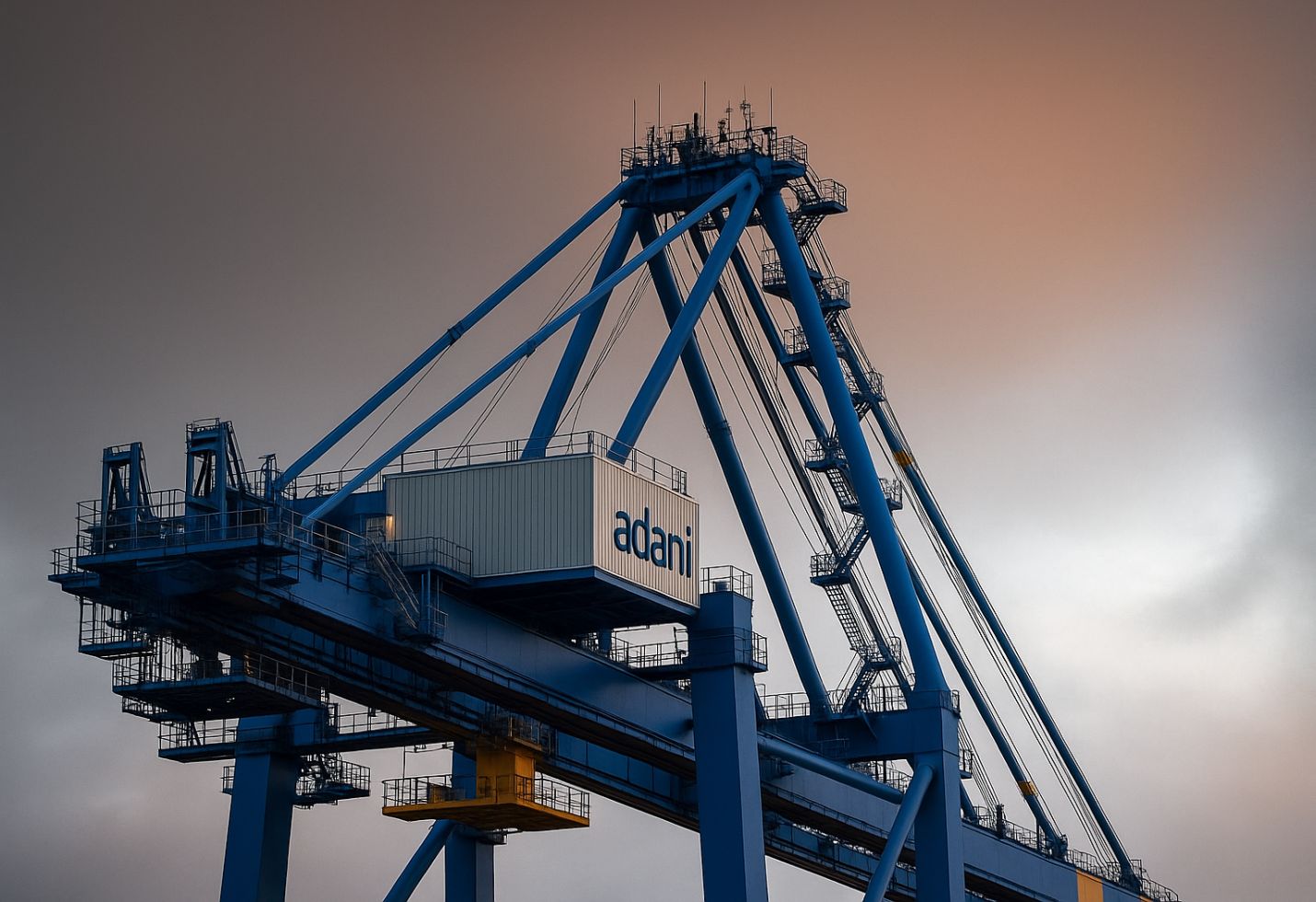
The image added is for representation purposes only

Fortis Healthcare Q2 FY26: Strong Hospital & Diagnostics Growth Push Revenue and Profit Up Sharply

Adani Group Emerges as Leading Contender for Jaiprakash Associates: A Game-Changing Bid in India’s Infrastructure Sector

Adani Power Eyes Butibori Thermal Plant in Rs 3,000 Crore Acquisition Deal

Adani Power Eyes Butibori Thermal Plant in Rs 3,000 Crore Acquisition Deal

Adani Power accelerates growth plans by acquiring Reliance Power’s Butibori plant, aiming to capitalize on India’s rising electricity consumption.

Acquisition talks intensify as Adani Power eyes takeover of Butibori plant

Adani Power, India’s largest private sector thermal power producer, has entered advanced negotiations to acquire the 600 MW Butibori thermal power project, once operated by Reliance Power. The transaction’s valuation is projected between ₹2,400 crore and ₹3,000 crore, translating to roughly ₹4–₹5 crore for each megawatt of capacity. This strategic acquisition reflects Adani’s intent to tap into the rising demand for dependable electricity across India.

Reliance Power’s Insolvent Asset Up for Sale

Butibori Thermal Power Plant, based in Nagpur, is currently controlled by Vidarbha Industries Power Limited, a Reliance Power subsidiary. Financial distress forced the plant into non-operational status, making it a candidate for acquisition. CFM Asset Reconstruction Company (CFM ARC) is presently the sole creditor of the project, having purchased outstanding loans worth ₹1,265 crore. Adani Group plans to fully finance the acquisition using its own generated funds, reflecting the conglomerate’s robust financial position.

Originally, the Butibori facility, with two operational units, carried an estimated valuation of ₹6,000 crore. However, production has been halted due to operational and financial hurdles, reducing its current valuation substantially. For Adani Power, this offers a strategic bargain, aligning perfectly with its broader vision of strengthening its thermal power portfolio.

Previous Suitors and Changing Dynamics

Interestingly, JSW Energy had earlier expressed interest in acquiring the Butibori facility but eventually backed out, citing valuation and operational complexities. Reliance Power had previously utilized Butibori’s generation capacity for power distribution in Mumbai before that business was taken over by Adani Electricity Mumbai Ltd. The lapse of the power purchase agreement between Vidarbha and Adani in December 2019 plunged the facility deeper into financial troubles, leading to insolvency proceedings.

Why the Acquisition Makes Strategic Sense

This acquisition attempt comes at a time when India is witnessing a surge in peak power consumption. In recent presentations, the Adani Group emphasized that an increase in thermal power capacity is necessary to meet this burgeoning demand.

The strategic advantage for Adani Power lies in its proximity. Adani’s 3.3 GW supercritical coal-fired facility at Tiroda sits approximately 125 kilometers away from Nagpur. By integrating Butibori with its Tiroda facility, Adani could significantly enhance operational efficiencies and reduce logistics costs. The proximity allows potential synergy between the plants, streamlining coal supplies and grid connectivity.

Moreover, with Maharashtra holding a long-term Power Purchase Agreement (PPA) for 3,085 MW, this acquisition positions Adani to potentially capitalize on untapped capacity and future expansions.

Sector-Wide Implications of the Deal

Adani’s interest in acquiring the Butibori project marks a significant step toward consolidating its position in India’s thermal power sector. While much of the industry is currently pivoting towards renewable energy, thermal power remains indispensable for stabilizing base load requirements. Given recurring coal shortages in India and seasonal fluctuations in renewable generation, this acquisition could provide a critical advantage.

The Butibori project’s revival would not only improve Adani’s generation capacity but also enhance its bargaining position in Maharashtra’s competitive electricity market. This might create ripple effects for competing players like Tata Power and the Maharashtra State Electricity Distribution Company (MSEDCL).

Financing the Acquisition

Adani Group plans to finance the Butibori acquisition solely through its internal reserves, highlighting both its financial resilience and strategic focus on energy expansion.

Additionally, securing this asset at a relatively discounted price — due to halted production and bankruptcy distress — fits well into Adani’s larger strategy of acquiring stressed assets and turning them around profitably.

Final Thoughts

Adani Power’s ongoing negotiations for the Butibori thermal plant acquisition reflect a calculated expansion plan designed to capitalize on India’s escalating electricity demand. By potentially acquiring this distressed but strategically located facility, Adani not only boosts its overall generation capacity but also prepares for long-term competitive advantage in Maharashtra’s power sector.

While regulatory clearances and final shareholder approvals will shape the pace of execution, this move signifies Adani’s intent to dominate both regional and national power markets. If successful, the integration of Butibori with Adani’s existing infrastructure could turn a distressed asset into a revenue-generating powerhouse in the coming years.


:


The image added is for representation purposes only

Amazon Commits ₹2,000 Crore to Upgrade Delivery Network and Tech Systems in India