Menu

BoschIndia

Bosch Ltd Q2 FY26: Auto Demand Boosts Sales, Profit Inches Up Despite Higher Costs

Bosch Ltd Q2 FY26: Auto Demand Boosts Sales, Profit Inches Up Despite Higher Costs

Bosch Ltd Q2 FY26: Auto Demand Boosts Sales, Profit Inches Up Despite Higher Costs

Bosch posted a steady quarter: sales rose on the back of good demand in auto-parts and two-wheeler segments, helping overall revenue grow ~9% YoY. Profit after tax grew modestly as well, despite a rise in raw material and other costs. The performance reflects resilience in core demand, though cost inflation and material-price pressure remain visible.

*Key Highlights*
* Revenue from operations: ₹4,795 crore in Q2 FY26, up +9.1% YoY (vs ₹4,394 crore in Q2 FY25)
* Net Profit (PAT): ₹554 crore, up +3.4% YoY (vs ₹536 crore in same quarter last year)
* Total expenses: ₹4,274 crore, up +8.9% YoY — cost of materials consumed rose by ~10.6%
* Automotive segments (passenger car, off-highway, two-wheelers) saw healthy demand, power-solutions and other product categories also contributed.

*Revenue & Profit Analysis*
Bosch’s 9% jump in revenue shows demand held up well, especially in its auto-components business. Despite input-cost headwinds (material costs rising ~10.6%), the company managed to stay profitable. The modest +3.4% increase in net profit suggests margins have been squeezed, but Bosch appears to have absorbed the cost impact reasonably, helped by volume growth and perhaps a favourable product mix. Overall, the quarter reflects operational resilience rather than windfall gains.

*Business Segments & Demand Trends*
* Automotive & Mobility Parts: This continues to be Bosch’s bread-and-butter. Demand picked up in passenger cars, off-highway vehicles and two-wheelers, providing a stable base for revenue.
* Power-Solutions/ Consumer-Electronics & Other Businesses: These verticals also contributed, supporting the overall diversified structure of the company. Bosch’s wide product range beyond just auto parts helps cushion volatility in any single business.
Given its diversified business lines (auto parts, industrial products, consumer goods), Bosch is better placed than many peers to ride through short-term cycles.

*Costs & Challenges*
Cost of materials consumed rose notably (+10.6% YoY), contributing to the rise in total expenses. That squeezed margins a bit, explaining why profit growth (+3.4%) lagged behind revenue growth (+9.1%). As input costs remain volatile globally and domestically (for metals, plastics, etc.), Bosch, like many in auto-components space, will need to manage supply chains and cost efficiency tightly to keep profitability stable.

*Implications for Investors*
1. Positives to note:
* Demand for automobiles and two-wheelers seems stable, which supports Bosch’s core business.
* Diversified product mix (automotive and non-automotive) provides a cushion during downturns.
* A steady though modest profit growth indicates the company is navigating material-cost pressures reasonably well.
2. Risks to monitor:
* Input cost inflation (raw materials, components) remains a headwind, could squeeze margins if demand weakens.
* Auto-industry cycles: slowdowns in vehicle production or consumer demand may hit order books and sales.
* Need to keep a close eye on order backlog to assess sustainability.

*Conclusion*
Bosch’s Q2 FY26 results offer a picture of steady stability rather than dramatic growth. The company managed to grow sales and maintain profits despite cost headwinds, showing decent operational resilience. For long-term exposure in auto-components and diversified industrial businesses, Bosch appears to remain a solid bet, provided raw-material inflation and auto-sector cycles are handled carefully.


The image added is for representation purposes only
Alkem Labs Q2 FY26: Strong 17% Revenue Growth and Healthy Profit Gains Across India & Global Markets

In India, Bosch Launches a Smart Supply Chain Platform

In India, Bosch Launches a Smart Supply Chain Platform

In India, Bosch Launches a Smart Supply Chain Platform


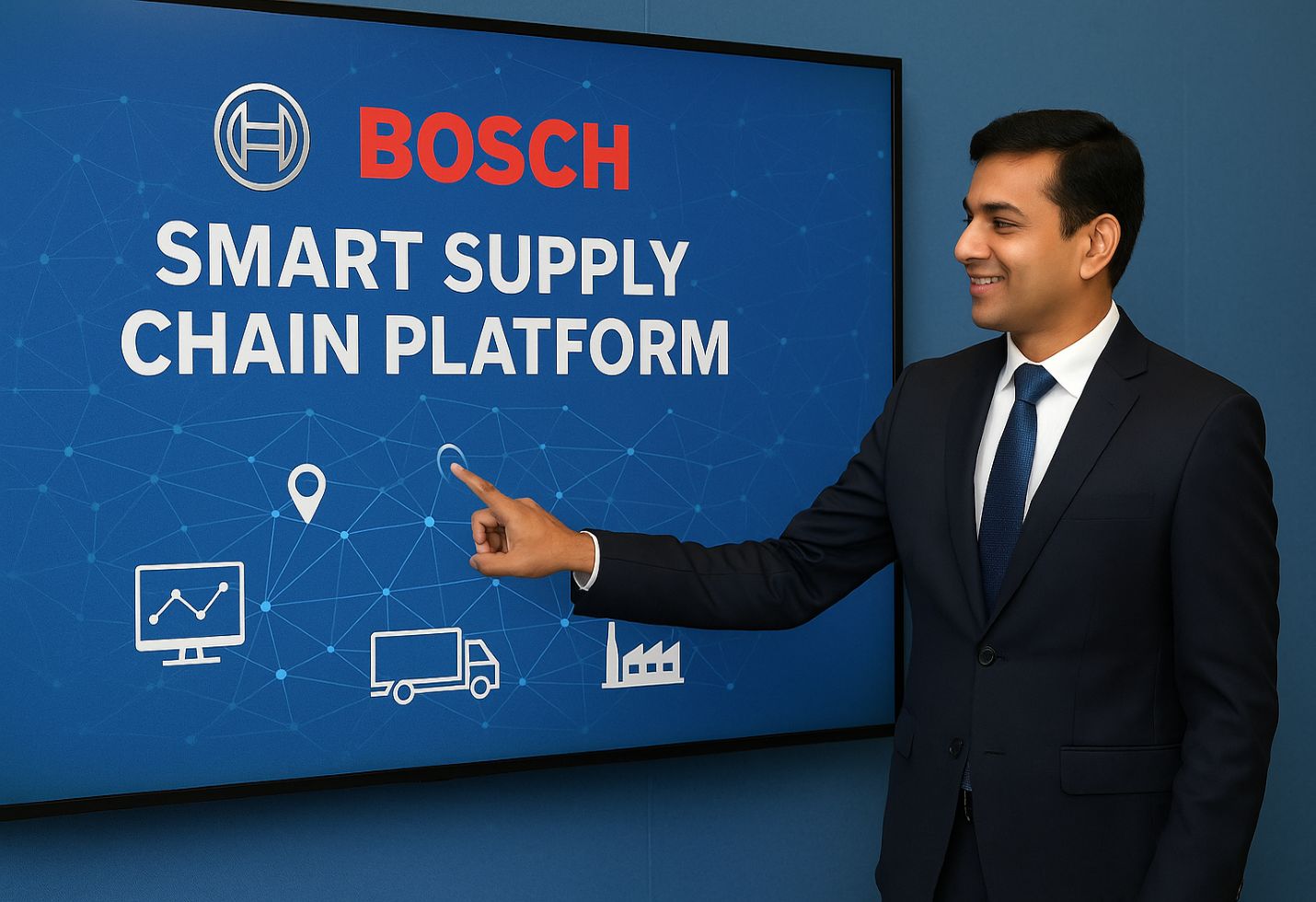
The Digital Supply Chain Management (DSCM) platform from Bosch, a world leader in engineering and technology solutions, has launched in India. In line with India’s drive for smarter and more connected industrial systems under the “Digital India” and “Make in India” agendas, the move represents a significant step towards modernizing supply chain operations in one of the fastest-growing economies in the world.
By combining cutting-edge technology like artificial intelligence (AI), cloud computing, the Internet of Things (IoT), and predictive analytics, the recently launched platform seeks to completely transform how companies in India manage, track, and improve their supply chains. It aims to provide seamless collaboration, automated procedures, and real-time supply chain insight.

Overcoming Supply Chain Difficulties

Despite its size and diversity, India’s supply chain ecosystem nevertheless faces a number of operational challenges. These include disjointed logistical networks, a lack of transparency, a failure to integrate data across stakeholders, and uncertain delivery schedules—problems that were made worse by the COVID-19 epidemic and the ensuing world upheavals.
By providing companies with a powerful digital tool to precisely estimate demand, manage inventories in real time, trace shipments, and save operating costs through automation and data-driven insights, Bosch hopes to address these inefficiencies with its Digital Supply Chain Management platform.
“Our goal is to empower Indian enterprises—whether in manufacturing, logistics, or retail—with a scalable, secure, and smart supply chain solution,” said Soumitra Bhattacharya, Managing Director of Bosch Limited India, in response to the launch. Through the utilization of Bosch’s worldwide experience and profound comprehension of Indian market conditions, we are offering a platform that not only streamlines operations but also equips companies for the future.

The Digital Supply Chain Management Platform’s attributes

Bosch’s DSCM platform has a number of features designed specifically for Indian companies in several industries:
• End-to-End Visibility: Using GPS tracking and IoT-enabled devices, real-time tracking of items from suppliers to final consumers.
• Demand Forecasting: Predictive models powered by AI assist in foreseeing supply concerns, seasonal patterns, and customer demands.
• Inventory optimization: automated insights and warnings to minimize overstock or stockouts in warehouses and retail locations.
• Supplier Collaboration: Order placement, confirmation, invoicing, and payment administration are all accomplished through digital connection with suppliers.
• Analytics Dashboard: Adaptable dashboards with efficiency measurements, danger warnings, and key performance indicators (KPIs).
• Smooth Integration: Compatible with current supply chain software and top enterprise resource planning (ERP) systems.

Specifically designed for the Indian market

In contrast to off-the-shelf global solutions, Bosch developed this platform with consideration for the unique supply chain complexity in India, which includes multi-layered vendor networks, regional logistics limitations, and differences in the level of digital adoption among SMEs
The platform provides cloud-based and on-premise deployment choices, is mobile-friendly, and supports interfaces in multiple languages. Bosch has also partnered with logistics firms and government-sponsored digital infrastructure projects to broaden the platform’s reach, particularly in Tier 2 and Tier 3 cities.

Applications in Industry

The platform is expected to benefit a wide range of industries, including fast-moving consumer goods (FMCG), pharmaceuticals and healthcare, automotive and auto components, e-commerce and retail, and industrial manufacturing.
Bosch cites significant improvements in inventory accuracy, lead time reduction, and supply chain responsiveness from a prototype version of the DSCM platform that was already deployed with a few manufacturing enterprises in India in 2024.

Bosch’s More Comprehensive Digital Approach

This introduction is a component of Bosch’s larger digital transformation plan in India, where the business has made significant investments in digital transportation, AI research, and smart manufacturing (Industry 4.0). Bosch’s digital innovation hub in Bengaluru will oversee the recently developed platform, and integration and support services will be provided nationwide.
Bosch is also collaborating with startups and academic institutions to co-develop features and analytics tools that might improve the platform’s functionality.

Prospective Roadmap

In future iterations of the platform, Bosch intends to incorporate carbon footprint tracking, sophisticated cybersecurity mechanisms, and blockchain-based supply chain authentication. These improvements are intended to meet changing regulatory requirements, improve openness, and promote sustainability goals.
Bosch’s new product comes at a critical juncture, as India’s economy is expected to grow to $5 trillion in the near future and supply chain resilience is emerging as a major business concern worldwide.
Such platforms, according to industry analysts, will be essential for future-proofing companies, particularly as India integrates more fully into global value chains.


The image added is for representation purposes only

Green Growth: Ambuja’s Capacity Surge and Record Earnings