Menu

Markets

British Fashion Titan ASOS Makes Exclusive Indian Debut Through Ajio

Strategic Expansion: Trident Plans 14,470 Mn CAPEX by March 2024

Strategic Expansion: Trident Plans 14,470 Mn CAPEX by March 2024

Company Name: Trident Ltd | NSE Code: TRIDENT | BSE Code: 521064 | 52 Week high/low: 43.8/25 | CMP: INR 36.2 | Mcap: INR 18,427 Cr | PE: 40.4

Company Overview:

Trident Ltd is a textile company engaged in the manufacturing, trading, and selling of textile products such as yarn, terry towels, and bed sheets. Additionally, the company also manufactures paper and chemicals. It operates in three revenue segments: Bath & Bed Linen, Yarn, and Paper. With a presence in 150+ countries globally and a workforce of 13,000+, Trident Ltd is a prominent player in the industry.

Robust Revenue Growth Driven by Increased Demand

In Q2FY24, the company experienced a significant revenue growth of 24.1% YoY (+20.06% QoQ), reaching 1,761 Cr. This surge was attributed to the rising demand for textile and paper products. The Textile segment’s revenue grew by 21.48% YoY to 1,465 Cr, while the Paper segment witnessed a 13.43% YoY increase, reaching 296 Cr. Notably, Bed & Bath Linen contributed 57% to the total revenue, with Yarn and Paper contributing 27% and 17%, respectively.

Margin Improvement – EBITDA/EBIT/PAT – 350 bps/390 bps/445 bps YoY

The company’s profitability margins saw improvement in Q2FY24, driven by strategic initiatives such as higher retail price points, a focus on specific product categories, increased plant capacity utilization, and the development of new products. EBITDA margin jumped 350 bps YoY to 13.6%, while EBIT and PAT margins expanded by 390 bps YoY to 8.6% and 445 bps YoY to 7.25%, respectively.

Company Plans CAPEX of 14,470 Mn to Increase Capacity in All Segments by March 2024

Trident Ltd plans a substantial capital expenditure of 14,470 Mn to boost capacity across its segments. In the Yarn segment, there is a targeted increase in capacity by adding 98,496 spindles by December 2023 and 94,848 spindles by March 2024. Bath Linen and Chemical segments also have planned capacity expansions, requiring investments of 11,000 Mn and 1,000 Mn, respectively.

Profitability Grew 222% YoY (+41% QoQ) Led by Lower Input Prices and Demand Scenario

The company reported a remarkable 222% YoY growth and 41% QoQ growth in profitability (PAT), reaching 127 Cr during Q2FY24. This robust performance was fueled by margin improvement, lower input prices, and increased demand. PAT margin increased by 445 bps YoY and 110 bps QoQ, reaching 7.25% in Q2FY24, with a one-time exceptional gain of 36 Cr impacting the quarter.

Valuation and key ratio

As of now, the stock is trading at a multiple of 40.4x EPS (TTM) at the current market price of 36.2, with an industry PE at 27x. The company’s stock is valued at 4.4 times its book value of 8.14 Rs per share. In EV/EBITDA multiple, Trident holds the 4th position with a multiple of 18.65x, surpassing the industry median of 15.21x. In H1FY24, the ROE and ROCE stood at 10.5% and 11.1%, respectively, while the interest coverage ratio demonstrated the company’s solvency at 7.52x.

Q2FY24 Results Update: Standalone

➡️In Q2FY24, the company witnessed a revenue growth of 24.1% YoY (+20.06% QoQ) to 1,761 Cr, driven by an increase in the retail price point. Textile revenue increased by 21.48% YoY, while paper revenue increased by 13.43% YoY.

➡️Gross profit increased by 42.5% YoY (+13.84% QoQ) to 847 Cr due to a moderate rise in raw material costs. While gross margin improved by 620 bps YoY, it declined by 260 bps QoQ to 48.08% due to an increase in COGS QoQ.

➡️EBITDA surged by 67.54% YoY (+5.05% QoQ) to 240 Cr, with EBITDA margin expanding by 350 bps YoY but declining by 190 bps QoQ to 13.6% in Q2FY24.

➡️Operating profit (EBIT) grew by 131.13% YoY (+7.7% QoQ) to 152 Cr, with EBIT margin increasing by 395 bps YoY but declining by 99 bps to 8.6% in Q2FY24.

➡️PAT grew by 221.89% YoY (+41.36% QoQ) to 127 Cr, driven by margin improvement and an increase in prices. PAT margin jumped by 445 bps YoY and 110 bps QoQ to 7.25%.

➡️EPS for the quarter stood at 0.25 Rs, compared to the previous quarter’s 0.18 Rs.

Conclusion:

Trident Ltd showcased robust Q2FY24 results, marked by substantial revenue growth, margin improvement, and strategic expansion plans. With a strong global presence, diversified product portfolio, and prudent financial metrics, the company is poised for continued success in the textile industry. Investors may find the stock’s current valuation and key ratios favorable, reflecting Trident’s solid performance and growth prospects.

The image added is for representation purposes only

Strategic Partnerships Fuel One97’s Financial Turnaround

India: Infrastructure Set to Outpace IT as the Growth Engine

Beyond boundaries: G20 Influence elevates Indian markets to new peaks

Beyond boundaries: G20 Influence elevates Indian markets to new peaks

Introduction:

The recent rally in key benchmark indices, particularly in the Indian stock market, has caught the attention of market experts and participants. This is a significant milestone, marking the first time the index has crossed the 20,000 mark. It took 52 sessions for Nifty to climb from 19,000 to 20,000, indicating a steady and sustained upward trend. Sensex regained the 67,000 mark, this further emphasizes the positive sentiment in the market, with both major indices reaching new highs. Nifty reached a new peak of 20,008 after 36 sessions.

This surge is attributed to a participatory rally involving Foreign Institutional Investors (FIIs), Domestic Institutional Investors (DIIs), and Indian retail investors. Additionally, recent triggers, including the success of the G20 summit, have played a pivotal role in attracting global investors to the Indian markets.

Participatory Rally by Diverse Investors:

The driving force behind the rally in Indian indices can be attributed to the collective participation of various investor groups. FIIs, DIIs, and Indian retail investors have all played significant roles in contributing to the upward momentum. The continuous inflows from these diverse sources have created a robust and inclusive market environment.

• FIIs Inflows: Foreign Institutional Investors have been actively participating in the Indian market, attracted by the country’s economic resilience and growth potential. The influx of foreign capital has not only provided liquidity but has also signaled global confidence in the Indian market.

• DIIs and Retail Investors: Domestic Institutional Investors, along with a surge in participation from retail investors, have added depth to the market rally. Increased retail investor activity, facilitated by easier access to markets and digital platforms, has injected vitality into the markets.

G20 Success and Global Investor Confidence:

The recent success of the G20 summit has acted as a significant catalyst, drawing global investors’ attention towards the Indian markets. The resounding success in addressing global economic challenges and fostering cooperation among nations has positioned India as an attractive investment destination. The G20’s success has injected momentum into the markets, yet valuations have room to surpass previous peaks. Increased bilateral trades, particularly in segments like pipes and cables, are anticipated. Sectors such as Railways, Shipping, and Logistics stand to gain from recent announcements. With strengthened corporate earnings, indices are poised for further growth in the near to medium term. Market euphoria has propelled indices past the 20,000 mark, eyeing 20,500 levels this month. Optimism, fueled by India’s strong showing at the G20 summit, is a key driver.

The Nifty has hit 20,000 in its second attempt after July 2023, propelled by strong domestic investment flows and mixed or negative overseas flows. In the face of global concerns, India’s achievement in space and foreign diplomacy has strengthened confidence. Despite their strong advance, smallcap and midcap companies warrant a reassessment of asset allocation and consideration of profit booking or capital raising.

• International Perception: The positive outcomes of the G20 summit have enhanced the international perception of India as a stable and growth-oriented economy. This has instilled confidence among global investors, leading to increased allocations to Indian equities.

• Attractiveness of Emerging Markets: Amid global uncertainties, emerging markets, including India, are viewed as promising investment destinations. The G20 success has underscored India’s commitment to economic reforms and sustainable development, further elevating its status among emerging market economies.

Conclusion:

The global financial markets have witnessed a remarkable phenomenon in recent months, with many key indices reaching unprecedented all-time highs. This surge has captured the attention of investors, analysts, and policymakers alike. The participatory rally in the Indian stock market, driven by the collective involvement of FIIs, DIIs, and retail investors, is a testament to the overall confidence in the country’s economic trajectory. The success of the G20 summit has amplified this sentiment, attracting global investors seeking stable and promising opportunities. As the Indian market continues to evolve, monitoring the sustained inflows and the impact of global events will be essential for investors and market participants to navigate and capitalize on emerging opportunities.

The image added is for representation purposes only

Strategic Partnerships Fuel One97’s Financial Turnaround

AEL Resilient Q2 Performance in Energy and Airport Sectors

AEL Resilient Q2 Performance in Energy and Airport Sectors

AEL Resilient Q2 Performance in Energy and Airport Sectors

Company Name: Adani Enterprise Ltd | NSE Code: ADANIENT | BSE Code: 512599 | 52 Week high/low: 4,190/1,017 | CMP: INR 2,362 | Mcap: INR 2,69,240 Cr | PE: 103

Company Overview:

Adani Enterprise Ltd, a key player in the Adani Group, operates in the sectors of energy & utility, road & transport, FMCG & digital, and primary industries. The business is divided into two segments: Incubating Business (energy, airport, and road) and Established Business (retail, digital, and mining). AEL manages 8 airports in India, serving 23% of the total passenger base, and has 14 ongoing road projects covering 5000+ lane km. In the energy sector, the existing cell & module plant capacity is 2 GW, with an additional 2 GW in the new plant. AEL boasts the largest wind turbine generator globally, with a capacity of 5.2 MW, earning recognition for global WTG supply.

EBITDA gained momentum driven by strong incubating business:

EBITDA witnessed a robust 30% year-over-year growth in Q2FY24, primarily attributed to the outstanding performance of the Incubating Business segment, encompassing Energy and Airports. The Energy business demonstrated an extraordinary 11x YoY EBITDA surge, reaching 628 Cr, while the Airport business experienced a notable 15% YoY increase, totaling 568 Cr. Consequently, the consolidated EBITDA exhibited a noteworthy 30% YoY upswing (with a marginal -3.72% QoQ decline), amounting to 2,430 Cr, despite a reduction in overall revenue. In contrast, the Established Business segment, specifically IRM, witnessed a modest 4.4% YoY decline in EBITDA, settling at 1,063 Cr, whereas the Mining business demonstrated a commendable 17% YoY EBITDA growth.

Ensuring Sustained and Resilient Growth in Our Incubating Business

Incubating business exhibited robust growth, with combined revenue from airport and road operations surging 49% YoY to 1,946 Cr, driven by stellar operational performance. Passenger volume soared by 31% YoY to 21.4 Mn in Q2FY24 compared to 16.3 Mn in Q2FY23. Air traffic movement witnessed a 17% increase, while cargo experienced a 5% decline during the quarter. In the solar, wind, and data center segment, combined revenue surged by an impressive 216% YoY, reaching 1,939 Cr. This significant growth was attributed to a remarkable 205% YoY increase in module sales, totaling 630 compared to 206 in Q2FY23.

Margin improvement but PAT declined 23% YoY

In Q2FY24, the PAT saw a 23% YoY decline (-50% QoQ) to 333 Cr, attributed to a rise in the tax rate to 50% from 34% in Q2FY23. EBITDA and PAT margins showed improvements of 590 bps YoY and 35 bps YoY, respectively, driven by lower raw material costs and total Opex. The management maintains a 56% YoY reduction in raw material costs and an 8.17% YoY increase in operating costs.

Latest Developments in Data Center and ANIL Ecosystem Business:

In the Data Center segment, Chennai Phase-I 17 MW project is operational, Noida project- 50 MW was completed 63% of overall project and Hyderabad project -48 MW was completed 65% of overall project. In the ANIL Ecosystem business, solar manufacturing total operational capacity was at 4.0 GW, Wind Turbine manufacturing received final type certificate for prototype 1 and Nacelle & Hub facility – commenced commercial production.

Valuation and key ratio

The stock is currently trading at a high multiple of 103x EPS(TTM) 21.4 Rs at current market price of 2,362, with an industry PE of 38.7x. The company is valued at 2.5x its book value of 322 Rs per share. In EV/EBITDA, AEL ranks 5th among peers at 27x, compared to the industry median of 19.3x. The trailing twelve-month ROE and ROCE are 9.63% and 9.49%, respectively. The interest coverage ratio is 1.94x, indicating strong solvency.

Q2FY24 result update: Consolidated

➡️In Q2FY24, Consolidated revenue declined by 41% YoY (-11.5% QoQ) to 22,517 Cr, attributed to a slowdown in the IRM and mining business.

➡️Gross profit witnessed a 13% YoY growth (-10.5% QoQ) to 9,397 Cr, driven by a significant 56% YoY reduction in raw material costs. The gross margin showed a robust 19% YoY increase, reaching 41.7%.

➡️EBITDA surged by 30% YoY (-3.7% QoQ) to 2,430 Cr, propelled by the strong performance of incubating businesses, including energy and airport & road ventures. EBITDA margin increased by 590 bps YoY and 87 bps QoQ, reaching 10.7%.

➡️Operating business (EBIT) grew by 25% YoY (-7.5% QoQ) to 1,673 Cr, with EBIT margins expanding by 390 bps YoY and 31 bps QoQ, reaching 7.4%.

➡️PAT declined by 22.9% YoY (-50.8% QoQ) to 333 Cr, primarily due to an increased tax rate of 50% in Q2FY24 compared to 34% in Q2FY23.

➡️EPS for the quarter stood at 2.92 Rs, down from 5.94 Rs in the previous quarter.

Conclusion:

Adani Enterprise Ltd Q2FY24 showed strong EBITDA growth from thriving energy and airport businesses, offsetting an overall revenue decline. Despite a dip in PAT due to increased tax rates, the company remains resilient with a focus on sustained growth in incubating sectors. Key ratios indicate a high stock multiple and strong solvency. Ongoing developments in data centers and the ANIL ecosystem underscore AEL’s commitment to innovation and expansion.

The image added is for representation purposes only

Strategic Partnerships Fuel One97’s Financial Turnaround

Gold and Silver Aim for Key Resistance Zones

Q2 Success: Cressanda's EBITDA Sees Remarkable Growth

Q2 Success: Cressanda’s EBITDA Sees Remarkable Growth

Company Name: Cressanda Solution Ltd | BSE Code: 512379 | 52 Week high/low: 33.6/19.6 | CMP: INR 25 | Mcap: INR 994 Cr | PE: 176x

Company Overview:

Cressanda Solution Ltd, an India-based company, specializes in IT enabled services and digital media. The company’s offerings are divided into two baskets: TECHNOLOGY nXT and INFRA nXT. TECHNOLOGY nXT focuses on transforming existing business processes through Automation, AI & ML, Data Science, FinTech, HealthTech, and Data Security. On the other hand, INFRA nXT provides services in mobility, transportation, skilling, healthcare, and digital welfare. Cressanda serves key sectors, including healthcare, education, financial services, and transportation.

PAT Skyrockets 300% YoY Amidst Revenue Decline

In Q2FY24, Cressanda reported a revenue of 19.5 Cr, a 6.7% YoY decline but a substantial 57.4% QoQ increase. Despite the top-line slowdown, the company effectively managed raw material costs, resulting in a 28% YoY reduction and a remarkable 300% YoY surge in PAT. This translated to an 836% QoQ increase in PAT.

EBITDA Jumps 315% YoY Fueled by Strategic Cost Management Initiatives

Q2FY24 saw EBITDA growth of 315% YoY, though there was a 191% QoQ decline to 1.68 Cr. This exceptional performance was driven by effective cost management, with revenue declining by 6.74% YoY to 19.5 Cr and COGS down by 28.5% YoY to 14.5 Cr. Consequently, EBITDA margin increased by 6.6% YoY and an impressive 21.6% QoQ to reach 8.63% in Q2FY24.

Q2 Profits Soar on Other & Exceptional Income, Margins Surge

During Q2FY24, the company reported other income of 1.21 Cr, a substantial increase from the previous quarter’s 0.06 lakh. Additionally, a one-time exceptional income of 2.14 Cr, equivalent to 41% of PAT, contributed to a PAT of 5.10 Cr. This boosted PAT margins to 26%, while EBITDA and EBIT margins stood at 8.63% and 8.60%, respectively.

Valuation and Key Ratios:

Currently trading at a multiple of 176x EPS (TTM) at a market price of 25 Rs, Cressanda Solution Ltd surpasses the industry PE multiple of 40.4x. The stock is also trading at 8.37 times its book value of 2.99 Rs per share. In terms of EV/EBITDA multiple, the company ranks 2nd among peers at 137.8x, compared to the industry median of 20.85x. The trailing twelve-month ROE and ROCE stand at 7.23% and 9.65%, respectively.

Q2FY24 Results Updates: Standalone:

➡️In Q2FY24, despite a 6.7% YoY revenue decline, Cressanda showed resilience with a 57.4% QoQ growth to 19.5 Cr. The company’s commitment to maintaining raw material costs led to a remarkable 673.3% YoY increase in gross profit, reaching 5 Cr.

➡️EBITDA witnessed a substantial 315.6% YoY growth, although there was a temporary 191% QoQ decline to 1.7 Cr. EBITDA margin expanded by 6.7% YoY and an impressive 21.6% QoQ, reaching 8.63% in Q2FY24.

➡️Operating profit (EBIT) saw a remarkable 314.6% YoY increase, with a 190.4% QoQ decline to 1.7 Cr. EBIT margin expanded by 6.6% YoY and an impressive 23.6% QoQ, reaching 8.60% compared to 1.93% in Q2FY23.

➡️Other income in Q2FY24 stood at 1.21 Cr, a significant increase from the previous quarter’s 0.06 lakh. The one-time exceptional income of 2.14 Cr significantly contributed to the boosted net profit.

➡️PAT surged by an impressive 301.9% YoY and an astounding 836.5% QoQ to 5.10 Cr. This robust performance was attributed to effective cost management, other income, and one-time exceptional income. PAT margin increased by 20% YoY and 21.8% QoQ, reaching 26.2% in Q2FY24.

➡️EPS for the quarter stood at 0.12 Rs, a significant improvement from the previous quarter’s 0.01 Rs.

Conclusion

Cressanda Solution Ltd demonstrated remarkable resilience in Q2FY24, navigating a YoY revenue decline through astute cost management. Despite the revenue challenges, the company witnessed an impressive surge in PAT by 300% YoY and 836% QoQ. The strategic focus on maintaining raw material costs and capitalizing on other income sources contributed to robust financial performance. The company’s strong EBITDA growth, expanding margins, and prudent financial measures position it as a noteworthy player in the industry.

The image added is for representation purposes only

Strategic Partnerships Fuel One97’s Financial Turnaround

Gautam Adani’s Freight Forwarding Foray: Challenging Global Logistics Giants

APSEZ Q2FY24 Highlights: Robust Growth in Cargo Volumes Despite Forex Losses

APSEZ Q2FY24 Highlights: Robust Growth in Cargo Volumes Despite Forex Losses

Company Name: Adani port & SEZ Ltd | NSE Code: ADANIPORTS | BSE Code: 532921 | 52 Week high/low: 912/395 | CMP: INR 832 | Mcap: INR 1,79,637 Cr | PE: 22.7x

Company Overview:

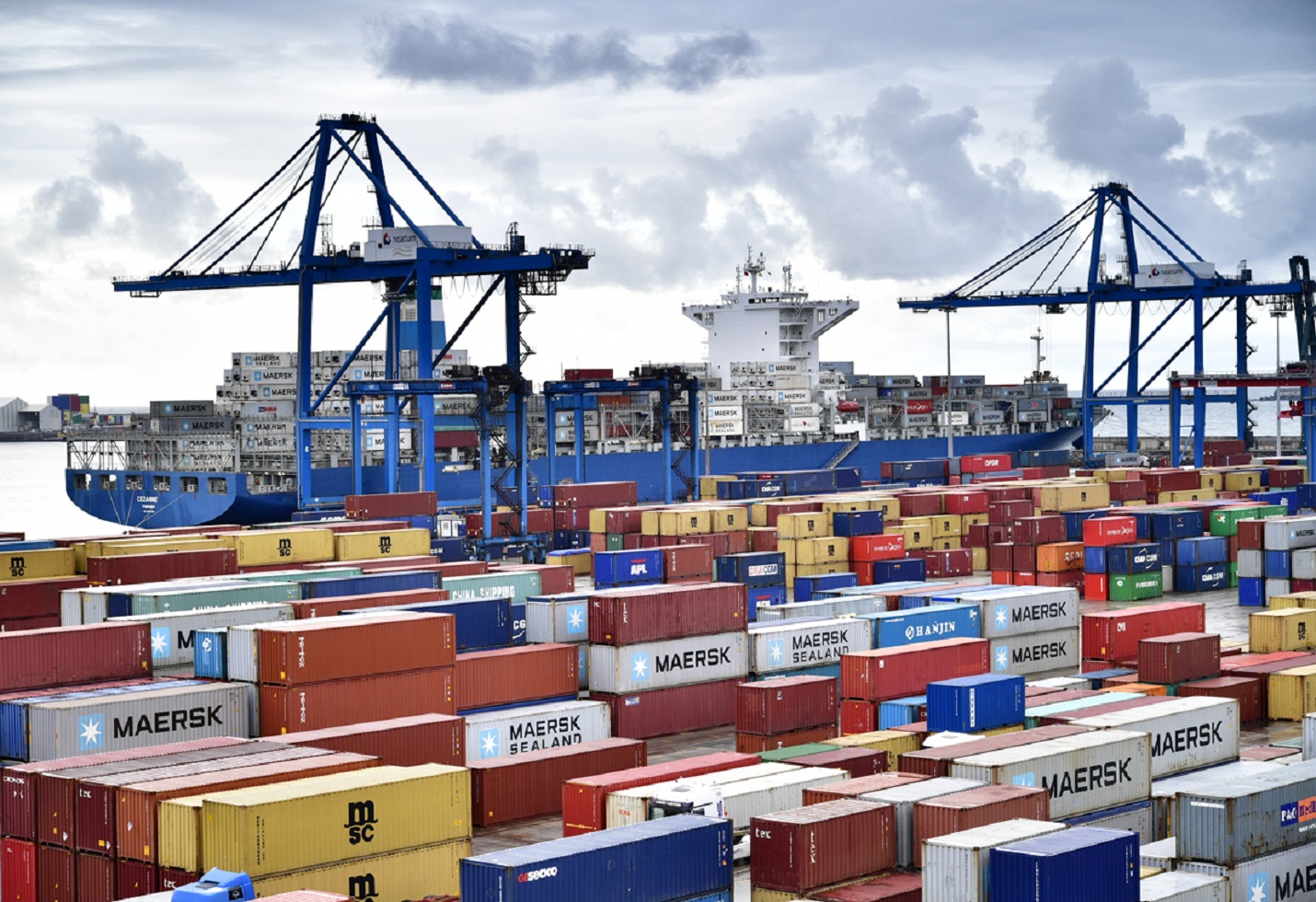
APSEZ, part of the Adani Group, is India’s largest private port operator, initially known as Gujarat Adani Port Limited (GAPL). Operating since 2001, it has expanded to manage 14 ports/terminals across India. In FY23, APSEZ held a 24% market share, handling 339mmt of cargo. Noteworthy acquisitions include Gangavaram, with three more ports under construction. The company also offers logistics and SEZ services through its subsidiary, ALL, providing end-to-end solutions and agri-storage through silo capacities nationwide.

Diversified portfolio with market leadership – 24% market share:

Over the past decade, APSEZ has demonstrated an impressive 10-year cargo volumes Compound Annual Growth Rate (CAGR) of 14%, which is three times the industry’s growth rate of 4%. From FY13 to FY23, India’s cargo volumes experienced a modest 4% CAGR increase to reach 1,433 MMT, while APSEZ significantly outpaced this, achieving a remarkable 14% CAGR, resulting in cargo volumes of 337 MMT in FY23. This outstanding performance can be attributed to strategic expansions at Mundra, the successful commissioning of Hazira, and strategic acquisitions, including ports such as Dhamra, Krishnapatnam, and Gangavaram. In FY23, APSEZ handled an impressive 339 MMT of cargo at its ports, solidifying its dominance with a substantial 24% market share.

Robust growth in overall cargo volumes driven by container cargo, dry cargo & liquid-gas:

APSEZ achieved a robust 14% YoY growth in cargo handling, reaching 203 million metric tonnes. Growth was observed across all major categories: dry bulk (10% YoY), liquids (21% YoY), and containers (18% YoY). Eight ports hit their highest half-yearly volumes. Mundra port led with 3.6 million TEUs, surpassing competitors by 15%. In October, Mundra set a record with 16 million metric tonnes, the highest monthly volume in any Indian port. Haifa Port in Israel handled 6.3 million metric tonnes in H1 and 1.1 million metric tonnes in October.

Robust Volume growth in the first half boosted revenue – 27% YoY:

In Q2FY24, the company reported a robust 27.5% YoY (+6.38% QoQ) revenue growth, reaching 6,646 Cr. This growth was fueled by a 17% YoY increase in overall cargo volumes, totaling 101.2 MMT in Q2FY24 and 14% YoY growth to 203 MMT in H1FY24. Notably, all three major cargo categories contributed to this expansion, with dry bulk at 10% YoY, liquids at 21% YoY, and containers at 18% YoY.

EBITDA Surges Amidst Margin Pressure from Forex Losses

In Q2FY24, EBITDA demonstrated a robust YoY growth of 26.7% (slightly down by -2.7% QoQ) to reach 3,664 Cr. However, EBITDA margins experienced a slight decline of 35 bps YoY (500 bps QoQ) to 55.1%, primarily attributable to a forex loss of 216 Cr during the quarter. Adjusting for the forex loss, the EBITDA stands at an impressive 7,429 crores, showcasing a commendable 49% YoY growth.The company’s strategic focus on enhancing operational efficiency is evident in the port EBITDA margins for H1, which expanded by 220 basis points YoY, reaching an impressive 72%. Furthermore, the logistics business boasted EBITDA margins of 29%, positioning it as the best among its domestic peer group.

Key concall highlights

➡️The company successfully completed bond buybacks of $130 million in May and $195 million in October.
Consequently, the net debt as of September 30 decreased to $38,696 million compared to $39,989 million on March 31.

➡️The addition of assets to the logistics business led to a 25% YoY increase in rail volumes to 279,177 TEUs and a 42% YoY Valuation and key ratio S bulk volumes to MMT in Q2FY24.

Valuation and key ratio

The current stock valuation indicates a 22.7x earnings per share (EPS) multiple (TTM) of 29.3 Rs at the market price of 832 Rs, with the industry PE at 34.1x. APSEZ leads peers in EV/EBITDA multiple at 15.2x, while the industry median of 15.2x. Trailing twelve-month ROE and ROCE are 14.4% and 9.53%, respectively. The interest coverage ratio at 5.1x signifies strong solvency.

Q2FY24 result update: Consolidated

➡️In Q2FY24, the company witnessed a robust 27.5% YoY (+6.4% QoQ) increase in revenue, reaching 6,646 Cr, driven by substantial growth in cargo volume.

➡️EBITDA showed a 26.7% YoY growth (-2.7% QoQ) at 3,664 Cr, with EBITDA margins at 55.1%, down by 35 bps YoY (-500 bps QoQ), primarily due to a forex loss stemming from increased foreign currency debt.

➡️Adjusted for forex loss, EBITDA surged by 49% YoY, reaching 7,429 Cr in the first half of the year. Port EBITDA margins in H1 expanded by 220 basis points YoY to 72%, while logistics business EBITDA margins stood at 29%, leading the domestic peer group.

➡️Operating profit (EBIT) increased by 32% YoY (-4.5% QoQ) to 2,689 Cr, with EBIT margin expanding by 140 bps YoY but contracting by 450 bps QoQ to 40.5%.

➡️PAT reported a modest 1.4% YoY growth (-16.9% QoQ) at 1,762 Cr, influenced by one-time expenses related to MAT credit amounting to 455 Cr during the quarter. PAT margin decreased by 680 bps YoY (-740 bps QoQ).

➡️EPS for the quarter stood at 8.16 Rs, compared to 9.81 Rs in the previous quarter.

Conclusion:

APSEZ, a leading private port operator in India, exhibited robust performance in Q2FY24 with a 27.5% YoY revenue growth, driven by a 17% YoY increase in cargo volumes. Despite margin pressure from forex losses, the company’s strategic focus on efficiency is evident in impressive EBITDA margins. The logistics business outperformed peers with a 29% EBITDA margin. The Q2FY24 PAT growth was modest due to one-time expenses. The company’s diversified portfolio, strategic acquisitions, and focus on operational efficiency position it well in the market.

The image added is for representation purposes only

Strategic Partnerships Fuel One97’s Financial Turnaround

Shree Renuka Sugars Q2 FY26: Revenue Holds Up Seasonally, But Loss Widened Sharply as Costs Bite

Celebration Economy: The Economic Impact of Weddings on Hospitality

Celebration Economy: The Economic Impact of Weddings on Hospitality

Introduction

The hospitality industry is a key driver of the economy, contributing significantly to global GDP and employment. The industry is extremely diverse, encompassing everything from hotels and restaurants to event planning and catering. The hospitality industry has faced a number of challenges in recent years, including the global pandemic and the economic downturn. However, the industry is beginning to recover, thanks to an increase in weddings and other celebrations.

Weddings as a Catalyst for Growth

Weddings are a major source of revenue for the hospitality industry. The hospitality industry is experiencing a remarkable resurgence, fuelled by a significant increase in weddings and related events. Celebrations following the pandemic have left an indelible mark on the industry, indicating a significant shift in preferences and customs, painting a dynamic picture of evolving traditions. According to recent CAIT projections, there is a significant expected increase, with approximately 3.8 million weddings expected to take place this season, compared to 3.2 million weddings during the same period last year.

Transformative trends:

A transformative wave is sweeping through the hospitality industry, driven by forward-thinking businesses that combine tourism and hospitality services. The fallout from Covid has forever altered people’s perspectives on life and travel, resulting in game-changing developments and trends in the industry. The travel industry is buzzing with trends such as staycations, leisure travel, solo and backpacking trips, experiential travel, and destination weddings, as millennials and Gen Z continue to shape travel decisions.

Wedding tourism stands out as a particularly promising trend among these. Brands are revamping their offerings to create distinctive and memorable wedding celebrations, with the goal of providing a more enriching experience for guests of all ages. This evolution reflects a dynamic response to today’s diverse and discerning travellers’ shifting preferences and expectations.

Furthermore, according to a KPMG report, the expense of Indian weddings ranges from 5 lakh to 5 crore rupees, with individuals allocating one-fifth of their savings for this significant event. Consequently, each wedding function holds substantial potential for creating employment and business opportunities across various industries. From dedicated wedding photographers to the wedding décor team, as well as F&B vendors, every aspect contributes to making the occasion grand and impactful.

Impact on the hospitality industry:

 Increased Revenue Streams: Hotels, banquet halls, and catering businesses are experiencing an increase in bookings, which translates to increased revenue for these establishments.
 Job Possibilities: The growing demand for wedding-related services has promoted job creation in a variety of sectors of the hospitality industry, contributing to increased employment.
 Industry Diversification: The trend toward unique and personalized weddings is driving a diversification trend in the hospitality industry. This evolution reflects an industry-wide effort to cater to clients’ changing preferences for unique and customized experiences.

Sectors set to soar in wedding and hospitality boom:

1. Hospitality Sector:
– Hotels and Resorts: Increased bookings for wedding events and accommodations.
– Travel and Tourism: Rise in destination weddings contributing to increased travel.

2. Apparel and Clothing:
– Bridal Wear: Growing demand for elaborate and designer wedding outfits.
– Groom Wear: Increased focus on groom fashion and accessories.

3. Jewellery:
– Wedding Jewellery: High demand for traditional and contemporary wedding jewellery.
– Bridal Sets: Rise in purchases of complete bridal jewellery sets.

4. Entertainment and Decor:
– Entertainment Services: Demand for live bands, DJs, and other entertainment.
– Decor Services: Increased need for elaborate and personalized wedding decor.

5. Event Management and Wedding Planning:
– Event Planners: Growing demand for professional wedding planning services.
– Destination Wedding Specialists: Increased interest in unique and exotic locations.

6. Catering and Banquets:
– Catering Services: High demand for catering at weddings and related events.
– Banquet Halls: Increased bookings for wedding receptions and ceremonies.

Conclusion:

In short, the wedding and hospitality industries are reviving, which is good news for many businesses. Hotels, fashion, jewellery, and event planning are all benefiting as weddings become more popular. This boost is about more than just making money; it is about changing the way we celebrate, making things more unique and personal. This upswing is not only assisting businesses in recovering, but it is also bringing new ideas and creativity. As weddings continue to shape the industry, we can expect a bright future full of new opportunities.

The image added is for representation purposes only

Robust Loan Book Growth and Strategic Lending Drive PFC’s Stellar Q2FY24 Results

Flexiloans Bags ₹375 Cr in Series C, Targets ₹5,000 Cr AUM Within 18 Months

Strategic Partnerships Fuel One97's Financial Turnaround

Strategic Partnerships Fuel One97’s Financial Turnaround

Company Name: One 97 Communication Ltd | NSE Code: PAYTM | BSE Code: 543396 | 52 Week high/low: 998/440 | CMP: INR 889 | Mcap: INR 56,647 Cr | P/Sales: 7.86x

Company Overview:

One97 Communications is engaged in the business of offering a) payment and financial services, encompassing payment facilitator services, facilitating consumer and merchant lending, wealth management, and related financial solutions. b) Additionally, the company provides commerce and cloud services, serving as an aggregator for digital products, managing ticketing operations, supplying voice and messaging platforms to telecom operators and enterprise customers, among other business activities.

Robust Revenue Growth Fueled by GMV and Merchant Payments:

One97 Communications reported a robust 31.6% YoY revenue increase to Rs. 2,519 crore in Q2FY24, driven by a surge in Gross Merchandise Value (GMV) and a 47.6% YoY jump in payments to merchants. The net payment margin rose by 60.0% YoY to Rs. 707 crore, mainly due to a significant increase in non-UPI payments. The company’s adaptability in a dynamic market is evident despite a slightly lower growth rate compared to the previous quarter.

Thriving Financial Services and Loan Disbursement Business:

One97 Communications reported robust Q2FY24 financials with a 63.6% YoY growth, totaling Rs. 571 crore. The surge was driven by a 44% YoY increase in loan disbursements, reaching 13.2 million, fueled by Paytm’s active user base. The total value of disbursed loans rose by 122% YoY to Rs. 16,211 crore, showcasing the company’s success in diversifying revenue streams and leveraging its user base for sustained growth.

Strong growth in contribution profit leads to margin expansion

The loan distribution business and improved net payment margin drove a significant uptick in Q2FY24 EBITDA before ESOP cost to Rs. 153cr, compared to a loss of Rs. -167cr in Q2FY23. A consistent 69.2% YoY growth in contribution profit led to an adjusted EBITDA margin rise from -8.7% to 6.1%. In the same period, profit attributable to shareholders improved from Rs. -571cr to Rs. -291cr, indicating a positive turnaround in financial performance.

Valuation and key ratio

The company’s stock is trading at 7.84x its sales, reflecting a market valuation of 7,203 Crore INR at the current share price of 889 INR. Additionally, the company is valued at 4.53x its book value, amounting to 196 INR per share. However, financial indicators reveal challenges, with a negative ROE and ROCE at -13.9% and -13.5%, respectively. The interest coverage ratio is a concerning -48.2x, indicating potential solvency issues.

Key concall highlight

➡️In Q2, Tata Capital joined as a lending partner, bringing the total number of NBFCs and banks to nine for credit card and loan distribution.

➡️Q2FY24 witnessed a 19% YoY increase in Average Monthly Transacting Users (MTUs), reaching 9.5 crore. Merchant subscriptions showed robust growth, surging 91% YoY to 9.2 million.

➡️The cash balance strengthened to Rs. 8,754 crore in September, up from Rs. 8,367 crore in June, attributed to improved EBITDA and working capital. The company anticipates adding more partners in the upcoming quarters.

Q2FY24 result update: Consolidated

➡️In Q2FY2, the consolidated revenue witnessed robust growth, surging by 31.6% YoY (+7.6% QoQ) to reach 2,519 Cr. This growth was primarily driven by a strong uptick in merchants’ subscription revenue, increased loan disbursements, and a rise in Gross Merchandise Value (GMV).

➡️The Adjusted EBITDA before ESOP cost exhibited remarkable expansion, soaring by 191.6% YoY (+82.5% QoQ) to 153 Cr, compared to a loss of -167 Cr in Q2FY23. This impressive performance was fueled by consistent growth in contribution profit (+69.2% YoY), resulting in an improved adjusted EBITDA margin of 6.1%, a significant positive shift from -8.7% in Q2FY23.

➡️EBITDA demonstrated a notable YoY increase of 57%, but experienced a QoQ decline of 21.1% to -231 Cr, primarily attributed to higher ESOP costs.

➡️The Operating Profit (EBIT) saw a YoY decrease of 36% (-9% QoQ) to -411 Cr, primarily due to a substantial 72.7% YoY increase in depreciation expenses.

➡️Reported Profit After Tax (PAT) declined by 49% YoY (-18.6% QoQ) to -292 Cr, driven by elevated ESOP costs and depreciation.

Conclusion:

One97 Communications demonstrated robust Q2FY24 performance with a 31.6% YoY revenue increase, driven by strong growth in financial services, merchant payments, and loan disbursements. The company’s adaptability and strategic partnerships, such as with Tata Capital, contributed to positive results, leading to a notable turnaround in financial performance, reflected in improved EBITDA margins and a strengthened cash balance. Despite a QoQ decline in some metrics, One97 Communications remains well-positioned for sustained growth, focusing on expanding its partner network and capitalizing on its active user base.

The image added is for representation purposes only

Robust Loan Book Growth and Strategic Lending Drive PFC’s Stellar Q2FY24 Results

British Fashion Titan ASOS Makes Exclusive Indian Debut Through Ajio

Nykaa Q2FY24 results: A Beauty brand on the rise with 5x growth

Nykaa Q2FY24 results: A Beauty brand on the rise with 5x growth

Company Overview:

Nykaa, established in 2012 by Falguni Nayar, stands as a prominent Indian e-commerce company specializing in beauty, wellness, and fashion products. Over the years, the company has experienced substantial growth, becoming a household name in India. Nykaa’s product range encompasses offerings from both local and international brands. Nykaa has a cumulative customer base of over 21 million, with over 3,600 domestic and international brands available across its 165 physical stores. The company also has over 80 participating brands and over 800 influencers, MUAs, and KOLs. Additionally, Nykaa has generated over 5,000 pieces of content.

Nykaa Q2 Business Segment Highlights:

Nykaa’s primary revenue driver is the Beauty and Personal Care (BPC) segment, contributing 77.9% of its revenue, 15.5% for Fashion, and 6.6% for other categories. The Compound Annual Growth Rate (CAGR) of the Gross Merchandise Value (GMV) has been 31%. The customer base has grown significantly, with 21% new consumers and 79% old customers totalling 20,016 in total. Nykaa’s product selections include over 3,600 foreign and domestic brands, as well as over 10,000 new Stock Keeping Units (SKUs) among the top 400 brands.

Strong key metrics:

In the fiscal year 2023, Nykaa demonstrated strong performance across both the Beauty and Personal Care (BPC) and Fashion segments. The BPC segment experienced a noteworthy 6% QoQ increase in monthly average visitors, reaching 26.8 million. This surge translated into a total of 10 million orders, marking a substantial 4% QoQ growth. The average order value (AOV) remained consistently strong at INR 1,916.

The Gross Merchandise Value (GMV) for the BPC segment exhibited robust growth, escalating by 8% QoQ to INR 20,016 million. Moving to the Fashion segment, there was a 6% QoQ rise in monthly average visitors, reaching 17.6 million. This uptick contributed to 1.7 million orders, reflecting a significant 18% QoQ increase, with the AOV steadily growing to INR 4061. Notably, the Fashion GMV demonstrated remarkable growth, surging by an impressive 17% QoQ to INR 7628 million.

Nykaa’s Offline Expansion:

Nykaa has significantly broadened its footprint, establishing 165 physical stores in over 60 cities across India. These stores feature three distinct formats: Nykaa Luxe, Nykaa On Trend, and Nykaa Kiosks. In Q2FY24 alone, the company successfully launched 13 new stores, contributing to an impressive 34% year-on-year (YoY) growth. This offline expansion has proven impactful, with an 8% contribution to the overall Gross Merchandise Value (GMV) in the Beauty and Personal Care (BPC) segment.

Nykaaland 2023: India’s Premier Beauty Festival

Nykaa, in its grandest celebration, hosted Nykaaland 2023, marking India’s biggest beauty festival. The event witnessed enthusiastic participation with over 80 brands, collaboration with 800 influencers, MUAs, and KOLs, resulting in the creation of over 5,000 diverse content pieces. This extravaganza drew a massive crowd, with more than 15,000 attendees immersing themselves in the beauty experience. Nykaa’s strategic social media and influencer outreach achieved a staggering reach of 525 million, amplifying the festival’s impact. A unique highlight was the first-time early access for Prive Gold & Platinum members.

Valuation and Key Ratios:

Nykaa’s stock valuation is notably high, standing at a multiple of 2,490 PE, with a market price of INR 171. This is in sharp contrast to the industry PE of 46.5. The company reports return ratios, with ROE at 1.42% and ROCE at 5.52%. Additionally, the stock is trading at 35.04 times its book value, and the EV/EBITDA stands at 149x.

Nykaa’s Q2FY24 Financial Performance:

Nykaa has experienced a notable 50% year-on-year (YoY) surge in net profit, reaching INR 7.8 crore. In Q2FY24, Nykaa maintained its upward trajectory, achieving a 22% YoY increase in revenue, reaching INR 15,070 crore. The key driver of this growth was the Beauty and Personal Care (BPC) segment, witnessing an 18% YoY surge to INR 12,782 crore, complemented by a robust 28% YoY increase in the Fashion business. The GMV soared to INR 29,435, reflecting a substantial 25% YoY growth, with significant contributions from both the BPC and Other business segments. EBITDA exhibited a noteworthy 10% QoQ increase, reaching INR 806 crore, and margins expanded by 18 bps QoQ. The PAT also demonstrated growth, reaching INR 7.8 crore.

Conclusion:

Nykaa, founded in 2012, has become a major force in Indian beauty and fashion e-commerce. With a customer base of over 21 million, 3,600 brands, and 165 physical stores, the company has witnessed substantial growth. Key Q2FY24 highlights include a 22% YoY revenue increase, with the BPC segment leading at 18% YoY growth. Nykaa’s offline expansion, showcased by 165 stores, and successful events like Nykaaland 2023 contribute to its strong market presence. Despite a high stock valuation, Nykaa’s financial indicators and a 50% YoY surge in net profit indicate a robust and strategic position in the industry.

The image added is for representation purposes only

Robust Loan Book Growth and Strategic Lending Drive PFC’s Stellar Q2FY24 Results

Navneet Education Q1FY25: Exceptional Gains Boost Profits Amid Sector Challenges

Resilient Kokuyo Camlin: Impressive Profit Growth Amid Q2

Resilient Kokuyo Camlin: Impressive Profit Growth Amid Q2

Company Overview:

Kokuyo Camlin, a renowned company specializing in the production and marketing of stationery and art products, has a robust background. The company, now majority-owned by the Japanese stationery giant Kokuyo with a 74.4% stake, boasts an extensive product portfolio, including writing instruments, notebooks, marker pens, inks, fine-art colors, and various other stationery products.

Robust Manufacturing Facilities

Operating three manufacturing sites in Patalganga, Tarapur, and Jammu, the company’s Patalganga facility leads in production volume with over 324 SKUs annually. Tarapur follows with 800 SKUs, and the Jammu plant contributes 393 SKUs. Kokuyo Camlin caters not only to the local market but also exports its products to other countries.

Camlin Leads Stationery Market with 54% Paper, 34% Non-Paper Share

The stationery market is composed of two main categories: paper and non-paper stationery products. Camlin dominates the stationery market with a 54% market share in paper and 34% in non-paper. The paper industry, valued at ₹21,000 Crores, witnesses an 8% growth, with Camlin contributing ₹11,500 Crores. In the ₹17,500 Crores non-paper industry, Camlin holds a share of ₹6,100 Crores, in a market growing at 7.6%. Overall, the industry has shown significant growth.

Top-Line Momentum Sustained YoY while Dip QoQ in Q2FY24

In Q2FY24, the company reported a revenue of 194.8 Cr, marking a 2.6% YoY growth but a 17.3% QoQ decline. Despite moderate growth in top line, the management maintained raw material expenses, resulting in a 6.4% YoY boost in gross profit to 77.4 Cr, but down 12.2% QoQ.

Despite top line challenge, PAT up147% YoY on Lower Finance Cost & Tax Rate

Despite moderate top-line growth, Profit After Tax (PAT) soared by an impressive 147% YoY to 9.5 Cr, though it experienced a 48.3% QoQ downturn. This remarkable bottom-line growth was driven by decreased interest expenses, which fell 43.3% YoY and 58.8% QoQ to 0.47 Cr, and a lowered tax rate, dropping to 24% compared to 60% in Q2FY23.

Valuation and Key Ratios:

Presently, Kokuyo Camlin trades at a multiple of 40.3x EPS (TTM) 4 Rs at a market price of 161 Rs, with the industry PE standing at 26.2x. The company is trading at 5.64x its book value of 28.6 Rs per share. In the EV/EBITDA multiple, it ranks third among its top peers with a multiple of 21.7x, while the industry median is at 15.3x. The trailing twelve-month Return on Equity (ROE) and Return on Capital Employed (ROCE) stand at 9.26% and 12%, respectively. The interest coverage ratio in Q2FY24 stands at 27.4x, indicating the company’s solvency.

Q2FY24 Results Updates: Standalone

➡️In Q2FY24, revenue grew by 2.6% YoY but experienced a 17.4% QoQ decline to 194.8 Cr. Despite the moderate revenue growth, gross profit increased by 6.4% (down 12.2% QoQ) to 77.4 Cr, driven by prudent management of raw material costs.

➡️Gross margin showed improvement, rising 233 basis points (bps) QoQ and 140 bps YoY to 39.7% in Q2FY24 compared to 37.4% in the previous quarter.

➡️EBITDA increased by 18% YoY (down 28.6% QoQ) to 17.3 Cr, attributed to low raw material costs and operating leverage. The EBITDA margin, up 115 bps YoY but down 140 bps QoQ, stood at 8.9% in Q2FY24.

➡️Operating profit (EBIT) witnessed a YoY growth of 23.4% (down 35.6% QoQ) to 12.9 Cr, with the EBIT margin up 111 bps YoY but down 188 bps, standing at 6.6% in Q2FY24.

➡️PAT surged impressively by 147% YoY (down 48.3% QoQ) to 9.5 Cr, driven by lower interest costs (down 43.3% YoY), increased other income, and a reduced tax rate.

➡️Earnings Per Share (EPS) for the quarter stood at 0.95 Rs compared to 1.84 Rs in the previous quarter.

Conclusion:

Kokuyo Camlin, a leading stationery and art products company, faces QoQ revenue decline but sustains YoY growth. Despite top-line challenges, prudent cost management boosts gross profit and results in an impressive 147% YoY increase in PAT. The company trades at a PE of 40.3x, showing a premium compared to the industry. Key highlights include improved gross margin

The image added is for representation purposes only

Robust Loan Book Growth and Strategic Lending Drive PFC’s Stellar Q2FY24 Results

Konstelec Engineers Secures ₹16.33 Cr Contract Boost!

Navigating Innovation: Tata Technologies in Engineering Excellence and Risk Mitigation

Navigating Innovation: Tata Technologies in Engineering Excellence and Risk Mitigation

Tata Technologies Limited is an Indian multinational company that provides engineering and design services, product lifecycle management, manufacturing, and IT service management to the automotive and aerospace industries. It has a global presence, with offices in 19 countries.

Company Overview:

Tata Technologies, founded in 1989, has established itself as a prominent player in the field of engineering solutions. With a history spanning several decades, the company has built a reputation for delivering innovative and reliable services to its clients. Specializing in engineering solutions, Tata Technologies has become a trusted partner for some of the global leaders in the automotive and aerospace industries.

The company’s client portfolio includes renowned names such as Jaguar Land Rover, Ford, Fiat Chrysler Automobiles, Airbus, and Boeing, showcasing its ability to collaborate with major Original Equipment Manufacturers (OEMs). Over the years, Tata Technologies has likely contributed significantly to the development and advancement of technology in the automotive and aerospace domains. The company’s focus on innovation and engineering excellence has likely played a pivotal role in shaping its success and maintaining long-term relationships with industry leaders.

Tata technologies core services:

1. Engineering, Research and Development (ER&D):
Tata Technologies’ ER&D services are focused on assisting global manufacturing customers throughout the product development lifecycle. This involves conceptualization, design, and development to create improved and sustainable products. The emphasis on sustainability suggests a commitment to environmentally conscious engineering solutions.

2. Digital Enterprise Services (DES):
The Digital Enterprise Services are tailored to help manufacturing customers leverage technology for various aspects of their operations. This includes identifying and deploying technologies, tools, and solutions to enhance manufacturing processes, service delivery, and overall product realization. This aligns with the modern trend of digital transformation in manufacturing.

3. Education Offerings:
Tata Technologies collaborates with universities and governments to contribute to the education sector. The company plays a role in equipping the next generation of engineers with the skills needed in the manufacturing industry. Additionally, offering a digital learning system to businesses and individuals reflects a commitment to addressing training needs in a dynamic digital environment.

4. Products and Value Added Reselling (VAR):
Tata Technologies assists its customers in identifying and deploying product development software from partners. Acting as a Value Added Reseller (VAR), the company adds value to these products, helping customers manufacture, service, and bring superior products to market successfully

Tata Technologies Industries: Driving Excellence Across Sectors-

 Automotive Innovation:
Navigating the automotive industry’s radical transformation, Tata Technologies delivers end-to-end solutions. From electric vehicle engineering to digital transformation, their expertise spans the entire automotive value chain. They accelerate product launches, optimize operations, and enhance customer experiences, shaping a connected, autonomous, shared, and electric future.

 Global Industrial Heavy Machinery (IHM):
In a shifting Industrial Heavy Machinery landscape, Tata Technologies provides comprehensive solutions. Their offerings, covering engineering, manufacturing, and customer experience, empower manufacturers to meet global infrastructure demands efficiently. Leveraging digital enterprise solutions, they minimize production costs, accelerate time to market, and guide their clients towards Industry 4.0.

 Aerospace Advancements:
As the aerospace industry undergoes a transformative phase, Tata Technologies contributes cutting-edge solutions. Their aerospace portfolio spans engineering, manufacturing, and customer services, addressing the industry’s need for innovative, high-precision products. With advanced technologies and a focus on customer experiences, they redefine excellence in aerospace engineering and services.

Risk factors associated with tata technologies:

 Dependence on key clients: Tata Technologies’ business is strongly reliant on a few important customers, notably Jaguar Land Rover, Ford, Fiat Chrysler Automobiles, Airbus, and Boeing. If any of these clients reduces their spending or switches to a new provider, Tata Technologies’ revenue and profitability could suffer significantly.

 Exposure to global economic conditions: As Tata Technologies works in a global market, it is subject to swings in global economic conditions. A faltering global economy could result in lower demand for Tata Technologies’ services, significantly impacting its financial performance.

 Technological advances: The engineering services business is continually evolving, with new technologies arriving on a regular basis. To be competitive, Tata Technologies must be able to keep up with these changes. If it does not, it risks losing clients to more innovative competition.

 Currency fluctuations: Tata Technologies operates in a number of countries worldwide, and its revenue is denominated in a number of currencies. Exchange rate fluctuations might have an impact on the company’s performance.

 Regulatory risks: In the countries where it works, Tata Technologies is subject to a range of rules. Changes in this legislation may have an impact on the company’s ability to operate in certain markets.

 Project risks: Projects at Tata Technologies are frequently difficult and require a high level of technical competence. If a project fails to reach its goals, it may result in financial losses and damage to the company’s reputation.

 Talent acquisition and retention: Tata Technologies’ services are delivered by a competent staff. If the organization is unable to attract and retain great personnel, its ability to compete in the market may suffer.

 Financial investment: The corporation invests in unsecured debt instruments on occasion, including those with interest rates lower than the market rate, which has an impact on profitability. These investments include a variety of financial products. Inter-corporate deposits are held solely by the Promoter and are repayable on demand.

 Cash flows and projections: Recognizing previous negative cash flows and projecting future negatives, the business recorded negative net cash flow from operational activities for Fiscal 2022 and the six-month period ending September 30, 2023. The negative operating cash flow in Fiscal 2022 was related to the use of client advances to pay vendors. Similarly, the latter period’s negative cash flow was caused by greater advances to suppliers.

Tata technologies partnerships:

1. Mobility in Harmony (MIH) Consortium: Tata Technologies is a member of the Mobility in Harmony (MIH) consortium, indicating its commitment to engineering sustainable mobility solutions and contributing to the acceleration of innovation in future mobility.

2. PTC: Tata Technologies collaborates with PTC, a company focused on making digital transformation a reality for businesses. In this partnership, Tata Technologies serves as a system integrator (SI) and a reseller for PTC, likely working on customized innovations that deliver maximum business advantage.

3. Kovair: Tata Technologies has a partnership with Kovair, a company specializing in enabling digital transformation through DevOps solutions and enterprise tools integrations for embedded software development. As a system integrator (SI) and reseller for Kovair, Tata Technologies likely plays a role in integrating Kovair’s solutions into their services.

4. Codincity: Codincity is Tata Technologies’ cloud and digital partner. This partnership suggests that Tata Technologies is harnessing the power of the cloud to support its customers’ digital transformation journeys. The collaboration with Codincity may involve utilizing cloud technologies to enhance Tata Technologies’ offerings.

5. Logility: Tata Technologies serves as a system integrator (SI) for Logility, focusing on delivering a digital and sustainable supply chain. This partnership aims to empower customers to grow and compete through advanced supply chain solutions.

6. Dassault Systèmes: Tata Technologies acts as a reseller for Dassault Systèmes, a company known for developing product development applications. This collaboration enables Tata Technologies to offer a range of tools and solutions that help customers thrive throughout the entire product lifecycle.

7. SAP: Tata Technologies has a partnership with SAP, where it functions as a sell partner. SAP is renowned for transforming enterprise processes, enhancing customer satisfaction, and enriching employee experiences. Through this collaboration, Tata Technologies likely provides SAP solutions to its clients.

8. Siemens: Tata Technologies plays a dual role as a system integrator (SI) and a reseller for Siemens. Siemens is recognized for empowering companies to embrace complexity, leveraging it to enhance productivity and gain a competitive advantage. This partnership positions Tata Technologies to integrate Siemens’ solutions and serve as a reseller. 

The image added is for representation purposes only

Robust Loan Book Growth and Strategic Lending Drive PFC’s Stellar Q2FY24 Results