Menu

Markets

Biggest Gainers from the Upcoming Nifty Rebalancing

Biggest Gainers from the Upcoming Nifty Rebalancing

Biggest Gainers from the Upcoming Nifty Rebalancing

On September 30, 2025 the National Stock Exchange’s semi-annual reconstitution of the Nifty 50 takes effect. The most consequential changes: InterGlobe Aviation (IndiGo) and Max Healthcare Institute will be added to the Nifty 50, while Hero MotoCorp and IndusInd Bank will be removed. These index moves force passive vehicles — ETFs, index funds and many mutual funds — to buy the inclusions and sell the exclusions, producing concentrated capital flows that can materially move stock prices in the days around implementation.

Which five stocks look set to benefit
Brokerage and institutional analysis points to five stocks that should see the largest passive inflows from the reshuffle: InterGlobe Aviation (IndiGo), Max Healthcare, State Bank of India (SBI), Bajaj Finserv, and ITC. Nuvama Institutional Equities estimated that five names could receive more than $1 billion of passive buying when index-tracking funds rebalance, with warded estimates concentrated in IndiGo and Max Health. Reuters specifically flagged that Max Healthcare could attract as much as $400 million of flows following the inclusion announcement. Business Standard and other domestic broker notes estimated ETF and mutual fund buying in IndiGo and Max Health on the order of ₹4,300 crore (about $520 million) combined — illustrating that estimates vary by methodology but all point to meaningful demand.
Why these five? The combination of free-float market cap, recent price performance, and index weight adjustments means that additions (or weight increases) require large index-tracking pools to accumulate shares. InterGlobe and Max Health are the headline inclusions; SBI, Bajaj Finserv and ITC are expected to see weight increases that also pull in passive capital because of reweighting within the Nifty 50.

How passive flows distort short-term price moves
Passive funds must replicate index weights. When a stock is added, every ETF and index fund tracking the Nifty 50 must buy shares to reflect the new composition, and the converse applies for removals. Because many index trackers execute trades on or just prior to implementation, this creates lumpy, front-loaded demand for inclusions and supply for exclusions. The result is compressed supply/demand in a short window that often leads to outsized short-term gains for the beneficiaries and pressure on the delisted names — irrespective of near-term fundamentals.
Two additional mechanics accentuate the effect. First, leveraged and derivative strategies (futures and ETFs with synthetic replication) can amplify flows and volatility. Second, arbitrageurs and momentum traders front-run the expected demand — buying expected inclusions in advance — which compounds the price move. That is why you often see a sharp run-up in price for additions in the days and weeks before a rebalance, followed by some mean reversion as flow-driven demand subsides.

Evidence from the current cycle
Market headlines on September 30, 2025 recorded a modest overall market bounce — Nifty rose intraday to 24,677.9 — led by banks and metals, but the rebalancing story dominated sector headlines as broker estimates of forced buying were circulated. That microstructure context helps explain why specific names (IndiGo and Max Health) spiked in attention and volume around the effective date. The magnitude of price moves will depend on real executed flows, existing liquidity in each stock, and how much passive ownership already exists.

Practical strategies for retail investors
* Avoid blind chasing: Expect a run-up into the rebalance; buying at the peak of flow-driven rallies risks rapid giveback once flows normalize. If you prefer exposure, consider phased buying (dollar-cost averaging) rather than lump purchases.
* Use horizon and purpose to decide: If you are a long-term investor attracted to the company’s fundamentals (e.g., IndiGo’s market position, Max Health’s growth in private healthcare), a measured buy-and-hold approach is reasonable. If your view is short-term, consider trading with strict stop-losses or taking profits quickly after the initial move.
* Watch liquidity and bid-ask spreads: Smaller, less liquid stocks can see exaggerated spreads during the rebalance window. Prefer executing on high-volume days or using limit orders to control execution price.
* Beware of headline-driven momentum: Momentum traders and quant funds can create fast reversals; using options to hedge or limiting position size reduces downside risk. For size portfolios, consider overlay hedges (puts) if flow risk is material.
* Sell the exclusions selectively: Stocks removed from an index may be sold off in the short run but can represent buying opportunities if fundamentals remain intact. Analyze the reason for exclusion — a structural deterioration versus technical delisting — before selling at a loss.

Conclusion
Index rebalances are predictable mechanical events that create real but often temporary market distortions. The September 30, 2025 Nifty reshuffle is likely to concentrate passive flows into IndiGo, Max Health, SBI, Bajaj Finserv and ITC — a redistribution that can produce outsized short-term gains. Savvy retail investors can benefit by separating flow-driven price action from fundamental conviction, managing trade execution carefully, and applying disciplined risk management rather than chasing headlines.


The image added is for representation purposes only

Why Indian Markets Bounced After a 7-Session Losing Streak

Why Indian Markets Bounced After a 7-Session Losing Streak

Why Indian Markets Bounced After a 7-Session Losing Streak

Why Indian Markets Bounced After a 7-Session Losing Streak

On Tuesday, September 30, 2025, Indian equity benchmarks staged a modest recovery after a seven-session slide. The Nifty 50 rose to 24,677.9 and the BSE Sensex moved to 80,469.39 in early trade — a small rebound that stopped a run of losses and reflected sector-specific buying rather than a broad risk-on shift.

What triggered the rebound: banks and metals
Two visible threads explain the recovery. First, financials — particularly public sector banks — led buying as market participants priced in regulatory changes that make credit more flexible and encourage lending. Public sector bank indices rose noticeably, reflecting expectations of easing credit conditions and better capital access for lenders. Second, metal stocks rallied on a softer U.S. dollar and commodity dynamics that improve dollar-priced commodity returns for rupee investors, boosting the metal index by around 1% on the day. Together these pockets of strength produced enough index weight to nudge the benchmarks higher.

The RBI’s role: targeted easing, not looser supervision
A critical proximate driver was a set of Reserve Bank of India (RBI) circulars published around September 30 that relax specific lending rules while strengthening oversight in other areas. The changes allow banks to revise some components of small-business loan spreads more frequently, let borrowers switch to fixed-rate loans at reset, and broaden permissible working-capital lending against gold for businesses that use gold as raw material. The package is explicitly designed to improve credit flow to MSMEs and gold-intensive industries without compromising supervisory oversight. Markets interpreted those moves as supportive for lenders’ core business — hence the banking sector rally.

How big is the market move, really?
The moves were modest: Nifty’s intraday gain was about 0.18% and Sensex added roughly 0.14% in early trade — enough to halt the slide but not to signal a sustained reversal of the recent downtrend. The rebound followed a painful stretch during which Indian indices fell over multiple sessions and experienced their sharpest weekly drops in almost seven months, reflecting a mix of domestic and global headwinds.

The sombre backdrop: foreign investor outflows and macro risks
Despite the knee-jerk rebound, the underlying story remains fragile. Foreign portfolio investors (FPIs) have been net sellers in recent weeks and months; data through September shows FPI withdrawals of about ₹7,945 crore in the month, contributing to cumulative net outflows for the year that run into tens of thousands of crores. On some measures, foreign selling in financials and other cyclical segments has been pronounced, and international hedge funds have registered sizeable short-term selloffs in emerging-market Asia — a reminder that domestic relief measures have to work against broader global risk aversion. These flows can blunt or reverse any domestic policy-driven bounce.

What investors should watch now
* RBI communications and MPC outcome (early October): The market is parsing not just the technical circulars but the Monetary Policy Committee messaging. Any signal that the RBI will prioritise growth via liquidity or forbearance could sustain the financials rally; hawkish language would do the opposite.
* FPI flows and dollar/ rupee moves: Continued net foreign outflows or a stronger dollar would keep downward pressure on risk assets and on the rupee, offsetting domestic positives.
* Earnings and valuation checks: Gains concentrated in weighed sectors (banks, metals) can make headline indices look healthier while individual stocks — especially in mid and small caps — remain vulnerable if earnings don’t meet expectations.

Tactical and strategic takeaways
For short-term traders, the rebound offers intraday and swing opportunities in beaten-up bank and metal names, but positions must be protected with tight stops because macro flows can re-assert quickly. For long-term investors, the RBI moves are constructive for credit availability and MSME financing, but they do not negate systemic risks posed by persistent foreign selling and external shocks. A balanced approach — trimming into strength, adding selectively to high-quality franchises with healthy balance sheets, and keeping an allocation to macro hedges (cash/gold or defensive sectors) — is prudent.

Conclusion
The September 30 bounce was real but contained: regulatory tweaks by the RBI acted as a catalyst for sectoral buying in banks and metals, yet the market’s longer-term direction remains hostage to global investor flows and macro signals. The rebound bought breathing room, not certainty — investors should treat it as an opportunity to reassess exposures, not as proof that the sell-off is over.


The image added is for representation purposes only

PhonePe Files for $1.5B IPO at a $15B Valuation: A New Era for India’s Fintech Investing?

LG Electronics’ India unit IPO: valuation, strategy and sector implications

PhonePe Files for $1.5B IPO at a $15B Valuation: A New Era for India’s Fintech Investing?

PhonePe Files for $1.5B IPO at a $15B Valuation: A New Era for India’s Fintech Investing?

On 24 September 2025 PhonePe Limited filed a Draft Red Herring Prospectus (DRHP) with SEBI via the confidential route, signalling intent to list in India (likely in early 2026). The company is targeting to raise approximately $1.2–1.5 billion (₹10,000–12,000 crore) through a mix of fresh issuance and an offer-for-sale (OFS), with a headline target valuation of roughly $15 billion (≈₹1.33 lakh crore). Lead managers reported in media leaks include Kotak Mahindra Capital, JPMorgan, Citi and Morgan Stanley.

Key operating and financial metrics disclosed (FY ended Mar 31, 2025)
PhonePe’s DRHP and reporting around the filing highlight a clear improvement in underlying economics for the year ended 31 March 2025: revenue from operations rose about 40% year-on-year to ₹7,115 crore, up from prior year levels; losses narrowed to ₹172 crore (₹17.2 billion) in FY2025 from ₹199.6 crore (₹19.96 billion) a year earlier; and the company reported positive adjusted EBIT of ₹117 crore (excluding ESOP costs) and positive free cash flow of ~₹1,202 crore from operations, per media disclosures. PhonePe also claims major scale: >600 million registered users and roughly 40 million merchants on its platform. These improvements form the operational justification for an IPO now.

Investor-relevant metrics
Because PhonePe is a high-growth fintech converting scale into monetisation, traditional equity ratios like P/E are not currently meaningful; instead investors should focus on growth, margin and balance-sheet ratios that will determine long-term valuation:
* Revenue growth (YoY): ~+40% (FY2025 vs FY2024).
* Adjusted EBIT: ₹117 crore (first positive adjusted EBIT, FY2025).
* Reported net loss: ₹172 crore (FY2025).
* Free cash flow from operations: ~₹1,202 crore (FY2025).
* Loss-to-revenue ratio: loss of ₹172 crore on revenue ₹7,115 crore → net loss margin ~2.4% (FY2025).
* OFS dilution indicated: market reports suggest ~10% stake being sold by existing investors in the offering (subject to prospectus confirmation).
* GTV/ payments share: PhonePe claims a dominant UPI footprint (market share estimates vary regionally); GTV metrics and take-rates will be central once DRHP is public.
These figures imply PhonePe has moved from subsidy-led growth toward cash generation; key ratios investors should compute from the prospectus will be adjusted EBIT margin, operating cash conversion (OCF / EBITDA), net debt/EBITDA (if any).

Valuation context and comparable signals
A $15 billion target valuation places PhonePe among the largest private-to-public Indian tech listings. For investors, the implied revenue multiple (EV / revenue) will matter: at $15B valuation and FY2025 revenue ₹7,115 crore (~$802M at ₹88.7/USD), the implied EV / FY2025 revenue is ~18–19x (back-of-envelope), before accounting for growth and margin improvement. By comparison, high-growth fintech peers globally trade broadly between mid-teens to 30x revenues depending on profitability trajectory, so PhonePe’s multiple will be judged on sustainability of its improving margins and FCF. Reuters and ET noted the valuation and valuation context in coverage.

Risks investors must consider
Regulatory changes (UPI rules, market-share caps), execution risk in scaling financial services beyond payments, and concentrated investor exits via OFS are immediate risks. Macro volatility or a chilled IPO window could force price discovery away from the target $15B. The confidential filing does not guarantee a proposed size or timeline; investors should read the public DRHP once available for precise governance, related-party and contingent liability disclosures.

What investors should do now
1. Wait for the public DRHP for full numbers (detailed unit economics, take-rate, segment revenue split, capex plan, and shareholding/lock-ups).
2. Assess cash generation metrics, particularly adjusted EBIT margin, OCF/EBITDA, and free cash flow trends; these are the clearest signals PhonePe is past pure-subsidy phase.
3. Model multiple scenarios (base: gradual margin expansion and 25–35% revenue CAGR; bull: faster margin recovery and >$2B revenue by FY2027; bear: slower monetisation and regulatory headwinds).
4. Position with sizing discipline. If subscribing, treat the IPO as growth exposure—limit position sizes until 3–6 months of post-listing performance and S-1/DRHP confirmations.
5. Consider secondary plays. Banks, payment-processor partners, and listed insurers/NBFCs that tie into PhonePe’s financial stack may benefit indirectly—evaluate those names on P/E, P/B and ROE relative to historical ranges.

Conclusion
PhonePe’s confidential DRHP filing on 24 Sep 2025 for a $1.2–1.5B raise at a $15B valuation is a major milestone for India’s fintech ecosystem. The company’s move toward reported positive adjusted EBIT and free cash flow materially changes the investment narrative, but investors should insist on prospectus-level details (unit economics, dilution, lock-ups, and regulatory risk) before making allocation decisions.


The image added is for representation purposes only
Power Grid Outperforms in a Weak Market: Is India’s Utility Sector a True Defensive Play?


Sustainable transition and energy security: investment implications for Indian utilities and grid players

Power Grid Outperforms in a Weak Market: Is India’s Utility Sector a True Defensive Play?

Power Grid Outperforms in a Weak Market: Is India’s Utility Sector a True Defensive Play?

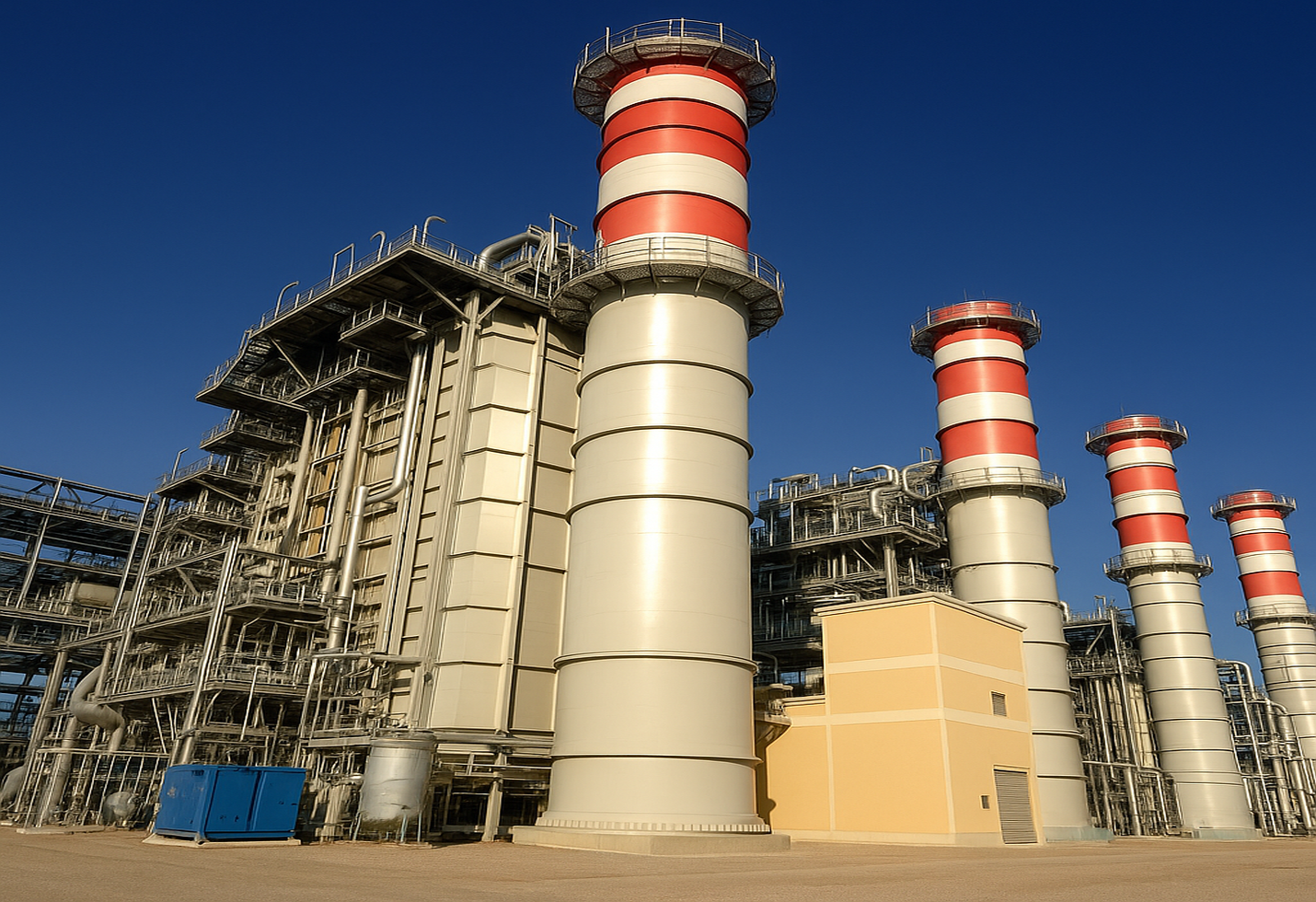
On 26 September 2025 Indian markets sold off sharply — the BSE Sensex fell ~733 points, pressured by global tariff headlines, rupee weakness and FII selling. In that down session many cyclical names underperformed, but Power Grid Corporation of India Ltd. (POWERGRID.NS) only dipped modestly and outperformed the broader market, signalling the classic “flight to defensive utilities” behaviour.

Power Grid — financials and ratios
Power Grid’s most recent audited FY numbers and Q1 FY26 disclosures (company investor presentation and exchange filings) give the clearest picture:
* Total income (FY 2024-25): ₹46,325 crore (reported 19 May 2025). Consolidated FY25 Profit after tax: ₹15,354 crore.
* Q1 FY26 (quarter ended June 30, 2025): consolidated revenue ~₹11,444–11,657 crore and consolidated PAT ~₹3,630–3,631 crore. These were reported in investor presentation / Q1 release (July–Aug 2025).
* Trailing twelve-month EPS (TTM): ₹16.59 (Jun 2025 TTM). Trailing P/E (market data around late Sep 2025): ~17.2x. Price/Book: ~2.8–2.9x. Market capitalisation: ≈₹2.56–2.67 trillion. Dividend declared: ₹1.25 (final dividend announced 19 May 2025; ex-date 19 Aug 2025). Dividend yield (TTM, late Sep 2025): ~3.1–3.2%.
* Return on Equity (ROE, Mar-2025 consolidated): ~17.1–17.3%.
* Return on Capital Employed (ROCE): ~12.4%.
* Total Debt / Equity (consolidated, Mar-2025): ~1.42x (≈142%) and reported net debt around ₹1.24 trillion (gross debt ~₹1.35t, cash ~₹100.8b). These leverage levels are material but typical for asset-heavy regulated utilities.

Why Power Grid (and utilities) behave defensively
* Regulated cash flows and indexation. Transmission tariff frameworks and the quasi-regulatory nature of transmission revenue create high cash visibility versus cyclical industrial firms. That makes earnings less volatile during short global shocks.
* High net margins and steady payouts. Power Grid’s consolidated net margins (PAT/Total income) and historically high dividend payout (>50% in many years) mean investors receive income even when capital returns lag. The company paid interim/final dividends across 2024–25, supporting a ~3% yield in a falling market.
* Defensive valuation anchors. With trailing P/E in the high-teens and ROE ~17%, Power Grid is not a “cheap” beaten down cyclical — but the valuation reflects predictable cashflows and dividendability. During risk-off bouts FIIs and domestic yield-seeking investors rotate into such names.

Risks that temper the defensive narrative
Utilities are defensive only to an extent. Key risks include project execution delays (which have pressured recent quarterly growth), rising interest rates impacting project financing costs, and regulatory changes around tariffs or capital cost pass-throughs. Power Grid’s leverage (debt/equity ~1.4x and net debt >₹1 trillion as of Mar-2025) means a sudden spike in funding cost would compress returns. Reuters and company filings flagged project delays as a near-term headwind in 2025 results.

Practical investor checklist — what to do now
1. If you want defence + income: hold or add high-quality regulated utilities such as Power Grid in size consistent with a portfolio yield target (i.e., 5–15% allocation). Focus on names with stable payout histories and ROE >12%. Use staged buys to average in around 16–18x forward P/E ranges.
2. If you want growth exposure with lower risk: rotate part gains from cyclicals into mid-sized transmission/renewable-integration plays, but check net debt/EBITDA and capex commitments — avoid highly levered EM infra juniors.
3. Balance-sheet check: insist on latest net debt, interest coverage (EBITDA / interest expense), and capex guidance. For Power Grid, confirm that gross debt (~₹1.35t as of Mar-2025) and available liquidity are aligned to project pipelines.
4. Hedge macro risk: maintain cash/fixed-income buffer to exploit sharper dislocations if FIIs rotate back quickly; defensive rotation can reverse fast and lead to short-term volatility even in utilities.

Conclusion
Power Grid’s modest decline amid a broader Sensex sell-off in late September 2025 illustrates the defensive pull of regulated utilities: steady cashflows, attractive ROE and reliable dividends cushion downside and attract yield-hungry flows. Investors must weigh leverage, project execution risk and valuation before adding exposure. Prudent position sizing, dividend-adjusted total return math and weekly flow/earnings monitoring are essential.


The image added is for representation purposes only

Government Mulls Relaxing FDI Rules for E-Commerce Exports — Who Wins, and by how much?

Government Mulls Relaxing FDI Rules for E-Commerce Exports — Who Wins, and by how much?

Government Mulls Relaxing FDI Rules for E-Commerce Exports — Who Wins, and by how much?

Government Mulls Relaxing FDI Rules for E-Commerce Exports — Who Wins, and by how much?

On 25 September 2025 Reuters reported that the Directorate General of Foreign Trade (DGFT) circulated a confidential draft that would permit foreign e-commerce platforms (e.g., Amazon) to directly purchase Indian goods for export via dedicated export entities, subject to compliance and penalties. The draft is explicitly export-only and requires cabinet approval; timing for finalisation remains unclear. This is the immediate policy event investors should watch.

Why the change matters
India’s goods exports (FY25) were roughly ₹3.12 lakh crore (~US$36.6bn) for textiles and apparel segments — textiles account for a substantial share of export volumes and a direct channel to global marketplaces can materially shorten time-to-market. The policy’s objective (per reporting) is to lift export participation of small sellers (currently <10%) and to support platform goals (e.g., Amazon cited an ambition to lift exports from $13bn since 2015 toward much higher targets). If implemented, this could accelerate export volumes and unit economics for many MSME sellers.

Textiles & Apparel
Investors should watch export revenue share, EBITDA margin, inventory turns and leverage. India textile exporters posted FY24–FY25 revenue growth and modest margin improvement: sector EBITDA margins among organised apparel players are in the ~9–13% band (industry trackers report mid-single-digit to low-teens operating margins in FY25), with export-heavy firms often delivering EBITDA margin ≈11%. Healthy listed textile names often target Net Debt / EBITDA <2.0x; firms above 2.5x are leverage-sensitive if working capital expands. Expect quicker order conversion and higher inventory days if platforms hold exported inventory — test models with inventory days +10–30% scenarios.

Pharmaceuticals & CDMOs
Leading domestic pharma players show wide margin dispersion. A concrete example: Mankind Pharma’s Q1 FY26 presentation reported an EBITDA margin of 23.8% (Q1 FY26) and improving ROCE metrics — a template for consumer/OTC players riding platform exports. For export-oriented contract manufacturers, expect EBITDA margins typically ~15–25%, with Net Debt/EBITDA often <1.5x for defensive mid-caps but vulnerable MSMEs may run >2.0x leverage. Regulatory compliance and GMP certification remain gating constraints (and can affect margin conversion).

Electronics & Components (EMS / small appliances)
Industry reports (PwC, SAS Partners) show India’s electronics objective and rising exports; typical listed EMS/OEM incumbents trade with EBITDA margins ~6–12% depending on product mix. For capital-light electronics suppliers (components / accessories), EBITDA margin nearer 8–10% and Net Debt / EBITDA 0.5–1.5x are common. Unit economics for cross-border e-commerce rely on logistics cost per order and return rates; model take-rate / fulfilment cost per order for margin break-even (>10% of AOV is risky).

Agri-processing & Food (packaged foods)
Agri-processors tend to have lower operating margins; listed players show EBITDA margins ~6–12% (higher for branded, lower for commodity processors). Working capital days (inventory + receivables) are critical: watch OCF / Sales and current ratio. Firms with Operating Cash Flow / Net Income >1.0 and Net Debt/EBITDA <2.0x will scale export pilots more comfortably.

Logistics & Fulfilment partners
Logistics partners that handle cross-border fulfilment often deliver EBITDA margins ~7–10%; their incremental scale benefits (higher utilisation) can lift margins 150–300 bps. Track asset turns, EV/EBITDA and free cash flow conversion.

What investors should do now
1. Map exposure: identify portfolio names with >20% seller exposure to platform exports or supply-chain links (logistics, packaging).
2. Wait for formal policy text: do not assume the draft will pass unchanged; focus on cabinet approval and DGFT notification dates.
3. Screen for unit economics: prefer companies where adjusted EBIT margin is positive or improving and Net Debt/EBITDA <2x.
4. Use event-driven sizing: initiate small positions on confirmed pilots or sanction letters; increase on clear tariff/compliance frameworks.
5. Hedge distribution risk: consider short-dated hedges or reduce size where seller concentration or low cash conversion is evident.

Conclusion
The DGFT draft of 25 September 2025 opens a possible new export channel that could materially improve market access for Indian SMEs. Textile, pharma, electronics and agri-processing could be principal gainers – but investors must demand hard, prospectus-level unit economics, low leverage and explicit policy clarity before re-rating names. The policy’s final shape and cabinet timetable will determine who wins and who gets squeezed.


The image added is for representation purposes only

Ashok Leyland–CALB Tie-Up: A Game Changer for EV Investors

GST 2.0 Boost: Investment Opportunities in Automobiles and Consumer Durables

GST 2.0 Boost: Investment Opportunities in Automobiles and Consumer Durables

GST 2.0 Boost: Investment Opportunities in Automobiles and Consumer Durables

The GST Council’s rationalisation package—commonly called GST 2.0—came into force on 22 September 2025, collapsing multiple slabs and reducing tax rates on a wide list of everyday items, including many automobiles and consumer appliances. The change was explicitly designed to lower headline prices at the point of sale and stimulate household spending in the festival season. This policy shift is the proximate cause of the demand moves discussed below.

Ground-level evidence: sales and bookings surged immediately
The demand reaction was fast and visible. Dealers in Ludhiana reported unprecedented showroom activity: one group moved 70 car deliveries in a single day versus a normal 8–10, and bookings in some locations jumped from ~20–30 per day to ~150 after the GST change. Automakers also disclosed material booking increases across marquee models, and media reports showed several OEMs offering combined “GST + festive” packages to accelerate conversions. These on-the-ground anecdotes underscore that the reform is not only theoretical — shoppers responded within days.

Why autos and durables profit more than others
Three mechanics drive sector-level outperformance.
* First, GST cuts are visible on final invoices for high-ticket purchases (cars, ACs, refrigerators, TVs) which shortens purchase deliberation.
* Second, the festival calendar converts a marginal price benefit into meaningful incremental purchases — OEMs and retailers layer traditional festive discounts on top of tax savings to amplify demand.
* Third, product-mix matters: premium and branded SKUs — which carry higher margin and lower cancellation rates — see proportionally greater conversion.

Top Six Stocks Worth Considering for Tactical Allocation
Below are six investible names across autos, appliances and channels, chosen for scale, balance-sheet health and direct exposure to the GST-driven demand upswing. Summaries include market-cap or valuation pointers current to 24–25 Sept 2025 (figures from cited market-data sources).
1. Mahindra & Mahindra (M&M) — Organised SUV/utility exposure, strong rural+urban retail network; large festive discounts announced (up to ~₹2.5 lakh combining GST + offers). Market cap ≈ ₹3.99 trillion; P/E ~29; enterprise-value signals elevated scale — suitable as a core auto recovery play. Watch dealer inventory and channel margins.
2. Maruti Suzuki India — Market leader with the deepest retail reach and the largest share in entry and mid segments; reported strong booking volumes immediately post-GST. Market cap ≈ ₹5.1 lakh crore; trailing P/E in the mid-30s; ROCE above 20% — a lower-risk way to play volume recovery. Monitor margin sensitivity to discounting.
3. Voltas — The branded air-conditioning and cooling specialist that benefits from both spending on upgrades and replacement demand; a primary appliance play for a hotter summer-to-festive cycle. Market cap ≈ ₹450–455 billion; debt on books is low (reported minimal long-term borrowings as of Mar 2025). Voltas is suited for investors who prefer appliances over autos.
4. Blue Star — Strong presence in commercial and consumer cooling, with channel reach and after-sales service that drives premium conversions. Market cap ≈ ₹40,000+ crore; trailing P/E elevated (reflecting premium growth expectations). A clear beneficiary if AC and premium appliance sales sustain.
5. Havells India — Large electricals and consumer-durables franchise with historically low net debt and steady margin profile; benefits indirectly through higher replacement & discretionary electrical sales. Market cap ≈ ₹96,800–97,000 crore; robust reported ROCE and a consistent dividend record make it a defensive durable play.
6. Bajaj Electricals — A combined manufacturer/retailer exposure that can capture channel restocking and short-term spikes; also reported administrative GST clarifications and tax demand reductions that affect near-term cash-flow. Suitable as a tactical mid-risk trade on consu mer durables.

Valuation, margins and the timing trade
The GST-triggered demand surge is real but front-loaded. Market reactions in late Sept 2025 already priced a portion of the uplift into multiples for top picks. Before allocating capital, check three things: gross-margin resilience — can companies maintain margin after passing on benefits, working capital impact — larger dealer discounts or extended dealer credit can stretch cash conversion, and inventory turns — sustained restocking signals deeper demand versus a one-time pull-forward. For large OEMs, the risk is margin dilution; for appliance makers, it’s inventory-led margin compression if component costs climb.

What to monitor over the next 4–12 weeks
Track weekly or monthly registration & booking data released by dealers or industry bodies; corporate September-quarter commentary for margin and channel-status notes; and any CBIC or GST Council clarifications that change how companies pass on benefits (authorities have signalled active monitoring). A sustained multi-month uplift would validate upgrades; a sharp reversion implies demand pull-forward and potential mean reversion in stock performance.

Conclusion
GST 2.0 (effective 22 Sept 2025) has already produced actionable demand signals. The highest-probability winners are large, organised OEMs and branded appliance manufacturers/retailers with clean balance sheets and strong distribution. For investors, the simplest approach is a core+ tactical allocation: core exposure to market leaders (Maruti, M&M) and selective tactical positions in appliance names and component suppliers (Voltas, Blue Star, Havells, Bajaj Electricals), with close attention to margins, dealer inventory and September-quarter commentary.


The image added is for representation purposes only

Why HSBC Upgrading India to ‘Overweight’ Matters — And How Retail Investors Can Position Themselves

Netflix vs Paramount in the Fight for Warner Bros- What Investors Need to Know

Why HSBC Upgrading India to ‘Overweight’ Matters — And How Retail Investors Can Position Themselves

Why HSBC Upgrading India to ‘Overweight’ Matters — And How Retail Investors Can Position Themselves

On September 24, 2025, global banking giant HSBC revised its rating on Indian equities from Neutral to Overweight. The decision was based on relative valuations that now look favorable compared to other Asian markets. This comes after months of cautious sentiment amid foreign portfolio investor (FPI) outflows of nearly ₹1.38 lakh crore in 2025 (till September). The shift is significant because global institutional views often shape cross-border capital flows. When a major bank such as HSBC issues an upgrade, it signals renewed foreign interest, potentially stabilizing markets that had been experiencing volatility.

The Valuation Argument
India’s premium valuations have often been a sore point. As of September 2025, the Nifty 50 trades at a trailing P/E of around 22 times earnings, compared to the MSCI Emerging Markets index at approximately 14 times. HSBC’s upgrade suggests that despite this apparent premium, India’s structural growth story justifies higher multiples. With GDP growth projected at 6.5% in FY26, faster than most major economies, earnings momentum remains intact. In fact, corporate profits to GDP in India rose to 5.2% in FY25, up from 4.1% in FY23, signaling expanding profitability.

Macroeconomic Backdrop Supporting the Upgrade
Several macroeconomic developments reinforce HSBC’s optimism:
* Inflation Cooling: Consumer price inflation moderated to 4.8% in August 2025, within the Reserve Bank of India’s (RBI) target band of 2% to 6%.
* Monetary Stability: The RBI is expected to keep the repo rate steady at 5.5% on October 1, 2025, supporting liquidity without stoking inflationary pressures.
* Strong Domestic Flows: Monthly SIP inflows reached ₹28,265 crore in August 2025, indicating strong domestic retail support despite FPI withdrawals.
Together, these factors highlight India’s relative resilience, making its equity markets a safer destination compared to peers exposed to global slowdown risks.

Sectoral Opportunities Emerging
HSBC’s Overweight rating does not mean all sectors are equally attractive. Retail investors should focus on areas with structural growth drivers and favorable policy tailwinds.
* Banking and Financial Services: Credit growth has sustained at 14% to 15% YoY in FY25, and balance sheets are healthier with non-performing asset ratios below 3%, the lowest in over a decade.
* Infrastructure and Capital Goods: Government capital expenditure surged by 25% YoY in FY25, with roads, railways, and green energy projects benefiting companies across construction, cement, and engineering.
* Consumer Discretionary: Rising disposable incomes in Tier-2 and Tier-3 cities continue to fuel demand in automobiles, electronics, and lifestyle goods.
* Technology and Digital Services: Despite global IT headwinds, digital adoption and AI-led transformation in domestic enterprises create medium-term growth opportunities.

Risks That Cannot Be Ignored
While HSBC’s upgrade is encouraging, investors must weigh associated risks.
* Foreign Outflows: FPIs withdrew nearly ₹7,945 crore in September 2025 alone. Persistent outflows may cap upside in the near term.
* Global Trade Pressures: OECD’s September 2025 report flagged tariff-related risks that could affect export-driven sectors like IT services and specialty chemicals.
* Earnings Volatility: A monsoon shortfall could impact rural demand, slowing consumption recovery in key sectors such as FMCG.
Thus, the outlook remains constructive but not without caution.

Positioning Strategies for Retail Investors
For retail investors, the upgrade is not a cue to indiscriminately buy equities but to position portfolios smartly.
* Core Passive Allocation: Index funds and ETFs tracking the Nifty 50 or Nifty Next 50 provide low-cost exposure to the broad market, benefiting from structural growth.
* Sectoral Tilt: Add exposure to financials, capital goods, and consumer discretionary sectors that align with domestic growth stories.
* Defensive Balance: Maintain some allocation to healthcare and utilities as hedges against global or domestic shocks.
* Systematic Approach: Continue with SIPs to smooth out volatility, as timing the market remains difficult even during bullish upgrades.

Conclusion
HSBC’s decision to upgrade Indian equities to Overweight in September 2025 reinforces India’s position as a resilient, growth-driven economy, even as other markets falter. Strong domestic flows, cooling inflation, and robust earnings justify the optimism. For retail investors, the path forward lies in disciplined allocation—balancing passive exposure with selective sector bets, and maintaining patience for compounding to work. While risks remain, India’s equity story continues to shine brightly on the global stage.


The image added is for representation purposes only

Diversification Strategy: IOC’s Foray into Petrochemicals and Renewable Energy


Diversification Strategy: IOC’s Foray into Petrochemicals and Renewable Energy

Diversification Strategy: IOC’s Foray into Petrochemicals and Renewable Energy

Diversification Strategy: IOC’s Foray into Petrochemicals and Renewable Energy

State-owned Indian Oil Corporation Ltd. (IOC/IOCL) is executing one of the largest strategic pivots among India’s oil majors: simultaneous, capital-intensive expansion into petrochemicals while scaling renewable-energy capacity and low-carbon fuels. The aim is to increase petrochemical intensity, capture higher value-added product margins, and lower exposure to cyclical transport-fuel demand — but the plan demands massive funding, tight project execution and regulatory/market alignment.

The Hard Facts: Strategy, Metrics, and Timelines
* Petrochemicals push: IOC signalled plans to grow petrochemical capacity aggressively, with company-level targets and project investments announced across multiple years. External reporting noted IOC exploring up to $11 billion (~₹90–100k crore) of petrochemicals investment over a 4–5 year horizon to raise its petrochemical intensity from ~6% to as high as ~15% by 2030.
* Paradip Petrochemical Complex: IOC’s board approved the Paradip petrochemical complex (board press release dated 21 March 2023) as a marquee investment to vertically integrate refinery streams into polymer and intermediate chemicals (IOC’s official project pages list Paradip among its largest single-location investments).
* Panipat expansion: The Panipat Refinery & Petrochemical Complex expansion — a major vertical integration project — was reported with a project cost of ₹36,230 crore (Rs 362.3bn) and revised completion timelines aimed around late-2025 (reported Dec 2023, with later status updates continuing into 2024–25).
* Recent petrochemical unit commissioning: IOC inaugurated a ₹5,894 crore acrylics and oxo-alcohol plant at its Gujarat refinery (Vadodara) — an example of converting refinery propylene into higher-value petrochemicals — with inauguration reported in August 2025. This demonstrates IOC’s pipeline of completed downstream capacity alongside larger projects.
* Renewables and Terra Clean: IOC has created and capitalised a renewables platform — Terra Clean Ltd. — and approved additional equity infusion of ₹1,086 crore (₹10.86 billion) in April–May 2025 to develop ~4.3 GW (added to earlier 1 GW approvals). IOC’s corporate targets show an ambition to reach a multi-GW renewable portfolio (company materials cite a 31 GW by 2030 renewable target).
* Recent financials / capex: In its investor presentation (FY 2024–25 filings), IOC reported revenue from operations of ₹8,45,513 crore for FY 2024–25 and capex (including equity investments) of ₹40,374 crore in FY 2024–25, signalling an ability to deploy large sums while adding project-level funding lines.

Benefits: why diversification makes strategic sense
1. Higher margin mix / value capture: Petrochemicals generally offer higher and more stable margins than commodity transport fuels. By converting refinery by-products (propylene, aromatics) into in-country polymers and intermediates, IOC can capture downstream value, reduce imports and improve petrochemical yield per barrel.
2. Import substitution & FX savings: Large petrochemical complexes (Paradip, Panipat upgrades, Gujarat units) reduce India’s dependence on imported intermediates and finished polymers, supporting national import-substitution goals and saving foreign exchange.
3. Energy transition positioning: Scaling renewables and green fuels (solar/wind, green hydrogen potential, biofuels, and SAF) aligns IOC with policy targets and decarbonisation pathways — safeguarding long-term demand for energy services while diversifying revenue streams. Terra Clean and the 31 GW target illustrate that shift.
4. Portfolio resilience: A balanced mix of refining, petrochemicals, gas and renewables reduces single-commodity cyclicality (e.g., transport fuel demand shocks) and can stabilise corporate cash flows over cycles.

Challenges and execution risks
1. Capital intensity and funding mix: The scale of investments (multi-tens of thousands of crores and multi-billion-dollar plans) places pressure on IOC’s balance sheet and requires careful phasing, JV/investor partnerships, and disciplined returns. Mis-timed investments could depress ROCE.
2. Complex project delivery: Mega projects (Panipat cost escalation to ₹36,230 crore reported) have already suffered schedule and cost slippages; serial execution risk across Paradip, Panipat and Gujarat modular units can magnify delays and EPC supply-chain bottlenecks.
3. Commodity & feedstock volatility: Petrochemical margins depend on feedstock spreads (naphtha, LPG, propylene) and global polymer pricing — IOC must secure competitive feedstock (including gas linkages) and manage inventory/hedging to protect margins.
4. Market & regulatory risk for renewables/green fuels: While policy incentives exist, scaling utility-scale RE, green hydrogen, or SAF requires grid integration, offtake agreements, technology tie-ups (e.g., ATJ for SAF) and favourable regulatory clarity on tariffs/subsidies.
5. Execution of inorganic options: IOC’s stated appetite for both organic and inorganic growth (M&A, JV) means integration risk for acquisitions and the need to attract partners for capital-heavy upstream/downstream green projects.

Investment Implications
IOC’s move is a structural re-rating thesis only if execution delivers: measured capital allocation, disciplined IRR thresholds on petrochemical complexes, timely commissioning of renewables (Terra Clean) and clear feedstock/oftake strategies. The upside is higher long-term earnings quality and lower cyclical volatility; the downside is prolonged capex drag and margin dilution if projects underperform or commodity cycles turn adverse. Monitor: project commissioning dates, capex cadence (quarterly investor presentations), partner/JV disclosures, and realized petrochemical yields.

Conclusion
IOC’s diversification into petrochemicals and renewables is strategically coherent — it pursues higher margin products while preparing for an energy transition. The plan is capital-heavy and execution-sensitive: success will hinge on on-time, on-budget delivery, feedstock security, and smart partnerships. For investors, IOC offers a story of transformation, but one where due diligence on project-level metrics, timelines and funding is essential.


The image added is for representation purposes only

India’s Data Center Doubling by 2026: What It Means for Infrastructure Investors

How India’s Fiscal & Monetary Settings Are Shaping Investment Flows

Investment Strategies in an Era of Tariffs: India’s Emerging Role in Global Trade Networks

Investment Strategies in an Era of Tariffs: India’s Emerging Role in Global Trade Networks

In 2025, the U.S. has imposed a range of aggressive tariff policies. An effective average tariff rate of 18.6% is estimated for goods entering the U.S. by August 2025 — the highest since 1933. These tariffs include blanket 10% duties, steep reciprocal tariffs, as well as targeted rates of 50% on steel/aluminum and 25% on autos/parts, depending on origin. Such tariffs raise input costs, distort global sourcing, and inject uncertainty into planning for multinationals. The Organisation for Economic Co-operation and Development (OECD) warns that the full impact is still unfolding: many firms are absorbing the shock via thinner margins or inventory buffers, but over time capital investment and trade volumes may suffer. In a BlackRock analysis, the increased policy uncertainty is cited as a dampener on corporate capex: firms may delay or curtail longer-horizon investments until clarity returns.

Trade diversion and supply chain “rewiring”
Tariffs increase the cost of moving goods across borders, especially intermediate parts and components. As a result, some firms are shifting or diversifying supply chains away from high-tariff regions toward more tariff-friendly or trade-advantaged jurisdictions. This is often described as the “China + 1” strategy, but now evolving toward “Asia + India / Southeast Asia” nodes. One empirical insight: firms exposed to longer delivery delays (driven by tariffs, border friction, inspections) tend to raise inventory levels (higher inventory/sales ratios) to buffer supply uncertainty. A recent model estimates delivery delays have increased by ~21 days for foreign inputs, which has led to ~2.6% drop in output and ~0.4% increase in costs purely from logistics drag. Trade policy also encourages substitution in sourcing: where Chinese components were dominant, firms are now trying to source from lower tariff jurisdictions or localize. But this reallocation is uneven because many global value chains (GVCs) remain deeply China-embedded, especially in upstream parts and semiconductors. The structural inertia in these upstream chains can slow the movement away from China.

India as a new hub: evidence behind the 60% figure
Multiple surveys and trade reports back up the claim that over 60% of firms from the U.S., U.K., China and Hong Kong intend to expand trade with India. For example, Standard Chartered’s “Future of Trade: Resilience” report finds this share, reflecting corporate intent to reorient supply chains and trade flows. The “India emerges as top market” report underscores that nearly half of surveyed multinational corporations plan to ramp up trade or maintain trade activity with India over the next 3–5 years.
India’s domestic policies are also reinforcing the shift:
* India’s Production Linked Incentive (PLI) programs have been successful in drawing in global electronics and manufacturing players. As of FY25, reported FDI inflows tied to PLI across sectors reached US$81 billion despite headwinds in traditional FDI flows.
* In corporate surveys, 27% of Indian firms say they are shifting supply chains to India, compared with 20% globally saying they are reshoring to domestic bases.
Furthermore, Apple is a prime example: it is actively relocating part of its U.S-bound iPhone production from China to India and Vietnam as a response to tariff and geopolitical pressures. These data points suggest India is not merely a passive beneficiary but an active node in supply chain realignment.

What it means for investors — sector and country risk tilts
Some industries are more tariff-sensitive and thus more vulnerable to shocks and disruption:
* Commodities and raw materials: steel, aluminum, chemical intermediates, mining inputs – often these face steep tariffs or countervailing duties.
* Auto, auto components, and machinery: high import content in parts means tariffs can severely erode margins.
* Consumer electronics and appliances: supply chains are transnational; components sourced globally.
* Apparel, textiles, leather goods: especially from high export economies, they are frequently tariffed or subject to quotas.
These sectors are more at risk of margin compression, higher input costs, supply disruptions, or relocation pressures.

Opportunity zones
Conversely, regions and sectors that can attract relocated supply chains may gain:
* India (and neighboring Southeast Asia) stands out, given intent from major global firms, policy backing (PLI, ease of doing business), and ample labor & capacity potential.
* Logistics, warehousing, ports, cold-chains in India may see uptick as trade flows reorient.
* Industrial parks, SEZs, and modular manufacturing facilities designed for import substitution or export competitiveness.
* Input manufacturing (chemicals, basic materials, metal fabrication) in India to replace imports.
* IT/servicing, back-end assembly, final testing & packaging centers in India may grow as firms look to reduce tariff incidence on finished goods.

Strategies for investors
* Country exposure calibration: In equities or emerging-market portfolios, increase weight in Indian or ASEAN names with strong domestic or export orientation; reduce exposure in tariff-vulnerable export nations.
* Supply chain due diligence in portfolio companies: scrutinize firms’ import dependency, tariff exposure, origin of components, ability to switch suppliers or localize.
* Thematic asset picks: Logistics, industrial real estate (warehouses, export-oriented districts), and input producers in rising hubs are potential beneficiaries.
* Hedging & optionality: Use marine shipping, commodity futures, or trade-policy derivatives (if available) to hedge downside in high-tariff environments.

Key caveats & risks
* Political backlash / protectionism: As India grows, it may also erect its barriers or quality control orders (QCOs) which can hamstring sourcing.
* Regulatory friction and red tape: While India is attractive, permit delays, tax regimes, infrastructure constraints may slow relocation or raise costs.
* Infrastructure gaps: Power, logistics, port capacity, connectivity may remain bottlenecks and weaken the advantage.
* Tariff volatility and retaliation cycles: If tariffs stabilize or are reversed, the reorientation incentive may fade.
* Overvaluation risk: The “reallocation narrative” may already be priced into some emerging market / India names, making valuation discipline critical.

Conclusion
U.S. tariffs in 2025 have risen to historic levels (effective ~18.6%), pushing firms to reevaluate supply chains and relocate parts of their trade footprint. Over 60% of global firms in major economies are planning to expand trade with India, aligning with India’s PLI incentives and manufacturing reforms. Investors should analyze sector-level tariff exposure and seek to tilt toward regions and asset classes likely to benefit from realignment—while watching policy reversals and infrastructure gaps carefully.


The image added is for representation purposes only

Investing in India’s EV Future: Analyzing Mercury EV-Tech’s Strategic Merger and Market Expansion

Investing in India’s EV Future: Analyzing Mercury EV-Tech’s Strategic Merger and Market Expansion

Investing in India’s EV Future: Analyzing Mercury EV-Tech’s Strategic Merger and Market Expansion

Investing in India’s EV Future: Analyzing Mercury EV-Tech’s Strategic Merger and Market Expansion

India’s electric vehicle (EV) industry is undergoing rapid transformation driven by aggressive government incentives, urbanization, declining battery costs, and growing environmental and regulatory pressures. Market estimates project India’s EV sector to grow at a compound annual growth rate (CAGR) of ~19-20% from about US$54.41 billion in 2025 to approximately US$110.7 billion by 2029. Investors focused on early-stage players need to balance growth potential against high valuation multiples and execution risks. Among these, Mercury EV-Tech Ltd stands out due to its recent strategic merger with EV Nest Private Limited, its widening product portfolio, and a strong financial momentum.

Strategic Merger with EV Nest
On 19 September 2025, the National Company Law Tribunal (NCLT) approved the merger between Mercury EV-Tech Ltd and EV Nest Private Limited, with an appointed date of 1 April 2023. This merger aims to deliver operational synergies—combining R&D, production of EV components (notably batteries via its Powermetz unit), and market reach. The consolidated entity is expected to improve economies of scale, reduce redundant costs, and enhance its competitive positioning against established EV incumbents in India.

Financial Performance and Growth Metrics
From recent reports, Mercury EV-Tech has delivered strong revenue growth. In Q1 FY2025-26, revenue stood at ₹23.07 crore, marking a year-on-year (YoY) increase of ~494.6%, and net profit was ₹1.98 crore, with a net profit margin of approximately 8.6%. For the full year FY2025, its revenue rose to ₹67.64 crore from ₹19.18 crore in FY2024. Net profit after tax also rose significantly: in March 2025, profit after tax was ₹7.70 crore, up from ₹0.23 crore in March 2022. Earnings per share (EPS) over the same period improved from ₹0.12 in March 2022 to ₹0.42 in March 2025.

Valuation Ratios: What They Tell Us
While Mercury EV-Tech’s growth is strong, its valuation metrics are elevated, which is common in high growth / small-cap EV plays. Key valuation numbers are:
* Trailing P/E (Price-to-Earnings ratio): ~119.67 as of mid-September 2025.
* Earlier estimates in 2025 show P/E ranging between ~125-130
* Price-to-Book (P/B) ratio: approx 3.48 to 3.6 in recent filings.
* EPS (Trailing Twelve Months, TTM): ~₹0.4 per share
* Market Capitalization: about ₹941 crore with ~189.97 million shares outstanding.
These numbers indicate that the market is pricing Mercury EV-Tech with very high growth expectations. A high P/E of ~120+ suggests that investors expect profits to rise significantly, but it also means the stock is vulnerable if growth slows, margins deteriorate, or if competitors scale faster. The P/B of ~3.5-3.6 indicates that the market values the company at ~3.5 times its net assets, which again is high for a small/investment-stage company in the EV supply chain.

Market Expansion and Product Diversification
Mercury EV-Tech has expanded beyond vehicles into battery systems via its subsidiary Powermetz Energy, and made acquisitions (e.g. EV Nest, Traclaxx Tractors, Altius EV-Tech) to diversify into e-tractors and specialized EV components. It has also secured large contracts (for example, a ₹110 crore order for lithium-ion batteries), reflecting strong demand in both commercial and consumer EV segments. These moves also help hedge risk: revenue from batteries and components may cushion volatility in vehicle sales.

Investment Considerations
From an investment perspective, Mercury EV-Tech presents a classic high-growth yet high-risk opportunity. On the positive side, the company has shown strong revenue acceleration, improving margins, and rising profits after years of relatively small earnings. Its expanding order pipeline, particularly in the battery supply chain, benefits from policy support for EV adoption and localization, while recent mergers and acquisitions broaden its product offering and allow participation across multiple segments of the EV value chain. However, risks remain significant: valuations are steep with a P/E ratio near 120–130, meaning even modest execution challenges or margin pressures could trigger sharp corrections. In addition, the company faces competitive threats from established manufacturers with deeper capital and stronger R&D capabilities, as well as regulatory uncertainties, subsidy rollbacks, raw material inflation, and potential supply chain disruptions. Limited free float and relatively low institutional ownership further increase liquidity risk, making the stock prone to heightened volatility.

Conclusion
Mercury EV-Tech Ltd stands at a compelling but challenging locus in India’s fast-growing EV ecosystem. Its strategic merger with EV Nest, strong revenue growth, improving profitability, and involvement in both vehicles and battery components provide a fertile base for future growth. However, the current high valuation metrics (P/E ~ 120+, P/B ~3.5-3.6) imply that much of the growth is already priced in. For investors with a higher risk tolerance and a long time horizon, Mercury EV-Tech may represent an opportunity as a satellite exposure to India’s EV and battery boom. More conservative investors should demand clear evidence of margin stability, consistent earnings growth, and competitive differentiation before entering large positions.


The image added is for representation purposes only

India: Infrastructure Set to Outpace IT as the Growth Engine