Menu

Markets

Bosch Ltd Q2 FY26: Auto Demand Boosts Sales, Profit Inches Up Despite Higher Costs

Remsons Industries Q1 FY26: Consolidated Growth Powers Ahead

Remsons Industries Q1 FY26: Consolidated Growth Powers Ahead

Financial Highlights: Q1 FY26
Remsons Industries, a leading Indian supplier of automotive cables and components, announced robust consolidated financial results for the quarter ended June 2025. Consolidated revenue surged to approximately ₹99.6 crore, reflecting a sharp 30% rise over the previous year. PAT surged 73% year-on-year, coming in at around ₹3.6 crore for the quarter.
Earnings per share also followed this growth trajectory, underscoring the company’s operational discipline and strong demand from global and domestic customers. At the same time, consolidated operating margins crept higher: EBITDA rose by 63% year-on-year, and a healthy 11% operating margin was reported.
However, standalone results painted a contrasting picture. Standalone revenues fell by nearly 8%, and standalone net profit slipped 11% year-on-year, primarily due to persistent softness in domestic core markets.

Strategic Expansion and New Ventures
Remsons’ management has pushed strongly into diversification and external partnerships to insulate it from domestic cyclical weaknesses. The company launched a new subsidiary, Remsons Edge Technologies Private Limited, and completed a significant (35.86%) minority acquisition in Astro Motors Private Limited. These bold moves aim to reinforce Remsons’ portfolio, boost R&D, and add new revenue streams, particularly through electric vehicle and high-value product segments.
Further, Remsons has aggressively broadened its product range and is steadily progressing on its stated ambition to venture into the railway and defense sectors—two markets with promising long-term potential.

Operational Excellence and International Push
Despite muted domestic auto sector trends during the quarter, Remsons outperformed its industry peers thanks to a blend of operational efficiencies, robust export growth, and a shift towards high-value, customized products. Management cited export realization and premium orders as critical drivers for consolidated revenue growth, particularly as overseas markets offered better pricing and stability.
Export growth and diversification not only cushioned against local market headwinds but also helped drive up profitability, as evidenced by the year-on-year expansion in margins.

Chairman’s Perspective: Confidence Amid Uncertainties
Chairman and Managing Director Krishna Kejriwal said the company’s strong results highlight its flexible and resilient business model.
He stressed that, even in a sluggish auto market, the company achieved remarkable results by advancing high-value segments, enhancing operational efficiency, and maintaining a firm focus on creating value for shareholders.
The company aims to reach a revenue milestone of ₹900–1,000 crore by FY29 as part of its medium-term goals. Management’s ongoing commitment to invest in technology, people, and process innovation remains central to this goal.

Challenges: Standalone Softness and Sectoral Risks
The main blemish in Q1’s performance was the dip in standalone revenue and profit. While the reasons include subdued demand from core Indian OEM clients and heightened competition, the company appears confident that its strategic pivots—such as moving further up the value chain and increasing export reliance—will help mitigate these headwinds moving forward.
Remsons also faces the broader cyclical risks affecting the auto sector, including input cost volatility, currency fluctuations, and changing regulatory norms. Nonetheless, its diversified base and strong cash position provide some insulation.

Conclusion: On Track for Ambitious Growth, with Cautious Optimism
Remsons Industries’ Q1 FY26 performance demonstrates the effectiveness of its transformation efforts and diversification into both product lines and geographies. Robust consolidated growth and margin expansion speak to improving competitiveness and operational focus. While soft spots remain in certain business verticals, particularly domestically, the company’s trajectory remains positive.
Management’s medium-term outlook is upbeat, grounded in investments in innovation, new business verticals, and continued global expansion. If Remsons sustains its strategic discipline, further market share gains and profitability improvements are likely.


:


The image added is for representation purposes only

Reliance Retail Writes Off $200 Million Dunzo Investment — A Wake-Up Call for Quick-Commerce in India

India’s year-end IPO blitz: risks, rewards and what to watchIndia’s year-end IPO blitz: risks, rewards and what to watch

Lenskart’s IPO: A Clear Vision for India’s Eyewear Future

Lenskart’s IPO: A Clear Vision for India’s Eyewear Future

Lenskart Steps Toward Public Listing

India’s stock market is about to get its first pure-play eyewear listing, with Lenskart gearing up for an IPO that could raise ₹2,150 crore. The offering is designed to give early backers an exit route while channelling fresh funds into expanding company-owned stores.

It’s a milestone headline — but does the business story live up to the excitement? Let’s unpack what’s happening, explore Lenskart’s market position, and see what the road ahead might look like.

A Long-Awaited Move

After recording its first-ever profitable year, Lenskart has filed its Draft Red Herring Prospectus (DRHP) in preparation for going public. The company plans to issue fresh equity worth ₹2,150 crore.

Since its inception, Lenskart has gone through 19 funding rounds, raising about $1.08 billion in total. This IPO will allow some of its earliest investors to cash out while injecting new capital into the business. A significant share of these funds is earmarked for CoCo (company-owned, company-operated) outlets, along with expansion via acquisitions.

What makes this debut particularly noteworthy is that nearly 40% of Lenskart’s revenue already comes from international markets. Unlike most Indian consumer brands focused on domestic dominance, Lenskart is openly chasing global market share — a move that even veteran banker Uday Kotak questioned earlier this year.

The Lenskart Playbook

At first glance, many think of Lenskart as a tech-first brand thanks to its app and website. In reality, the company’s DNA is rooted in physical retail — in India and abroad.

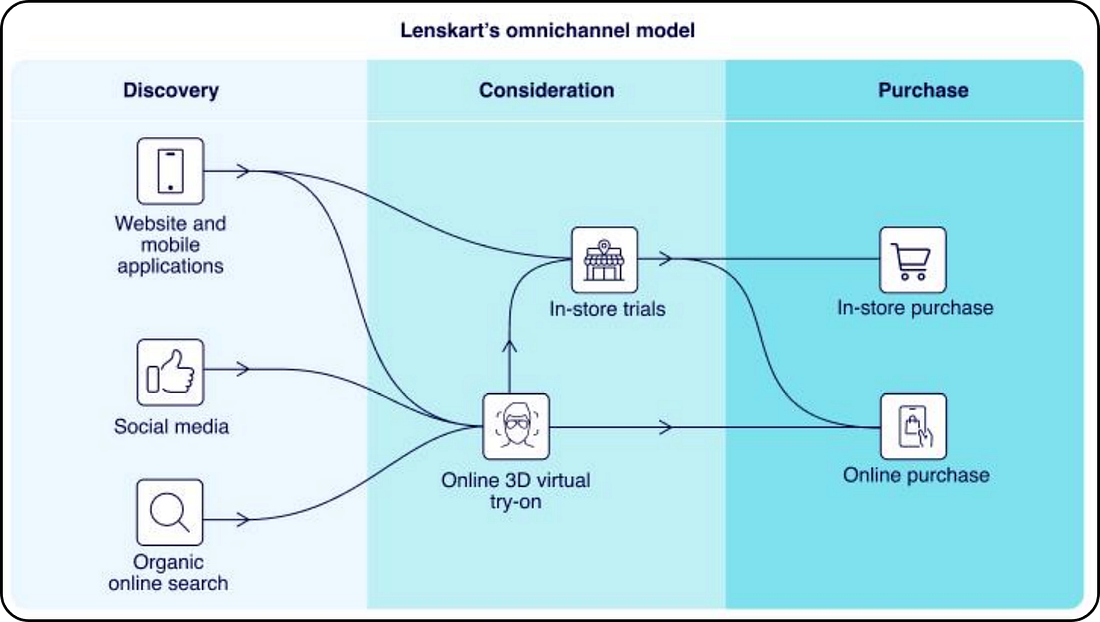
Its operational model is fully vertically integrated: from conceptualising and designing eyewear to manufacturing and direct sales, everything happens in-house. On top of this, Lenskart has adopted an omnichannel approach, blending online reach with offline presence to create a layered customer acquisition strategy.

This combination of control over the value chain and hybrid sales channels gives it a unique edge in an industry where most competitors depend on third-party manufacturing or retail partners.Source: Lenskart Solutions Limited, DRHP

Lenskart’s integration gives it a serious cost edge. No middlemen inflating prices 2.5–4x, and massive scale from selling 27.2 million eyewear units in FY25.

Source: Lenskart Solutions Limited, DRHP

Scaling Smart: How Lenskart Turns Size into Strategy

By operating at a massive scale, Lenskart is able to source frames and lenses at 35–50% lower costs than most competitors. This cost advantage, supported by manufacturing control through facilities in Gurugram, Bhiwadi, and soon Telangana — plus overseas plants in Singapore, the UAE, and a joint venture in China — allows the company to sustain gross margins close to 70%.

But the benefit goes far beyond profitability. Full control over both design and manufacturing gives Lenskart agility — crucial in a category where eyewear doubles as both a medical necessity and a fashion accessory. This integration allows the company to respond quickly to emerging trends, keep products fresh, and strengthen customer stickiness. Evidence? Over 98% of customers make repeat purchases within two years, many also renewing their paid Gold Membership.

The company’s measured approach to international growth further reinforces its base. Instead of rushing into new markets, founder and CEO Peyush Bansal prefers to acquire established players that align with Lenskart’s strengths in India. Today, it operates 656 stores abroad, each chosen with precision, aiming for premium margins in targeted geographies while keeping India as the anchor. This strategy draws parallels to global eyewear leader EssilorLuxottica, which holds about 20% global market share.

A First for Public Investors

With an estimated 25–40% share of India’s organised eyewear market, Lenskart sits well ahead of its nearest competitor. Yet, until now, retail investors had no way to directly invest in a dedicated eyewear business in India. Titan Eye exists, but it’s housed under Titan Company Ltd, where jewellery is the mainstay. Lenskart’s listing changes that — offering a pure-play opportunity in a growing, underpenetrated sector.

The company is financially robust, generating operating cash flow at 1.27 times EBITDA. For investors, this IPO is not just another debut — it represents the market’s first chance to own a focused leader in Indian eyewear.

The Growth Lens

India’s eyewear market is projected to be worth ₹78,800 crore in 2025, expanding at an annual rate of 13.5%. Prescription lenses make up 70% of the market, and demand is set to climb sharply as 62% of the population is expected to suffer from vision issues within five years.

Initially, Lenskart expanded through a franchise-led, asset-light model, which appealed because of quick payback — often just over 10 months, and even shorter in smaller cities. However, strained franchise relationships have prompted a strategic pivot. Now, the company is focusing on expanding company-owned outlets, enhanced with AI-driven tools and remote eye-testing capabilities to boost accessibility.

Final Frame

From a startup to a retail powerhouse with global aspirations, Lenskart has become one of India’s most compelling consumer stories. Whether it evolves into the “EssilorLuxottica of the East” will unfold in time — but for investors, the opportunity to buy into India’s eyewear growth story after 17 years of waiting is finally here.


:


The image added is for representation purposes only
Foreign Investors Pull Back: FPIs Exit Indian Equities for Second Straight Week

Lenskart’s IPO: A Clear Vision for India’s Eyewear Future

Foreign Investors Pull Back: FPIs Exit Indian Equities for Second Straight Week

Foreign Investors Pull Back: FPIs Exit Indian Equities for Second Straight Week

FPIs Sell Indian Stocks for 2nd Week in a Row — Should You Worry?
Foreign investors have once again turned net sellers of Indian equities, pulling out funds for the second consecutive week. While the headline numbers look concerning, domestic sentiment has so far remained resilient. But the persistent outflows highlight a shift in global risk appetite and signal that caution may be warranted in the months ahead.

Who Are FPIs and Why Do They Matter?
Foreign Portfolio Investors (FPIs) are large overseas funds, global banks, pension funds, and asset managers who buy and sell shares in Indian stock markets. They are not long-term strategic owners like Foreign Direct Investors (FDI) but move money based on short- to medium-term opportunities.
Their influence is substantial — FPIs own between 16% and 20% of India’s total market capitalisation. Their buying brings foreign currency inflows, strengthens the rupee, and lifts market valuations. Conversely, sustained selling can weigh on both the stock market and the currency.
When FPIs act in unison, their trades can swing daily market volumes and even drive sentiment for retail and domestic institutional investors (DIIs).

What’s Happening in August 2025?
In the week ending August 1, FPIs sold ₹17,000 crore worth of Indian equities. This marks the second straight week of outflows, adding to what is already a heavy year for foreign selling.
So far in 2025, over ₹1.03 lakh crore ($11.8 billion) has left Indian equities. More telling is the fact that FPIs sold stocks on all five trading days last week — a sign of consistent bearish positioning rather than a one-off rebalancing.

Why Are FPIs Selling? Four Key Drivers
1. Trump’s 50% Tariff on Indian Exports
The reimposition of Donald Trump’s protectionist trade stance has unsettled global markets. His 50% tariff on Indian exports comes alongside criticism of India’s continued purchase of Russian oil.
For sectors like textiles, auto components, gems and jewellery, and chemicals — which rely heavily on US demand — such tariffs threaten revenue and margins. For FPIs, this adds a new layer of trade friction risk, reducing the near-term appeal of Indian exporters.
2. US Dollar Strength & Higher US Interest Rates
The US dollar index is holding firm around the 100 mark, while US Treasury yields remain elevated. For global investors, this means they can park funds in US bonds with attractive, risk-free returns.
At the same time, the Indian rupee has weakened to ₹87.20 per dollar, making Indian assets less lucrative. Even if stock prices rise in rupee terms, currency conversion erodes dollar returns. This currency headwind is often a decisive factor for foreign fund managers.
3. India’s Expensive Stock Market
Indian equities have commanded premium valuations for several years. While this reflects strong domestic growth and corporate earnings, it also makes the market more vulnerable during periods of uncertainty.
The Nifty 50’s price-to-earnings (P/E) ratio is above its historical average and well above the multiples in other emerging markets like China or Brazil. In a global rotation, relatively cheaper markets tend to attract more capital, drawing money away from India.
4. Mixed Corporate Earnings and Growth Concerns
The Q1 FY26 earnings season has delivered a mixed bag. While some sectors like banking and telecom have performed well, industrial growth has slowed, and several companies have reported results below market expectations. This earnings uncertainty reduces the case for aggressive FPI buying.

Sector-Wise FPI Trends
The latest data shows a sharp divergence in sectoral flows:
Heavy Selling:
• IT: ₹30,600 crore (hit by slower US client spending and delayed technology budgets)
• FMCG: ₹18,178 crore (margin pressures, weak rural demand recovery)
• Power: ₹15,422 crore (profit booking after strong rallies)
• Auto & Auto Components: ₹11,308 crore (tariff fears, slowing exports)
Selective Buying:
• Telecom: ₹26,685 crore (5G rollout, digital infrastructure growth)
• Financial Services: ₹13,717 crore (credit growth, strong balance sheets)
The selling appears concentrated in sectors exposed to export risk and those trading at rich valuations, while flows remain positive in domestic demand-driven industries.

Looking Back: How Does 2025 Compare?
The current year’s trend is in sharp contrast to recent history:
• 2023: FPIs invested ₹1.71 lakh crore, fuelled by a global risk-on environment and India’s growth narrative.
• 2024: Net inflow of just ₹427 crore — effectively flat, as cautious sentiment emerged late in the year.
• 2025: Big reversal, with more than ₹1 lakh crore leaving in just seven months.
The swings underline how quickly FPI sentiment can change based on geopolitical developments, US monetary policy, and risk-adjusted returns in other markets.

Is the Market Panicking? Not Yet.
Interestingly, despite heavy foreign selling, Indian benchmark indices have not seen a proportionate collapse. This resilience is largely due to strong domestic institutional inflows and steady retail investor participation through SIPs (Systematic Investment Plans).
DIIs have been net buyers in recent weeks, offsetting much of the FPI outflow impact. The deepening domestic investor base is providing a cushion against external shocks — a major difference from earlier decades when FPI withdrawals could spark sharp corrections.

Conclusion: The Road Ahead
While India’s long-term growth story remains intact, near-term volatility cannot be ruled out. Key factors to watch include:
• US policy direction on trade and interest rates
• Movement of the rupee against the dollar
• Domestic corporate earnings in Q2 FY26
• Global commodity prices, especially oil
If US interest rates remain high and the dollar stays strong, FPI flows into India may remain subdued. However, a policy shift or softer economic data from the US could prompt a reversal — history shows that FPI sentiment can flip quickly.
For now, the market is absorbing the selling without major panic. But if outflows persist for several more weeks, the pressure on both equities and the rupee could intensify, testing the market’s resilience.


:


The image added is for representation purposes only

NSDL Shares Jump 16%, Push Value Past ₹25,000 Crore

Foreign Investors Pull Back: FPIs Exit Indian Equities for Second Straight Week

NSDL Shares Jump 16%, Push Value Past ₹25,000 Crore

NSDL Shares Jump 16%, Push Value Past ₹25,000 Crore

The sharp post-listing momentum in National Securities Depository Limited (NSDL) shares showed no signs of cooling on August 8, as the stock surged nearly 16 percent, extending gains for a third straight session. Since debuting on the bourses earlier this week, the depository giant has delivered a stellar 48 percent jump in value, pushing its market capitalization past the ₹25,000 crore milestone.

With Thursday’s rally, the stock is now trading more than 62 percent above its issue price, underscoring the strong appetite among investors despite a moderate listing premium on debut.

Three-Day Market Debut Performance

With a listing price of ₹880 per share on the BSE, NSDL became public on the secondary market on August 6. This was 10% higher than the IPO price of ₹800 per share. While the listing gain came in slightly lower than the expectations indicated by the grey market—where the stock commanded an estimated 16 percent premium before debut—the company’s subsequent performance has far exceeded early forecasts.

Over the course of the first three sessions, the stock has consistently advanced, adding a cumulative 48 percent from its listing price and propelling its market value into the top tier of newly listed companies.

Analysts Endorse Long-Term Potential

Experts in the market attribute the ongoing buying demand to NSDL’s strong operational model and established market leadership. Mehta Equities Ltd.’s Senior Vice President (Research Analyst), Prashanth Tapse, claims that the company stands out in the domestic depository market due to its supremacy in value-based transactions and institutional account holdings.

“NSDL continues to lead in value-centric transaction volumes and institutional accounts, supported by a trusted industry reputation and advanced technological infrastructure,” Tapse said. “Operating alongside CDSL in what is effectively a near-duopoly, the company benefits from significant entry barriers for potential competitors.”

He added that for investors who were allotted shares in the IPO, maintaining a long-term position is advisable. Those who did not receive allotment may consider entering the stock on any post-listing correction.

Strong Fundamentals, but Caution Advised

Echoing a similar view, Saurabh Jain, Head of Equity Research (Fundamentals) at SMC Global Securities, highlighted NSDL’s dominant market share, broad service reach, and diversified asset coverage as pillars for sustained expansion. He emphasized that macroeconomic growth trends and supportive regulatory policies further bolster the company’s growth trajectory.

However, Jain also noted potential vulnerabilities. “While the long-term story remains compelling, the company’s revenue is sensitive to fluctuations in transaction volumes. Changing investor participation trends, evolving regulatory norms, and the growing complexity of cybersecurity threats are key risk factors to watch,” he said.

Valuation Context and Industry Comparison

From a valuation perspective, NSDL is currently trading at a price-to-earnings (P/E) ratio of around 77, which is notably higher than its peer, Central Depository Services (India) Ltd. (CDSL), whose P/E stands near 66. The premium suggests investors are factoring in NSDL’s leadership position and anticipated earnings growth.

The Indian depository segment is characterized by its high entry barriers, owing to the technological investment, regulatory clearances, and market trust required to operate. As one of only two depositories in the country, NSDL’s near-monopoly position provides it with a competitive edge. Alongside CDSL, it plays a critical role in maintaining and safeguarding securities ownership records, enabling smooth settlement of trades, and supporting the rapidly growing domestic capital markets.

IPO and Listing Journey

NSDL’s IPO was closely tracked by both institutional and retail investors, given the company’s pivotal role in India’s financial market infrastructure. While the moderate listing premium initially suggested a tempered debut, the subsequent rally reflects strong secondary market demand, likely fueled by institutional interest and the scarcity value of such a unique business model.

The grey market premium ahead of the listing—about 16 percent over the IPO price—indicated healthy, though not exuberant, investor sentiment. But with the stock now trading significantly higher than both its IPO and listing price, the market has clearly reassessed its valuation metrics in light of the company’s fundamentals and growth prospects.

Strategic Positioning for the Future

NSDL’s operations span a wide range of services, from dematerialization of securities to facilitating capital market transactions, settlement services, and investor account maintenance. Its stronghold in institutional accounts and value-based transactions underpins a stable revenue base, while technological capabilities allow it to maintain high service efficiency and data security standards.

Looking ahead, market participants expect the company to benefit from India’s expanding equity culture, increasing retail participation, and the continued digitization of financial services. Regulatory pushes towards transparency and formalization of capital market activities are also likely to enhance the role of depositories in the broader financial ecosystem.

Investor Outlook

For now, the market mood towards NSDL remains decisively bullish. The combination of limited competition, strong industry positioning, and macroeconomic tailwinds is drawing in long-term investors, even at elevated valuations.

Still, the company’s high P/E ratio and sensitivity to transaction-based revenue streams suggest that disciplined entry points could be prudent, particularly for investors who missed out on the IPO. Experts agree that while NSDL is well-placed for structural growth, short-term volatility could arise from market-wide corrections, regulatory changes, or shifts in investor trading patterns.

Conclusion

In just three days since listing, NSDL has transformed from a moderately received IPO debutant into one of the standout performers of 2025’s primary market season. With a market capitalization now exceeding ₹25,000 crore and shares trading over 60 percent above the issue price, the company has firmly captured investor attention.

As India’s largest depository by value, NSDL’s strong fundamentals and strategic market position make it a compelling long-term play. However, as with all high-growth, high-valuation stocks, a measured approach to accumulation—especially for new entrants—remains the prudent course.


:


The image added is for representation purposes only

Gabriel India Stock Rockets Nearly 80% in 13 Sessions: What’s Driving This Surge?

Gabriel India Stock Rockets Nearly 80% in 13 Sessions: What’s Driving This Surge?

Gabriel India Stock Rockets Nearly 80% in 13 Sessions: What’s Driving This Surge?

Gabriel India Stock Rockets Nearly 80% in 13 Sessions: What’s Driving This Surge?

With a bold joint-venture push and strong quarterly performance, Gabriel India has become a standout in the auto-ancillary space—what lies ahead?

In a span of just 13 trading sessions since June 23, Gabriel India’s stock has surged nearly 79%, transforming it into a remarkable small-cap success story. What began as a steady climb accelerated in July, propelling the shares close to their year’s peak of ₹1,084. Such a short-term rally has both intrigued and energized investors, prompting a closer look at the forces behind this dramatic rise.

Strategic Expansion Through Joint Venture

A significant catalyst for this rally was Gabriel India’s board approval on July 9 for a ₹26.83 crore investment into Jinhap Automotive India Private Limited (JAIPL). Through this move, the company will hold a majority 51% stake in the newly formed venture, co-founded with South Korea’s Jinos Co., Ltd. The JV is focused on manufacturing automotive and industrial fasteners—an adjacent space to Gabriel’s well-established role in shock absorbers and suspension systems.

The partnership is designed to blend Gabriel’s manufacturing presence with Jinos’s technical expertise. Although the joint venture is slated for completion by October 2025, investors have already responded with strong enthusiasm. Investors interpreted this as a strong signal that Gabriel is actively diversifying its product portfolio—boosting confidence in its long-term potential .

Robust Financial Performance Reinforces Bullish Sentiment

Investors’ optimism isn’t just about strategic moves—it’s also grounded in solid financials. In its most recent quarter, Gabriel posted revenue of ₹1,073 crore, marking a year-on-year increase of nearly 17%. Even more impressive, net profit rose by 31.2% to ₹64 crore.

Equally noteworthy is the company’s near-zero debt position, which has bolstered its appeal. Gabriel stands out in the auto-ancillary sector as one of the few companies with an exceptionally lean and debt-free balance sheet, as noted by market observers.

This combination of growth and prudence has seen its trailing twelve-month price-to-earnings (P/E) multiple balloon to around 64×—well above industry norms of 25–30×—indicating that markets are pricing in strong future performance .

Technical Breakout and Momentum Trading

The rapid price ascent has broken through key technical resistance levels. Gabriel’s shares are now trading near ₹1,079–₹1,083—a level that aligns with their 52-week high . This breakout has triggered increased volume and momentum-based trading activity.

For the year-to-date, Gabriel India has delivered returns of over 120%, with more than 13% gained just in the previous week . Such returns are particularly notable when compared to broader indices, drawing further investor interest.

Key Drivers Powering the Jump

While technical trading has clearly amplified the rally, three primary factors appear to have lit the fuse:

1. The announcement of the ₹26.83 crore JV investment and impending majority stake in a new fastener business .
2. A healthy financial structure, emphasizing double-digit revenue and profit growth plus minimal debt .
3. Broad-based investor confidence and speculative interest often seen in small- to mid-cap stocks when favorable corporate news emerges.

Possible Risks and Cautionary Notes

Despite its recent surge, Gabriel India still carries certain risks. Its valuation demands strong growth going forward—anything less might trigger a steep re-rating. Moreover, integrating the new joint venture, establishing manufacturing plans, and achieving profitability will take time and depend heavily on execution, particularly in collaboration with a foreign partner.

In addition, small-cap stocks are known for their volatility. Even a slight negative macroeconomic shift or sector-level headwind could prompt a correction, trimming recent gains.

Strategic Context: More Than a Short-Term Move

This rally isn’t just about speculation or short-term momentum—Gabriel appears to be deliberately broadening its market presence and expanding its technological expertise. The fasteners JV complements its existing portfolio, while other ongoing structural efforts (like corporate reorganizations) hint at a long-term growth plan.

Given the projected demand in the automotive sector and increasing complexity of vehicle components, Gabriel is positioning itself to supply multiple product categories to original equipment manufacturers (OEMs) and aftermarket players.

Final Thoughts

Gabriel India’s impressive 79% rally within just 13 trading days signals a significant turning point in the company’s growth journey. Backed by a strong Q4 earnings report, a strategic JV with South Korea’s Jinos Co. for fastener production, and technically driven investor sentiment


:


The image added is for representation purposes only

IREDA Bonds Gain Tax Benefits to Promote Green Energy

Nila Spaces Jumps 10% as Wellness Housing Project Gets RERA Clearance

Nila Spaces Jumps 10% as Wellness Housing Project Gets RERA Clearance

Nila Spaces Jumps 10% as Wellness Housing Project Gets RERA Clearance

Penny stock leaps 10% as RERA gives green light to sustainable residential project in Gujarat’s GIFT City.

Regulatory Nod Sparks Market Rally

Shares of Nila Spaces skyrocketed by 10%, hitting the daily upper circuit on Thursday, following the Gujarat Real Estate Regulatory Authority’s approval of its PRANA residential project at GIFT City, Gandhinagar. This significant uptick reflects investor enthusiasm around the firm’s innovative blend of wellness, design, and urban living.

PRANA: A Holistic Urban Living Experience

Conceived and developed through its subsidiary Nila Urban Living (90% owned), PRANA has been formally registered with RERA and is cleared to proceed with sales and marketing. The registration remains valid till December 31, 2030, with renewal possibilities.

Located in the heart of India’s first smart city, the development brings together globally recognized collaborators:

•Interbrand for brand identity
• Design responsibilities were entrusted to Germany-based Blocher Partners, known for their modern architectural sensibilities
• Lifestyle experiences will be curated by Quintessentially, a premium concierge brand specializing in bespoke services

PRANA is designed to serve discerning professionals—offering studio, 1-BHK, and 2-BHK units, rooftop yoga and meditation zones, fitness centers, smart-home technology, lounges, children’s play areas, and co-working hubs.

Prior Milestone: ₹129 Crore Construction Deal

Nila Spaces has already established a strong foothold in GIFT City through significant past milestones. In June 2025, the company secured a ₹129.25 crore contract via its subsidiary to build core and shell infrastructure for a premium residential tower at the same locale. The plot was acquired at a record price (₹6,557/sq ft), marking it as Gujarat’s most expensive land deal.

The chosen contractor, Riveria Infrastructures, has been tasked with delivering the structure within 27 months. The deal boosted investor confidence—Nila Spaces shares surged 10% in that session.

Market Metrics & Stock Activity

Trading opened at around ₹12.60 on the BSE, with prices oscillating between ₹12.19 and ₹13.72 during the day. With a current share price below ₹15, Nila Spaces clearly qualifies as a penny stock.

While such micro-caps usually exhibit low trading volumes and high volatility, recent developments sparked heavy trading activity . Market watchers caution investors of the inherent risks, though some technical charts suggest additional upside could extend toward ₹15–16, with ~₹12.5 acting as a support floor.

Financial Landscape & Strategic Positioning

Nila Spaces is evolving rapidly. During FY25, the company reported a revenue of ₹136 crore, reflecting a robust growth of nearly 50% over the ₹91 crore it posted the year before. Net profit rose from ₹13 crore to ₹15 crore.

Financial indicators reflect healthy performance:

• ROE: ~11%
• ROCE: ~25%
• PE ratio: ~37x, slightly below industry average of ~43x Analysts view this growth as consistent, underscoring the company’s strong trajectory.

Wellness-Centric Smart Living: The PRANA Approach

What sets PRANA apart is its focus on sustainable, community-minded urban living. The project’s USP is its emphasis on wellness—integrating services like rooftop yoga, meditation spaces, and gym facilities. Smart-home integration and a wellness club featuring both modern and traditional health practices aim to foster balance and stress relief.

Designed for today’s busy professionals navigating stress and work-life overlap, PRANA aspires to offer a peaceful retreat that promotes harmony and rejuvenation.

Strategic Collaborations & Design Excellence

By partnering with international players like Interbrand, Blocher, and Quintessentially, Nila Spaces brings a global standard to PRANA. Interbrand shapes its visual identity, Blocher crafts functional and user-centric architecture, and Quintessentially provides a curated lifestyle experience across wellness, travel, dining, education, and culture.

Investor Hotspot: Penny Stock Gains Traction

Despite falling into the penny stock category—with shares under ₹15—Nila Spaces is carving out a reputation underpinned by solid fundamentals and high-profile approvals. Over five years, the stock has delivered multibagger returns of over 1,000%, with recent fiscal performance showing strong growth momentum.

While volatility remains, approvals like the RERA nod and landmark contracts enhance credibility and visibility.

Final Thoughts

The 10% upswing in Nila Spaces’ stock reflects growing investor confidence after receiving RERA approval for its PRANA project in GIFT City. Alongside major contracts and bullish fiscal indicators, the company is reshaping its image from a speculative penny stock into a serious player in the luxury wellness residential space. With a 27-month construction timeline and collaborations with renowned global brands, PRANA offers a compelling value proposition for urban professionals—from design and amenities to community and well-being.

That said, investors need to tread carefully, as penny stocks are often marked by sharp price swings and elevated risk levels. Key price levels—support near ₹12.5 and resistance at ₹15–16—are critical to monitor. But if execution aligns with its vision, Nila Spaces could continue to chart impressive growth and redefine sustainable luxury living in India’s burgeoning smart cities.


:


The image added is for representation purposes only

IREDA Bonds Gain Tax Benefits to Promote Green Energy

Arkade Developers: High-Margin, Debt-Free Growth in Mumbai Realty

Aurionpro Shares Climb After ₹30 Crore Digital Infrastructure Contract Win

Aurionpro Shares Climb After ₹30 Crore Digital Infrastructure Contract Win

Aurionpro Solutions secures a ₹30 crore contract from Protean eGov Technologies, driving stock gains and reinforcing its dominance in digital transformation solutions.

Aurionpro Wins Major Order, Boosts Investor Confidence

Aurionpro Solutions’ stock climbed close to 3% on Thursday after the company unveiled a significant new project acquisition. The firm revealed that it had secured a significant order valued at approximately ₹30 crore from Protean eGov Technologies Ltd, a prominent digital services provider.

The contract is set to strengthen Aurionpro’s foothold in India’s rapidly advancing digital ecosystem, particularly in government-driven tech modernization efforts. This announcement added to growing investor optimism surrounding the company’s consistent project wins and robust fundamentals.

Deal Details: Supporting National Technology Transformation

Aurionpro confirmed that the awarded contract is focused on establishing a state-of-the-art IT infrastructure platform. This system will support Protean’s next-generation digital services, contributing to more efficient delivery of e-governance and citizen-centric solutions across India.

The project encompasses comprehensive system integration, cutting-edge cybersecurity measures, and robust infrastructure management services. Aurionpro plans to deploy advanced technologies to build a streamlined platform designed to efficiently handle today’s large-scale digital requirements.
This initiative aligns with India’s broader Digital India mission, which seeks to empower governance through efficient, accessible, and transparent digital platforms.

Aurionpro’s Growing Momentum in the Public Sector

Aurionpro has increasingly positioned itself as a preferred technology partner for large-scale public and private sector digital initiatives. Its reputation for delivering secure, scalable, and reliable IT infrastructure solutions has paved the way for long-term partnerships.

The Protean contract further expands Aurionpro’s expanding lineup of large-scale, high-impact technology initiatives. Recent contract wins across multiple verticals — including banking, smart cities, and government platforms — reflect its capability to deliver end-to-end digital solutions that cater to complex requirements.
Notably, this order comes at a time when both public and private entities are aggressively investing in secure digital systems due to heightened cybersecurity concerns and a push for digital transformation.

Market Reaction: Strong Fundamentals Drive Stock Gains

Following the announcement, Aurionpro’s stock rose as much as 3%, reflecting the market’s positive reception of the order. As of the last trading session, shares were priced at ₹950.90 apiece on the NSE, registering a gain of ₹24.65.

Over the past year, the stock has delivered stellar returns of more than 160%, underlining strong investor faith in the company’s strategic direction. Aurionpro’s consistent financial performance, backed by strong order inflows and profit growth, has solidified its standing as a fundamentally strong mid-cap IT player.
Analysts attribute the recent rally not just to this particular order but to the company’s broader growth trajectory, robust execution capabilities, and long-term focus on scalable technology solutions.

Strategic Focus on Infrastructure and Cybersecurity

This order underlines a critical area of focus for Aurionpro — IT infrastructure development combined with enhanced cybersecurity. With rising concerns about data privacy and security breaches, public and private enterprises are doubling down on cyber-resilient platforms.

Aurionpro’s expertise in integrating secure solutions within complex digital ecosystems makes it well-positioned to benefit from this shift. The company’s proactive approach in aligning with global technology standards and incorporating artificial intelligence (AI), cloud computing, and secure networks has further enhanced its market appeal.

Looking Ahead: Pipeline Visibility and Expansion Plans

Aurionpro’s current project pipeline is robust, with a steady stream of orders across various sectors including BFSI, smart mobility, and digital governance.
The management’s recent focus on expanding its global footprint — particularly in Southeast Asia and the Middle East — has opened new revenue streams. Simultaneously, partnerships with government agencies and tech platforms have fueled domestic growth.

The ₹30 crore contract from Protean is not just a revenue boost but also a testament to the company’s ability to consistently win high-value deals in a competitive market. It validates Aurionpro’s project execution standards, reliability, and value-driven offerings.

Final Thoughts

Aurionpro Solutions’ recent ₹30 crore deal with Protean eGov Technologies represents a significant step forward in its ongoing digital infrastructure expansion. This development further cements its reputation as a reliable tech partner in India’s ongoing digital transformation drive.
The market’s swift and positive response to this announcement underscores investor confidence in the company’s strong fundamentals, growth visibility, and execution capabilities.

As demand for digitally integrated and cyber-secure infrastructure continues to surge, Aurionpro is well-placed to capture a significant share of this opportunity, both in India and globally. With a robust order book and expanding client base, the company remains on a promising upward trajectory.


:


The image added is for representation purposes only

IREDA Bonds Gain Tax Benefits to Promote Green Energy

Temasek Targets Europe with $25 Billion Investment Surge Strategy

Temasek Targets Europe with $25 Billion Investment Surge Strategy

Temasek Targets Europe with $25 Billion Investment Surge Strategy

Singapore’s state-backed investment giant Temasek is sharpening its focus on Europe, following a record-breaking year of capital deployment in the region. With a $7.8 billion investment in European assets during the last financial year, the firm now sees even more potential opportunities opening up across the continent due to lower company valuations and favorable market conditions.

A Strategic Shift Toward European Markets
Temasek’s increased interest in Europe is part of a broader strategic pivot that reflects shifting global dynamics. According to Nagi Hamiyeh, who leads Temasek’s operations in Europe, the Middle East, and Africa (EMEA), market volatility, inflation, and geopolitical uncertainty have made European companies more attractively priced than they were in previous years. This, in turn, has created an entry point for long-term investors like Temasek.
“Because of the economic environment and valuation corrections, many European firms are now available at fair prices, whereas earlier they were overvalued,” Hamiyeh said.
While the U.S. remains an important market, the valuation gap between European and American firms has widened, making Europe an increasingly attractive hunting ground for fresh investments.

Record-Breaking Portfolio Growth
Temasek experienced a significant rise in the overall worth of its investment portfolio by the end of the financial year closing on March 31, 2025.. The investment firm’s net portfolio value rose 11.6% year-over-year, reaching a historice high of S$434 billion (roughly $321 billion USD). This marks a strong rebound for the fund, especially following a challenging prior year where market fluctuations negatively impacted returns.
Out of the S$25 billion Temasek has planned to invest in Europe over a five-year period, S$10 billion has already been deployed—indicating that the fund is moving faster than expected in seizing opportunities across the continent.

Where Temasek Is Placing Its Bets Temasek’s investments in Europe are spread across a mix of sectors that align with its long-term themes such as digitization, sustainable living, future mobility, and healthcare. Some of the notable investments include:
• Renewable Energy: Temasek has increased its stake in Neoen, a French renewable energy company focused on solar, wind, and battery storage projects. This aligns with Temasek’s vision for environmental responsibility and reinforces its dedication to advancing renewable energy initiatives.
• Gaming and Tech Services: The fund invested in Keywords Studios, an Irish company that provides services to global video game developers. This initiative reflects Temasek’s strategic drive to strengthen its presence in the evolving digital landscape.
• Industrial and Financial Services: The company continues to show interest in industrial manufacturing, logistics, fintech, and financial platforms, especially those in early growth stages.
• Consumer Goods and Family Businesses: Temasek is also targeting well-established, often family-run businesses in countries such as Germany, Italy, and Scandinavia, which have proven business models and room ford modernization.

Europe vs. U.S.: Valuation and Risk-Reward Balance
While American markets have generally commanded higher valuations due to their tech-heavy composition and investor optimism, Europe now presents a better value proposition, particularly for long-term investors seeking quality assets at discounted prices. The price-to-earnings ratios and other valuation metrics for many European firms have declined in recent months, giving investors like Temasek more bargaining power.
Hamiyeh noted that Temasek isn’t looking to pull back from Asia or North America, but rather to diversify in a way that balances its global exposure. Europe’s unique combination of attractive pricing, economic resilience, and forward-thinking industries makes it an ideal match for Temasek’s shifting investment strategy.

Riding Out the Global Uncertainty
Temasek’s strategy also reflects a deeper confidence in riding out global macroeconomic headwinds. From interest rate changes to global trade disruptions and inflationary pressures, the current landscape is uncertain. However, Temasek sees this uncertainty not as a deterrent, but as a potential source of value.
Rather than waiting on the sidelines, the investment firm is leaning in—deploying capital where it sees long-term growth potential. With a patient capital approach, Temasek is less concerned about short-term volatility and more focused on strategic positioning for the decades ahead.

Future Outlook: Scaling Up European Exposure
Looking forward, Temasek is expected to continue allocating more capital to Europe, particularly in regions where it already has a stronghold—such as France, Italy, Germany, and Scandinavian countries. The firm is also actively exploring new sectors including advanced manufacturing, agri-tech, digital healthcare, and sustainable infrastructure.
Temasek still retains nearly 60% of its planned five-year capital allocation for Europe, giving it substantial financial capacity to further grow and diversify its investments across the continent.. The current pace suggests that the fund may exceed its original targets if market conditions remain favorable.

Conclusion: A Long-Term Play in a Rebounding Market
Temasek’s aggressive move into European markets marks a transformative turn in global investment dynamics.While many investors remain cautious amid rising geopolitical tensions and economic uncertainty, Temasek is taking a proactive stance—investing in businesses that are poised for recovery and long-term growth.
By capitalizing on current valuation gaps and focusing on high-quality companies, Temasek is not just weathering the storm—it’s building for the future. For Europe, this could mean an influx of long-term capital from one of the world’s most respected institutional investors.


:


The image added is for representation purposes only

IREDA Bonds Gain Tax Benefits to Promote Green Energy

RBI's Revised Co-Lending Norms Set to Transform NBFC Growth

RBI's Strategic Liquidity Management: A ₹2 Trillion Operation Looms

RBI’s Strategic Liquidity Management: A ₹2 Trillion Operation Looms

In a liquidity management move watched closely by financial markets, the Reserve Bank of India (RBI) conducted a two-day Variable Rate Reverse Repo (VRRR) auction on July 9, accepting ₹97,315 crore from banks. This came just shy of the ₹1 trillion it had offered. Market participants believe the cautious bidding reflects expectations of a much larger liquidity absorption—possibly ₹2 trillion—on the horizon.

RBI Tightens Grip on Surplus Liquidity
The accepted bids cleared at a cut-off rate of 5.49%, slightly higher than the 5.47% seen in the previous seven-day VRRR held on July 4. This increase, though modest, suggests that banks are pricing in tighter liquidity going forward or preparing for another, much larger VRRR operation.
Traders and treasury dealers believe the higher rate points to growing uncertainty in the short-term money market. With expectations of a ₹2 trillion auction soon, many institutions held back from fully subscribing to the current round, choosing instead to wait and see how the RBI proceeds.

Liquidity Remains in Surplus—But Banks Tread Carefully
Even after the RBI’s significant withdrawal of funds via the VRRR mechanism, surplus liquidity remains abundant in India’s banking sector. As per RBI figures dated July 8, the system still held an excess of ₹3.07 trillion.
Still, the higher cut-off rate indicates that banks are becoming more cautious. There is still no clarity on where the RBI wants overnight rates to settle—whether close to the repo rate of 5.50% or somewhere between the repo and the Standing Deposit Facility (SDF) rate of 5.25%.
A dealer from a state-owned bank noted:
“There is expectation of a ₹2-trillion VRRR announcement soon. It remains uncertain whether the RBI aims to anchor the overnight rate precisely at 5.50% or prefers it to fluctuate within the range bounded by the Standing Deposit Facility and the repo rate. This uncertainty is leading to cautious bidding and a higher cut-off.”

Short-Term Rates Show an Uptrend
The rising rates in the money market support this cautious outlook. Key short-term rates have moved upward recently:
• The Weighted Average Call Rate (WACR) increased to 5.34%, compared to around 5.26% a week ago.
The interest rate for Tri-party repos advanced to 5.29%, marking a rise from the previous benchmark of 5.13%.
This suggests that short-term money is becoming slightly more expensive, even with surplus liquidity still in the system.

A Look at Recent VRRR Activity
This auction is part of a series of regular VRRR operations the RBI has been conducting to manage surplus liquidity and guide short-term interest rates. Here’s a quick recap:
• On July 4, during a seven-day Variable Rate Reverse Repo (VRRR) auction, the Reserve Bank of India attracted ₹1.7 trillion in total bids but chose to absorb only ₹1 trillion, setting the cut-off yield at 5.47%.
• On June 27, the Reserve Bank of India absorbed ₹84,975 crore from the banking system, with the average return rate settling at 5.45%.
• June 18: A similar pattern was observed, with selective acceptance at competitive rates.
These auctions show RBI’s consistent effort to sterilize excess liquidity and fine-tune monetary transmission.

Expectations Building for a ₹2 Trillion Operation
Speculation within financial circles suggests that the Reserve Bank may soon initiate a Variable Rate Reverse Repo (VRRR) operation worth ₹2 trillion, possibly within the near-term horizon. There are several reasons why a large liquidity absorption may soon be necessary:
• A recent reduction in the Cash Reserve Ratio (CRR) has freed up nearly ₹2.5 trillion, effectively releasing that volume of funds into the banking system and enhancing overall liquidity.
• The Reserve Bank of India’s transfer of surplus funds to the government will, in due course, make their way back into circulation within the banking sector.
• Bond maturities and government spending: Both can temporarily elevate surplus liquidity.
Analysts predict that by October–November, the total liquidity surplus could grow to ₹5 trillion, making larger VRRR operations not just likely—but necessary.

Why VRRR Matters in Monetary Policy
1. Variable Rate Reverse Repo (VRRR) auctions serve as essential instruments in the Reserve Bank of India’s strategy to regulate liquidity. By conducting these operations, the RBI draws surplus funds out of the banking sector, helping to maintain monetary balance.
2. Prevent oversupply of money, which can lead to lower short-term rates and weaken monetary policy transmission.
3. Stabilize overnight rates like WACR, keeping them aligned with the central bank’s policy stance.
4. Manage inflation expectations, since surplus liquidity can fuel asset bubbles or consumption spikes.
By actively managing liquidity through VRRR, the RBI reinforces the effectiveness of its repo and reverse repo corridor.

Banks Playing It Smart
Banks, for their part, are being strategic. Many chose not to deploy their entire surplus in the latest VRRR, likely keeping some buffer for potential rate volatility or the upcoming larger auction. The move to bid at higher rates suggests that banks are aiming to hedge risk rather than chase marginal returns.
Some analysts believe this “wait and watch” behavior will continue until the RBI provides greater clarity on its short-term liquidity roadmap—especially if more durable liquidity (like long-term money) continues to flood the system.

Looking Ahead
With inflation under control and growth momentum holding steady, the RBI is expected to maintain its current policy stance. However, the central bank’s liquidity operations—like the VRRR—will remain active and adaptive to market conditions.
A potential ₹2 trillion auction will be watched closely not just for the amount, but also for the tenor (7-day, 14-day, etc.) and the cut-off rate. These factors will offer deeper insight into RBI’s evolving liquidity strategy.

Conclusion
By taking in ₹97,315 crore through its most recent VRRR operation, the Reserve Bank of India has demonstrated a forward-looking stance in handling excess liquidity within the banking system. As anticipation builds around a potential ₹2 trillion liquidity operation, financial institutions are treading carefully—mindful of excess funds in the system while closely observing the Reserve Bank’s next strategic steps. In the weeks ahead, the central bank may adopt a more assertive stance to fine-tune the delicate balance between economic expansion, price stability, and overall financial system health.


:


The image added is for representation purposes only

IREDA Bonds Gain Tax Benefits to Promote Green Energy

Lenskart’s IPO: A Clear Vision for India’s Eyewear Future

Global Investors Reap Nearly $100 Billion Gains from India Investments

Global Investors Reap Nearly $100 Billion Gains from India Investments

In a powerful indicator of India’s growing prominence in the global investment landscape, overseas investors have reportedly earned close to $100 billion from their equity, debt, and direct investments in the country. This remarkable amount highlights India’s growing reputation as a trustworthy and profitable hub for international investors.
This large-scale repatriation of investment income comes amid a backdrop of increasing foreign direct investment (FDI), strong economic growth, and the government’s push for structural reforms that encourage business and innovation.

India Delivers Strong Returns to Foreign Investors
According to official estimates and industry analysts, foreign entities made substantial gains from various investment channels in India. These include returns from listed equity holdings, government and corporate bonds, and direct ownership in Indian businesses. The near $100 billion figure reflects net profits repatriated, not just inflows, showing that overseas investors are not only placing capital in India—but also realizing robust returns.
India’s dynamic and resilient economic performance, paired with its reform-driven policy approach, has created an ecosystem that attracts long-term foreign investment across industries ranging from manufacturing and digital infrastructure to green energy and consumer markets.

Economic Fundamentals Attracting Foreign Capital
Several factors have contributed to making India a hotbed for international investors:
1. Strong Economic Growth and Reform-Driven Environment
India has regularly achieved rapid economic expansion, ranking it among the fastest-growing large economies worldwide.. Strategic initiatives such as the Goods and Services Tax (GST), corporate tax cuts, and the ease-of-doing-business drive have improved investor sentiment.
The government’s ambitious “Make in India” and “Digital India” missions have created a more open and innovation-friendly environment, further encouraging global capital flows.
2. China-Plus-One Strategy
With shifting global dynamics and disruptions in supply chains, international businesses are deliberately diversifying away from their reliance on China. India, with its large talent pool, improving logistics, and supportive policies, has emerged as a favored alternative.
Major global manufacturers like Apple, Samsung, and several semiconductor firms are expanding their India operations, signaling deeper investor confidence in India’s long-term manufacturing potential.
3. Valuation Advantage and Market Potential
While valuations in the U.S. and some other developed markets have become steep, India continues to offer compelling value across sectors like financial services, infrastructure, clean energy, and consumer tech. Many foreign funds view Indian markets as being in a long-term structural bull phase.

What Made Up the $100 Billion in Earnings?
Foreign investors realized their earnings across multiple investment channels:
• Listed Equities: Gains from shares of Indian companies, especially in the tech, financial, and green energy sectors.
• Debt Markets: Steady yields from government securities and corporate bonds attracted bondholders, particularly as global interest rates remained volatile.
• Direct Investments: Exit opportunities through IPOs and secondary market transactions allowed global investors to unlock value from their stakes in Indian enterprises.
This combination of sources has made India a well-rounded opportunity—offering both growth and liquidity to investors looking for long-term capital appreciation.

Capital Mobility: A Sign of Economic Maturity
That such significant profits are being repatriated signals that India has reached a new level of maturity in its financial ecosystem. Investors are not just betting on Indian growth—they are successfully monetizing their investments and exiting with ease.
This level of flexibility and transparency is critical in attracting new investments. As profits return to global portfolios, they often serve as endorsements that encourage more investors to look toward India for the next cycle of opportunity.

Government Support and Policy Initiatives
The Indian government has played a key role in fostering a positive investment climate. Several policy steps have helped:
• FDI Liberalization: India has opened up several sectors to 100% FDI under the automatic route, cutting red tape and simplifying regulations.
• Production Linked Incentive (PLI) Schemes: These incentive-driven policies have attracted global players in mobile manufacturing, pharmaceuticals, textiles, and electronics.
• Strategic Trade Agreements: India’s trade pacts, such as the one with the European Free Trade Association (EFTA), are paving the way for smoother capital flows and more favorable trade terms.
The country is targeting $100 billion in annual FDI in the near term, showing its ambition to become a global hub for high-quality investment.

What This Means for the Future
The $100 billion profit figure is not just a measure of past success—it’s a signal for what lies ahead. With capital markets deepening and private equity and venture capital on the rise, India is poised to be an even bigger player in global portfolios.
Investors are likely to reinvest part of their profits back into India, driven by new opportunities in sectors such as:
• Renewable energy and climate tech
• Digital and AI-driven enterprises
• Advanced manufacturing and electric vehicles
• Logistics and infrastructure modernization
• Financial technology and inclusion-based platforms
Global private equity firms and sovereign wealth funds are also expanding their footprints in India, confident in the country’s long-term fundamentals and scalable opportunities.

Conclusion: A Virtuous Investment Cycle
India’s ability to deliver nearly $100 billion in profits to foreign investors underscores the nation’s strength as a globally competitive, investor-friendly economy. It validates the country’s efforts in building an open, modern, and resilient financial and industrial system.
As foreign capital continues to flow in—and out—India is proving that it is not just a place for emerging market exposure, but a core pillar in global investment strategies. The cycle of invest, grow, profit, and reinvest appears to be gaining strong momentum.


:


The image added is for representation purposes only

IREDA Bonds Gain Tax Benefits to Promote Green Energy