Menu

Author Archives: Equity Right

GNFC Records Impressive Profit Surge in Q4 FY25: A Silver Lining Amid Revenue Dip

GNFC Records Impressive Profit Surge in Q4 FY25: A Silver Lining Amid Revenue Dip

GNFC Records Impressive Profit Surge in Q4 FY25: A Silver Lining Amid Revenue Dip


Gujarat Narmada Valley Fertilizers & Chemicals Ltd. delivers strong earnings in Q4 FY25 as margin improvement offsets sales pressure from plant outage.

Impressive Bottom-Line Performance in Challenging Conditions

Gujarat Narmada Valley Fertilizers & Chemicals Ltd. Gujarat Narmada Valley Fertilizers & Chemicals Ltd. (GNFC) reported a standout financial outcome for the fourth quarter of FY 2024–25, marking a robust 62% increase in its consolidated net earnings compared to the same period last year. The firm posted a profit of ₹211 crore between January and March 2025, significantly higher than the ₹130 crore reported in the corresponding quarter of FY24.

This strong growth in profit came even as the company witnessed a marginal dip in overall income. The company’s total consolidated income for the quarter reached ₹2,177 crore, reflecting a modest decline from ₹2,218 crore reported during the corresponding timeframe a year earlier. The results underline GNFC’s ability to navigate operational headwinds while still expanding its profitability base through strategic cost optimization and effective margin management.

Margin Expansion Strengthens Financial Profile

One of the standout aspects of GNFC’s Q4 FY25 results is the marked improvement in its operating profitability. The company’s EBITDA (Earnings Before Interest, Tax, Depreciation and Amortization) margin expanded significantly to 13.23%, up from 7.89% in the year-ago quarter.

This nearly 530 basis-point increase in margins reflects the company’s disciplined efforts to control input costs and streamline production. A key factor contributing to the enhanced margin was a decline in feedstock and energy costs during the quarter. In addition, increased production efficiency and tighter cost controls helped bolster earnings.

However, it’s worth noting that a shutdown at GNFC’s Dahej complex temporarily impacted volumes. Despite the short-term disruption, the company managed to maintain strong operational performance, indicating robust business resilience and strategic inventory management.

Fertilizer Segment Gains from Policy Tailwinds

GNFC’s fertilizer division performed steadily, backed by supportive government policies under the Nutrient-Based Subsidy (NBS) framework. The central government’s rationalization of subsidy rates and timely reimbursements offered financial predictability to manufacturers.

For GNFC, this support translated into better price realization and healthier margins in its fertilizer operations. Furthermore, lower input costs—particularly for key raw materials like ammonia and phosphoric acid—provided additional cushion to the bottom line.

The company also undertook initiatives to optimize its logistics and supply chain, which further contributed to cost savings. Fixed costs were better absorbed due to streamlined operations and improved utilization rates in the fertilizer segment.

Chemicals Business Shows Mixed Trends

The chemicals division of GNFC, which plays a key role in generating revenue, delivered varied results during the period. While pricing pressure remained in certain product categories due to global supply-demand imbalances, the company reported stable volumes in high-margin products.

The segment was partially impacted by market volatility and soft international demand for select chemicals. However, the company continued to invest in product innovation and forward integration initiatives to reduce reliance on cyclical commodities.

These efforts are expected to help the company build long-term value by enhancing its specialty chemicals portfolio and improving revenue diversification.

Full-Year Snapshot: Steady Growth Despite External Pressures

Looking at the broader picture for FY25, GNFC posted a net profit of ₹597 crore, a notable improvement from ₹497 crore recorded in FY24. This marks a strong year-over-year upswing, highlighting the company’s resilience in maintaining consistent profit growth over time.
Meanwhile, total consolidated income for the year marginally declined to ₹8,393 crore, compared to ₹8,399 crore in the previous fiscal. The near-flat revenue performance is reflective of softer product realizations and temporary production constraints, including the aforementioned plant shutdown at Dahej.

Nevertheless, the company’s ability to maintain earnings growth despite these pressures suggests a solid foundation built on prudent capital allocation, cost discipline, and operational excellence.

Strategic Outlook: Focus on Sustainability and Value Creation

GNFC remains committed to advancing its long-range vision focused on generating value, embracing sustainable practices, and driving forward-thinking innovation. The company is working on diversifying its revenue streams by exploring downstream opportunities in both the fertilizers and chemicals space.

In addition, GNFC is placing increased emphasis on environmental sustainability through energy efficiency initiatives, reduction in carbon footprint, and digitalization of plant operations. These proactive initiatives are anticipated to enhance operational efficiency while stabilizing income streams in the periods ahead.

With steady government support for the agriculture and fertilizer sectors, and rising demand for specialty chemicals across industries, GNFC appears well-positioned to benefit from both cyclical and structural tailwinds.

Conclusion: Resilience, Efficiency, and Forward Momentum

GNFC’s Q4 FY25 performance reflects a business that has not only weathered operational hurdles but also emerged stronger through efficient cost management, margin expansion, and policy-backed sectoral support. While top-line pressures persisted due to market conditions and temporary disruptions, the company’s focus on bottom-line growth through smarter resource utilization and operational agility has paid off.

As GNFC steps into FY26, its strategic initiatives in portfolio diversification, capacity enhancement, and ESG compliance will be crucial in sustaining growth and building investor confidence. The company’s ability to deliver consistent profits despite external challenges marks it as a resilient player in the Indian industrial landscape.


The image added is for representation purposes only

Gravita India: A New Chapter Begins with ₹500 Crore Capital Boost from Stake Divestment

Gravita India: A New Chapter Begins with ₹500 Crore Capital Boost from Stake Divestment

Gravita India: A New Chapter Begins with ₹500 Crore Capital Boost from Stake Divestment

Gravita India: A New Chapter Begins with ₹500 Crore Capital Boost from Stake Divestment


To bolster financial resilience amid shifting market conditions, Gravita India’s promoter relinquishes 3.4% equity, securing ₹498 crore from the transaction.

Promoter Stake Sale Marks Major Capital Infusion

Gravita India Ltd, a prominent entity in the lead production and recycling industry, experienced a notable decrease in promoter ownership following the sale of a 3.4% equity share, resulting in proceeds of ₹498 crore. This notable transaction reflects strategic financial management aimed at leveraging market opportunities and enhancing liquidity for future growth initiatives.

The sale of these shares occurred through a block deal on the stock exchanges, drawing significant market attention due to its scale and potential impact on the company’s shareholding pattern. The promoter’s decision to pare down their holdings signals a proactive approach towards capital restructuring.

Details of the Transaction

The stake divestment involved the sale of approximately 90 lakh shares in Gravita India at an average price of ₹550 per share. The entire transaction was executed in a single block deal, ensuring a swift transfer of ownership without disrupting the trading flow.

Market experts suggest that such a move could be motivated by the promoters’ desire to unlock value from their holdings, fund upcoming projects, or diversify their investment portfolios. Given Gravita’s recent financial performance and market position, this stake sale might also serve to bring in new investors or institutional stakeholders.

Market Reaction and Share Performance

There was notable fluctuation in Gravita India’s shares after the promoter’s stake sale was announced. Initially, there was a slight dip as investors digested the news, but the share price stabilized quickly, reflecting confidence in the company’s fundamentals despite changes in promoter ownership.

Analysts highlight that while promoter stake reductions can sometimes trigger market apprehension, in this instance, the strategic nature of the sale combined with Gravita’s strong operational metrics reassured investors about the company’s long-term prospects.

Company Overview and Industry Position

Gravita India is a recognized leader in the environment-friendly business of recycling lead-acid batteries and producing lead and lead alloys. The firm has consistently focused on sustainable practices and innovation in waste management, aligning with global environmental standards.

The company’s diversified product portfolio and robust client base across automotive and industrial sectors have contributed to its steady revenue growth. Gravita’s emphasis on technological upgrades and capacity expansion has positioned it competitively within the recycling industry, making it an attractive player for investors and stakeholders alike.

Implications of Promoter Share Sale on Governance

Despite the reduction, the promoter group retains a majority stake, ensuring continued control over corporate governance and strategic decision-making. This balance between unlocking capital and maintaining management control is critical for sustaining investor confidence and operational stability.

According to market observers, Gravita would be able to pursue expansion initiatives, pay down debt, and invest in R&D with the ₹498 crore influx from the equity sale. These measures are expected to enhance the company’s growth trajectory while preserving sound governance principles.

Sector Outlook and Growth Potential

The lead recycling sector in India is witnessing growing demand driven by increased automotive production, rising battery usage, and heightened environmental regulations encouraging recycling practices. Gravita’s strategic positioning and commitment to sustainability provide it with a solid foundation to capitalize on these market trends.

Experts predict that the industry will benefit from supportive government policies promoting green technologies and waste recycling, offering significant growth opportunities for companies like Gravita. The capital raised through the promoter’s stake sale could be instrumental in funding capacity expansions and technological advancements required to meet this increasing demand.

Conclusion: Strategic Stake Sale Sets Stage for Future Growth

A significant milestone in Gravita India’s financial path has been reached with the sale of a 3.4% promoter shareholding, which brought in close to ₹500 crore. This move not only strengthens Gravita’s capital base but also highlights the promoter’s confidence in the firm’s growth prospects by retaining majority ownership.

As the company channels the fresh capital towards expanding operations and enhancing sustainability initiatives, it is well-positioned to seize emerging opportunities in the lead recycling market. While the stake sale introduces a shift in ownership dynamics, it simultaneously reinforces Gravita’s commitment to robust corporate governance and long-term value creation.

Going forward, investors and stakeholders can anticipate a focused approach by Gravita India, leveraging this capital infusion to scale operations, innovate, and maintain its competitive edge in an evolving industry landscape.


The image added is for representation purposes only

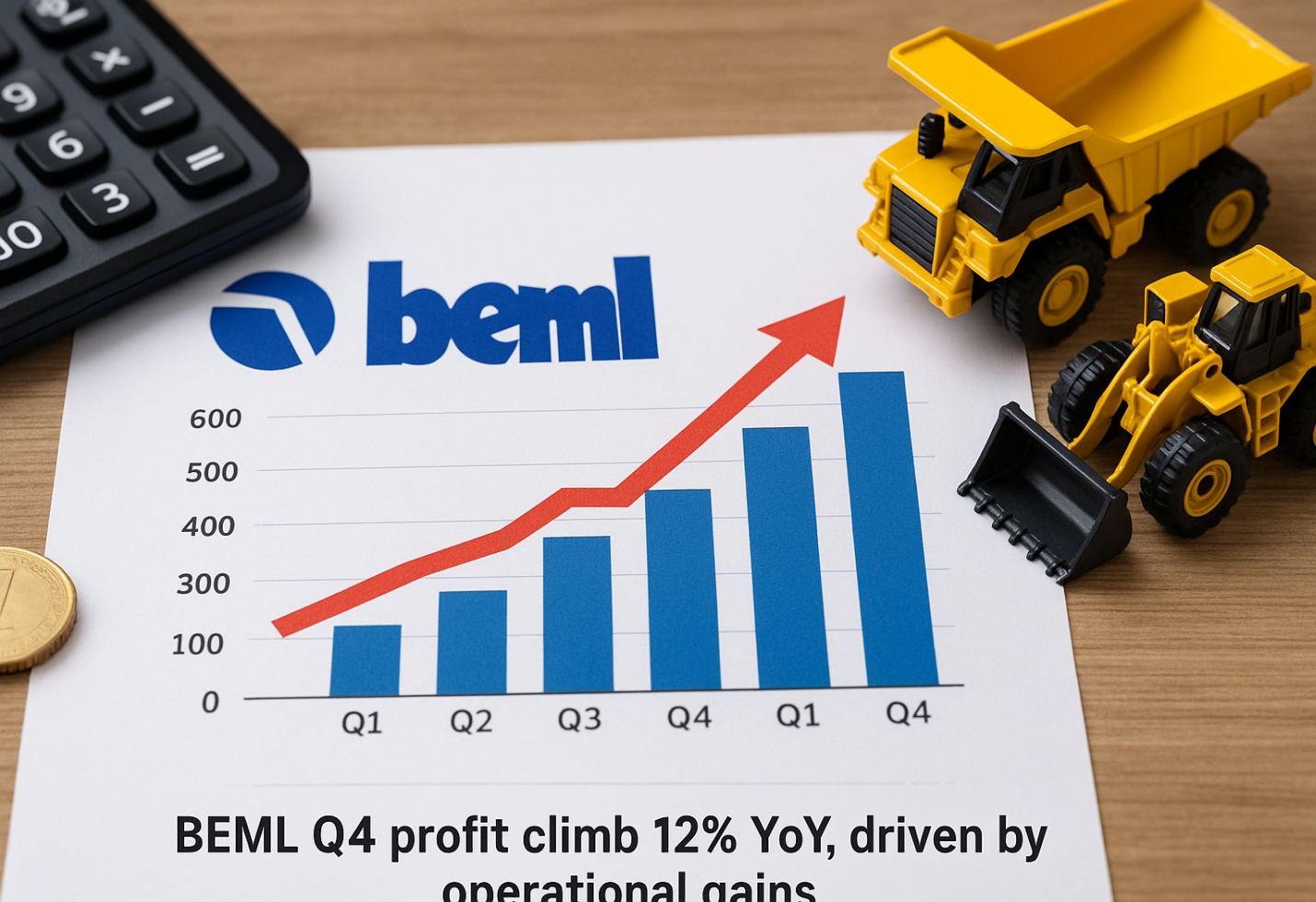
BEML’s Q4 Profit Climbs 12% YoY, Driven by Operational Gains

BEML's Q4 Profit Climbs 12% YoY, Driven by Operational Gains

BEML's Q4 Profit Climbs 12% YoY, Driven by Operational Gains

BEML’s Q4 Profit Climbs 12% YoY, Driven by Operational Gains


BEML Limited, a prominent Indian public sector company engaged in manufacturing heavy equipment for defence, mining, and infrastructure sectors, has delivered a steady performance in the final quarter of the financial year 2024–25. The company’s net profit increased 12% YoY, climbing to ₹287.55 crore. Alongside, revenue from operations rose by 9% YoY, highlighting solid demand across its business verticals.
This performance signals continued momentum as BEML capitalizes on domestic infrastructure expansion and growing investments in self-reliant defence manufacturing.

Q4 Performance Reflects Operational Strength

In its latest quarterly report, BEML declared a consolidated net profit of ₹287.55 crore, which was higher than the ₹256.7 crore it posted during the same time last year. The increase is a result of BEML’s strong business strategy and efficient cost controls, even in the face of a difficult macroeconomic climate.
Total operating revenue for Q4 stood at ₹1,540 crore, rising from ₹1,412 crore in the corresponding quarter of the previous year. The increase in revenue was largely driven by better execution in mining equipment deliveries, enhanced defence product supply, and ongoing metro rail projects.
The company’s earnings before interest, tax, depreciation, and amortization (EBITDA) improved accordingly, reflecting healthy margins supported by a combination of increased sales volume and efficient project execution.

Segment-Wise Business Insights

BEML’s operations span across three major divisions—Defence & Aerospace, Mining & Construction Equipment (MCE), and Rail & Metro. Each contributed positively to the overall performance.

Defence & Aerospace

This vertical benefitted from consistent orders under India’s Make in India and Atmanirbhar Bharat initiatives. The company supplied specialized vehicles and support equipment to the armed forces, including recovery vehicles, bridging systems, and field mobility solutions. Defence remains a core growth engine for BEML, especially with rising indigenous procurement by the Ministry of Defence.

Mining & Construction Equipment

India’s mining sector saw increased activity during the quarter, and BEML’s equipment, especially dumpers and dozers, saw strong demand. The revival of infrastructure development projects and government-led initiatives to expand coal output played a major role in boosting this segment’s revenue.

Rail & Metro

Urban transport systems continue to expand across Indian cities, and BEML remains a key supplier of metro coaches and rail track equipment. Ongoing metro projects in Bengaluru, Kolkata, and Mumbai ensured stable order execution and revenue inflow during the quarter. Export potential is also growing, with several international tenders under review.

Strong Order Book Positions Future Growth

By March 2025, BEML’s order backlog had expanded to ₹11,000 crore, providing steady revenue visibility for the upcoming fiscal year. The majority of these orders come from the mining, metro rail, and defense industries.
New orders received during Q4 included fresh procurement for high-mobility vehicles for the army, electric mining equipment for Coal India, and additional metro coach contracts. These reflect the company’s ability to attract consistent business from both government and enterprise clients.

Expansion and R&D Focus

BEML keeps spending money on new product development and capacity expansion. Facilities in Bengaluru, Mysuru, and Kolar Gold Fields (KGF) are undergoing upgradation to support higher production volumes and advanced manufacturing capabilities.
The company is also developing next-generation products, including electric dump trucks, autonomous mining equipment, and eco-friendly metro coaches, to meet the growing global and domestic demand for sustainable infrastructure solutions.
Its commitment to research and development is evident in the rising number of indigenous components being incorporated into production, helping reduce import dependence and increase cost efficiency.

Leadership Commentary

BEML’s Chairman and Managing Director, Mr. Shantanu Roy, expressed satisfaction with the company’s quarterly performance. In his statement, he remarked:
“This quarter’s numbers reflect the strength of our business fundamentals and our deep integration with national infrastructure and defence priorities. We are progressing steadily with diversification, innovation, and operational excellence.”
He emphasized that the company is aligned with India’s long-term vision of self-reliant defence and transportation sectors.

Road Ahead: Opportunities and Challenges

BEML aims to maintain growth momentum in FY26 by deepening its presence in overseas markets, especially in South-East Asia and Africa, where demand for construction and mining machinery is expanding. At the same time, the company is preparing to compete for larger contracts in India’s evolving metro and urban mobility ecosystem.
While the company remains optimistic, it also faces challenges like global supply chain volatility, commodity price fluctuations, and intensified competition from private players. Nonetheless, its public sector backing, proven delivery record, and expanding order book make it well-equipped to navigate such headwinds.

Conclusion

BEML’s performance in the fourth quarter showcases its resilience and capacity to deliver value in dynamic market conditions. With a 12% increase in net profit and 9% revenue growth, the company has reaffirmed its position as a leader in India’s heavy engineering landscape. As it continues to focus on modernization, sustainability, and innovation, BEML appears poised for further success in the coming quarters.


The image added is for representation purposes only
Reliance Power Skyrockets 18.5%: Record Volumes Surge!

Sustainable transition and energy security: investment implications for Indian utilities and grid players

Reliance Power Skyrockets 18.5%: Record Volumes Surge!

Reliance Power Skyrockets 18.5%: Record Volumes Surge!


Reliance Power shares witness their most substantial intraday rally since January 2024, driven by surging volumes, renewed investor interest, and positive sentiment around debt restructuring efforts.

summary

On May 23, 2025, Reliance Power’s stock surged by 18.5%, hitting a six-month peak of ₹52.82. The sudden spike was attributed to bullish investor sentiment and a significant increase in trading volumes, making it the stock’s most substantial intraday gain since January 2024. Analysts are monitoring the stock for potential gains as corporate debt restructuring progresses and sector-wide optimism strengthens.

Reliance Power Stocks Surge as Investor Confidence Recovers

Mumbai, May 24, 2025 – Reliance Power Ltd., a key player in the Indian power sector and a member of the Reliance Anil Dhirubhai Ambani Group (ADAG), stunned the markets on Friday as its stock rallied a staggering 18.5% intraday, peaking at ₹52.82 per share. This marks the highest level since November 2024 and the sharpest intraday jump since January 2024, rejuvenating investor enthusiasm for the stock.
The surge was underpinned by robust trading volumes, suggesting renewed interest from institutional investors and retail traders alike. Over 28.4 million shares exchanged hands on the NSE—more than 3.5x the stock’s 30-day average volume—making it one of the top-traded stocks by volume for the day.

Key Numbers at a Glance

Metric Value (May 23, 2025)
Opening Price ₹45.60
Day’s High ₹52.82
Closing Price ₹51.80
Intraday Gain 18.5%
Volume Traded (NSE) 28.4 million shares
52-Week High/Low ₹55.20 / ₹17.30
Market Capitalization ~₹19,000 crore (approx.)

Why the Rally? A Confluence of Factors

1. Heavy Trading Volumes Drive Momentum
The unusual volume spike was one of the most evident catalysts for the price surge. Market participants suggest this was likely driven by institutional bulk buying, short covering, and algorithmic trades triggered as the stock breached key resistance levels at ₹47 and ₹50.
2. Positive Sentiment Around Debt Resolution
Reliance Power has been in the process of strategic debt restructuring, working closely with lenders and group companies. Recent reports indicate the company may soon announce a resolution plan to clear legacy debt and improve cash flows. The market is pricing in a favorable outcome, potentially restoring financial discipline and long-term viability.
3. Sectoral Tailwinds and Infrastructure Focus
India’s energy and infrastructure sectors are in sharp focus as the government pushes for more private participation in power generation and transmission. This macro theme has boosted several power stocks over the past few weeks. With Reliance Power’s assets in coal, hydro, and gas-based projects across states, investors are betting on a re-rating.
4. Technical Breakout
Reliance Power’s stock has been confined to a tight trading range of ₹39 to ₹45 in recent weeks. Friday’s breakout above ₹50 was seen as a bullish signal, confirming an uptrend. According to chartists, the next resistance zone lies around ₹55–₹57, while support is expected at ₹46.

A Quick Flashback: From Turmoil to Turnaround?

Reliance Power, once a market darling during the infrastructure boom in the late 2000s, lost investor confidence in the past decade due to project delays, high leverage, and sectoral disruptions. The stock had fallen over 90% from its peak post-IPO, disappointing long-term shareholders.
However, the recent months have seen gradual improvements. In its Q4 FY25 earnings call, the company highlighted progress in asset monetization and hinted at streamlining operations for profitability. Additionally, stake reductions in some subsidiaries and a focus on debt-light operations have sparked a glimmer of hope.

What Analysts Are Saying

Motilal Oswal Securities:
“Reliance Power’s stock surge is driven by fundamental factors, extending beyond mere market speculation.
There’s increasing clarity on the management’s efforts to reduce debt and unlock value. However, valuations remain aggressive at current levels, and investors should await sustained financial performance.”
Kotak Institutional Equities:
“Volumes suggest accumulation is taking place, potentially hinting at strategic interest. We await concrete developments on the debt restructuring before revising our neutral stance.”
ICICI Direct:
“Technical patterns suggest that the upcoming target for an upward move is around ₹57. Long-term investors should look for a close above ₹55 on weekly charts to confirm a broader uptrend.”

Risks to Watch

Investors should remain vigilant about several inherent risks despite the recent optimism:
1. High Debt Levels: As of FY24, Reliance Power’s total consolidated debt is projected to surpass ₹25,000 crore, making timely debt servicing and restructuring a significant challenge.
2. Weak Cash Flows: The company’s operating cash flows have been under pressure, primarily due to underutilization of capacity and delays in project implementation.
3. Regulatory Challenges: Environmental clearance processes, fuel supply agreements, and tariff regulations continue to create hurdles within the Indian power sector.

What Lies Ahead?

The coming weeks could be crucial for Reliance Power’s trajectory. Investors and analysts await updates on debt recast plans, potential strategic investments, or merger activity within the ADAG ecosystem. With bulls firmly in control of short-term sentiment, the stock could see continued interest—provided the company backs optimism with financial results.
For long-term credibility, the market will look for consistent earnings visibility, improved asset utilization, andz clarity in corporate governance.

Conclusion

Reliance Power’s remarkable 18.5% intraday rally on May 23, 2025, underscores the market’s sensitivity to investor sentiment, technical milestones, and liquidity dynamics. While the rally marks a notable milestone, its sustainability will depend on how quickly and effectively the company can translate restructuring plans into real profitability. With India’s energy demand only expected to rise, the opportunity is immense—now it’s on Reliance Power to deliver.


The image added is for representation purposes only
Paras Defense Announces 2:1 Split and Completes JV with Heven Drones

Cochin Shipyard Sees Share Price Uptick as Defense Sector Gains Strength

Paras Defense Announces 2:1 Split and Completes JV with Heven Drones

Paras Defense Announces 2:1 Split and Completes JV with Heven Drones


Paras Defence and Space Technologies, one of India’s leading providers of defence and aerospace solutions, has announced a strategic joint venture (JV) with Israeli drone manufacturer Heven Drones Ltd. The JV aims to develop and manufacture next-generation drones for both defence and commercial applications, significantly bolstering India’s indigenous capabilities in unmanned aerial vehicle (UAV) technology. Alongside this development, Paras Defence also declared a 2:1 stock split, making its shares more affordable and liquid for retail investors.

A Strategic Partnership in the Drone Sector

Paras Defence has long been a pivotal player in India’s defence ecosystem, contributing high-end technologies for missiles, electronic warfare, and space systems. With this new joint venture, the company expands its portfolio into autonomous aerial systems — a sector poised for exponential growth. Heven Drones, based in Israel, is recognized globally for its innovative and versatile drone platforms, particularly in the field of heavy-lift drones and autonomous aerial logistics.
The joint venture will combine Paras Defence’s advanced engineering and manufacturing capabilities with Heven Drones’ cutting-edge UAV technology. Together, the two companies aim to cater to the increasing demand for drones in India’s defence forces as well as in civil domains like agriculture, infrastructure, mining, and emergency response.
The partnership also aligns with the Indian government’s “Atmanirbhar Bharat” (self-reliant India) mission, supporting indigenous production and reducing reliance on imported drone technologies. The JV will be headquartered in India, and the production of drones under this agreement will also take place domestically, creating significant employment opportunities and technological skill development.

Technological Edge and Applications

Heven Drones is known for developing drones that exceed typical UAV limits, particularly in payload capacity and flight time. Their drones can lift up to 50 kg, offering unmatched utility in sectors requiring logistics support in hard-to-reach areas. Paras Defence, on the other hand, brings to the table a deep understanding of defence procurement procedures and strong connections with Indian defence establishments like DRDO, HAL, and ISRO.
This synergy will enable the creation of drones that are not only compliant with Indian regulations but are also rugged, scalable, and customizable for a variety of applications. Drones in the defense sector will be used for logistics, tactical operations, surveillance, and reconnaissance. In the civilian space, use-cases will include disaster relief, medical supply drops, agriculture spraying, and industrial inspections.

2:1 Stock Split: Boosting Investor Participation

Paras Defence announced a 2:1 stock split in conjunction with this strategic statement, which means that each current share would be divided into two. This corporate action is typically aimed at increasing the stock’s affordability, especially for retail investors. The split will improve liquidity and draw in a wider range of investors because the company’s shares are now trading at a comparatively high price because of robust demand and growth prospects.
The 2:1 stock split does not alter the company’s market capitalization or shareholders’ proportional ownership but merely increases the number of shares in circulation while reducing the price per share accordingly. It is frequently interpreted as an optimistic indication, demonstrating management’s faith in the company’s potential for expansion.

Market and Industry Implications

The Indian drone market is expected to grow rapidly, with government policies and funding schemes like PLI (Production Linked Incentive) offering support to domestic manufacturers. Partnerships like Paras Defence and Heven Drones are a natural fit with the Ministry of Civil Aviation’s goal to establish India as a worldwide drone center by 2030.
Globally, the commercial drone market is forecasted to reach USD 58 billion by 2026, driven by applications in delivery, agriculture, surveillance, and mapping. The defence sector also continues to demand high-precision drones for combat and logistics roles, particularly in asymmetric warfare conditions and border surveillance.
By entering into this JV, Paras Defence not only enhances its technological base but also gains an early-mover advantage in a segment where competition is intensifying. Indian rivals and international drone makers entering the market will now face stiff competition from this JV-backed, Made-in-India drone initiative.

Forward-Looking Statements

With this partnership, Paras Defence is charting a new course in its business journey, one that involves deep technological collaboration and expansion into new-age aerospace solutions. The joint venture represents a meaningful step toward India’s vision of defence indigenization and technology sovereignty.
Analysts expect this move to improve the company’s topline over the medium to long term, especially if the JV can secure contracts from Indian defence forces and international markets. The 2:1 stock split is also expected to draw increased retail interest, further strengthening the company’s position on the stock exchanges.

Conclusion

The partnership between Paras Defence and Heven Drones, as well as the simultaneous 2:1 stock split, mark a turning point in the company’s business strategy. The JV is set to capitalize on the surging demand for high-performance UAVs in India and abroad, while the stock split will democratize share ownership and enhance market liquidity.


The image added is for representation purposes only
Kaynes Technology Reports a Strong Q4: Increase in Revenue and Profit

Why Kaynes Technology Has Fallen & What Investors Should Do

Kaynes Technology Reports a Strong Q4: Increase in Revenue and Profit

Kaynes Technology Reports a Strong Q4: Increase in Revenue and Profit


In the last quarter of FY2024, Kaynes Technology, a rapidly rising leader in India’s electronics manufacturing industry, produced an outstanding result. The company recorded a significant 43% increase in net profit, totaling ₹116 crore, while revenue climbed sharply by 54% compared to the same period last year. This strong financial showing cements its growing influence within the electronics manufacturing services (EMS) space and demonstrates its strategic ability to scale operations efficiently.

Q4 FY24 Performance Overview

The fourth quarter proved to be a breakthrough period for Kaynes Technology. Its net profit increased from ₹81 crore in Q4 of FY2023 to ₹116 crore. Revenues followed a similar upward trend, reaching ₹675 crore—substantially higher than the ₹439 crore reported a year earlier.
This strong momentum is attributed to an expanded customer base, particularly in the automotive, industrial automation, and defense sectors. Increased demand for electronics in smart devices and vehicles has further strengthened Kaynes’ order pipeline.

Operational Growth and Business Expansion

The company’s continued focus on innovation and capacity expansion has played a vital role in this performance. Over the past quarter, Kaynes enhanced its manufacturing infrastructure, adding new production lines and integrating automation to optimize output. These steps have allowed for greater efficiency and the ability to cater to larger, more complex projects.
Its design and development capabilities also received a boost, aligning with the growing trend of electronics manufacturers offering end-to-end solutions—from concept to production. As businesses across industries embrace digitalization, Kaynes has successfully positioned itself as a go-to partner for smart and connected product manufacturing.
Additionally, sustainability remains a key focus area. The company implemented energy-efficient systems at its facilities and laid down a roadmap to reduce greenhouse gas emissions by 30%
over the next three years.

Leadership Insights

Mr. Ramesh Kannan, Managing Director of Kaynes Technology, shared his perspective on the company’s growth:
“Our performance in the fourth quarter demonstrates both our technology preparedness and customer-centric strategy. We continue to prioritize innovation, quality, and dependability as we grow. We are confident in maintaining this momentum going ahead and are looking at collaborations that complement our worldwide ambition.”
He also mentioned that the company is actively evaluating opportunities to expand in Europe and Southeast Asia, leveraging rising global demand for electronics outsourcing.

Market Sentiment and Analyst Opinions

The announcement was well received by investors, as seen by the rise in Kaynes Technology’s stock after the results were made public. Market experts pointed to the company’s solid order book and improving margins as key strengths that set it apart in a competitive market.
Analyst reports suggested that Kaynes’ strategic alignment with high-growth industries such as EVs, automation, and IoT will likely fuel future growth. Many brokerage firms upgraded their outlook on the stock, citing its strong balance sheet and scalable business model.

Future Roadmap and FY2025 Outlook

For the next fiscal year, Kaynes Technology has big ambitions. The company aims to achieve 30–35% revenue growth by tapping into new verticals and expanding geographically. With India emerging as a hub for electronics production, the company plans to deepen its engagement in the domestic market while continuing to build a global client base.
Investments in artificial intelligence and advanced robotics are also on the cards, as the company aims to enhance efficiency and reduce dependency on manual labor. These technological advancements are expected to further streamline operations and drive higher margins.
The company’s strategy also includes inorganic expansion. Kaynes is exploring acquisition opportunities that could add complementary capabilities and support faster expansion into specialized markets.

Strategic Alignment with National Initiatives

Kaynes Technology continues to align its goals with India’s broader industrial development programs like “Make in India” and “Digital India.” These initiatives promote local manufacturing and technological innovation, areas where Kaynes already holds a strong position.
The company’s participation in these programs not only enhances its visibility and credibility but also opens up avenues for government contracts and strategic collaborations.

Conclusion

Kaynes Technology’s fourth-quarter results have established it as one of the most dynamic players in India’s EMS landscape. With a strong focus on innovation, sustainability, and market expansion, the company is well-equipped to sustain its growth in FY2025 and beyond.
As global industries increasingly rely on advanced electronics and embedded systems, Kaynes stands at the forefront, ready to shape the next phase of the electronics manufacturing revolution.


The image added is for representation purposes only

Shiprocket Eyes ₹2,400 Cr as IPO Plans Take Flight

Shiprocket Eyes ₹2,400 Cr as IPO Plans Take Flight

Shiprocket Eyes ₹2,400 Cr as IPO Plans Take Flight

Shiprocket Eyes ₹2,400 Cr as IPO Plans Take Flight


Shiprocket, a leading logistics technology company in India, has confidentially submitted its Draft Red Herring Prospectus (DRHP) to the Securities and Exchange Board of India (SEBI), signaling its plans to raise up to ₹2,400 crore through an Initial Public Offering (IPO). This move marks a critical milestone in the company’s ambition to expand its footprint in India’s rapidly growing e-commerce logistics market.

What is Confidential DRHP Filing?

Confidential filing allows companies to submit IPO-related documents to SEBI without immediately revealing financial and operational details to the public. This route offers companies like Shiprocket the flexibility to get early feedback from regulators and refine their IPO disclosures before the formal launch. It also helps protect sensitive business information during this crucial preparatory phase.
This approach has been adopted recently by several Indian startups preparing to list publicly, enabling them to maintain discretion while streamlining the IPO process.

Financial and IPO Details

Shiprocket’s planned IPO will include a fresh issue of shares alongside an offer for sale by current investors. The fresh equity component is expected to be around ₹1,000 to ₹1,200 crore, with the balance amount raised through sale of existing shares. Funds raised through the fresh issue will be utilized to boost technology upgrades, expand warehousing and logistics infrastructure, and explore strategic acquisitions.
The combination of fresh capital inflow and existing shareholders selling some of their stakes is a common IPO structure among tech companies, balancing growth capital needs and liquidity for early investors.

Company Overview and Market Presence

Established in 2012 by founders Saahil Goel and Gautam Kapoor, Shiprocket has evolved into a comprehensive logistics platform that supports more than 250,000 e-commerce sellers across India. The platform offers end-to-end shipping solutions, covering deliveries to over 24,000 pin codes in India, as well as international shipments to over 220 countries.
Despite incurring a net loss of ₹595 crore in the fiscal year 2023-24, the company witnessed a 21% increase in its operating revenue, which reached ₹1,316 crore, reflecting growing adoption of its services.
Shiprocket’s strength lies in its ability to simplify logistics operations for sellers of all sizes, providing integrations with multiple courier partners, automated shipping management, and real-time tracking—essential tools for scaling e-commerce businesses.

Strategic Growth Plans Supported by IPO

The proceeds from the IPO will support Shiprocket’s plans to enhance its technology infrastructure, including automation and data analytics capabilities. The company also intends to expand its warehousing capacity across key locations to improve delivery speed and reliability.
Another focus area is cross-border logistics, where Shiprocket aims to facilitate seamless international shipments, tapping into the global e-commerce boom. In addition, investments will be made in emerging sectors like quick commerce and digital payments, aligning with evolving consumer trends.
The logistics industry in India is poised for rapid growth, fueled by the surge in online retail, rising smartphone penetration, and consumer demand for faster deliveries. Shiprocket’s integrated platform positions it well to capitalize on these opportunities.

Backing from Top Investors

Shiprocket has attracted investments from prominent global and domestic investors such as Zomato, Temasek, Info Edge Ventures, PayPal, Bertelsmann India Investments, Lightrock, and March Capital. These investors bring not only capital but also industry expertise, which has helped Shiprocket scale its operations and build robust logistics technology.
Their continued support, including participation in the Offer for Sale portion of the IPO, will be key to the company’s ability to sustain growth and achieve profitability.

Challenges Ahead

Despite its promising outlook, Shiprocket faces several challenges typical of logistics startups. Intense competition from established courier companies and other logistics tech platforms means continuous innovation and operational efficiency are crucial. Additionally, managing costs and optimizing last-mile delivery remain vital to improving margins.
Regulatory factors and economic conditions will also influence the IPO’s success and the company’s future performance.

conclusion

Shiprocket’s confidential DRHP filing signals the company’s readiness to transition from a private startup to a publicly traded firm. The ₹2,400 crore IPO will provide the resources needed to accelerate growth, invest in cutting-edge technology, and expand infrastructure in India’s booming logistics sector.
By opting for a confidential filing, Shiprocket aims to navigate regulatory requirements efficiently while maintaining strategic confidentiality. As it prepares for its public market debut, all eyes will be on how effectively Shiprocket can execute its growth plans and create shareholder value.
This IPO represents a significant opportunity for investors to participate in the growth story of one of India’s fastest-growing logistics technology platforms.


The image added is for representation purposes only

Aegis Vopak’s ₹3,500 Cr IPO: Powering India’s Energy Future

Weak Listing, Strong Recovery Indicates Investor Confidence in Aegis Vopak IPO

Aegis Vopak’s ₹3,500 Cr IPO: Powering India’s Energy Future

Aegis Vopak’s ₹3,500 Cr IPO: Powering India’s Energy Future


The Joint Venture’s Mega IPO Aims to Reduce Debt, Expand Capacity, and Power the Next Phase of India’s Clean Energy Logistics

Introduction

India’s appetite for energy is growing rapidly, and with it, the need for robust storage and logistics infrastructure. Stepping up to meet this challenge, Aegis Vopak Terminals Limited (AVTL)—a joint venture between Aegis Logistics and Royal Vopak of the Netherlands—has announced a landmark IPO worth ₹3,500 crore. Scheduled for subscription between May 26 and May 28, 2025, the issue ranks among the most significant in the industry this year and is expected to transform the nation’s energy storage and distribution framework.

Company Profile: A Strategic Alliance

Aegis Vopak Terminals runs a network of 20 storage locations spanning six key ports in India.
These facilities handle a diverse range of products—LPG, liquid chemicals, petrochemicals, oil, bitumen, gases, and vegetable oils—making AVTL a critical link in India’s import-export and coastal trade chains.
The company is 50.1% owned by Aegis Logistics and 47.4% by Royal Vopak, a global leader in tank storage infrastructure. This partnership brings together deep local expertise and international best practices in safety, sustainability, and operational efficiency.

IPO Details: Structure, Dates, and Objectives
• Total Issue Amount: ₹3,500 crore, comprising a wholly fresh issuance of equity shares
• Price band: ₹223 – ₹235
• Offer Period: Opens on May 26 and closes on May 28, 2025
• Minimum Bid: 63 shares per lot, requiring a retail investment of at least ₹14,805
• Stock Market Debut: The company’s shares are slated to launch on the BSE and NSE, with trading scheduled to start on June 2, 2025.

Use of Proceeds

The IPO proceeds are earmarked for:
• Repayment of ₹2,015.9 crore in bank loans, significantly reducing the company’s interest burden
• Payment of ₹671.3 crore for acquiring a state-of-the-art cryogenic LPG terminal at New Mangalore Port, one of India’s largest LPG ports by volume
• Funding additional capital expenditure for expansion projects, including new storage tanks and infrastructure for sustainable feedstocks and ammonia terminals
• General corporate purpose

Expansion Plans: Meeting India’s Energy Demand

India’s demand for liquefied petroleum gas (LPG) is projected to reach 36–37 million metric tonnes per annum by FY29, with imports playing a crucial role as domestic production lags behind. AVTL’s expansion blueprint includes:
• Expanding fixed LPG storage infrastructure by an additional 130,000 metric tonnes
• Adding 176,290 cubic metres of liquid product storage
• Establishing combined LPG bottling facilities at key port sites
• Building new infrastructure for sustainable feedstocks and ammonia, supporting the country’s clean energy transition
The company has already approved projects worth ₹2,217 crore out of a planned ₹9,000 crore investment by 2030, signaling its intent to remain at the forefront of India’s energy logistics evolution.

Financial Snapshot and Promoter Holdings

While AVTL’s net profit in recent years has been impacted by high interest costs, the planned debt reduction is expected to improve profitability and cash flows going forward. The IPO will also reduce promoter group holdings from 97.4% to around 87%, increasing the company’s public float and market visibility.

Investor Perspective: Opportunity and Risks

AVTL’s IPO offers investors a chance to tap into the expanding energy infrastructure landscape in India.
The company’s strong port presence, diversified cargo handling, and expansion plans position it well for future growth. However, as with any infrastructure play, risks include regulatory changes, project execution, and fluctuations in global energy prices.

Key Dates and Application Process

The public issue is set to commence on May 26, 2025, and will conclude on May 28, 2025. The share allocation process is scheduled to conclude on May 29, 2025, followed by the initiation of refunds for unsuccessful applicants on May 30, 2025.
Retail investors can apply for a minimum of one lot (63 shares), with further applications in multiples of 63.

Conclusion

The ₹3,500 crore IPO by Aegis Vopak Terminals marks a pivotal move in advancing India’s energy logistics and storage capabilities.
By reducing debt and funding ambitious expansion, AVTL is positioning itself as a key enabler of the country’s energy and industrial growth. The IPO not only strengthens the company’s balance sheet but also aligns with India’s broader push towards cleaner fuels and robust infrastructure. For investors and industry watchers alike, this public issue signals confidence in the nation’s energy future and the vital role of world-class storage solutions.


The image added is for representation purposes only

Q4 Highlights: Grasim Industries Shows Resilience with Narrowed Losses

Q4 Highlights: Grasim Industries Shows Resilience with Narrowed Losses

Q4 Highlights: Grasim Industries Shows Resilience with Narrowed Losses

Q4 Highlights: Grasim Industries Shows Resilience with Narrowed Losses

Robust revenue increase and dividend announcement highlight Grasim’s improving financial health in a challenging market environment

Grasim Industries Q4 Financial Results Overview

Grasim Industries Ltd. unveiled its fourth-quarter financial results, showcasing a notable improvement in its net losses alongside a substantial rise in revenue. The company reported a net loss of ₹288 crore for the quarter ending March 31, 2025, a significant narrowing compared to the previous year’s loss. This positive shift reflects the company’s effective cost control and operational improvements during a turbulent economic phase.

Revenues surged by 32% year-on-year, reaching ₹9,422 crore, driven by strong demand across its key business segments. The company’s ability to grow topline amidst market uncertainties has drawn attention from investors and analysts alike, reaffirming its resilience and strategic agility.

Revenue Growth Fueled by Diverse Business Segments

Grasim’s impressive revenue growth was supported by strong performance in sectors including cement, viscose staple fiber (VSF), and chemicals. The cement division, a core contributor, benefited from increased sales volumes and steady pricing, helping offset pressure from input costs.

Meanwhile, the VSF segment also recorded robust demand, driven by both domestic and international markets. Enhanced capacity utilization and efficiency improvements in this vertical further contributed to top-line expansion. The chemicals business showed promising growth, aided by higher volumes and improved product mix, highlighting Grasim’s diversified revenue base.

Narrowing of Net Loss Reflects Operational Efficiency

One of the most significant takeaways from the quarterly report is the considerable reduction in net loss from the previous year. The ₹288 crore loss is a marked improvement over last year’s results, indicating that Grasim has successfully navigated cost pressures and market challenges.

This contraction in losses was largely attributed to enhanced operational efficiencies, disciplined cost management, and better product mix. While the company continues to face external headwinds such as raw material price volatility and global economic uncertainties, its focused approach toward profitability is clearly paying dividends.

Dividend Declaration Signals Confidence

Reflecting its improving financial health, Grasim announced a dividend of ₹12 per share for the fiscal year 2024-25. This dividend payout not only underscores management’s confidence in the company’s cash flow generation capabilities but also signals a commitment to rewarding shareholders despite a tough macroeconomic backdrop.
Market participants view this dividend declaration positively, considering it a strong message of the company’s return to stability and its intention to maintain shareholder value in the medium to long term.

Segment-Wise Performance Highlights

• Cement: Grasim’s cement segment continued to demonstrate steady demand growth, with increased dispatch volumes and healthy pricing trends. The company’s integrated operations and focus on cost optimization helped sustain margins despite inflationary pressures.
• Viscose Staple Fibre (VSF): Demand in the textile sector, particularly for sustainable fibers, has been favorable. Grasim’s VSF business capitalized on this trend, leveraging its expanded capacities and technological enhancements to meet rising market requirements efficiently.
• Chemicals: The chemical business showed resilience, with volume growth complemented by a favorable shift in product mix towards higher-margin offerings. Strategic customer relationships and operational agility have been instrumental in this segment’s improved performance.

Outlook and Future Growth Prospects

Looking ahead, Grasim Industries remains cautiously optimistic about sustaining its growth trajectory. The management emphasized ongoing efforts to strengthen core operations, invest in capacity expansion, and enhance operational efficiencies.

Additionally, the company is focusing on leveraging emerging opportunities in green and sustainable products, aligning with global trends towards environmental responsibility. Initiatives to reduce carbon footprint and adopt cleaner technologies are expected to not only enhance Grasim’s brand reputation but also open new avenues for growth.

Conclusion: Grasim Industries on a Path to Financial Recovery and Sustainable Growth

Grasim Industries’ latest quarterly results paint a picture of a company on the mend, showing resilience in the face of economic challenges. The narrowing net loss combined with strong revenue growth signals improving fundamentals and operational strength.

The dividend announcement further reinforces the company’s commitment to shareholder returns, marking a positive step towards financial stability. With a diversified business portfolio and a clear strategic vision focused on sustainability and efficiency, Grasim is well-positioned to navigate future market dynamics and capitalize on growth opportunities.

As the company continues to enhance its product offerings and operational effectiveness, stakeholders can anticipate a steady progression towards profitability and long-term value creation.


The image added is for representation purposes only

In Q4, Patanjali Foods reports record revenue and a 74% increase in profit.

In Q4, Patanjali Foods reports record revenue and a 74% increase in profit.

In Q4, Patanjali Foods reports record revenue and a 74% increase in profit.

In Q4, Patanjali Foods reports record revenue and a 74% increase in profit.


Patanjali Foods Limited, one of India’s key players in the edible oils and health-centric FMCG sectors, has posted a remarkable financial performance in the fourth quarter of FY2025. The company registered a 74% increase in net profit over the same quarter last year, while also achieving its highest-ever quarterly revenue from operations—a milestone that reflects both strategic efficiency and growing consumer demand.
This impressive growth signals a strong upward trajectory for the company, driven by a combination of operational improvements, strategic product positioning, and increased market penetration across various regions.

Impressive Q4FY25 Financial Highlights

Patanjali Foods recorded a net profit of ₹349 crore for the fourth quarter of the fiscal year 2025, a substantial increase from ₹201 crore for the same period in 2024. Revenue from operations surged to ₹8,028 crore, up from ₹6,575 crore in the corresponding quarter the previous year—a nearly 22% increase.
The notable boost in earnings is attributed to higher volumes across key product segments, improved supply chain efficiencies, and an expanding footprint in the health-conscious food market.

Key Growth Drivers

Several internal and external factors have contributed to Patanjali Foods’ stellar quarterly results:
• Product Diversification: The company continues to diversify its product range, with significant traction in its oils, flours, dairy, and packaged foods business.
• Rural and Urban Demand: Strong consumer demand, both from rural and urban markets, boosted sales. A growing preference for natural and Ayurvedic products played a crucial role.
• Efficient Operations: Streamlined manufacturing processes and cost optimization efforts supported margin expansion.
• Brand Strength: The Patanjali brand remains synonymous with trust, purity, and Indian traditional wellness, further reinforcing consumer loyalty.

Strategic Moves and Market Position

Over the past year, Patanjali Foods has steadily worked on enhancing its supply chain resilience and deepening its market reach. This includes expanding its presence in underpenetrated markets, ramping up e-commerce channels, and leveraging Patanjali’s well-established distribution network.
The company has also been investing in digital transformation and consumer data analytics, enabling better product targeting and inventory management. These efforts have improved operational responsiveness and elevated customer satisfaction.

Leadership Perspective

In a statement following the earnings release, CEO Sanjeev Asthana highlighted the strategic efforts behind the results:
“Our performance in Q4 is a result of sustained focus on value-driven products, consumer trust, and operational agility. As health and wellness continue to dominate consumption patterns, Patanjali Foods is well-positioned to deliver long-term value and innovation to our customers.”
He also mentioned that the company is planning new product launches in the plant-based and organic nutrition space, along with potential international expansion over the coming quarters.

Investor Sentiment and Analyst Views

When the announcement was made, the financial market reacted enthusiastically. Patanjali Foods’ stock saw an uptick, driven by optimism around the company’s future performance. Analysts see this quarterly result as an indicator of robust demand fundamentals and effective business execution.
Market experts believe the company’s consistent focus on Ayurvedic, natural, and health-oriented products aligns well with shifting consumer preferences, giving it a distinct edge in the competitive FMCG sector.
Many brokerages have raised their earnings estimates for the company, noting improved return ratios, high asset utilization, and long-term brand scalability as key strengths.

Outlook for FY2026 and Beyond

With consumer interest in healthier lifestyle choices expected to grow further, Patanjali Foods is aiming to ride the wave of demand through innovation and market expansion. Some of the company’s forward-looking strategies include:
• New Product Development: In the upcoming quarters, plans call for the introduction of vegan snacks, organic grains, and fortified food items.
• Geographical Expansion: Exploring markets in the Middle East, Africa, and Southeast Asia, where there is rising interest in Ayurvedic and Indian food products.
• Farm-to-Table Initiatives: Strengthening backward integration with Indian farmers to ensure quality raw material sourcing and promote sustainable agriculture.
The company’s leadership has also signaled interest in partnerships and acquisitions that align with its long-term mission of promoting health, wellness, and economic sustainability.

Conclusion

The results of Patanjali Foods’ Q4FY25 performance represent a turning point in the company’s development. By delivering record-breaking revenue and a substantial jump in net profit, the company has reinforced its reputation as a trusted name in India’s wellness-driven FMCG market.
As it gears up for further innovation, expansion, and digital growth, Patanjali Foods remains a company to watch in the evolving landscape of Indian consumer goods—combining ancient wisdom with modern business strategies.


The image added is for representation purposes only

Moschip’s Q4 Net Profit Soars 898% is Enhancing Market Confidence