Menu

IREDA

IREDA Bonds Gain Tax Benefits to Promote Green Energy

IREDA Bonds Gain Tax Benefits to Promote Green Energy

IREDA Bonds Gain Tax Benefits to Promote Green Energy

In a significant move to promote clean energy financing, the Government of India grants Section 54EC tax exemption status to IREDA bonds, enabling investors to save up to ₹50 lakh on capital gains while supporting India’s renewable energy ambitions.

Summary:
The Indian government has conferred tax-saving status under Section 54EC of the Income Tax Act to bonds issued by the Indian Renewable Energy Development Agency (IREDA). This strategic move allows investors to claim capital gains tax exemption of up to ₹50 lakh by investing in IREDA bonds, making them a cost-effective and attractive instrument for green energy financing. The measure is expected to help IREDA raise low-cost capital to support renewable energy projects across India and aligns with the country’s mission to achieve 500 GW of non-fossil fuel capacity by 2030.

IREDA Bonds Gain Section 54EC Status, Bringing Green Investments to the Fore
In a major policy decision aimed at accelerating India’s energy transition, the Government of India has granted Section 54EC tax exemption status to bonds issued by the Indian Renewable Energy Development Agency (IREDA). This move puts IREDA in the same league as REC, NHAI, and PFC, whose bonds have long been eligible for capital gains tax exemptions.
By extending 54EC status to IREDA bonds, the government not only provides investors a powerful tax-saving tool but also channels substantial funds into green infrastructure and renewable energy projects, a key component of India’s net-zero ambition.

What is Section 54EC?
Under Section 54EC of the Income Tax Act, individuals and Hindu Undivided Families (HUFs) who have earned long-term capital gains (usually from selling property or land) can invest up to ₹50 lakh in specified bonds within six months of the transfer date and claim exemption from paying tax on those gains.
Until now, this benefit was limited to bonds issued by:
Rural Electrification Corporation (REC)
National Highways Authority of India (NHAI)
Power Finance Corporation (PFC)
Indian Railway Finance Corporation (IRFC)
Now, IREDA joins this exclusive club, allowing its bonds to be exempt from long-term capital gains tax, provided the investor meets the holding period of five years.

How Does This Benefit Investors?
For individual investors looking to park capital gains safely while avoiding taxes, IREDA bonds now offer a double advantage:
Tax Savings: Capital gains up to ₹50 lakh can be exempted from tax if invested in IREDA bonds.
Stable Returns: Like other 54EC bonds, IREDA’s bonds are expected to offer fixed returns of around 5.25%–5.75% per annum, backed by a government enterprise.
With capital markets being volatile and real estate often illiquid, these bonds present a low-risk, tax-efficient alternative for preserving wealth while contributing to a cleaner future.

Boosting IREDA’s Low-Cost Capital Pool
The inclusion under 54EC is not just a win for investors—it’s a game-changer for IREDA’s funding structure. IREDA, functioning as a non-banking financial company (NBFC) and operating under the Ministry of New and Renewable Energy (MNRE), is instrumental in providing financial support for renewable energy initiatives like solar parks, wind farms, biomass projects, hydroelectric systems, and energy storage solutions.
With 54EC status:
IREDA can now attract long-term retail investors.
It can raise cheaper capital for onward lending.
It helps reduce dependency on external commercial borrowings or more expensive institutional funds.
It creates a retail channel of green financing, boosting financial inclusion in climate-positive investments.

Strategic Timing: Supporting India’s Green Growth Targets
The decision comes at a critical juncture when India is aggressively pursuing its climate and energy goals. Under the Nationally Determined Contributions (NDCs) and its pledge at COP26, India has committed to:
Reach a capacity of 500 GW from non-fossil fuel sources by 2030
Meet 50% of energy requirements from renewables
Reduce the emissions intensity of GDP by 45% from 2005 levels
To realize this vision, massive investments—estimated at $200 billion or more—are needed across the renewable energy spectrum. Enabling IREDA to access low-cost, long-duration capital from domestic investors is a strategic step in this direction.

IREDA’s Growth and Future Plans
IREDA has been actively expanding its reach and portfolio in recent years:
In FY24, it sanctioned more than ₹37,000 crore in loans and disbursed over ₹25,000 crore, a record in its history.
It was listed on the stock exchanges via a successful IPO in 2023, which was oversubscribed 38 times.
The company is now looking to expand financing to emerging sectors like green hydrogen, EV charging infrastructure, and offshore wind.
With the added 54EC status, IREDA can now scale faster, support more projects, and lower its average cost of funds—all of which translate to cheaper renewable power for developers and ultimately for consumers.

Expert Reactions
Pradip Kumar Das, Chairman & Managing Director of IREDA, welcomed the development:
“This is a watershed moment for IREDA. Inclusion under Section 54EC will significantly boost our fundraising capabilities and contribute meaningfully to India’s clean energy revolution. It aligns perfectly with our mission of enabling India’s green economy.”
Market analysts also believe this move could lead to a revival in retail investor interest in tax-saving infrastructure bonds, which had declined in recent years due to falling yields.

Investor Guidelines for IREDA 54EC Bonds
Maximum Investment: ₹50 lakh per financial year
Lock-in Period: 5 years (no premature redemption allowed)
Interest Rate: Expected in the 5.25%–5.75% range (final rates may vary)
Interest earned is completely subject to taxation
Availability: Likely to be available via designated branches, online platforms, and brokers

Conclusion
The government’s move to grant Section 54EC status to IREDA bonds is more than just a tax break—it is a strategic policy lever to steer private capital toward climate-conscious investments. By giving investors a tax-incentivized channel to support clean energy, India is laying a foundation for inclusive and sustainable development. For IREDA, this marks a new phase in becoming the financial backbone of India’s green energy transition.


:


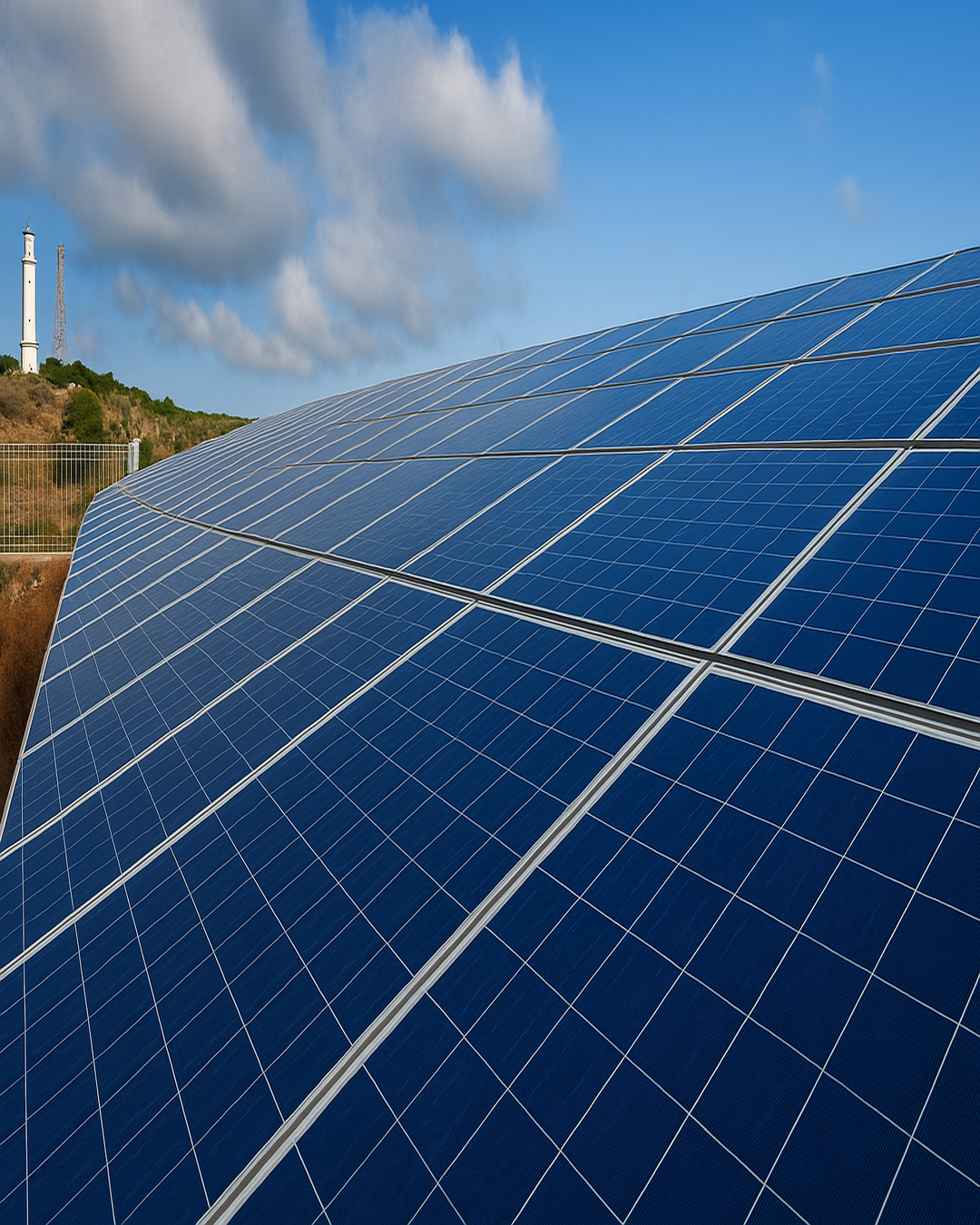
The image added is for representation purposes only

TCS Q1 FY26: Profit Up 4.4%, Declares ₹11 Dividend

Sensex Jumps 450 Points Amid Renewed US-China Trade Hopes and Strong Sectoral Buying

PSU Stocks Dominate May 2025 Market, Suzlon, Tata Also Shine

PSU Stocks Dominate May 2025 Market, Suzlon, Tata Also Shine

The Indian equity market saw a surge in activity during May 2025, with Public Sector Undertakings (PSUs) making a notable impact. Three PSU companies emerged as some of the most actively traded stocks of the month, reinforcing investor interest in government-backed enterprises. Additionally, Suzlon Energy and Tata Motors found places among the top ten most traded stocks, highlighting their continuing relevance in the eyes of retail and institutional investors alike.
This shift reflects not just short-term market behavior, but also underlying confidence in sectors like energy, infrastructure, and automotive—especially as India continues to push toward its long-term economic and sustainability goals.

The Three PSU Stars of the Month

Among the five most actively traded stocks in May 2025, three belonged to the PSU segment, showing strong investor confidence in these entities. These companies have either posted robust earnings, benefited from policy support, or have shown growth in core business areas.
1. IREDA (Indian Renewable Energy Development Agency):
After its post-IPO lock-in period ended, IREDA saw massive trading volumes. Investor interest remained high despite some volatility because of the company’s outstanding Q4 financials and important position in green finance.
2. Rail Vikas Nigam Limited (RVNL):
Large infrastructure contracts and on-time project execution are two ways that RVNL has continuously provided value. Market participation rose as a result of its rapid expansion, recent government contracts, and inclusion in trading indices.
3. ONGC (Oil and Natural Gas Corporation):
ONGC maintained high trading interest thanks to rising global crude oil prices and improving domestic energy demand. Its steady dividend payout policy and exploration activities continue to make it a favorite among conservative investors.

Suzlon Energy: Clean Energy Story Attracts Buyers

This month, Suzlon Energy, a significant force in India’s renewable energy market, stood out. The company recorded a whopping 365% jump in net profit for Q4 FY25, driven by improved operational performance, cost control, and a robust order pipeline exceeding 5.6 GW.
Investors rewarded this turnaround story. Suzlon’s stock not only saw increased trading activity but also gained significantly in price, reflecting renewed faith in India’s clean energy space. With a growing global focus on sustainability, Suzlon’s recent performance positions it as a company with long-term growth potential.

Tata Motors: Trading Strong Despite Sales Dip

Despite a year-on-year decline of 8.6% in total vehicle sales during May 2025, Tata Motors remained one of the most actively traded stocks. The company reported a total sales volume of over 70,000 units, with a drop attributed primarily to sluggish demand in the domestic market.
What kept investor interest alive was the company’s long-term EV strategy, new product pipeline, and ongoing efforts to reduce costs. Institutional investors appear to be taking a long view, believing the temporary dip in sales won’t materially affect the company’s competitive position in India’s fast-evolving automobile market.

Key Drivers Behind Market Movement

Several factors explain why PSU stocks and select private players like Suzlon and Tata Motors saw heightened activity:
• Policy Tailwinds: Continued government push for infrastructure, renewable energy, and Make in India initiatives.
• Earnings Performance: Many of the top-traded companies reported strong Q4 results, bolstering confidence.
• Investor Rotation: As global markets face uncertainty, investors are increasingly favoring established domestic names, especially PSUs with stable outlooks.
• Unlock Events: In IREDA’s case, the post-IPO share unlock added to liquidity and trading volumes.

Retail and Institutional Participation on the Rise

With the help of technological platforms and simpler access to market data, retail investors are becoming more involved in high-volume stock trading. PSUs, with their historical stability and attractive dividend policies, are becoming increasingly popular among new-age investors seeking both growth and income.
Meanwhile, mutual funds and FIIs (Foreign Institutional Investors) are closely tracking mid-cap and infrastructure-based opportunities, adding to the trading buzz. This dual participation by retail and institutional players adds depth and liquidity to stocks like Suzlon, ONGC, and RVNL.

Looking Ahead: Sectoral Trends to Watch

As India moves further into FY2025-26, sectors like renewable energy, infrastructure, and electric vehicles are expected to attract continued investor interest. Companies aligned with national goals—such as energy independence, net-zero targets, and high-speed connectivity—are well-positioned to benefit.
PSUs are slowly shedding their legacy image and proving themselves to be leaner, more performance-oriented entities. Meanwhile, private players like Tata Motors and Suzlon Energy are leveraging innovation and strategic clarity to strengthen their market presence.

Conclusion

May 2025 turned out to be a decisive month where investor attention clearly gravitated toward dependable, performance-driven stocks. While car giant Tata Motors and sustainable energy leader Suzlon maintained their positions in the top 10, three PSU businesses managed to rank among the top five most traded equities. This blend of government-backed and private-sector participation underscores a maturing Indian market where fundamentals, growth outlook, and strategic direction are all equally important to investors.


The image added is for representation purposes only
Turnaround Penny Stock Soars with 13x Revenue Jump and Record Trading Volume

IREDA Stocks Rise in Attention as the Lock-In Period Comes to an End

IREDA Stocks Rise in Attention as the Lock-In Period Comes to an End

IREDA Stocks Rise in Attention as the Lock-In Period Comes to an End


The Indian Renewable Energy Development Agency (IREDA), a key public sector player in green energy financing, has come into sharp investor focus as a crucial shareholder lock-in period officially ends. This development is drawing significant attention from the market, as over 53 crore shares, worth nearly ₹9,400 crore (approximately $1.1 billion), become eligible for trading on the open market starting June 2, 2025.
This unlock is a result of the six-month lock-in period post the company’s initial public offering (IPO) in November 2023, during which a segment of shareholders—primarily institutional and pre-IPO investors—were restricted from selling their holdings. The lifting of this restriction now enables a major portion of the company’s equity to be freely traded, opening the door to potential market moves.

The meaning of a Lock -In- period and it’s significance

Following an initial public offering (IPO), a lock-in period is a legally required period of time during which specific stakeholders—usually promoters, early investors, or insiders—are prohibited from selling their shares.

This provision is implemented to prevent massive sell-offs immediately after listing, thereby helping stabilize stock prices and encouraging investor confidence.
Since IREDA’s lock-in has ended, around 53.8 crore shares, or 20% of the company’s entire stock base, are now open to trade. This influx of supply may affect share prices depending on whether existing investors choose to offload their holdings or retain them.

How the Market Reacted

There was considerable anxious trading activity in IREDA’s stock as the lock-in expiry drew near. Although it has offered impressive returns since its IPO—gaining more than 200% from its listing price—recent sessions have shown signs of volatility. Some traders feared potential profit booking by pre-IPO investors, while others saw the unlock as an opportunity to enter the stock at potentially discounted levels.
On the day the lock-in ended, the stock opened with heavy volumes, with analysts closely watching institutional activity. Many market watchers expected a correction due to increased supply pressure, although long-term fundamentals remained strong.

Strong Financial Performance Bolsters Confidence

Despite near-term uncertainties around share movement, IREDA’s financial performance continues to support positive investor sentiment. For the fourth quarter of FY2024-25, the company posted a net profit of ₹501.5 crore—a solid 49% year-on-year increase. At ₹1,905 crore, operational income represented a strong 37% yearly increase.
These results underscore IREDA’s effective lending model, especially in renewable infrastructure, which continues to receive government policy support and private sector interest. The company’s net interest income also witnessed significant growth, improving over 50% on an annual basis.
This stellar performance has helped sustain institutional interest in the stock, which could offset some of the selling pressure expected post-lock-in expiry.

Background: IREDA and Its Business Model

Established in 1987, IREDA is a Mini Ratna (Category I) enterprise under the Ministry of New and Renewable Energy (MNRE). It provides financing for renewable energy and energy efficiency projects in India. With the government pushing towards its ambitious renewable energy goals—targeting 500 GW of non-fossil capacity by 2030—IREDA plays a central role in funding green transitions.
Its portfolio includes financing for solar parks, wind projects, biomass initiatives, and energy conservation systems. In recent years, it has also begun exploring green bonds and foreign collaborations to expand its funding reach.

What Lies Ahead: Investor Strategy Post Unlock

For investors, the expiry of the lock-in period raises several strategic considerations. The key question remains whether large shareholders, particularly institutions or government-linked entities, will choose to liquidate their positions or hold on for long-term value appreciation.
Analysts advise retail investors to avoid knee-jerk reactions. Instead, they should track shareholding pattern changes over the next few quarters, monitor block deals, and assess management commentary. If supply from the unlocked shares is absorbed without major price corrections, it may validate strong institutional confidence in the company.
Long-term investors can consider any dip in stock price as a potential accumulation opportunity, provided they believe in India’s renewable energy growth story and IREDA’s central role in it.

Wider Market Trends and IPO Lock-In Events

IREDA is not alone. A number of Indian companies that went public are nearing the conclusion of their lock-in periods in the upcoming weeks. This could flood the market with fresh supply across sectors including fintech, chemicals, and logistics. Hence, market liquidity, sectoral fundamentals, and demand for equity will be crucial in determining the overall impact.
However, IREDA is in a unique position due to its size, profitability, and contribution to the government’s energy objective. Most experts agree that while volatility may persist in the short term, the company’s long-term value proposition remains intact.

Conclusion

An important turning point in IREDA’s post-IPO path is the expiration of its shareholder lock-in term. While it introduces potential for short-term price fluctuations due to an increase in tradable shares, the company’s strong fundamentals and government-aligned mission offer long-term promise. Investors would do well to separate short-term volatility from structural strength and track how the market digests this $1 billion equity unlock over the coming weeks.


The image added is for representation purposes only

Sigachi Industries Announces a Dividend After a Successful Q4

PFC Withdrawals May Impact Zero-Coupon Bond Market

IREDA Announces Up to Rs 4,500 Crore Equity Capital Raise

IREDA Announces Up to Rs 4,500 Crore Equity Capital Raise

IREDA, a leading public sector green financier, plans to raise up to Rs 4,500 crore in equity capital to support India’s renewable energy goals. This decision was made during a meeting of IREDA’s Board of Directors held on August 29, 2024, as the company seeks to bolster its financial capabilities and support India’s ambitious renewable energy goals.

As a mini-Ratna company under the administrative control of the Ministry of New and Renewable Energy, IREDA has played a crucial role in financing green energy projects across the country. The funds raised through this equity capital infusion will be used to expand IREDA’s on-lending activities, enabling it to provide financial support to a broader range of renewable energy projects, from inception to post-completion.

The planned fundraising will be executed in one or more tranches, utilizing various methods such as a Further Public Offer (FPO), Qualified Institutional Placement (QIP), Rights Issue, Preferential Issue, or other permitted modes. The exact number of securities to be issued will be determined at a later stage, based on market conditions and the company’s funding requirements.

IREDA’s decision to explore diverse funding avenues, including public and institutional channels, demonstrates its commitment to diversifying its sources of capital. This strategic move will not only strengthen the company’s financial position but also enable it to cater to the evolving needs of the renewable energy sector in India.

The proposed fundraising initiative requires approval from the Government of India and other relevant regulatory authorities. This process is crucial, as the additional capital will play a pivotal role in supporting India’s ambitious renewable energy targets. The country aims to achieve 500 GW of renewable energy capacity by 2030, which requires an annual addition of approximately 50 GW to the existing infrastructure.

IREDA’s financial performance in the recent past has been commendable, further underscoring the need for this capital infusion. During the June quarter of 2024, the company saw a significant boost in its financial performance, with a 30% surge in net profit reaching Rs 384 crore, accompanied by a 32% year-over-year increase in revenue, which stood at Rs 1,502 crore. This robust financial standing has inspired the company’s leadership to seek additional resources to fuel its continued growth and contribute to the nation’s renewable energy aspirations.

The Indian government’s focus on renewable energy, as evidenced by policies such as the National Renewable Energy Policy and the National Solar Mission, has been a driving force behind the sector’s expansion. IREDA’s role as a leading financier in this space has been instrumental in facilitating the implementation of these policies and supporting India’s transition towards a more sustainable energy future.

The proposed fundraising by IREDA is expected to have a positive impact on the renewable energy industry in India. By providing access to additional capital, IREDA will be able to expand its lending activities and support a greater number of projects across the country. This, in turn, will contribute to the overall growth and development of the renewable energy sector, helping India progress towards its ambitious targets and reduce its reliance on fossil fuels.

Furthermore, this strategic move aligns with the global efforts to combat climate change, as the increased funding for renewable energy projects will play a crucial role in reducing greenhouse gas emissions and promoting a more environmentally sustainable energy landscape.

Overall, IREDA’s decision to raise equity capital of up to Rs 4,500 crore is a significant development that underscores the company’s commitment to supporting India’s renewable energy ambitions. By diversifying its funding sources and strengthening its financial capabilities, IREDA is poised to play an even more pivotal role in driving the country’s transition towards a greener and more sustainable energy future.

The image added is for representation purposes only

Maruti Suzuki’s new facility faces short delay; 2025-26 production kick-off