Menu

EVIndia

Nila Spaces Jumps 10% as Wellness Housing Project Gets RERA Clearance

Ola Electric’s Stock Surge: Unpacking the Momentum Behind the Rally

Ola Electric’s Stock Surge: Unpacking the Momentum Behind the Rally

Ola Electric retakes India’s No. 2 EV two-wheeler spot and rides a wave of recovery, PLI subsidy approval, and bullish investor sentiment—even as valuation risks linger.

Introduction
In August 2025, Ola Electric achieved a key milestone by surpassing Bajaj Auto to regain its position as India’s second-largest electric two-wheeler brand. Monthly retail sales rose 6.3% over July, even though volumes still lagged behind last year. On the stock market, Ola Electric experienced remarkable upside, with prices rallying over 11% in five days and more than 50% for the month, drawing intense interest from investors and analysts keen to understand the forces behind its resurgence.

Ola’s EV Comeback Story
Market Share & Sales
Ola Electric recorded sales of 18,972 units in August, rising from July but down almost 31% compared to last year—reflecting an overall industry slowdown partially offset by Ola’s rebound. This recovery helped Ola regain the No. 2 spot, trailing only TVS, and beating Bajaj, Ather, and Hero Vida in the monthly sales rankings. The overall market signaled optimism with 1.4% growth during the month, and Ola’s share rose to 18.19%, a sign that its momentum and product lineup are finding renewed traction.

Why is Ola’s Stock Rallying?
PLI Scheme Approval: The Game-Changer
A critical driver behind Ola’s market performance is its clearance under India’s Production Linked Incentive (PLI) scheme. Ola Electric’s Gen-3 S1 scooters now qualify for 13–18% subsidy on sales until 2028, instantly slashing production costs and boosting margins. This incentive provides clarity on future earnings potential, improves the path to profitability, and lifts investor mood in an environment hungry for scale-adjusted profits.
Technical Signals & Trading Momentum
Ola’s stock has shown bullish signals—strong trading volumes, positive moving averages, and a favorable RSI—suggesting momentum-driven buying by investors and traders. Share prices crossed ₹60.2, with market capitalization reaching ₹26,465 crore, underlining substantial support from institutional participants.

Ola’s Growth Blueprint
Market Share, Expansion, and Batteries
Ola Electric aims for a 25–30% market share by continuously expanding manufacturing capabilities, optimizing capital allocation, and developing proprietary lithium-ion battery technology for its new models. These strategic pillars are expected to deepen Ola’s competitive position and support higher long-term margins, positioning it to challenge TVS for the top spot by the festive season.
Supportive Macro Sentiment
Broader market trends—including GST reforms, stable inflation, and renewed foreign institutional inflows—are also encouraging for Ola and its sector peers. The investor mood remains hopeful as India’s EV infrastructure and adoption expands, and consumer acceptance of electrified mobility grows steadily.

How Should Investors Approach Ola Electric?
Volatility and Risks
While Ola Electric’s stock soared in August, it corrected 5–6% in early September as some investors booked profits after the sharp rally. Analysts remain cautious, warning that high valuations must be anchored by sustained profitability and positive cash flow. Ola Electric’s future depends not just on government incentives or plant expansions, but on actual scale-up of sales and efficient execution in a market that can be fickle and competitive.
Key Watchpoints
• Track Q2 and Q3 results to assess potential margin gains and stability.
• Track progress on lithium-ion battery manufacturing, which can be a decisive advantage
• Observe festive season demand and inventory cycles, which tend to drive major swings in the industry
• Expect increased price and feature competition from TVS, Ather, Hero Vida, and new entrants

Challenges and Outlook
• Sales are still down sharply compared to last year, showing sector headwinds and intensified competition.
• Bajaj’s production woes have helped Ola, but rival firms are rapidly launching new models and expanding distribution.
• Sustaining high valuations will require Ola to deliver consistency in volumes, profitability, and innovation—not just rely on incentives.

Conclusion
Ola Electric’s stock surge and its return to India’s No. 2 EV two-wheeler maker position are driven by timely government incentives, effective manufacturing, and bullish investor sentiment. Yet volatility remains the norm for fast-growing EV players. For investors, Ola’s ability to convert hype and incentives into sustained financial performance—and maintain its competitive edge against legacy and startup rivals—will determine whether today’s optimism is justified for the long haul.


The image added is for representation purposes only

Indian Startups Accelerate IPO Parade as Market Matures in 2025

Renault's Bold Move: JSW Alliance Shifts India's EV Landscape

Renault's Bold Move: JSW Alliance Shifts India's EV Landscape

Renault’s Bold Move: JSW Alliance Shifts India’s EV Landscape

French car manufacturer Renault is considering a new collaboration with JSW Group to rejuvenate its strategy in India, indicating a significant shift in the industry landscape.

Summary:
Renault SA is reportedly in early-stage discussions with India’s JSW Group for a possible joint venture, as its long-standing partnership with Nissan faces uncertainty. The move could reshape India’s EV and automotive sector, with JSW already investing in MG Motor and seeking to expand its electric vehicle portfolio.

Renault SA, one of Europe’s leading automobile manufacturers, is actively exploring new options to strengthen its foothold in the Indian market. Sources within the industry indicate that the French automobile major has initiated initial discussions with the JSW Group, an Indian conglomerate with a diverse portfolio and an expanding presence in the automotive industry, to establish a strategic joint venture. This comes at a time when Renault’s global alliance with Nissan is reportedly under stress, prompting both companies to reevaluate their regional operations, including India.
The timing of this potential collaboration is significant. The Indian automotive sector is undergoing a profound shift, with electric vehicles (EVs) gaining traction thanks to favourable government policies, improving charging infrastructure, and rising consumer interest in sustainable mobility. JSW Group, led by Sajjan Jindal, has already taken strategic steps in this direction by investing in MG Motor India, and is now looking to strengthen its EV portfolio further.
For Renault, a partnership with JSW could serve as a critical pivot. While the Renault-Nissan alliance has operated plants and developed vehicles together in India for over a decade, sources suggest the partnership has lately faced differences over future investment priorities and product roadmaps. If these differences deepen, Renault may require a new partner to continue its ambitions for growth in one of the world’s most promising automotive markets.

Renault’s India Challenge
Renault’s presence in India has seen mixed fortunes over the past decade. Models like the Kwid initially won over cost-sensitive buyers, but recent sales trends have highlighted challenges. The competition has become fiercer, with homegrown brands like Tata Motors and Mahindra, as well as Korean giant Hyundai, aggressively expanding their offerings, especially in the EV segment.
The Renault-Nissan plant in Chennai has been a cornerstone of their India manufacturing, but with strategic disagreements surfacing globally, Renault appears keen on hedging its bets by looking for an additional or alternative partner. The JSW Group, backed by significant financial resources, extensive industrial expertise, and a strong interest in electric vehicles, emerges as a strong contender.

JSW Group’s Automotive Ambitions
JSW Group, traditionally known for its steel and energy businesses, has been making steady moves into the automotive ecosystem. The group recently acquired a stake in MG Motor India and plans to localise EV production to meet India’s growing demand. Given its financial strength, manufacturing know-how, and clear push toward green mobility, a Renault-JSW alliance could potentially create a formidable player in the Indian passenger vehicle market.
If the talks succeed, it is likely the joint venture would focus heavily on EVs, leveraging Renault’s design and engineering expertise alongside JSW’s industrial scale and local market understanding. This aligns with the Indian government’s broader target of having 30% of new car sales come from electric vehicles by 2030.

Implications for Nissan
If Renault moves closer to JSW, Nissan could find itself having to recalibrate its own India strategy. The Renault-Nissan alliance has been a pillar of global automotive cooperation, but recent reports suggest diverging interests, especially around EV investments and platform sharing.
Any significant reshuffle of Renault’s alliances will likely force Nissan to reassess its footprint in India. Nissan’s own EV plans have been relatively slower compared to competitors, and losing Renault as a partner in India could hamper its market relevance unless it finds another collaborator or reinvents its roadmap independently.

Strategic Realignment Ahead
For India’s automotive market, these developments are a sign of more profound industry realignment. Partnerships are increasingly being shaped by electrification, localisation, and sustainability imperatives. A Renault-JSW tie-up could accelerate the pace of EV adoption in India by bringing together global design capabilities and robust local manufacturing.
Additionally, JSW’s existing relationship with MG Motor could open avenues for cross-platform collaboration, shared charging infrastructure, and even joint supplier networks, creating valuable synergies and economies of scale.
For Renault, securing a foothold with a local powerhouse like JSW may offer not just financial security but also a strategic advantage in navigating India’s rapidly evolving auto market, where changes in policy and consumer preferences are growing more quickly than ever.
As negotiations are reportedly at a preliminary stage, industry watchers will be keenly following how the talks progress and whether this marks the beginning of a new chapter in India’s auto industry. If finalised, the partnership could serve as a blueprint for other foreign automakers seeking to future-proof their India business by leveraging local alliances and sustainable growth models.
Only time will tell whether Renault and JSW can align their visions to create a dynamic, future-focused automotive powerhouse. But one thing is clear: India’s auto market is entering a period of unprecedented change, and this potential alliance could be one of its defining moments.


:


The image added is for representation purposes only

Tata Power Renewable Achieves Record Green Energy!

Shree Renuka Sugars Q2 FY26: Revenue Holds Up Seasonally, But Loss Widened Sharply as Costs Bite

Hero MotoCorp Shares Fall Over 2% Amid Market Turmoil

Hero MotoCorp Shares Fall Over 2% Amid Market Turmoil

Shares of Hero MotoCorp, one of India’s leading two-wheeler manufacturers, saw a noticeable drop in trading on June 3, 2025. The stock declined by 2.07% during the session, closing at ₹4,220.20 on the National Stock Exchange. This movement came as part of a broader decline across the Indian equity market.

Market Conditions Drive Broad Sell-Off

The Indian stock market experienced significant weakness on June 3, with major indices witnessing sharp corrections. The BSE Sensex fell by over 900 points, while the NSE Nifty hovered just below the 24,000 mark, reflecting negative sentiment across the board. Multiple sectors including IT, banking, and auto contributed to the decline.

This widespread weakness can be attributed to global market uncertainty, investor caution over possible delays in interest rate cuts by the US Federal Reserve, and persistent concerns about inflation and geopolitical risks. Foreign institutional investors (FIIs), which have played a major role in market volatility recently, were net sellers yet again.

Hero MotoCorp’s Intraday Performance

Hero MotoCorp shares followed the broader market trend, opening lower and continuing their descent during the trading day. The stock hit a low of ₹4,181 before recovering slightly to end at ₹4,220.20. Investor activity remained elevated, suggesting that market participants were cautious ahead of key global macroeconomic data.

This drop marks a pause in the stock’s recent upward trend. Despite strong quarterly performance in FY25, short-term pressures seem to have weighed on investor sentiment.

Company Fundamentals Remain Strong

While the stock faced pressure, Hero MotoCorp’s financial position remains fundamentally stable. In its Q4 FY25 results, the company reported robust earnings growth. Net profit rose to ₹1,016 crore, reflecting a 14% increase over the previous year, supported by higher sales and cost management. Total revenue also witnessed growth, crossing ₹9,800 crore for the quarter.

The company continues to benefit from a strong product portfolio, a vast distribution network, and efforts to expand in premium motorcycle and electric vehicle (EV) segments. Management has also reiterated its commitment to enhancing technological capabilities and launching new models to meet evolving customer demands.

Focus on Electric Mobility and Innovation

Through its VIDA line, Hero MotoCorp is making consistent strides toward establishing a stronger foothold in the electric two-wheeler market. Recent initiatives include investment in R&D and collaborations with international partners like Zero Motorcycles to co-develop premium electric offerings.

With the global transition toward clean energy and sustainable transport, the company aims to align its long-term vision with industry trends. However, the EV market remains competitive, with rivals such as TVS, Ola Electric, and Ather already gaining market traction.

Sectoral Pressure Weighs on Performance

The auto sector, particularly the two-wheeler space, has been under pressure for several quarters. Weak rural demand, high ownership costs, and inflationary trends have limited volume growth. Moreover, increasing competition in the electric vehicle segment adds to the challenges for legacy manufacturers.

Two-wheeler sales, especially in entry-level segments, are yet to see a full recovery to pre-pandemic levels. Rural markets, which constitute a major customer base for Hero MotoCorp, have faced setbacks due to irregular monsoons and stagnant income growth. Additionally, rising loan rates have made vehicle financing less attractive.

Final Thoughts

Hero MotoCorp’s recent stock decline reflects broader market concerns rather than company-specific issues. The auto sector as a whole is navigating through a complex environment marked by changing consumer preferences, technological shifts, and macroeconomic challenges.

Still, Hero’s efforts to strengthen its EV presence, expand product offerings, and maintain financial discipline suggest it is preparing for long-term sustainability. Investors may consider this correction as an opportunity to evaluate the stock’s potential, especially if market volatility persists in the near term.


The image added is for representation purposes only

Sarveshwar Foods Shares Rally Despite Market Crash, Driven by Strong Q4 Earnings

Mahindra Reports 17% Increase in Sales for May, Fuelled by 21% Surge in SUV Sales

Mahindra Reports 17% Increase in Sales for May, Fuelled by 21% Surge in SUV Sales

Mahindra Reports 17% Increase in Sales for May, Fuelled by 21% Surge in SUV Sales


Mahindra & Mahindra is capitalising on strong SUV demand in India, reporting a 17% overall growth in May 2025. With 52,431 sales of domestic SUVs and rising exports, the automotive giant reinforces its position as a leader in the utility vehicle segment.

 Summary:

Mahindra & Mahindra (M&M), a significant player in India’s automotive industry, announced a 17% rise in vehicle sales for May 2025, with 84,110 units sold in domestic and export markets. The domestic SUV sector experienced a significant 21% year-on-year growth, with 52,431 units sold, fuelled by high demand for popular models such as the Scorpio-N, XUV700, and Thar.

M&M’s May Surge: Robust Sales Fuelled by SUVs

Mahindra & Mahindra Ltd. (M&M) continues to ride the wave of India’s growing appetite for SUVs, reporting a 17% increase in total vehicle sales for May 2025, with 84,110 units sold, up from 71,082 units in May 2024. The bulk of this surge came from its domestic SUV business, which clocked 52,431 unit sales, marking a 21% year-on-year increase over the same month last year.

The robust numbers highlight M&M’s strong product positioning in the utility vehicle segment, backed by compelling designs, aggressive pricing, and continued demand across urban and rural markets. The automaker also sold 54,819 utility vehicles globally, including exports, showcasing its growing international footprint.

 Breaking Down the Numbers

Here is a closer look at Mahindra’s segment-wise performance in May 2025:

Segment May 2025 Sales May 2024 Sales YoY Growth
Utility Vehicles (Domestic) 52,431 43,080 +21%
Total Automotive (incl. CVs) 70,217 60,648 +16%
Tractors (Domestic + Export) 13,893 10,434 +33%
Total Vehicles (All Segments) 84,110 71,082 +17%

M&M’s growth wasn’t limited to the passenger segment. The farm equipment sector, particularly tractors, also reported a healthy uptick of 33% YoY, reaffirming the company’s dual strength in mobility and agriculture.

 Revenue Highlights (Consolidated)

  • Total Revenue from Operations (FY24): ₹1,39,078 crore
    (Up from ₹1,21,362 crore in FY23, showing a growth of 14.6%)
  • Profit Before Tax (PBT): ₹14,856 crore
    (Up from ₹11,305 crore in FY23 – a 31.4% increase)
  • Profit After Tax (PAT): ₹11,269 crore
    (Compared to ₹10,282 crore in FY23 – a 9.6% rise)

 Revenue Ratios & Financial Indicators (Standalone)

Ratio FY24 FY23 Change / Comment
Operating Profit Margin 14.9% 13.9% Improved due to higher operational efficiency
Net Profit Margin 10.6% 7.6% Significant improvement, reflecting stronger profitability
Return on Net Worth (RoNW) 22.4% 16.1% Enhanced due to higher net income
Debt Equity Ratio 0.03 0.11 Deleveraged balance sheet owing to repayment of borrowings
Interest Coverage Ratio 66.6x 28.5x Stronger due to lower finance costs
Inventory Turnover Ratio 8.1 8.7 Slightly lower, possibly due to inventory build-up amid rising sales
Debtors Turnover Ratio 22.6 23.5 Stable receivables management
Current Ratio 1.4 1.3 Marginally improved liquidity position

 Segment-wise Revenue Contribution (Standalone)

Segment Revenue (₹ crore) % Share of Revenue
Automotive ₹63,999 72.57%
Farm Equipment ₹22,500 25.00%
Auto Investments ₹211 0.24%
Farm Investments ₹247 0.29%
Industrial & Consumer Services ₹1,667 1.89%

SUV Segment: M&M’s Powerhouse

M&M’s achievements in May are primarily linked to its strong performance in the SUV segment, where the company has established a significant stronghold. The following models are key players:

– Scorpio-N and Scorpio Classic continue excelling in urban areas and Tier-II markets.

– XUV700, with its advanced technology and ADAS features, remains a favourite among premium SUV buyers.

– The Thar, recognized as Mahindra’s off-road lifestyle vehicle, consistently draws the attention of passionate enthusiasts and adventure seekers.

The company has successfully capitalized on the current SUV surge in India, where utility vehicles account for more than 50% of total passenger vehicle sales. This trend has been driven by shifting consumer preferences, enhanced road infrastructure, and increasing aspirational spending.

 Export and Commercial Vehicle Performance

On the global front, Mahindra’s export performance remained steady, helping it reach a total utility vehicle tally of 54,819 units. While the company is still a relatively small player in developed markets, its presence in Africa, South Asia, and Latin America is gaining momentum through affordable, rugged utility models tailored for developing nations.

In the commercial vehicle space, M&M continues to perform consistently in the light commercial vehicle (LCV) segment, particularly under 3.5 tons, with strong demand from logistics, MSMEs, and rural transportation.

Tractor Division Shines: Strong Rural Sentiment

The Mahindra Farm Equipment Sector (Mahindra’s tractor division S) reported 13,893 units sold in May 2025, including domestic and export markets. This reflects a robust 33% year-on-year growth, buoyed by favourable monsoon forecasts, rising crop prices, and government support for mechanization in agriculture.

As the world’s largest tractor manufacturer by volume, Mahindra’s dominance in this segment continues to give it a competitive edge, even when passenger vehicle markets face supply-chain disruptions or demand fluctuations.

 Strategic Investments & Future Outlook

M&M’s strong May performance comes at a time when the company is investing aggressively in future-ready platforms, including:

  • EVs (Electric Vehicles): The Born Electric range of SUVs is under development, expected to launch in phases from late 2025
  • Digital transformation: Strengthening its after-sales and service infrastructure through connected car features and mobile servicing
  • Global manufacturing: Considering new overseas assembly facilities to tap into emerging markets

While M&M faces increasing competition from Tata Motors, Hyundai, and newer entrants like MG Motor and BYD, its brand strength in rural and semi-urban India and consistent product innovation positions it well for sustained growth.

 Challenges and Competitive Landscape

Despite the positive growth story, Mahindra faces some challenges ahead:

  • EV transition pace: While competitors like Tata Motors lead in electric passenger vehicle sales, Mahindra’s EV portfolio remains limited.
  • Chip supply volatility: Though easing, global semiconductor shortages could still impact production.
  • Global headwinds: Export performance could be hindered by geopolitical disruptions, logistics costs, and foreign exchange risks; Mahindra’s strong brand recall, product pipeline, and diversified presence across automotive and agricultural sectors make it one of the most balanced companies in the Indian auto space.

 Conclusion

Mahindra & Mahindra’s overall vehicle sales saw a remarkable 17% increase in May 2025, highlighting its resilience and the loyalty of its customers. The 21% surge in domestic SUV sales shows that M&M continues to thrive in India’s fast-evolving automotive landscape. With robust tractor sales and growing global reach, Mahindra is not just riding the SUV wave—it’s helping shape it.

As the company gears up for the EV era while defending its legacy markets, investors, analysts, and consumers watch closely to see how Mahindra navigates the next leg of India’s mobility revolution.


The image added is for representation purposes only
US Sanctions on Russia Pose Significant Challenges to India’s Crude Oil Imports

India’s E-Bus Revolution Gets $137 Million IFC Backing

JBM Auto's EV Growth Produces Excellent FY25 Results

JBM Auto’s EV Growth Produces Excellent FY25 Results


JBM Auto Delivers Robust FY25 Results, Declares Dividend, and Accelerates EV Expansion

JBM Auto Limited, a prominent player in India’s automotive and electric mobility space, has reported a strong financial performance for the fourth quarter and the full fiscal year ending March 31, 2025 (FY25). The company’s results reflect solid momentum across its core segments, improved operational efficiencies, and strategic positioning in the fast-growing electric vehicle (EV) industry.

Q4 FY25 Performance: Growth in Revenue and Profitability

For the January–March 2025 quarter, JBM Auto recorded a total net profit of ₹66.34 crore, up 19% year over year from ₹55.75 crore in Q4 FY24. The company’s operational revenue for the same time last year was ₹1,645.70 crore, which represents a 10.75% increase over ₹1,485.95 crore. Higher domestic demand, more orders coming in, and robust traction in its electric mobility category all contributed to this impressive success. The company also reported an EBITDA of ₹213.60 crore, which was 20.56% more than ₹177.18 crore at the same time previous year. The EBITDA margin rose 50 basis points to 12% in the fourth quarter of FY25. The quarter’s profits per share (EPS), which rose to ₹2.81 from ₹2.36 a year earlier, also showed stronger shareholder returns.

FY25 Annual Results: Continued Growth Trajectory

JBM Auto’s net profit for the year was ₹201.91 crore, 12.91% more than the ₹178.83 crore it earned in FY24. In FY21, the company’s total revenue was ₹5,525.91 crore, up more than 9.87% from FY24’s ₹5,029.67 crore. Over the course of the fiscal year, the EPS rose from ₹7.56 to ₹8.54.

Dividend Announcement: Confidence in Financial Stability

The Board of Directors of JBM Auto declared a final dividend of ₹0.85 per share for FY25, subject to approval at the next Annual General Meeting (AGM), reflecting the company’s sound financial standing and dedication to shareholder returns. Despite the capital-intensive nature of the automotive and electric vehicle industries, the company’s confidence in its profits visibility and future cash flow creation is demonstrated by this dividend distribution.

Segment-Wise Performance: OEM and Components Drive Growth

Among the key business segments:
• The OEM division saw revenues rise 18.11% year-on-year to ₹745.80 crore.
• The component division reported a 5.91% increase, bringing in ₹827.34 crore.
• The tool room division recorded a marginal decline of 0.1%, with revenues at ₹73.07 crore.
These figures highlight broad-based growth in manufacturing and supply chain operations, with the OEM segment benefiting from rising demand in the commercial and electric vehicle categories.

EV Segment: Order Wins Fuel Long-Term Prospects

One of the quarter’s major highlights was JBM Auto’s ₹5,500 crore deal for 1,021 electric buses under the PM e-bus Sewa Scheme-2. The company’s position as a major force in India’s EV revolution is cemented by this order. Both governmental transportation projects and private fleet operators have shown a great deal of interest in its electric bus brand, JBM ECO-LIFE.
The company is now ramping up capacity and infrastructure to meet the growing demand, while also investing in charging solutions, telematics platforms, and battery systems to offer a holistic EV ecosystem. These efforts are aimed at reinforcing its leadership in sustainable mobility and enhancing long-term growth prospects.

Future Outlook: Innovation, Expansion, and Export Potential

Looking ahead, JBM Auto is focused on expanding its EV portfolio to include electric light commercial vehicles (e-LCVs) and smart mobility solutions tailored for urban infrastructure. It is also exploring export opportunities in Southeast Asia, the Middle East, and Africa, capitalizing on the global push toward decarbonized transport.
With a strong order book, improved operational efficiencies, and consistent R&D investment, the company is well-positioned to scale new heights. Collaborations with mobility start-ups and technology partners are expected to accelerate innovation, enabling faster go-to-market strategies for next-generation vehicles.

Stock Performance and Analyst Views

Post-results, JBM Auto’s stock experienced moderate movement. Analysts remain bullish on its long-term prospects, citing its strategic EV investments, steady revenue growth, and robust financials. Brokerages like HDFC Securities and ICICI Direct maintain a positive stance on the stock, highlighting its potential to deliver value amid industry transformation.

Conclusion: Strong Fundamentals with Future-Ready Focus

In India’s fast-paced automotive industry, JBM Auto’s Q4 and FY25 performance attest to its standing as a high-performing, innovation-driven business. JBM Auto is well-positioned to take the lead in the nation’s shift to environmentally friendly transportation because to its increasing sales, better profit margins, and expanding electric vehicle footprint.

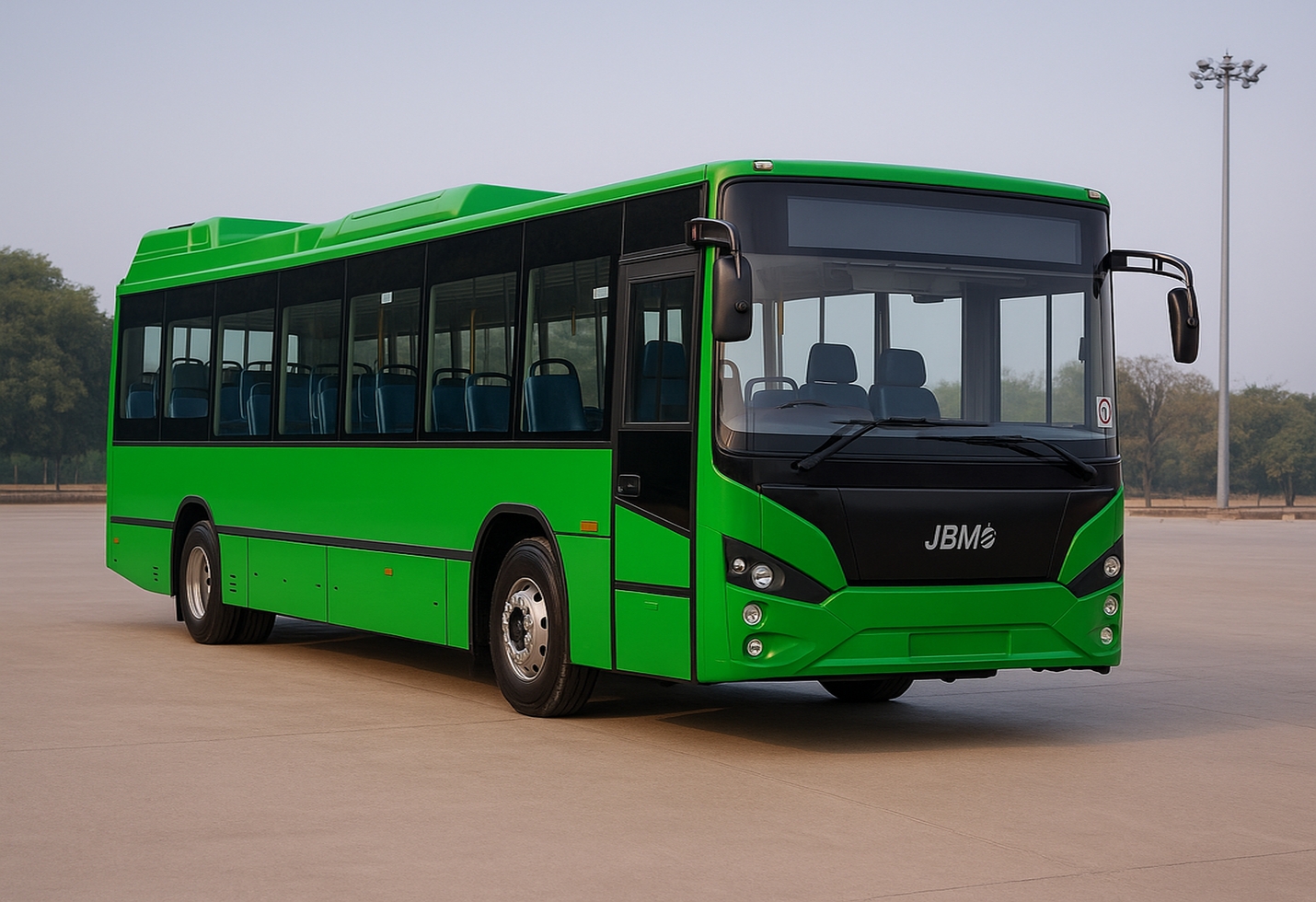
The image added is for representation purposes only
DMart Maintains Solid Growth Amid Margin Pressures and Fierce Retail Rivalry

Greaves Cotton Q4 Revenue Climbs to ₹823 Crore, Up 19%

Greaves Cotton Q4 Revenue Climbs to ₹823 Crore, Up 19%

 Greaves Cotton Q4 Revenue Climbs to ₹823 Crore, Up 19%


For the fourth quarter of FY2024–2025, Greaves Cotton Limited, a diversified engineering firm catering to the automotive and non-automotive industries, reported strong financial results. With a 19% year-over-year increase in revenue to ₹823 crore, the company demonstrated robust demand across all of its business divisions and solidified its position as a major force in India’s engineering and transportation sector.

Q4 Financial Performance Overview

Greaves Cotton reported a consolidated revenue of ₹823 crore for Q4 FY25, reflecting a 19% increase compared to ₹692 crore in the same quarter last year. This growth was fueled by solid performance in its electric mobility and engine segments, coupled with increased aftermarket demand.
The company’s EBITDA for Q4 stood at ₹71 crore, rising from ₹60 crore in the same period last year, with an EBITDA margin of 8.6%. Net profit for the quarter rose to ₹36 crore, showing a year-on-year increase of 13%. This positive bottom-line growth reflects improved cost management and stronger product mix efficiency.

Annual Financial Snapshot

Greaves Cotton recorded total revenue of ₹3,110 crore for the whole fiscal year FY25, up 15% from FY24’s ₹2,702 crore. The EBITDA for the year grew to ₹278 crore, compared to ₹229 crore in the previous year, while net profit reached ₹148 crore, up from ₹121 crore.
These results highlight the company’s strategic execution, diversification efforts, and focus on sustainable mobility solutions. The consistent rise in revenue and profit over the year is a testament to Greaves’ agility in adapting to changing market dynamics and consumer needs.

Dividend Declaration

The board of directors announced a final dividend of ₹1.50 per equity share for FY25 in recognition of its impressive performance. This reflects the company’s commitment to delivering value to shareholders while continuing to invest in innovation and expansion. The dividend will be paid to eligible shareholders after approval at the upcoming Annual General Meeting.

Segment-Wise Highlights

Electric Mobility (Ampere Vehicles)

Greaves Electric Mobility, the EV arm operating under the Ampere brand, continued its momentum with growing sales of electric two-wheelers and three-wheelers. The division contributed significantly to the revenue, supported by the rollout of new products and expansion of the dealership network.
The company also made advancements in battery technology and vehicle range, aiming to address range anxiety concerns and increase adoption of EVs in tier 2 and tier 3 cities. Sales during Q4 showed a strong uptick due to year-end buying trends, improved supply chain management, and attractive financing options.

Automotive Engines and Non-Automotive Applications

The traditional engine business also saw consistent demand, especially in the agricultural and industrial sectors. The company witnessed stable order inflow for diesel and CNG engines, used widely in irrigation pumps, small commercial vehicles, and construction machinery.
In the non-automotive space, Greaves’ gensets, marine engines, and light engineering products saw healthy growth, driven by demand from rural electrification, backup power solutions, and infrastructure projects.

Strategic Initiatives and Sustainability Goals

Greaves Cotton has been increasingly focusing on cleaner, sustainable technologies. The corporation made significant investments in R&D and digital capabilities in FY25 with the goal of future-proofing its products. Enhancing linked mobility solutions, growing electric product lines, and breaking into new export markets were among the initiatives. The company also continues to emphasize ESG (Environmental, Social, and Governance) practices by reducing its carbon footprint, improving energy efficiency across plants, and supporting community programs focused on skill development and rural upliftment.

Management Commentary

Commenting on the performance, Greaves Cotton’s MD and CEO, Nagesh Basavanhalli, said, “This quarter’s performance reflects the strength of our diversified portfolio and the successful execution of our transformation strategy. Our focus on electric mobility, while maintaining momentum in our traditional engine and aftermarket businesses, has allowed us to create a balanced and resilient model. We are confident of building on this foundation in FY26.”

Outlook for FY26

Looking ahead, Greaves Cotton aims to accelerate growth by expanding its EV portfolio, increasing localization to reduce costs, and leveraging government support for electric mobility under initiatives like FAME-II. With rising fuel prices and a growing shift towards sustainable alternatives, the company is optimistic about capturing a larger market share in both electric and traditional sectors.
The company is also evaluating potential strategic collaborations to strengthen its supply chain and tap into international markets, especially in Southeast Asia and Africa, where demand for affordable mobility and power solutions is rising.

Conclusion

Greaves Cotton has successfully transformed into a diverse, forward-thinking business, as seen by its Q4 FY25 performance. A defined growth path, solid financials, and growing investor confidence suggest that the company is well-positioned to maintain pace into FY26 and beyond.


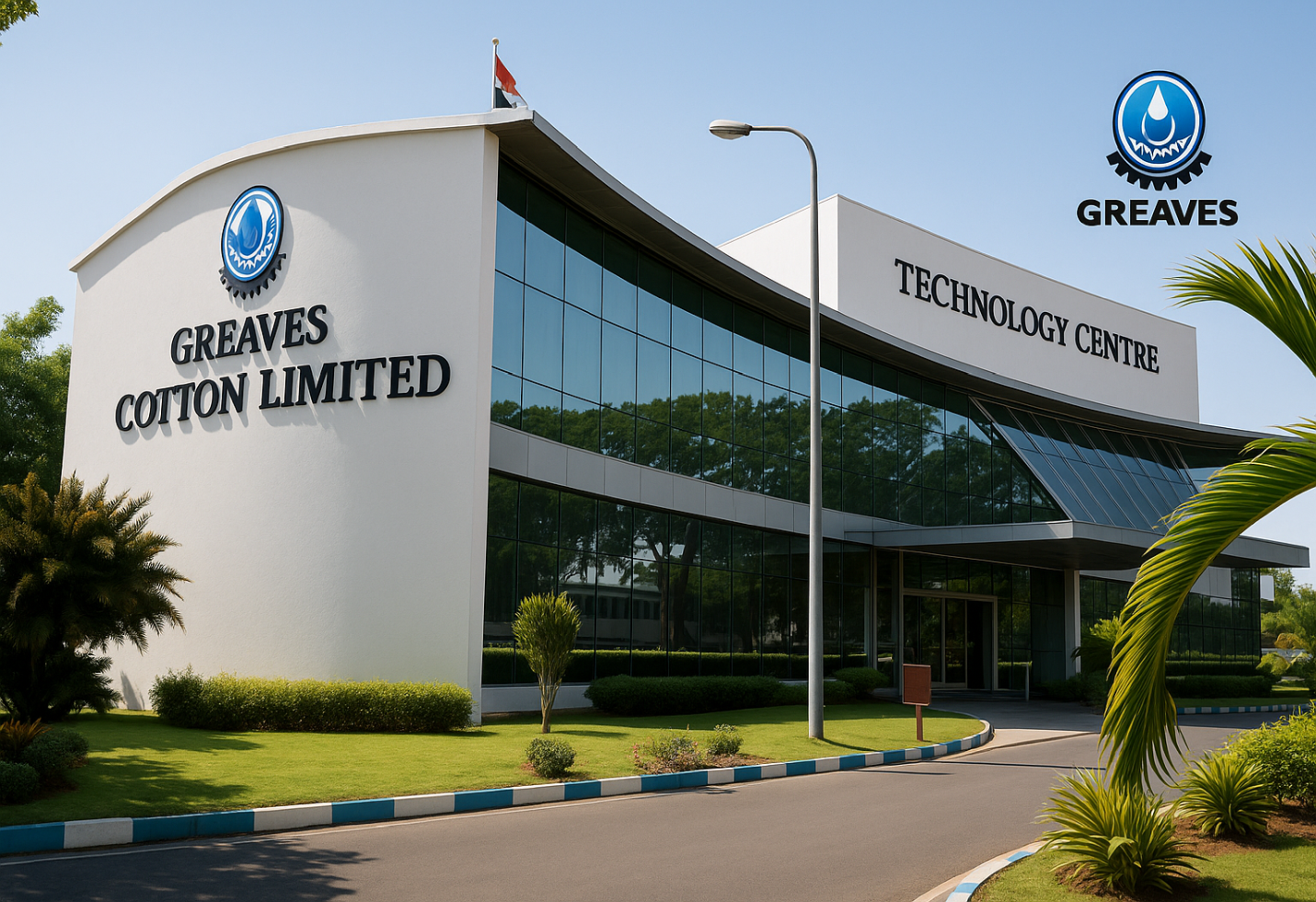
The image added is for representation purposes only

Vedanta Q4 FY25 Earnings: Robust Profit Surge Fueled by Cost Cuts and Commodity Gains