Menu

Delhivery

Delhivery Q2 FY26 — Revenue Up 17% Yet Back in the Red

Delhivery Q2 FY26 — Revenue Up 17% Yet Back in the Red

Delhivery Q2 FY26 — Revenue Up 17% Yet Back in the Red

Delhivery reported a mixed Q2 FY26: strong top-line momentum and record parcel volumes, but the quarter moved back into a reported consolidated loss after one-time integration costs from the Ecom Express acquisition. Management says the underlying business is healthy and that most integration costs are one-off and within prior guidance.

*Key numbers (consolidated, Q2 FY26)*
* Revenue from services: ₹2,559 crore (reported) — +11.6% QoQ / +11.6–16% YoY depending on presentation; management’s adjusted “excluding Ecom Express impact” figure is ₹2,546 crore (+16.3% YoY).
* Total income: ₹2,652 crore (reported).
* Reported EBITDA: ₹68 crore (this includes integration costs). Management’s adjusted EBITDA (excluding Ecom integration costs) was ₹150 crore with a 5.9% EBITDA margin.
* Reported Profit after Tax (PAT): loss of ₹50 crore (Q2 FY26). Adjusted PAT (excluding integration costs) was ₹59 crore (2.2% margin).
* Integration costs in Q2 related to Ecom Express: ₹90 crore; total integration costs expected to be within ₹300 crore as previously guided.
* Express parcel shipments: 246 million in Q2 FY26 — +32% YoY and +18% QoQ.
* PTL tonnage: 477k MT in Q2 FY26, +12% YoY; PTL revenue ₹546 crore (+15% YoY). Express parcel revenue was ₹1,611 crore (+24% YoY).

*Why revenue rose but the company is “back in the red”*
* Top-line growth: Volumes and revenue expanded, driven by a strong festive season and the integration of Ecom Express customers. Express parcel volumes were the standout: Delhivery handled its highest monthly volumes in September, and October started strong as well. This volume growth translated into higher service revenue.
* One-offs pushed the result into red: The company booked ₹90 crore of integration costs in Q2 (facility shutdowns, equipment moves, employee exits, etc.). When these are included, reported EBITDA and PAT fell sharply and Delhivery reported a ₹50 crore consolidated loss. Excluding those costs, the business produced positive EBITDA (₹150 crore) and PAT (₹59 crore). Management emphasised these costs are within the pre-announced ₹300 crore envelope.
* Margin dynamics: Service EBITDA margin for the Transportation vertical (Express + PTL) was 13.5% in Q2 on management-adjusted basis, and Express service margins are expected to normalize to 16–18% by end of FY26 as volumes scale and network utilization improves. PTL steady improvement is expected to continue.

*Operations & business mix*
* Express remains the biggest growth engine: higher share-of-wallet with clients after the Ecom deal plus festive demand lifted shipments to 246 million in the quarter. Management highlighted D2C/SME volumes growing ~40% YoY — an important sign of organic demand.
* Some non-express lines (supply chain, truckload, cross-border) had mixed performance: supply chain revenue was down YoY but profitability improved; truckload and cross-border had lower revenue sequentially. These are part of the company’s broader portfolio and are being tuned operationally.

*Management commentary*
Integration of Ecom Express is largely complete from a revenue transition standpoint and the network rationalization is done (retention of 7 facilities for long-term use). Management expects the remaining integration costs to be within the earlier ₹300 crore guidance. They also flagged that peak-period profitability targets are likely to be met across Q2–Q3 as festive volumes sustain.

*Risks & what to watch*
* Integration execution risk: remaining integration costs and any operational surprises could keep reported numbers volatile.
* Yield mix: acquisition changed shipment mix (lower average weight due to Ecom Express mix), which reduced yield QoQ even though volumes rose — this affects revenue per shipment and needs monitoring.
* Seasonality and temporary peak costs: management acknowledged temporary capacity build-ups for the festive season that affected margins. The pace of margin recovery will matter for investor confidence.

*Conclusion*
Delhivery delivered strong volume and revenue growth and showed operational scale during the festive season, but headline profitability was hit by expected integration costs from the Ecom Express deal. The adjusted numbers look healthy and management expects margins to recover as integration completes and volumes stay high — however, investors will rightly focus on how actual reported results evolve once the remaining one-offs are absorbed.


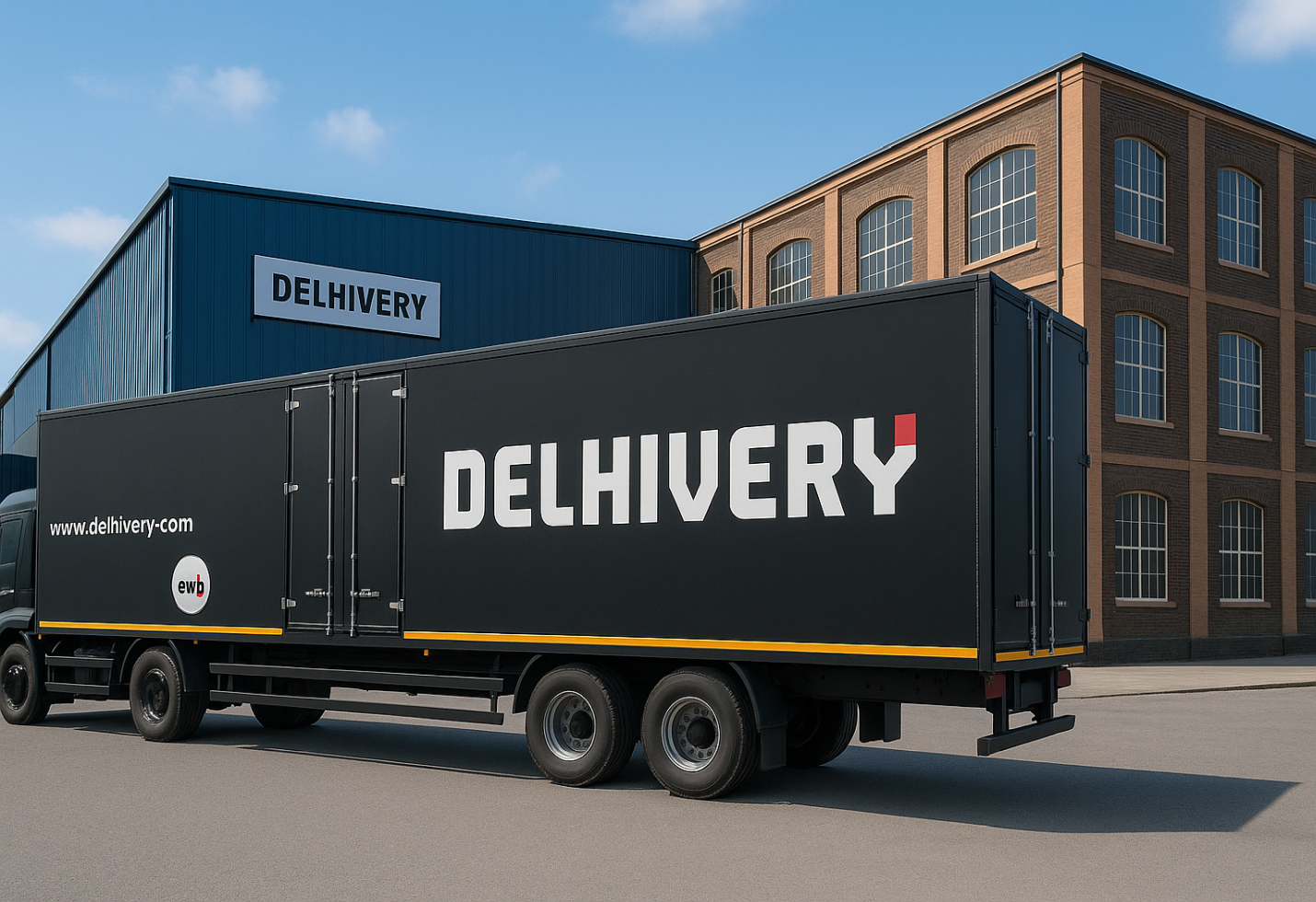
The image added is for representation purposes only

From Mumbai to the World: Equity Right’s Climb to the Global Top 3

Delhivery Q2 FY26 — Revenue Up 17% Yet Back in the Red

Delhivery’s Stellar Quarter: Profit Surges 190% Sequential

Delhivery’s Stellar Quarter: Profit Surges 190% Sequential


Robust demand, operational efficiencies, and network strength drive growth

Delhivery Ltd., India’s leading logistics and supply chain solutions provider, has delivered an outstanding performance for the fourth quarter of FY25. The company reported a massive 190% quarter-on-quarter (QoQ) jump in net profit , reaching ₹72.6 crore, compared to ₹25 crore in the previous quarter. This marks a strong turnaround for the company that had faced headwinds in earlier quarters, particularly due to macroeconomic pressures and seasonal fluctuations.

The company’s financial performance during Q4 is a testament to its improving operational efficiency, strategic focus on profitable growth, and an uptick in demand across core business segments including express parcel services, part-truckload (PTL), and third-party logistics (3PL) warehousing.

Revenue and Margins Witness Robust Growth

This growth was fueled by an expansion in service offerings and increasing market demand from e-commerce and enterprise clients alike. Compared to the previous quarter, revenue showed a mild uptick of around 5%, which when combined with aggressive cost control, contributed to the sharp rise in profitability.

What stood out in this quarter’s performance was the significant improvement in EBITDA margins , which expanded to 6.1% versus 3.4% in Q3. The company attributed this to better yield management, automation-led efficiency gains, and tighter control over fixed overheads. Additionally, network optimization and reduced capacity under-utilization helped in reducing variable costs per shipment.

Segment Performance: Express and PTL Lead the Way

Delhivery’s express parcel services segment continued to be its largest revenue contributor, benefiting from e-commerce tailwinds and improved service levels. Shipment volumes rose by 9% sequentially, and the average revenue per shipment also witnessed moderate growth due to better product mix and premium services adoption.

The PTL freight business also saw robust traction, with volumes increasing 14% QoQ, driven by higher demand from small and medium enterprises (SMEs) and MSMEs, particularly from tier-2 and tier-3 cities. The company noted that its Spot platform — which connects shippers with real-time capacity — played a vital role in scaling this segment efficiently.

Delhivery’s supply chain services and warehousing verticals also witnessed expansion , as customers increasingly opted for integrated logistics solutions. While still a relatively smaller portion of the overall revenue pie, this segment is gaining strategic importance due to higher margins and sticky client relationships.

Strategic Initiatives and Technology Investments

Delhivery continued to invest in cutting-edge automation and AI-driven logistics platforms, which played a pivotal role in streamlining operations. During the quarter, the company enhanced its pan-India network coverage by operationalizing new hubs and strengthening connectivity in underpenetrated geographies.

In addition, the management revealed a **renewed focus on improving working capital efficiency, which helped reduce outstanding receivables and improve cash flows. Inventory turns improved in line with warehouse digitization and predictive demand tools, further reinforcing operational resilience.

The company has also deepened its partnerships with major e-commerce players, D2C brands, and industrial clients to offer customized logistics solutions, thereby driving cross-selling and upselling opportunities.

Management Commentary and Future Outlook

Commenting on the Q4 performance, CEO Sahil Barua stated, Our focus on execution, network efficiency, and product innovation has resulted in a resilient quarter. We are encouraged by the broad-based improvement across business segments and believe this momentum will carry into FY26.

The management guided for double-digit revenue growth in FY26,backed by improving demand, new client wins, and ongoing investments in capacity and technology. It also hinted at the possibility of select acquisitions to enhance last-mile capabilities and international freight forwarding reach.

Delhivery also reaffirmed its goal of sustainable EBITDA-level profitability, indicating that the worst of its margin compression phase may be behind it. Analysts tracking the logistics space view Delhivery as a structurally sound play in India’s growing digital commerce infrastructure.

Market Reaction and Analyst Takeaways

Following the strong results, Delhivery’s shares surged over 6% in intraday trade, reflecting investor confidence in the company’s turnaround story. Several brokerages have revised their target prices upwards, citing strong volume growth, operating leverage, and the company’s expanding market share in organized logistics.

The stock, which had faced pressure in previous quarters due to high fixed costs and muted demand, is now being seen as a key beneficiary of India’s logistics sector formalization and increasing digital penetration in supply chains.

Summary

Delhivery recorded a significant 190% rise in its net profit for Q4 FY25, reaching ₹72.6 crore, fueled by enhanced operational efficiency and strong demand across its logistics services. Revenue grew to ₹2,076 crore, supported by better cost management and increased shipment volumes in its express and part-truckload (PTL) businesses. Margin expansion and strategic investments in automation further strengthened the company’s performance. With optimistic management guidance and improving sector dynamics, Delhivery is well-positioned for steady growth in the coming fiscal year.


The image added is for representation purposes only

Investor Wealth Jumps ₹26.48 Lakh Crore as Markets Hit Historic Weekly High