Menu

Research

A New Chapter for Vishal Mega Mart: Major Stake Trim and a $588 Million Deal on the Horizon

Vishal Mega Mart's Strong FY25 Growth and Outlook for Market Expansion

Vishal Mega Mart’s Strong FY25 Growth and Outlook for Market Expansion


Company Profile:

Vishal Mega Mart is a leading retail chain in India, founded in 2001.It provides a diverse selection of budget-friendly apparel, general merchandise, and FMCG products. As of March 31, 2025, the company operates 696 stores across 458 cities, with a total retail area of ~12.2 million square feet. Vishal Mega Mart also serves over 145 million consumers and has a growing presence in quick commerce.

Quarterly Performance (Q3 FY25 vs Q4 FY25):

Vishal Mega Mart reported a decline in performance in Q4 FY25 compared to Q3. Revenues dropped by 18.74%, from ₹3,136 crore in December 2024 to ₹2,548 crore in March 2025. This contraction in sales led to a 29.31% fall in operating profit, while Profit Before Tax (PBT) saw a steep decline of 55.68%. Net profit declined from ₹263 crore to ₹115 crore, a sharp fall of 56.27%. Earnings Per Share (EPS) also reduced significantly by 56.90%, dropping to ₹0.25. The quarter indicates pressure on margins and profitability, potentially due to reduced consumer spending, seasonal factors, or cost challenges.

Annual Performance (FY24 vs FY25):

Despite a demanding quarter, Vishal Mega Mart delivered strong annual growth in FY25, with sales climbing 20.26% to ₹10,716 crore, up from ₹8,912 crore in FY24. Operating profit increased by 19.88%, and more impressively, PBT and net profit grew by 36.68% and 36.80%, respectively. EPS for the full year improved from ₹1.02 to ₹1.37, representing a 34.31% increase, signaling enhanced value creation for shareholders. The company managed to scale its business while improving efficiency and profitability over the fiscal year.

Key operational highlights

• As of March 31, 2025, the company operates 696 stores across 458 cities, covering a retail space of approximately 12.2 million square feet.
• For FY25, the revenue breakdown by category was as follows: 44% from Apparel, 28% from General Merchandise, and 28% from FMCG.
• The company boasts a large and loyal customer base of around 145 million as of March 31, 2025.
• The proportion of revenue from the company’s proprietary brands increased to 73.1% in FY25, up from 71.8% in FY24.
• In addition, the company has made consistent progress in its quick commerce initiative, which is now available in 656 stores across 429 cities, with a registered user base of 8.7 million.

Market Reaction:

On April 30, 2025, Vishal Mega Mart’s stock surged by 9%, reflecting positive investor sentiment and confidence following the company’s strong financial performance and operational growth. The rise in stock price highlights investor optimism regarding the company’s future prospects, particularly in its expanding retail network and successful quick commerce initiative.

Final Take:

Vishal Mega Mart has demonstrated strong performance in FY25, with notable growth in sales, operating profit, and net profit, driven by its diverse product categories and expanding store network. The company has also made significant progress in its quick commerce initiative, further enhancing its market position.
Despite a challenging Q4 FY25, where sales and profits saw a decline, the company’s overall performance for the full year reflects resilience and strategic growth. The increase in the contribution of its own brands to revenue highlights the company’s growing brand equity and consumer loyalty.
The positive market reaction, with a 9% rise in stock price on April 30, 2025, signals strong investor confidence in Vishal Mega Mart’s long-term prospects, particularly as it continues to innovate and expand its presence across India.
In conclusion, Vishal Mega Mart remains well-positioned for continued growth, with its strong consumer base, expanding retail footprint, and increasing focus on digital and quick commerce services.


The image added is for representation purposes only

Star Health Q4 FY25: Profits Drop, Claims Surge!


Star Health Q4 FY25: Profits Drop, Claims Surge!

Star Health Q4 FY25: Profits Drop, Claims Surge!

Star Health Q4 FY25: Profits Drop, Claims Surge!


Despite robust double-digit growth in gross written premiums and a broader rural footprint, Star Health’s Q4 performance highlights rising claims expenses and a dramatic total collapse in net profit.

Summary:

Star Health and Allied Insurance reported a sharp decline in profits for Q4 FY25, recording an underwriting loss of ₹378 crore. The company’s combined ratio increased to 101.1%, climbing from 97.3% in the prior year, signaling a worrisome shift. Although the insurer saw a 10% YoY increase in Gross Written Premium and robust digital expansion, higher medical inflation and claim payouts led to significant financial strain.

A Disappointing Quarter for Star Health

Star Health and Allied Insurance Company Ltd. has reported a dramatic decline in its profitability for the fourth quarter and full year ended March 31, 2025. The standalone net profit plummeted by almost 100%, with the insurer posting an underwriting loss of ₹378 crore in FY25, compared to a modest ₹89 crore profit in FY24.
Profit after tax (PAT) fell to ₹646 crore under IGAAP and ₹787 crore under IFRS, down from ₹845 crore and ₹1,103 crore, respectively, in the previous year. The decline was caused by a rise in claims, healthcare cost inflation, and an increase in the combined ratio to 101.1%, surpassing the critical 100% mark. This suggests that the company’s claim payouts and operational costs exceed the revenue generated from premium collections.

Claims Surge and Expense Pressure

During FY25, the company paid over ₹10,350 crore in claims, a significant rise from previous years. Speciality categories such as orthopaedics, cardiology, cancer, and infectious diseases consumed close to ₹1,000 crores in payouts, with ₹2,000 crores paid out to senior citizens alone. The net incurred claim ratio rose to 70.3% under IGAAP and 70.7% under IFRS, indicating a surge in claim volumes beyond projections.
Operating expenses remained elevated at 30.4%, with administrative and distribution costs remaining high despite technology-led efficiency initiatives.

GWP Growth Strong, but Profitability Concerns Mount

Even though the bottom-line figures were disappointing, the company reported consistent growth in its top-line metrics. Gross Written Premium (GWP) rose 10% YoY to ₹16,781 crore under the new 1/n accounting norm and 15% to ₹17,553 crore without the 1/n adjustment. Retail health, contributing 93% of total GWP, remained the company’s core growth engine.
Renewal premium retention also stayed healthy at 97%, reflecting continued trust from existing policyholders.

Digital and Rural Expansion Pay Off

A highlight for the quarter was the company’s continued investment in digital and rural outreach. Star Health’s digital platform saw a 71% increase in fresh business through digital channels, 89% of policies were sourced digitally, and over 63% of renewals were done without human intervention.
Moreover, 51% of all insured people who lived during FY25 came from semi-urban and rural India. Notably, 60% of the retail claims settled were from these non-metro areas, aligning with Star Health’s aim of inclusive coverage.

Solvency and Investment Performance Remain Stable

The company demonstrated robust financial health with a solvency ratio 2.21x, well above the IRDAI requirement of 1.5x. This highlights a strong ability to meet sustained obligations over time. Additionally, total investment assets impressively reached ₹17,898 crore, reflecting a solid investment strategy. Furthermore, the investment yield experienced a marginal increase, rising to 7.8% from 7.7% in the previous fiscal year (FY24), highlighting the effectiveness of the company’s investment operations.

Management Commentary and Outlook

In a recent statement, Managing Director and CEO Anand Roy emphasized Star Health’s unwavering commitment to broadening its retail business, particularly in historically underserved regions. He outlined a range of forthcoming initiatives to promote customer-focused care models, innovative wellness programs, and accessible home healthcare services designed to enhance patient experiences.

Roy acknowledged the persistent challenges posed by rising inflation in healthcare costs, creating a more complicated landscape for service delivery. Nevertheless, he expressed confidence that the path forward lies in leveraging technology to drive efficiency and implementing prudent risk management strategies to navigate these economic pressures effectively. His insights paint a picture of a forward-thinking organization dedicated to adapting and thriving in a changing healthcare environment.

Conclusion: A Tough Quarter, But Not Without Silver Linings

Star Health’s Q4 and full-year FY25 performance presents a classic case of substantial growth marred by cost escalation and margin erosion. While the company’s leadership in retail health and strong solvency offer stability, sustained profitability will depend on effective underwriting, prudent pricing, and sharper cost controls. The year ahead is likely crucial as the company works to return to a healthier profit trajectory.


The image added is for representation purposes only

In India, Bosch Launches a Smart Supply Chain Platform


Ambuja Cements Q2 FY26: Volume & Margin Drive Deliver a Strong Surge

Green Growth: Ambuja's Capacity Surge and Record Earnings

Green Growth: Ambuja’s Capacity Surge and Record Earnings


Adani Group’s Ambuja achieves 100 MTPA milestone, posts highest-ever profit fueled by volume, strategic moves, and commitment to sustainability.

Ambuja Cements, a prominent entity within the Adani Group, has achieved a major milestone in the cement sector, now boasting a production capacity that exceeds 100 million tonnes annually. The company also announced its highest-ever annual profit after tax (PAT) of ₹5,158 crore, demonstrating a robust 9% year-on-year (YoY) increase for the fiscal year concluding on March 31, 2025.

This noteworthy accomplishment propels Ambuja Cements to become the ninth-largest cement producer worldwide based on its production capabilities. The company’s exceptional financial performance throughout FY25 was propelled by substantial growth in sales volumes, strategically advantageous acquisitions, and enhanced operational efficiencies implemented across its various units. Throughout the entirety of fiscal year 2025, Ambuja Cements registered its peak annual sales volume to date, hitting 65.2 million tonnes, a substantial 10% rise year-over-year. The company also celebrated a record annual revenue figure of ₹35,045 crore, demonstrating a robust 6% growth from the prior fiscal year.

In his remarks on this notable milestone, Vinod Bahety, the Whole Time Director & CEO of Ambuja Cements, stated, “Exceeding the 100 million tonnes per year production mark is a truly momentous occasion for Ambuja Cements.” This milestone underscores our inherent strength, our ambitious plans for growth, and our steadfast commitment to the progress of India’s infrastructure.” This milestone puts us on a firmer path towards our ambition of reaching a production capacity of 140 MTPA by the financial year ending 2028.

Strong Fourth-Quarter Performance and Operational Highlights

In the final quarter of fiscal year 2025, Ambuja Cements exhibited significant momentum, announcing a standalone profit after tax (PAT) of ₹929 crore, marking a considerable 75% increase compared to the corresponding period in the previous year. The company’s Earnings Before Interest, Taxes, Depreciation, and Amortization (EBITDA) for the fourth quarter stood at ₹1,868 crore, with an impressive EBITDA per tonne (PMT) of ₹1,001 and healthy EBITDA margins of 18.9%. Quarterly cement sales volume reached an all-time high of 18.7 million tonnes, reflecting a strong 13% increase on a year-over-year basis. Notably, Ambuja Cements continues to maintain a debt-free status, with a robust net worth of ₹63,811 crore and substantial cash reserves amounting to ₹10,125 crore.

Growth Fueled by Environmental and Digital Initiatives

Demonstrating a strong commitment to sustainability, Ambuja Cements has made substantial progress in its renewable energy transition, with 299 MW of green power capacity now operational, including 200 MW from solar sources and 99 MW from wind energy. This is part of a larger strategy to reach 1 GW of renewable capacity, with the remaining portion expected to be operational by the end of fiscal year 2026.

Consequently, the share of green power in the company’s energy mix has risen to 26.1%, with an ambitious target of reaching 60% by FY28. Furthermore, the company’s proactive implementation of cost-saving measures across various operational areas, including logistics, fuel consumption, and manpower optimization, has contributed significantly to maintaining its industry-leading profit margins.

The strategic acquisition of Orient Cement and the successful operational stabilization of the recently acquired Penna and Sanghi cement assets have played a crucial role in enhancing the company’s overall scale of operations and realizing significant synergy benefits. Ambuja Cements is also actively investing in digital transformation across its value chain, incorporating AI-driven operational processes, implementing smart logistics solutions, and enhancing customer engagement through user-friendly mobile applications such as OneConnect and Reward Connect.

Industry analysis indicates that India’s overall cement consumption experienced a growth rate of approximately 6.5-7% in the fourth quarter of FY25, supported by increased construction, rural demand, and infrastructure investments. Looking ahead to FY26, market forecasts project a further growth in cement demand of 7-8%, primarily driven by a pro-infrastructure focus in the government’s budget allocations and a positive outlook for the residential housing sector.

Commitment to Sustainability and Industry Recognition

Ambuja Cements continues to be recognized as a leader in sustainability within the industry, achieving significant water positivity and plastic negativity ratios. A substantial portion of its product mix comprises blended cement. The company has also pledged to plant 8.3 million trees by 2030, aligning with the Adani Group’s broader environmental goals. The company’s commitment has been acknowledged through awards like the Golden Peacock Award 2024 for ESG excellence and an ‘A-’ rating in the CDP Climate Leadership Score. TRA Research has also named Ambuja Cements as ‘India’s Most Trusted Cement Brand’ for the second consecutive year.

Final Thoughts:

Ambuja Cements Solidifies Market Position Through Capacity Expansion, Profitability, and Sustainable Practices

Ambuja Cements’ achievement of surpassing 100 MTPA in production capacity, coupled with its record-breaking annual profit, underscores its strong operational execution and strategic growth initiatives within India’s dynamic cement sector. The company’s commitment to expanding its green energy footprint and embracing digital transformation further positions it for sustainable and efficient growth. Its proactive approach to cost management, strategic acquisitions, and focus on meeting the growing demand have been key drivers of its success. Furthermore, Ambuja Cements’ consistent recognition for its ESG efforts and brand trust reinforces its position as a responsible and leading player in the industry. As India’s infrastructure development and housing sector continue to grow, Ambuja Cements appears well-positioned to capitalize on these opportunities while maintaining its focus on sustainability and innovation.


The image added is for representation purposes only
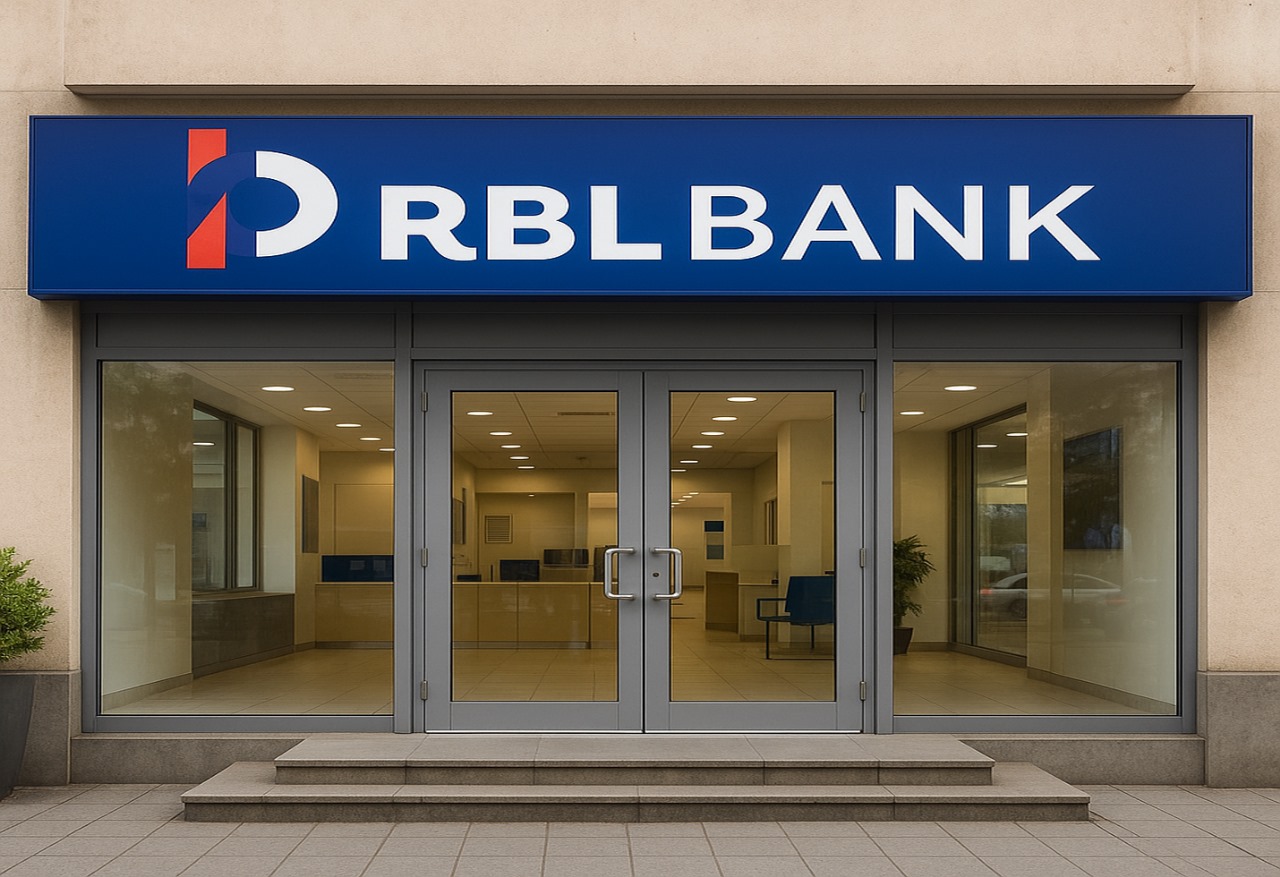
RBL Bank Q4 Results


RBL Bank Q4 Results

RBL Bank Q4 Results

RBL Bank Q4 Results

Executive Summary

Bank continued to maintain strong capital , stable asset quality. A key development in FY2025 was the strategic adoption of revised RBI investment guidelines, which enhanced the bank’s net worth and accounting clarity.

Key Financial Highlights (Standalone)

Particulars (₹ in crore) Q4 FY25 Q3 FY25 Q4 FY24 FY25 FY24
Interest Earned 3,476 3,536 3,339 14,039 12,394
Other Income 1,000 1,073 875 3,806 3,043
Total Income 4,476 4,610 4,215 17,845 15,437
Operating Profit (before prov.) 861 997 887 3,627 3,030
Provisions (other than tax) 785 1,189 414 2,959 1,778
Net Profit 69 33 353 695 1,168
Capital Adequacy Ratio (Basel III) 15.54% 16.18% 15.54% 16.18%
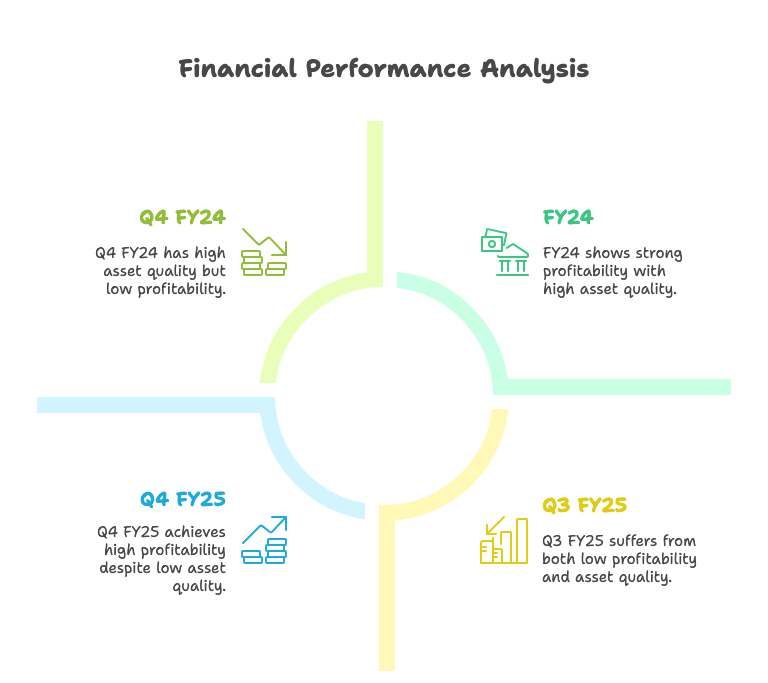
Gross NPA (%) 2.60% 2.92% 2.65% 2.60% 2.65%
Net NPA (%) 0.29% 0.53% 0.74% 0.29% 0.74%
Return on Assets (RoA) 0.20% 0.09% 1.08% 0.51% 0.96%


Segment Performance Breakdown

Retail banking contributed ₹1,613 crore in revenue, dominating the segment mix. Corporate banking and treasury brought in ₹672 crore and ₹975 crore respectively. Retail banking faced losses due to heightened provisioning from the JLG portfolio.

Strategic Accounting Changes (FY25)

The bank adopted RBI’s revised investment guidelines from April 2024, resulting in a ₹75.58 crore transfer to general reserve and fair value adjustment across AFS and FVTPL portfolios, enhancing transparency.

Cash Flow Summary (Standalone)

Operating cash flow was negative at ₹84.18 crore due to growth in advances. Cash and cash equivalents ended at ₹1,251.68 crore, down from ₹1,412.46 crore a year ago.

Consolidated View

Consolidated net profit was ₹71.71 crore for FY2025. The bank’s net worth rose to ₹1,506 crore, and deposits closed at ₹11,093 crore, backed by consistent credit growth and stable capital ratios.

VIII. Capital and Shareholder Updates

RBL declared a ₹1 per share dividend. The bank allotted 2.78 million shares under ESOP schemes during the year, reflecting long-term talent investment.

Key Financial Ratios

Earnings per Share stood at ₹11.45 (basic) and ₹11.40 (diluted) on a standalone basis. Debt-equity ratio stood 0.88 and total debt to total assets was at 9.36%.

Outlook and Conclusion

The conservative provisioning approach, improved asset quality, and regulatory compliance put the bank on a solid foundation for sustainable growth into FY2026.

Market Insights on Q4 FY2024 Performance

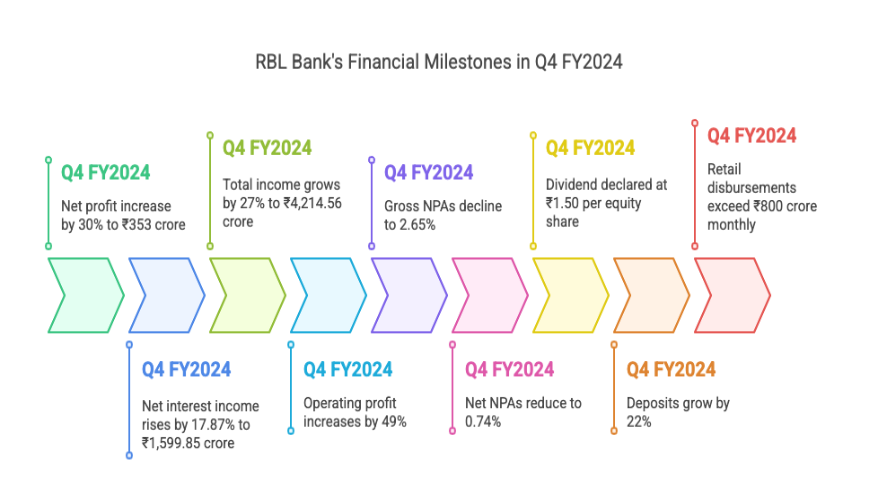
In Q4 FY2024, RBL Bank’s financial performance received considerable media attention, highlighting its strategic gains and sound fundamentals. The bank recorded a net profit of ₹353 crore, a 30% year-on-year increase, driven by a solid 17.87% rise in net interest income (NII), which stood at ₹1,599.85 crore. Total income for the quarter grew by 27%, reaching ₹4,214.56 crore, while operating profit rose 49% from the previous year.

Improvement in asset quality was evident with gross NPAs declining to 2.65% and net NPAs reducing to 0.74%. Net interest margin (NIM) was maintained at a healthy 5.45%, indicating efficient interest spread management.

The bank declared a dividend of ₹1.50 per equity share for FY2024, reflecting its strong financial position and shareholder commitment. A 22% year-on-year growth in deposits further enabled strong credit disbursement, particularly in the retail segment, where monthly disbursements exceeded ₹800 crore, encompassing business, home, and rural vehicle loans.

Challenges were also noted, with a slight increase in asset slippages to 0.56%, primarily from unsecured and microfinance segments. Despite this, RBL’s prudent provisioning policies ensured the bottom line remained protected.

Overall, media coverage emphasized RBL Bank’s solid execution and steady recovery in FY2024, reaffirming its resilience and readiness to navigate upcoming market dynamics.

 Investor Presentation Highlights – Q4 & FY2025

The investor presentation for Q4 & FY2025 offered a comprehensive view of RBL Bank’s operational resilience, strategic focus, and performance outcomes. Despite reporting a moderate net profit of ₹69 crore in Q4 FY25, the bank made a 100% provision on gross NPAs in its JLG (Joint Liability Group) portfolio, demonstrating a prudent approach to risk management.

Net Interest Income (NII) for the quarter declined by 2% year-on-year to ₹1,563 crore, with Net Interest Margin (NIM) at 4.89%. On the other hand, the bank recorded a 14% growth in other income to ₹1,000 crore, aided by a 17% increase in core fee income. Operating profit stood at ₹861 crore.


 Growth was primarily retail-led:

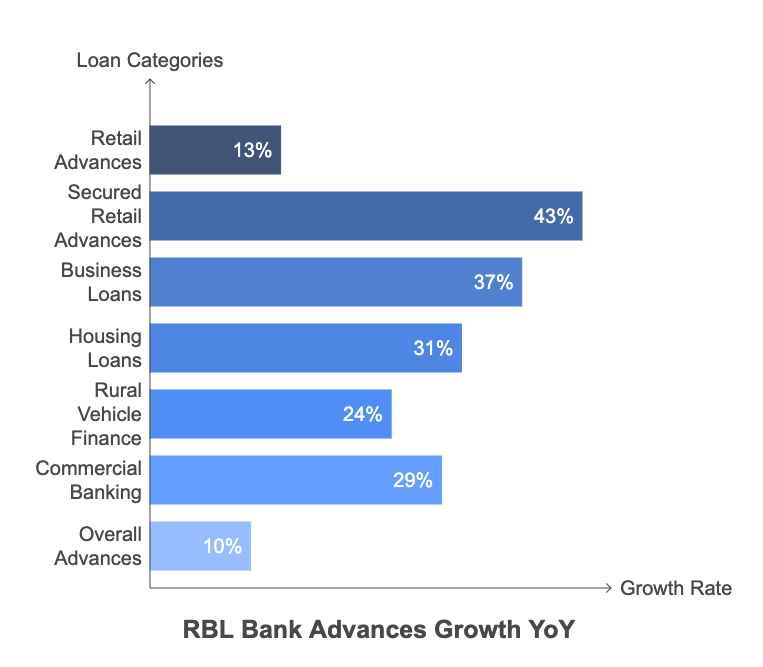
  • Retail advances grew 13% YoYto ₹55,703 crore.
  • Secured retail advances surged 43% YoY, led by:
  • Business loans: ↑ 37%
  • Housing loans: ↑ 31%
  • Rural vehicle finance: ↑ 24%
    • Commercial banking(mid-corporates/SME) within wholesale banking grew by a notable 29% YoY.
    • Overall advances reached ₹92,618 crore (↑10% YoY).

    Deposit traction and granularity improved:

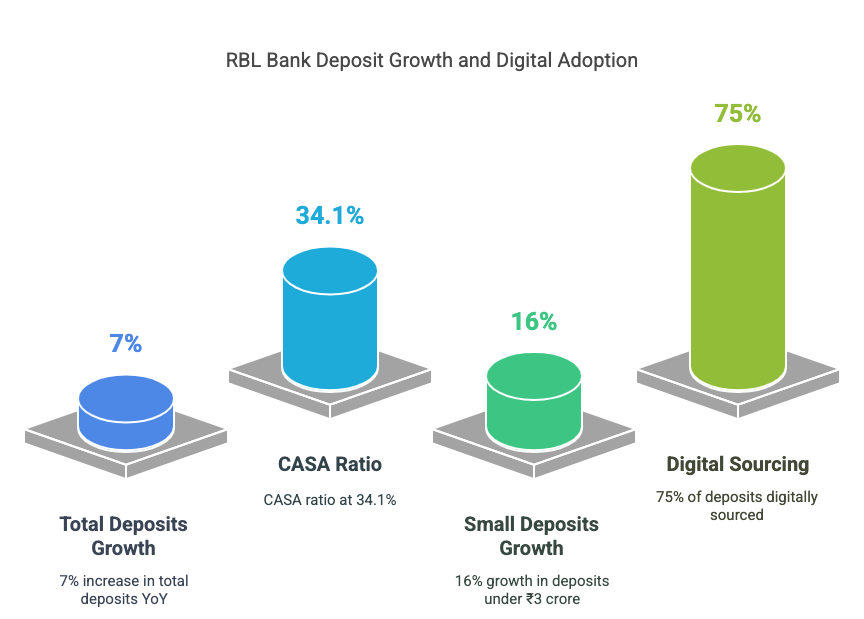
  • Total deposits grew 7% YoY to ₹110,944 crore.
  • CASA ratio stood at 34.1%.
  • Deposits under ₹3 crore grew 16% YoY and now represent ~50% of total deposits.
  • Over 75% of fixed deposits and savings accounts were digitally sourced, highlighting strong digital adoption.


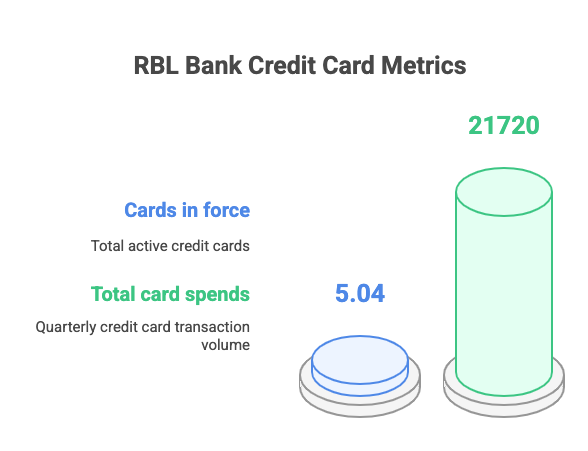
Credit cards remained a high-volume portfolio:

  • Cards in force: 5.04 million
  • Total card spends: ₹21,720 crore (Q4)
  • Receivables remained stable, with portfolio expansion outside Tier-1 cities.

 Asset Quality & Capital:

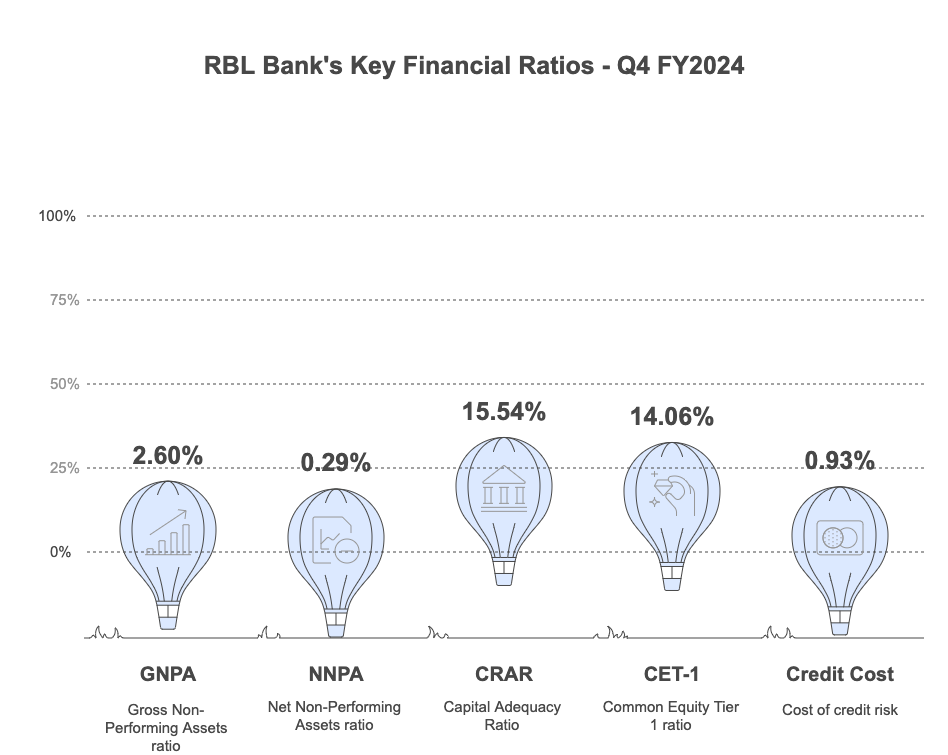
  • GNPA improved to 2.60% (↓32 bps QoQ)
  • NNPA declined to 0.29% (↓24 bps QoQ)
  • Capital Adequacy Ratio (CRAR): 15.54%
  • CET-1 ratio: 14.06%
  • Credit cost for Q4 was 93 bps.


Digital & Tech Advancements:

  • 5 million customers use RBL’s mobile apps.
  • Daily API calls exceed 1 million, with live end-to-end onboarding for open banking clients.
  • Key features launched include WhatsApp-based account opening, assisted journeys, and digital FD overdraft access.
  • 86% of recurring deposits and 66% of fixed deposits are now booked digitally.

 Sustainability & ESG Focus:

  • Voluntary climate risk policies adopted; target to eliminate coal exposure by FY2034.
  • Strong focus on financial literacy for rural women.
  • Recognized as India’s Best Bank for CSR (AsiaMoney) and awarded for technology innovation by IBA.


The image added is for representation purposes only
Zepto Eyes ₹1,500 Crore Debt at $5B Valuation


UltraTech Cement Q4: Strong Growth, Steady Margins

UltraTech Cement Q4: Strong Growth, Steady Margins

UltraTech Cement Q4: Strong Growth, Steady Margins


Strong volume growth and strategic acquisitions are poised to boost UltraTech’s Q4 earnings despite pricing pressures.

Summary:
UltraTech Cement is expected to deliver a strong performance in Q4FY24, supported by significant volume growth, strategic acquisitions, and effective cost management. Revenue is anticipated to grow by 12% YoY, while net profit may see an 8% uptick, although pricing pressures and a high base could limit the overall upside.

Introduction: Building Momentum Amid Challenges

As India’s largest cement producer, UltraTech Cement is expected to report healthy numbers for the quarter ended March 2024 (Q4FY24). Analysts forecast that the company’s earnings will be driven primarily by double-digit volume growth, successful integration of recent acquisitions, and relatively stable operating margins. However, a high base effect, regional pricing pressures, and input cost dynamics may pose minor hurdles to margin expansion.

Volume Growth: The Primary Growth Catalyst

Industry experts predict that UltraTech Cement’s domestic sales volumes will rise by approximately 10 to 12% annually. The increase stems from strong demand for rural housing, infrastructure push under government schemes like PM Gati Shakti and Smart Cities Mission, and sustained urban real estate momentum.
The company’s proactive expansion of capacity and its acquisition of smaller regional firms in recent quarters has enhanced its distribution network, significantly increasing deliveries in key areas such as Central and Eastern India.
Moreover, favourable weather conditions during January–March — traditionally the busiest construction season — supported sustained demand, reinforcing volume growth expectations.

Financial Forecast: Revenue and Profit Growth to Remain Resilient

Revenue:
UltraTech’s consolidated revenue for Q4FY24 is expected to rise by around 12% year-on-year, aided by higher sales volumes and the scaling of newly acquired capacities.
Profitability:
Net profit could grow by approximately 8% yearly, reflecting better cost management, economies of scale from acquisitions, and marginal improvement in blended realizations.
The company’s EBITDA (earnings before interest, tax, depreciation, and amortization) margin is projected to remain broadly stable around 19–20%, compared to the year-ago period. The steadiness is attributed to internal cost-control measures, higher operational efficiencies, and moderating input costs like pet coke and diesel.

Margins: Steady but Sensitive to Price and Costs

While cost rationalization has benefited UltraTech Cement, regional pricing variations — especially in South and West India — have capped realizations. Although input costs like coal and pet coke have declined sequentially, fierce competition in key markets has prevented significant price hikes.
Management’s strategic focus on improving logistics efficiency (e.g., using captive power plants and optimising lead distances) has helped offset some energy and freight cost inflation.
Even if average cement prices stay stable, UltraTech’s profit margins are anticipated to remain consistent rather than see significant growth this quarter.

Key Risks: High Base, Pricing Pressures, and Inflation

Despite strong fundamentals, certain risks continue to hover over UltraTech’s Q4 results:
High Base Effect:
Last year’s strong Q4 performance sets a tough comparison benchmark, particularly for margin expansion.
Regional Pricing War:
Aggressive price competition in Southern and Western markets may limit realization-led earnings growth.
Cost Pressures:
Although easing, energy and transportation costs remain volatile and could impact the company’s EBITDA if not efficiently managed.

Strategic Outlook: Well-Positioned for Long-Term Growth
Looking beyond Q4, UltraTech Cement appears well-positioned for sustainable growth:
Capacity Expansion:
The company’s strategy to increase capacity from 137 MTPA to over 160 MTPA by FY25 through brownfield and greenfield projects remains on track.
Diversification:
Investment in green energy (Waste Heat Recovery Systems and Renewable Power Projects) will reduce dependency on fossil fuels and lower energy costs in the long run.
Government Infrastructure Push:
Ongoing government investment in infrastructure, along with rising urbanization and growing housing demands, creates a favourable environment for the cement industry, positively impacting UltraTech.
Moreover, UltraTech’s robust balance sheet, leadership in the industry, and swift approach to acquisitions will help it maintain its stronghold in the Indian cement market while also considering selective opportunities abroad.

Conclusion: Solid But Balanced Expectations

In conclusion, while volume growth and operational efficiency will drive UltraTech Cement’s earnings growth in Q4FY24, investors should temper expectations given pricing challenges and the high base effect. Nevertheless, the company’s long-term prospects remain highly attractive, making it a key player poised to benefit from India’s structural infrastructure and housing boom.


The image added is for representation purposes only
Analysts Discontinue to Trust Jio’s valuation amid rising costs and slower revenue growth

Tech Mahindra Q4FY25: Despite modest revenue growth during the ongoing recovery phase, PAT jumps 80.3% year over year.

Tech Mahindra Q4FY25: Despite modest revenue growth during the ongoing recovery phase, PAT jumps 80.3% year over year.

Tech Mahindra Q4FY25: Despite modest revenue growth during the ongoing recovery phase, PAT jumps 80.3% year over year.


Despite difficulties in several important locations and verticals, Tech Mahindra, one of India’s top providers of IT services, exceeded analysts’ expectations with a solid performance in Q4FY25. At ₹4,252 Cr, the company’s Profit After Tax (PAT) increased by an astounding 80.3% year over year (YoY). Although sales climbed just 5.8% YoY, indicating persistent demand issues in some sectors, this impressive rise was driven by aggressive cost optimization efforts, improved margins, and enhanced operational efficiency.

After a protracted period of margin pressure and sluggish topline growth, Tech Mahindra is on the road to recovery, as seen by the company’s outstanding profitability performance during the quarter. Revenue growth is still slow despite PAT’s strong progress, highlighting some of the sector-specific difficulties and macroeconomic headwinds the company is now negotiating.

Growth by Segmentation: Mixed Performance Across Verticals

Uneven growth across business segments was highlighted by Tech Mahindra’s Q4FY25 statistics. The Enterprise segment which comprises BFSI, technology, and manufacturing saw a significant 7.7% YoY growth, indicating a high demand for services related to digital transformation. Increased use of cloud platforms, automation, and AI-driven solutions targeted at improving customer experiences and optimizing operations were especially advantageous to the BFSI vertical. In a similar vein, continuous investments in digitization and industrial automation by the manufacturing and technology sectors fueled expansion.
However, the usual growth driver for the Communications, Media, and Entertainment (CME) industry suffered a 2.5% YoY dip. Due to client budget cuts and postponed spending in the face of economic uncertainty, the telecom industry continued to face pressure. Demand has been slow as a result of media and telecom firms cutting down on investments in digital services and infrastructure upgrades.
Notwithstanding this drag, Tech Mahindra’s strategy emphasis on client diversification, high-value services, and developing technologies served to mitigate the overall effect and indicated the robustness of its larger portfolio.

Optimizing Costs and Improving Margin

The significant increase in profitability, which was fueled by rigorous cost optimization, was one of Tech Mahindra’s Q4FY25 reports’ main highlights. EBIT margins improved by 360 basis points to 11.8% from 8.8% in the same quarter last year as a result of the company’s successful efforts to cut subcontracting costs, minimize staff expenses, and simplify discretionary spending.
Additionally, the company’s continued emphasis on operational effectiveness and margin development is reflected in the EBITDA margin, which rose to 11.8%. Tech Mahindra’s dedication to cost control and profitability was evidenced by a 216-basis point increase in the cost-to-income ratio and better free cash flow generation. Strong operational efficiency efforts by the business also enhanced return on equity (ROE) and return on assets (ROA), both of which are anticipated to continue to grow in the future.

Dividend Payout and Balance Sheet

Tech Mahindra maintained a solid cash position and liquidity on the balance sheet, demonstrating continued financial prudence. A decrease in reserves was the main cause of the company’s reported small decline in net worth. Nonetheless, cash and cash equivalents increased to ₹1,521.8 Cr, indicating that the business is committed to keeping a healthy liquidity cushion.
The decrease in net current assets, which indicates increased operational cash flow efficiency, was a result of Tech Mahindra’s efforts to tighten working capital management. The business recommended a final payment of ₹30 per share, increasing the total dividend payout for FY25 to ₹45 per share, despite the modest fall in net worth This demonstrates the company’s continued dedication to its investors. This dividend payment demonstrates the company’s sustained capacity to produce robust cash flow and sustain shareholder dividends despite a difficult environment for revenue growth.

Management Plan and Prospects

The management of Tech Mahindra is concentrating on a three-year strategic transformation strategy. FY25 is the reset/recovery phase, focusing on addressing operational challenges and improving profitability. FY26 will aim for stability, refining strategies, while FY27 is expected to drive accelerated growth through successful execution of these plans.
The company is enhancing its Customer Experience (CX) capabilities by leveraging 5G, cybersecurity, and Generative AI (GenAI) to offer more personalized and intelligent services. This will play a crucial role in enhancing customer satisfaction and fostering loyalty. Additionally, Tech Mahindra is expanding its digital services and AI capabilities to offset slower growth in the telecom and media sectors, focusing on AI-powered services and cloud transformation.
Despite positive margin gains, short-term performance may be impacted by macroeconomic volatility and uncertainty in telecom/media sectors. However, Tech Mahindra’s strategic emphasis on digital services and AI technologies is expected to drive long-term growth.

Conclusion and Score

To sum up, Tech Mahindra has improved significantly in Q4FY25, demonstrating high profitability and cost effectiveness in spite of sluggish sales growth. The company’s concentration on high-value services, efficient cost-control strategies, and margin expansion all point to future success. But keeping up top-line growth will be essential to keeping investors confident.
We maintain our hold rating on Tech Mahindra due to the company’s present difficulties and sluggish revenue growth. Increased operational leverage, the CME segment’s recovery, the rapid expansion of innovative technologies, and the accomplishment of its strategic goals are important drivers of upside.


The image added is for representation purposes only
HUL Delivers FY25 Results: Dividends and Strategic Growth Outlook

HUL Delivers FY25 Results: Dividends and Strategic Growth Outlook

HUL Delivers FY25 Results: Dividends and Strategic Growth Outlook

HUL Delivers FY25 Results: Dividends and Strategic Growth Outlook


SUMMARY
For the fourth quarter of FY25, Hindustan Unilever Ltd (HUL) achieved a 3.7% rise in consolidated net profit, bringing the total to Rs 2,493 crore. The company recorded a 2.4% growth in operating revenue, amounting to ₹15,214 crore. Additionally, the board has proposed a final dividend of Rs 24 per share, highlighting their focus on rewarding shareholders.
Looking forward to FY26, HUL foresees a gradual recovery in demand, which it plans to support through strategic investments and ongoing efforts to transform its product portfolio. This approach aims to drive steady growth and strengthen its market position.
Enhancing Shareholder Value Through Strategic Dividends
The board has approved a final dividend of ₹24 per share, raising the total annual dividend paid to shareholders to ₹53 per share. However, the announcement of the record date for this dividend is still pending.
Over the past year, Hindustan Unilever Ltd (HUL) has declared multiple dividend payouts, including interim and special dividends, with amounts ranging from ₹10 to ₹24 per share.
HUL’s Q4 Net Profit Slips
Fast-moving consumer goods (FMCG) giant Hindustan Unilever (HUL) on Thursday announced a slight decline of 3.7% in its consolidated net profit, which stood at ₹2,464 crore for the fourth quarter (Q4) of the financial year 2024–25 (FY25). In comparison, the company had posted a net profit of ₹2,558 crore in the corresponding quarter of the previous year.
On a quarter-on-quarter basis, the net profit saw a sharper dip of 17.5% from ₹2,984 crore recorded in the preceding quarter.
The company reported a 3.5% year-on-year (YoY) increase in total income for Q4 FY25, reaching ₹15,979 crore compared to ₹15,441 crore. However, revenue showed little change when compared to the previous quarter.
Segment Performance Overview:
The Personal Care division recorded a 5% increase in profit, supported by modest sales growth under ongoing pricing pressure. Within this category, the Bodywash segment achieved double-digit growth, further solidifying its leadership position. Non-hygiene products delivered high single-digit growth, while skin cleansing products posted a modest, low single-digit increase.
The Home Care segment added ₹5,815 crore to the overall revenue, reflecting a 2% year-on-year rise. Growth was primarily driven by strong performance in premium fabric wash and fabric conditioners, along with contributions from the liquids portfolio, according to the company’s investor update.
In Beverages, tea experienced low single-digit growth due to pricing, whereas coffee maintained its strong momentum with continued double-digit expansion. The company held on to its leadership in both value and volume in the tea category.
Meanwhile, the Foods segment saw a decline in consolidated profit, which dropped 15% to ₹627 crore.
CEO Rohit Jawa Envisions FY26 Growth Path for HUL
In FY25, HUL achieved a turnover exceeding ₹60,000 crore, reflecting an Underlying Sales Growth of 2% and EPS growth of 5%. While absolute volume tonnage expanded by a mid-single-digit rate, this progress was somewhat diminished due to an unfavorable product mix,” stated Rohit Jawa, CEO and Managing Director, HUL.
He highlighted HUL’s competitive performance and its reinforced market leadership. “FY25 was a defining year in our portfolio evolution, marked by strategic developments in high-growth segments, enhanced investments in emerging channels, the acquisition of Minimalist, the sale of Pureit, and the planned separation of our Ice Cream business,” Jawa remarked. Looking ahead to FY26, HUL anticipates a progressive recovery in demand. “We remain focused on fulfilling a billion ambitions, leveraging our robust business fundamentals to sustain competitive advantage,” he stated. 


The image added is for representation purposes only
Reliance Power Share Price Jumps 7% Amidst Flat Stock Market

IREDA's PAT Soars 49% to ₹502 Crore!

IREDA's PAT Soars 49% to ₹502 Crore!

IREDA’s PAT Soars 49% to ₹502 Crore!


Strong growth in renewable energy financing pushes IREDA’s profitability and operational scale; significant improvement in asset quality and financial ratios underlines sector momentum.

Summary:

IREDA has reported a 49% year-on-year (YoY) increase in consolidated net Profit for Q4 FY25, reaching ₹502 crores compared to ₹337 crores in Q4 FY24. Revenue from operations also saw a solid 37% growth, hitting ₹1,904 crore. With a consistent focus on renewable energy financing, IREDA’s performance underscores the growing opportunities in India’s green economy transition.

Robust Profit Growth Driven by Renewable Sector Focus

IREDA reported a consolidated PAT of ₹502 crore for the quarter ended 31st March 2025, representing a significant 49% increase compared to ₹337 crore in the same quarter of the previous year. The performance was underpinned by a surge in revenue, which grew 37% to ₹1,904 crore from ₹1,391 crore in Q4 FY24. This indicates a numerical gain and reflects long-term structural shifts in India’s energy sector. As demand for green financing soars, IREDA has successfully captured a significant share of the lending market for renewables, leveraging its domain expertise and policy alignment.

IREDA announced a consolidated profit after Tax (PAT) of ₹1,699 crore for FY25, representing a 36% increase from ₹1,252 crore in FY24. This reflects robust loan disbursements, improved margins, and higher interest spreads in a conducive renewable energy financing environment. The key driver here was a policy push and financial schemes favouring renewable projects, such as rooftop solar, green hydrogen, and EV infrastructure, which IREDA is actively funding.  

Why This Is Good:

  • Sector Tailwinds: India’s push for energy transition creates a natural growth environment for IREDA.
  • Efficient Execution: Despite increasing finance costs, the company boosted margins, indicating efficient operations.
  • Government Backing: As a public sector enterprise, it benefits from sovereign credibility and favourable interest rate arbitrage.

Revenue Growth Outpaces Cost Inflation

Total income for Q4 FY25 stood at ₹1,915 crore, while for the whole year, it reached ₹6,755 crore, a 36% increase from ₹4,965 crore in FY24. Finance costs increased by 31% YoY to ₹1,104 crore in Q4, owing to higher borrowing volumes. Although finance costs increased by 31% to ₹1,104 crore due to higher borrowings, the outpacing growth in revenue allowed IREDA to maintain profitability and expand operating margins.

Operating Profit before depreciation and impairment came in at ₹770 crore in Q4 FY25, a 55% increase from ₹498 crore in Q4 FY24. Profit before Tax rose 31% YoY to ₹630 crore in the March quarter.  

Why This Is Positive:

  • Spread Management: Rising finance costs are typical in high-interest periods, but IREDA maintains the spread through strategic loan repricing.
  • Scalable Model: Revenue per employee leapt from ₹28.53 crore to ₹40.37 crore, proving economies of scale and a lean operational model.
  • Borrowing at Competitive Rates: Access to ECBS and perpetual bonds reduced the cost of capital.


Improved Asset Quality and Financial Metrics Indicate Strong Fundamentals

IREDA also reported a significant improvement in key financial ratios:

  • Net Interest Margin: Boosted to 3.27% in FY25 from 2.85% in FY24
  • Interest Spread: Widened to 2.42% from 2.16%
  • Earnings Per Share (EPS): Improved to ₹6.32 from ₹5.16 YoY
  • Revenue per employee: Leaped to ₹40.37 crore from ₹28.53 crore in FY24

This improved financial performance reflects the company’s success in optimising operations while expanding its loan book. These numbers validate IREDA’s focus on asset quality, risk management, and diversification beyond traditional renewable assets like solar and wind. The company increasingly funds new-age sectors like EV charging infra, grid-scale battery storage, and green ammonia.


Why These Are Strong Signals:

  • Stable Margins in a Volatile Rate Cycle: NIM expansion indicates successful loan repricing despite rising repo rates.
  • Diversified Exposure: Reduced risk concentration with exposure across 15+ clean energy sub-sectors.
  • Tech-Enabled Credit Monitoring: Lower NPAS and improved recoveries through digitised monitoring systems.  


Loan Book Expansion Reflects Demand Surge

IREDA’s gross loan portfolio grew to ₹75,320 crore by the end of FY25, signalling increasing demand for green energy financing. IREDA benefits from rising demand, fueled by India’s goal of 500 gigawatts of non-fossil fuel energy by 2030. The company also emphasised its readiness to support newer domains like offshore wind, ethanol-based fuels, and hybrid solar-wind parks.

As per the latest balance sheet, the company’s total liabilities stood at ₹79,728 crore, supported by ₹64,740 crore in borrowings and ₹10,266 crore in equity.

Strategic Initiatives and Recognition

IREDA’s transformation into a Navratna CPSE and its expansion into international markets through the GIFT City subsidiary reflect its growing strategic importance. The agency also secured foreign currency financing through a JPY 26 billion External Commercial Borrowing (ECB) from SBI Tokyo and raised ₹1,247 crore via perpetual bonds.

Additionally, between November 2023 and November 2024, the company received two CBIP awards for outstanding contributions to the RE sector and was ranked among India’s top five wealth creators.

Why Numbers Could Raise Concerns (Mild Risks)

While the overall story is highly positive, some challenges persist:

  • Rising Finance Costs: A 31% YoY rise in finance costs could compress margins if rate hikes continue.
  • High Leverage: With borrowings at ₹64,740 crore, debt servicing needs careful monitoring.
  • Execution Risk: As IREDA expands into newer domains (like green hydrogen), operational execution becomes critical.

However, these risks are currently outweighed by sector growth, government support, and the company’s evolving capabilities.


Comparison with Q4 FY24

Metric Q4 FY25 Q4 FY24 YoY Change
Revenue from Operations (₹ Cr) 1,904 1,391 +37%
Operating Profit (₹ Cr) 770 498 +55%
Profit Before Tax (₹ Cr) 630 480 +31%
Profit After Tax (₹ Cr) 502 337 +49%
Net Interest Margin (%) 3.27% 2.85% +0.42 bps
EPS (₹) 6.32 5.16 +22%


Future Projections: Green Horizon Beckons

Looking ahead, IREDA is positioned for significant growth due to

  1. Policy Push: The government’s PLI schemes, green bond frameworks, and the solarisation of agriculture will require massive funding.
  2. IPO Aftereffects: The 2023 IPO has enhanced transparency and market visibility, likely attracting more global institutional interest.
  3. Digital Transformation: AI-powered credit appraisal and automated compliance monitoring are on the roadmap.

If the current growth trends persist, IREDA’s loan portfolio will surpass ₹1 lakh crore by FY27. With expanding global partnerships, its role could evolve from a lender to a development finance institution, leading climate financing for South Asia.

Summary:

IREDA has reported a 49% year-on-year (YoY) increase in consolidated net Profit for Q4 FY25, reaching ₹502 crores compared to ₹337 crores in Q4 FY24. Revenue from operations also saw a solid 37% growth, hitting ₹1,904 crore. With a consistent focus on renewable energy financing, IREDA’s performance underscores the growing opportunities in India’s green economy transition.


The image added is for representation purposes only
Traders claim that Trump’s tariffs have caused the $82 billion diamond industry to “ground to a halt.”

LG Electronics’ India unit IPO: valuation, strategy and sector implications

Get Ready to Invest: Tata Capital's Game-Changing ₹15,000 Crore IPO!

Get Ready to Invest: Tata Capital’s Game-Changing ₹15,000 Crore IPO!

Tata Capital, the financial services subsidiary of the Tata Group, takes a significant step toward listing with an ambitious ₹15,000 crore IPO in the works.

In a pivotal move for its public market debut, Tata Capital Limited has formally submitted a confidential preliminary prospectus to SEBI (Securities and Exchange Board of India), initiating the process of its much-anticipated ₹15,000 crore Initial Public Offering (IPO).

Breakdown of the Offer

The company plans a two-part IPO offering. The first part consists of a new share issuance — about 2.3 crore equity shares, which will raise additional capital to fuel its growth initiatives. The second part of the offer will involve the sale of existing shares by its major stakeholders, predominantly Tata Sons, which holds a dominant 92.83% stake in the company. This share sale will enable a broader base of investors to become stakeholders in Tata Capital. The company’s shares are set to be listed on both the National Stock Exchange (NSE) and the Bombay Stock Exchange (BSE), with final details on pricing and bid structure to be finalized later.

Leading Investment Banks to Guide the Offering

The IPO process will be managed by a group of prestigious financial institutions, who will handle various aspects of the offering The coalition includes leading financial institutions and consultancy firms such as Kotak Mahindra Capital, Axis Capital, Citi, JP Morgan, HSBC, ICICI Securities, IIFL Capital, BNP Paribas, SBI Capital, and HDFC Bank. These experts will assist in structuring the deal, determining pricing, and ensuring the offering aligns with market expectations.

Tata Capital’s Position in the Market

Founded in 2007, Tata Capital has become an established name in India’s financial services industry. The company provides a broad array of services ranging from consumer loans and wealth management to commercial finance and co-branded Tata Cards. Its operations span more than 900 locations across India, serving both retail and corporate customers.
Tata Capital’s strong network and diversified offerings have positioned it as one of the leading non-banking financial companies (NBFCs) in the country. With a customer-first approach, it leverages technology and innovation to maintain a competitive advantage in the sector.

A Look at the Financials: Growth Momentum

Tata Capital has demonstrated remarkable financial performance recently. The company reported ₹18,178 crore in revenue for FY24, reflecting a 34% increase compared to the prior year, showcasing its ability to meet growing demand for financial services across various segments.
Additionally, its net profit reached ₹3,150 crore in FY24, marking a 37% increase from the previous year’s figure of ₹2,300 crore. This growth signals strong operational efficiency and a healthy portfolio of assets.
In addition, Tata Capital’s loan portfolio exceeded ₹1 lakh crore, reflecting a 40% annual growth and solidifying its status as a major contender in India’s financial sector.

Rationale Behind Going Public

This IPO is strategically timed to align with Tata Capital’s long-term vision for expansion. With a growing demand for financing in India and a rising middle class, the company sees this as an opportunity to enhance its financial flexibility. The funds raised from the IPO will support business expansion, investment in technology, and improvements to its capital structure, particularly in underserved sectors.
This step also positions Tata Capital for further digital growth and increased penetration into new markets, thereby enabling it to reach a wider audience of both consumers and businesses.

Tata Group’s Strategy: Unlocking Value

The proposed IPO forms a key element of the Tata Group’s wider strategy to maximize the value of its subsidiaries. Similar efforts have been observed with Tata Technologies, which successfully went public, and it appears Tata Capital is following suit by capitalizing on its strong financial foundation to access additional capital markets.
This approach reflects a growing trend in the Group’s strategy to position its subsidiaries for greater visibility and growth opportunities.

Closing Thoughts: A Milestone for Tata Capital

Tata Capital’s decision to go public highlights its strong growth trajectory and market stability in India’s competitive financial services sector. By confidentially filing its IPO papers, the company ensures it has ample time to adjust its offering to market conditions before making any final decisions.
With continued growth prospects and a solid financial outlook, Tata Capital’s IPO is poised to be one of the most anticipated listings of 2025, drawing considerable attention from both retail and institutional investors.


The image added is for representation purposes only
Apple’s India Move: iPhones Worth $6 Billion and Counting

Tesla Shares Surge 3% Following Elon Musk’s $1 Billion Stock Investment

Elon Musk’s Robotic Dream Team: Laying the First Bricks on Mars

Elon Musk’s Robotic Dream Team: Laying the First Bricks on Mars


Space has always fascinated humanity, and few people have pursued that fascination as boldly as Elon Musk. As the founder of SpaceX and Tesla, Musk has long spoken about his mission to build a human civilization on Mars. But instead of sending astronauts first, he’s taking a different approach — deploying humanoid robots to Mars to prepare the terrain for human arrival. These machines, led by Tesla’s Optimus robot, are expected to begin their journey by 2026, laying the foundation for one of the most daring goals in space history.

Optimus: A Robot Built for More Than Earth

Tesla introduced Optimus as a robot designed to handle routine tasks in factories. However, its role has since grown far beyond industrial use. Optimus stands human-sized and is powered by Tesla’s artificial intelligence, enabling it to work in dynamic environments. It’s not just programmed to follow instructions — it can learn, adapt, and assist in unpredictable situations.
For Mars, this flexibility is key. Unlike machines limited to a single function, Optimus is expected to help with tasks like assembling solar power units, maintaining equipment, and preparing shelters — all crucial for making the planet livable for future settlers.

The 2026 Launch Goal

Musk has stated that a SpaceX Starship could deliver Optimus to Mars as early as late 2026. This uncrewed mission would mark the first time a humanoid robot is sent to another planet to actively shape its environment. The objective is to test both the spacecraft’s landing capabilities and the robot’s performance in real Martian conditions.
If this initial phase succeeds, human missions could follow within a few years — possibly by the end of the decade. These robots are not just scouts; they’re the builders and operators of Mars’ first infrastructure.

The Starship Connection

The mission wouldn’t be possible without Starship, SpaceX’s heavy-lift rocket. It’s designed to transport cargo and humans across planets, and it’s fully reusable — a key factor in making space travel economically viable. Optimus will hitch a ride aboard Starship, likely alongside other robotic systems and equipment.
Before any Mars-bound flights, Starship will continue rigorous testing in Earth orbit and potentially the Moon. These rehearsals will help ensure its reliability for interplanetary travel.

Why Use Robots First?

Mars is a harsh and unpredictable place — far from ideal for human life without preparation. Temperatures are extreme, radiation levels are high, and breathable air doesn’t exist. Sending robots first makes practical sense. They don’t need oxygen, food, or rest, and they can work around the clock under dangerous conditions.
By performing construction, setup, and maintenance tasks, robots will reduce the risks and burdens that future astronauts might face. In other words, these machines will act as the first settlers, paving the way for human survival.

Beyond Mars: What This Means for Earth

The significance of dispatching Optimus to Mars extends well beyond the realm of space exploration. If humanoid robots can successfully build and operate in space, their potential applications on Earth multiply. Imagine disaster relief, high-risk construction, or remote medical aid — tasks where human lives are at risk — being carried out by robots like Optimus.
This mission could be the start of a new age in both robotics and space exploration, encouraging industries to adopt similar technologies and governments to invest in advanced AI.

Ethical and Environmental Considerations

While the plan is exciting, it’s also complex. How do we ensure Mars remains protected from contamination? Could introducing machines alter any existing natural balance? International space treaties call for caution, and SpaceX will need to align with these guidelines as it proceeds.
Moreover, as artificial intelligence advances in autonomy, ensuring its ethical application becomes equally critical as the development of the technology itself. Transparency and oversight will be crucial as these robots begin to perform more critical roles.


The image added is for representation purposes only

Optimism in the Air: How RBI’s Actions are Driving Market Momentum