Menu

Blog

Paytm Shares Plunge Over 10% Amid MDR Rumours and Government Clarification

The Impact of Vijay Shekhar Sharma's Rs 492 Crore Surrender on Paytm Investors.

The Impact of Vijay Shekhar Sharma’s Rs 492 Crore Surrender on Paytm Investors.


Regulatory Scrutiny and Voluntary Surrender

On April 16, 2025, Vijay Shekhar Sharma, founder and CEO of Paytm’s parent company One97 Communications, made a pivotal decision to return 2.1 crore Employee Stock Options (ESOPs), valued at approximately ₹492 crore. This action followed scrutiny from the Securities and Exchange Board of India (SEBI), which raised concerns over the classification of promoters during Paytm’s Initial Public Offering (IPO) in 2021. SEBI’s investigation revealed that Paytm’s promoters may have misrepresented their status, allowing them to receive stock options in violation of regulations that prevent promoters from benefiting from ESOP schemes.
Sharma’s move to voluntarily return the stock options is part of a broader effort to address SEBI’s concerns and demonstrate transparency and regulatory compliance.

SEBI’s Allegations and Sharma’s Response

SEBI issued a show-cause notice to Vijay Shekhar Sharma and his company, questioning the legitimacy of Paytm’s promoter classification in the IPO process. Under SEBI rules, promoters are prohibited from receiving ESOPs as they are designed for employees. However, since Sharma had listed himself as a non-promoter during the IPO, he was eligible for stock options, which raised doubts regarding the fairness of this allocation.
In response, Sharma decided to forfeit the ESOPs, an amount worth ₹492 crore, while also agreeing to a settlement with SEBI, paying a fine of ₹2.79 crore. This proactive step from Sharma goes beyond the settlement, as he aimed to address any doubts regarding Paytm’s compliance with regulatory standards.

The Financial Impact of Returning ESOPs

Sharma’s decision to return the 2.1 crore ESOPs translates into a one-time, non-cash charge of ₹492 crore for Paytm, which will be recorded in its financial statements for the fourth quarter of FY 2025. This amount represents a significant reduction in potential equity for the company and reflects a loss in shareholder value. However, the cancellation of these stock options will decrease Paytm’s future ESOP expenses, easing long-term financial pressures.
While the return of shares carries immediate financial consequences, Paytm expects the move to have a positive impact on the company’s governance and investor relations in the future. By addressing SEBI’s concerns, Paytm is likely to regain investor trust and improve its position in the market.

Market Reaction to the Announcement

Following the announcement of the voluntary surrender of ESOPs, Paytm’s stock saw a brief decline. On April 17, 2025, Paytm’s shares declined by over 2%, as concerns about the decision’s immediate financial implications rattled the market. The uncertainty surrounding Paytm’s current financial status is shown by the investors’ response.
Nevertheless, market analysts view the surrender as a positive move in the long run. By voluntarily returning the ESOPs, Sharma is signaling to investors that Paytm is committed to adhering to regulations and improving corporate governance. While the stock price reaction was negative, it may improve once investors recognize the company’s effort to align with best practices and regulatory guidelines.

Corporate Governance and Long-Term Benefits

Sharma’s dedication to improving Paytm’s corporate governance is evident through his choice to voluntarily give up the stock options. The scrutiny over the IPO and stock option distribution has highlighted the need for increased transparency in India’s rapidly growing fintech sector. Sharma’s decision to forfeit the ESOPs is seen as a key step in addressing these concerns and reinforcing Paytm’s focus on ethical business practices.
Corporate governance is becoming increasingly important for companies in India’s startup ecosystem, especially as they transition into public markets. Paytm’s actions may set a precedent for other tech companies to prioritize regulatory compliance and transparency to safeguard shareholder interests. Sharma’s decision to act swiftly and decisively underscores his recognition of the significance of adhering to SEBI’s regulations.

Long-Term Strategy and Future Prospects

While the return of the ESOPs has short-term financial implications, it positions Paytm to grow more sustainably in the long run. The cancellation of these stock options eliminates a potential future financial burden, allowing Paytm to focus more on its core business and less on managing stock option-related expenses.
Additionally, the commitment to transparency and regulatory compliance is likely to strengthen Paytm’s reputation with investors, analysts, and other stakeholders. As Paytm continues to expand its services in the digital payments and fintech sectors, maintaining strong corporate governance will be crucial to its long-term success.

Conclusion: Restoring Investor Confidence

Vijay Shekhar Sharma’s resolve to improve Paytm’s governance procedures and guarantee complete adherence to SEBI rules is demonstrated by his decision to relinquish ESOPs valued at ₹492 crore. While this move has immediate financial consequences, it is a positive step toward strengthening Paytm’s long-term prospects. By addressing regulatory concerns head-on, Sharma is restoring investor confidence and positioning Paytm for future growth.
As Paytm moves forward, the focus on transparency, regulatory adherence, and corporate governance will be essential to the company’s sustained success in the competitive fintech landscape. Sharma’s proactive stance in resolving the issue serves as a model for other companies in India’s startup ecosystem, especially as more firms transition to the public markets.


The image added is for representation purposes only

Amid hopes for a tariff reprieve, auto and ancillary stocks rise.

BEML Surges by 7.86% on Likely Upgrade to Navratna Status

Amid hopes for a tariff reprieve, auto and ancillary stocks rise.

Amid hopes for a tariff reprieve, auto and ancillary stocks rise.


When U.S. President Donald Trump hinted at a possible temporary waiver of auto import tariffs in April 2025, shares of auto and related companies surged sharply on international markets. Investors and industry participants are feeling more optimistic as a result of this move, which has caused auto-related equities to rise on key markets.

A Tariff Reprieve Encourages Market Hope

The latest market surge has been sparked by President Trump’s declaration that he is considering pausing the 25% tariffs on imported cars and auto parts. Originally imposed to promote domestic production, the tariffs had sparked worries about higher automotive costs and possible supply chain disruptions worldwide.
Automobile manufacturers that depend on intricate global supply chains are seen to benefit from the prospect of a tariff suspension. It gives them the chance to modify their business practices without being immediately impacted by rising expenses, preserving their competitiveness in the global market.

International Auto Stocks React Favorably

Global stock markets have responded favorably to the prospect of a possible tariff respite, especially among automakers and related businesses. The shares of major automakers in the United States, including General Motors, Ford, and Stellantis, increased by 5.1%, 5%, and 6.8%, respectively. Gains were also seen by electric car makers such as Tesla, Rivian, and Lucid, which reflected increased investor confidence in the industry.

This optimism was reflected in Asian markets, where shares of Hyundai, Honda, and Toyota saw notable increases. These businesses, who have sizable export operations to the United States, have benefited most from the possible reduction of trade hostilities.

The Indian Auto Ancillary Industry Is Growing

The sentiment throughout the world has helped the auto ancillary business in India. The stock prices of companies like Samvardhana Motherson International Limited (SAMIL), Bharat Forge, and Sona BLW Precision Forgings have increased by as much as 8%. These businesses stand to gain from any lowering of trade barriers because of their significant exposure to global markets, especially those in North America.

Investor confidence has been further bolstered by the recent approval by the Indian government of a ₹26,000 crore Production Linked Incentive (PLI) scheme for the automobile industry. The plan is in line with the global trend toward localized production since it seeks to increase domestic manufacturing and lessen reliance on imports.

Effects on the Automobile Sector

The global auto sector is anticipated to be affected in a number of ways by the possible suspension of tariffs:
• Supply Chain Stability: Automakers may continue to produce and distribute goods by maintaining their current supply chains without having to immediately restructure them.
• Cost management: Reducing manufacturing costs through the avoidance of additional tariffs might be essential for setting prices and preserving market share.
• Strategic Planning: In line with long-term objectives of supply chain resilience, the respite gives businesses a window to plan ahead and make investments in local manufacturing capabilities.

Prospects for the Future

Even though recent advancements show promise, the car industry is still wary. Companies must continue to keep a careful eye on policy changes and be ready for any changes because the tariff suspension is only temporary. Navigating the changing trade landscape will need investments in regional manufacturing, supply chain diversification, and policy advocacy.
To sum up, the recent spike in the stock prices of car and related companies highlights how vulnerable the sector is to trade regulations and how crucial strategic flexibility is in adapting to changes in the world economy.

Summary :

Auto and ancillary stocks surged globally after Trump’s tariff pause hint, boosting investor optimism and supporting supply chain stability.


The image added is for representation purposes only
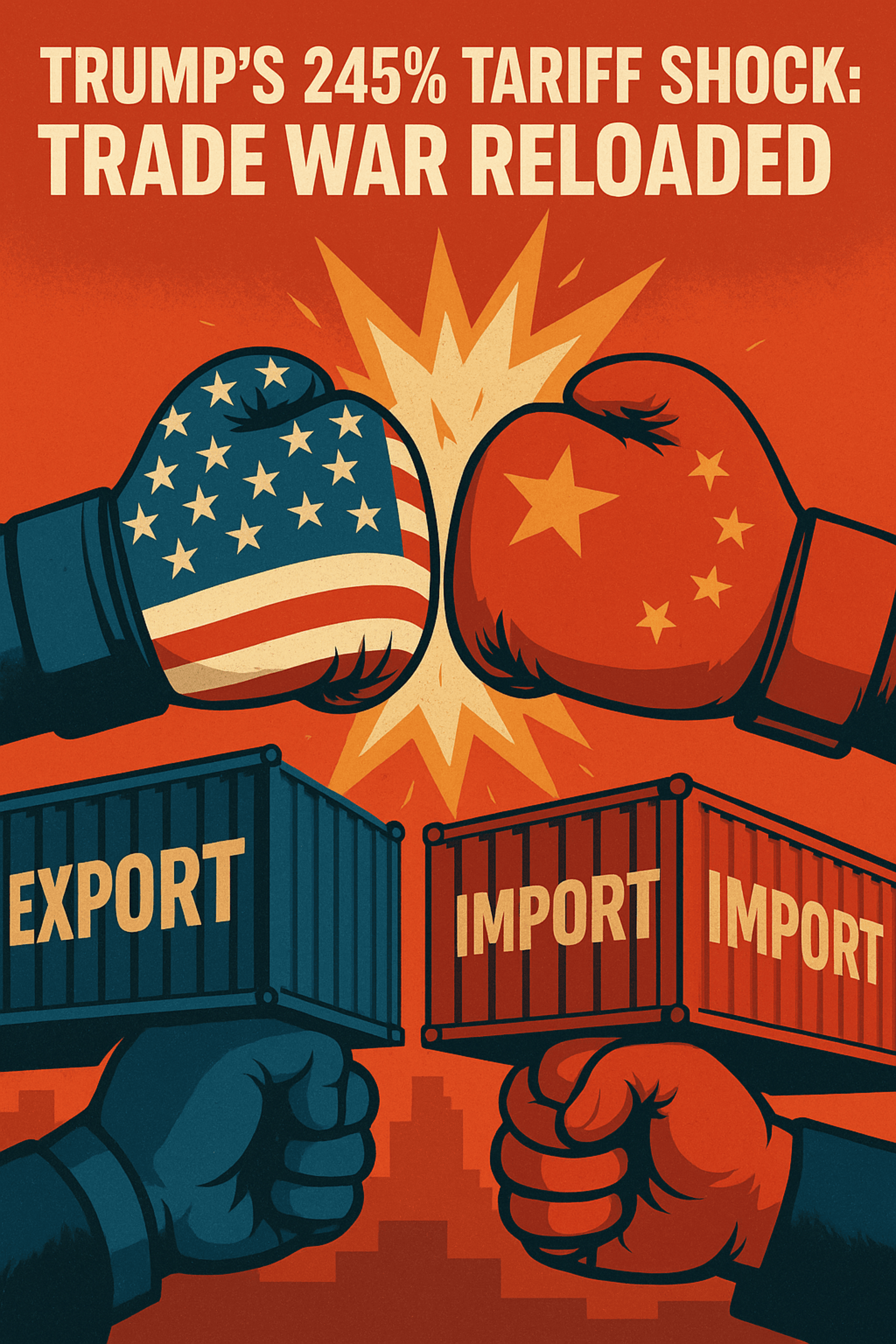
Trump’s 245% Tariff Shock: Trade War Reloaded

Trump’s 245% Tariff Shock: Trade War Reloaded

Trump’s 245% Tariff Shock: Trade War Reloaded

Trump’s 245% Tariff Shock: Trade War Reloaded


In a move that’s already sending ripples across global markets, former U.S. President Donald Trump has cranked up the heat in the U.S.-China trade war, announcing tariffs as high as 245% on a wide range of Chinese imports. This fiery escalation is not just economic—it’s deeply political, strategic, and personal, fitting Trump’s long-standing “America First” rhetoric like a custom-tailored MAGA suit.

During a campaign event, followed by its formalization through an executive order, the announcement portrays China as an “economic aggressor,” alleging unfair trade practices, currency manipulation, intellectual property violations, and negligence regarding the U.S. fentanyl crisis.
A Breakdown of the Tariff Tsunami

The 245% tariff isn’t a blanket number across all goods—it’s the upper ceiling. The newly announced tariffs fall into several categories:

– 125% Tariff: This chunk targets Chinese products as retaliation for Beijing’s ongoing countermeasures to past U.S. tariffs. It’s payback, Trump-style.

– 20% Tariff:Aimed specifically at punishing China for what Trump described as “negligence” in controlling the export of fentanyl precursors that end up fueling the U.S. opioid epidemic.

– Section 301 Tariffs (Revised): These now range from 7.5% up to 100%, applied to hundreds of products across sectors like electronics, textiles, steel, solar panels, EV batteries, and more. The intent is to cripple strategic sectors where China dominates.

Put together, this triple-tiered tariff move is unprecedented in its scale and timing, hitting as the U.S. heads into an election year and the global economy wades through post-pandemic volatility.

Political Fireworks & Legal Crosshairs

But not everyone’s clapping. California Governor Gavin Newsom has already announced a legal challenge to block the tariffs, calling them “unconstitutional” and “economically dangerous.” His administration argues that Trump’s executive order violates the International Emergency Economic Powers Act (IEEPA) , which does not grant presidents unchecked tariff authority without Congressional oversight.

Newsom’s office warned that the move could devastate key sectors in California—from agriculture to tech—and drive up costs for working-class Americans. “This is Trump playing economic roulette with our future,” Newsom said in a statement.

Expect a full-blown legal battle in federal court, as industries from retail to agricultureline up to challenge the policy.

Retailers, E-Commerce, and Supply Chain Whiplash

For e-commerce giants like Tem and Shein , both of which rely heavily on the de minimis” rule (which allows goods valued under $800 to enter the U.S. duty-free), the tariff storm is real. With the new tariffs, that loophole will close. Temu has already notified customers of price hikes starting April 25, 2025 , urging them to buy now or pay more later.

Retail analysts expect clothing, electronics, toys, and home goods to become more expensive by summer 2025. That inflationary jolt could hurt consumers right as interest rates remain high and household savings are stretched thin.

Small businesses , too, are bracing for impact. Many source cheap inventory from China through online marketplaces. With import duties spiking overnight, profit margins are about to get torched.

China Reacts: Retaliation Incoming?

Predictably, Beijing isn’t staying silent. A spokesperson from the Chinese Ministry of Commerce called the tariffs “economic intimidation” and warned of countermeasures , While specifics were not announced at the time of writing, analysts anticipate agricultural exports , U.S. tech companies operating in China , and rare earth exports could be Beijing’s targets.

Exporters at the Canton Trade Fair , one of the world’s largest trade expos, are already shifting gears—courting buyers from Latin America, Southeast Asia, and Europe to offset potential U.S. market losses.

Markets Jittery, Analysts Divided

Wall Street responded with nervous energy. The Dow Jones dipped over 500 points on the day of the announcement, while the NASDAQ tech index slumped nearly 2%. Supply chain-sensitive sectors, especially semiconductors and retail, took the hardest hits.

Some analysts argue that Trump is bluffing—laying the groundwork for a more favorable renegotiation with China or leveraging the move for political capital ahead of the election. Others believe the tariffs are a real, lasting threat that could fracture global trade dynamics.

The U.S. Chamber of Commerce issued a cautious statement, noting the long-term economic consequences of such sweeping tariffs and calling for “measured diplomacy over unilateral escalation.”

What Comes Next?

If this is campaign-era Trump, imagine post-election Trump. If reelected, he’s expected to go even further—floating ideas like universal tariffson all imports and stronger trade barriers to force domestic manufacturing.

The Biden administration has yet to formally respond, though sources say senior trade officials are reviewing the legality and implications of Trump’s actions. Meanwhile, manufacturers, retailers, and international trade partners are on edge.


The image added is for representation purposes only

Nippon India Mutual Fund Deepens Digital Transformation with Adobe Partnership

Nippon India Mutual Fund Deepens Digital Transformation with Adobe Partnership

Nippon India Mutual Fund Deepens Digital Transformation with Adobe Partnership

Nippon India Mutual Fund Deepens Digital Transformation with Adobe Partnership


In an increasingly digital world, financial institutions are constantly seeking ways to enhance customer engagement, streamline operations, and deliver tailored services. One of India’s leading asset management companies, Nippon India Mutual Fund (NIMF), has taken a major step forward by expanding its strategic partnership with Adobe to strengthen its digital experience capabilities.
This collaboration reflects a growing shift in the mutual fund industry, where digital transformation is no longer optional—it’s essential.

A Vision for Enhanced Investor Engagement

Nippon India Mutual Fund has long been known for its innovative customer-focused approach. With the Indian mutual fund landscape becoming increasingly competitive, offering a seamless and personalized digital journey has emerged as a critical differentiator.
By deepening its alliance with Adobe, NIMF aims to build a more intuitive, engaging, and investor-centric digital platform. This partnership centers around implementing Adobe Experience Manager (AEM), a robust content and digital asset management system designed to optimize user journeys and deliver customized content at scale.

What Adobe Brings to the Table

Adobe’s suite of enterprise solutions—particularly AEM Sites and AEM Assets—will play a pivotal role in transforming how NIMF interacts with its investors. These tools will help NIMF provide a dynamic, ecommerce-like experience across both its website and mobile application.
• AEM Sites enables the creation and delivery of personalized content across digital platforms, enhancing investor relevance and reducing bounce rates.
• AEM Assets allows for efficient management of media content and ensures consistency across all customer touchpoints. This also speeds up the process of launching campaigns and updating key content.
Together, these technologies allow NIMF to maintain brand coherence while also being nimble in responding to market changes and investor needs.

A Data-Driven Approach to Digital Success

NIMF has already been leveraging Adobe’s digital marketing tools for over five years, including Adobe Analytics, Adobe Campaign, and Adobe Target. These platforms have yielded significant results:
• A 90% increase in open rates for email campaigns
• A 150% rise in click-through rates for targeted communication
This data-driven approach has helped NIMF better understand its investor base, refine its messaging, and deliver content that resonates with user preferences. The expanded partnership with Adobe is expected to take these benefits even further by integrating AI-powered personalization into every aspect of the digital investor experience.

Creating a Seamless, Omni-Channel Experience

One of the key goals of this collaboration is to provide a frictionless investor journey—regardless of the device or platform used. Whether a customer interacts with NIMF via desktop, mobile, or in-app, the goal is to ensure that their experience is seamless, relevant, and informative.
This omni-channel focus is crucial as more Indian investors turn to digital channels for research, transactions, and portfolio tracking. With mobile apps and websites becoming primary touchpoints, delivering a consistent and responsive experience across platforms is critical for investor retention and conversion.

Leadership Perspective

Arpanarghya Saha, Chief Digital Officer at Nippon India Mutual Fund, emphasized the importance of innovation in today’s investment landscape. He noted that the partnership with Adobe will empower NIMF to craft highly personalized and interactive experiences that keep investors engaged and informed throughout their financial journey.
As digital adoption in India grows, such forward-thinking strategies are necessary to meet evolving customer expectations.

Adobe’s Role in India’s Fintech Future

Venu Juvvala, Head of Digital Experience Business at Adobe India, highlighted the broader implications of this partnership. He pointed out that many asset management firms are now embracing digital-first strategies to drive growth and improve client satisfaction. Adobe’s enterprise tools offer the scalability and intelligence required to deliver hyper-personalized experiences in real time.
This partnership reinforces Adobe’s commitment to supporting India’s financial ecosystem and helping it transition smoothly into the digital age.

Broader Impact on the Mutual Fund Industry

As more retail investors enter the mutual fund space, especially through Systematic Investment Plans (SIPs), companies must ensure that digital platforms are both robust and investor-friendly. Nippon India Mutual Fund’s partnership with Adobe sets a strong precedent for how technology can be leveraged to improve financial inclusion and investor education.
The ability to deliver content based on specific user profiles, risk appetite, and investment goals means investors will receive more relevant recommendations, product insights, and alerts—all of which can drive better financial decision-making.

The Road Ahead

With this expanded digital partnership, Nippon India Mutual Fund is positioning itself as a leader in fintech innovation within the mutual fund space. By blending advanced technology with a customer-first mindset, NIMF is well-equipped to navigate the next era of financial services.
The collaboration is not just about enhancing technology infrastructure—it’s about reimagining how investors interact with their money, their goals, and the institutions that support them.


The image added is for representation purposes only

Seven Blocks, One Boss: Cairn’s Bold Oil Play

India Eyes Landmark Oil Discovery in Andaman Sea, Signals Energy Breakthrough

Seven Blocks, One Boss: Cairn’s Bold Oil Play

Seven Blocks, One Boss: Cairn’s Bold Oil Play


Vedanta’s Cairn Oil & Gas flexes serious energy muscle with fresh acquisitions under OALP Round IX—setting its sights on dominating India’s energy game.*

Cairn Oil & Gas, the feisty exploration arm of Vedanta Limited, has once again made headlines—and this time, it’s for snagging seven high-potential exploration blocks under the Open Acreage Licensing Policy (OALP) Round IX , This isn’t just another notch on their belt; it’s a strategic power move in their quest to rewrite the energy map of India. With this acquisition, Cairn isn’t just drilling for oil—it’s drilling into dominance.

At India Energy Week 2025 , held in Goa, the company’s CFO Hitesh Vaid wasn’t shy about their ambitions. With a confident swagger, he laid out Cairn’s aggressive roadmap: they’re aiming for a 50% stake in India’s oil and gas output over the next few years.

So, What’s the Big Deal with These Blocks?

The seven blocks secured in OALP Round IX are not just any pieces of land—they’re strategic, data-backed opportunities sitting on potential reserves that could significantly boost domestic production. And Cairn is ready to pounce. These acquisitions signal a decisive shift toward expansion mode , with the company doubling down on both onshore and offshore drilling plans.

And here’s the kicker: Cairn already holds interests in 62 exploration blocks , making it one of the largest private-sector oil and gas explorers in India. With this recent haul, they’re clearly not playing defense. They’re charging full steam ahead.

The Numbers Game: Production and Ambition

Let’s talk output. As of FY25, Cairn has set its average gross production target between 110,000 to 120,000 barrels of oil equivalent per day (boe/d) , For the first nine months, they’re cruising at 105,500 boe/d , In a sector notorious for delays and shortfalls, this is no small feat—it’s a statement of intent.

And Cairn isn’t just throwing darts in the dark. The company has been meticulous in its planning. A big part of their upcoming strategy involves drilling five to six wells in their offshore Krishna Godavari (KG) basin block by 2026 , Offshore plays are tricky, expensive, and risky – but that’s where the bold players win big.

Energy Independence, the Cairn Way

India has long been dependent on imported crude, a fact that has haunted its energy security policies for decades. But with companies like Cairn stepping up, that narrative is beginning to change. By scaling domestic production, Cairn is directly contributing to India’s push for energy independence Their recent acquisitions aren’t just a business win—they’re a national asset.

Fast-Tracking the Future

With the ink barely dry on the OALP Round IX deals, Cairn is already preparing to hit the ground running. The company’s exploration strategy is laser-focused and supported by an experienced technical team.

And let’s not forget—Cairn isn’t new to high-stakes exploration. From their massive finds in Rajasthan to their steady production in the east coast basins, they’ve shown that they can walk the talk.

Beyond the Drill: What This Means for the Industry

Cairn’s aggressive expansion sends a clear message to the rest of the Indian energy sector: step up or get left behind With government reforms supporting easier access to acreage and faster clearances, the playing field is evolving. And Cairn is proving it knows how to play the new game better than most.

Other players would be wise to take notes – because while they’re still in the boardroom planning, Cairn is already out there drilling.

Vedanta’s Cairn Oil & Gas has pulled off a bold move by acquiring seven exploration blocks under OALP Round IX , reinforcing its mission to command a 50% share of India’s oil and gas output. With 62 blocks in total and a strong production pipeline, Cairn is not just exploring—it’s expanding with swagger. Their focus on fast-tracking exploration, particularly in offshore zones like the Krishna Godavari basin, positions them as a leading player in India’s march toward energy independence.


The image added is for representation purposes only

Harvard University Rejects Trump Administration’s Push for Reforms: Upholds Academic Autonomy

Harvard University Rejects Trump Administration's Push for Reforms: Upholds Academic Autonomy

Harvard University Rejects Trump Administration's Push for Reforms: Upholds Academic Autonomy

Harvard University Rejects Trump Administration’s Push for Reforms: Upholds Academic Autonomy

In a firm response, Harvard University has dismissed the Trump administration’s reform demands, citing the importance of academic freedom, institutional integrity, and its commitment to diversity and global excellence.

Harvard Draws the Line on Federal Overreach

In a bold and decisive stance, Harvard University has officially rejected reform proposals urged by the Trump administration, igniting fresh debate over academic freedom, federal authority, and the future of higher education in America. The elite institution clarified that the proposed changes undermined core principles of independence, academic integrity, and intellectual diversity — values it considers foundational to its identity.
Although not all details of the proposed reforms have been disclosed, sources familiar with the issue indicate that the Trump administration sought to implement stricter oversight of university curricula, enhance transparency in foreign partnerships, particularly with China, and modify affirmative action policies to focus on what it called “merit-based” admissions.

Background: Long-Standing Friction Between Ivy Leagues and the Trump Era

Harvard has long been a symbolic target for Republican administrations, especially under former President Donald Trump. During his tenure, the Trump administration frequently criticised elite institutions like Harvard and Yale for promoting what it perceived as “left-wing indoctrination,” racial quotas under affirmative action, and for receiving disproportionate endowments while allegedly neglecting middle-class American values.
In 2020, the administration attempted to strip international students of their visas if they attended only online classes — a move that Harvard and MIT successfully challenged in court. That incident marked a key flashpoint in the deteriorating relationship between academia and federal politics.

University’s Response: An Emphasis on Autonomy and Excellence

In an official statement, Harvard’s President (acting) affirmed the university’s position:
“Harvard has always stood for the free pursuit of truth, the protection of academic integrity, and the value of inclusive excellence. These principles are not up for negotiation.”
The university also emphasised that decisions regarding curriculum design, international partnerships, and student admissions must remain within the academic domain and free from political manipulation.
Harvard further noted that reforms dictated by political ideologies risk diluting academic quality and suppressing critical thinking, two pillars essential to the university’s global leadership in education and research.

Concerns Over Foreign Collaborations: The China Question

A significant point of contention stems from Harvard’s partnerships and joint programs with Chinese institutions. The Trump administration had consistently warned about China’s “strategic threat” in academic and technological collaborations, urging U.S. universities to sever ties with Confucius Institutes and scrutinise funding sources.
Harvard justified its international academic initiatives to encourage intellectual diplomacy and stimulate innovation. “Engagement does not imply endorsement,” the university maintained, asserting that research collaboration must be based on mutual benefit and rigorous standards, regardless of geography.

Affirmative Action Under Scrutiny

Another pillar of the Trump administration’s demands involved altering Harvard’s race-conscious admissions policy, which has long been a subject of political and legal challenge. Backed by conservative groups, Trump-era officials sought to dismantle affirmative action in favour of purely “test-based” meritocratic criteria.
Harvard, however, reaffirmed its belief in holistic admissions. “Diversity enhances learning and reflects the pluralism of the society we serve,” read its statement, signalling its intent to defend current policies in future legal forums if necessary.

Reactions: Support, Criticism, and Broader Implications

Harvard’s decision drew mixed responses across the academic and political spectrum. Several educational institutions and faculty unions commended the university’s stance as an essential defence of intellectual autonomy. Columbia, Yale, and Stanford shared similar viewpoints, with several releasing statements to show their support.
Conversely, conservative commentators and former Trump officials criticised the move as “elitist arrogance,” accusing the university of defying public accountability and promoting ideological bias.
Former Education Secretary Betsy DeVos stated, “Universities should not be ideological fortresses. They must reflect American values, not just elite liberal consensus.”

What This Means for U.S. Higher Education

The standoff marks a broader philosophical divide in the United States over the purpose of higher education. While one side views universities as neutral grounds for critical inquiry and cultural exchange, the other sees them as institutions needing ideological balance and national loyalty.
Harvard’s rejection of the proposed reforms will likely embolden other academic institutions to resist political encroachment, even as scrutiny over foreign ties, endowment spending, and equity policies grows under various administrations.


The image added is for representation purposes only

Tariffs seen as catalyst for blockchain, DeFi growth

Trump Tariffs Push US Inflation to Eight-Month High

Tariffs seen as catalyst for blockchain, DeFi growth

Tariffs seen as catalyst for blockchain, DeFi growth


Sergey Nazarov, the CEO of Chainlink Labs, envisions a promising future for the blockchain and decentralized finance (DeFi) sectors, despite the challenges posed by escalating global trade conflicts and the resurgence of protectionist measures. According to Nazarov, the current state of the economy, which is marked by growing tariffs and market fragmentation, may encourage more people to use decentralized technologies.

Economic Fragmentation and Tariffs

The U.S. government’s substantial tariffs and other recent policy changes have caused volatility in international markets. Notably, typical trade flows have been interrupted by a 125% tariff on Chinese imports and a baseline 10% levy on all other imports. Although the goal of these policies is to safeguard homegrown businesses, they have also raised prices and created uncertainty in global trade.

According to Nazarov, this kind of economic dispersion highlights the weaknesses in centralized financial institutions. Decentralized platforms provide an option that is naturally immune to geopolitical upheavals as traditional markets struggle with these issues.

The Function of DeFi and Blockchain

The decentralized and international character of blockchain technology makes it an attractive alternative to the drawbacks of conventional banking institutions. Peer-to-peer transactions are made possible by DeFi platforms, which are based on blockchain technology and do not require middlemen. This methodology improves accessibility and transparency while simultaneously cutting costs.
Nazarov emphasizes that organizations are actively investigating blockchain technologies as a result of the current economic climate. Interest in DeFi, which can function without centralized management and is less vulnerable to geopolitical forces, is being driven by the need for flexible and robust financial institutions.

Chainlink’s Function and Institutional Adoption

Chainlink, a decentralized oracle network, serves as a vital bridge between blockchain-based smart contracts and real-world data. Chainlink facilitates the operation of numerous DeFi applications by offering dependable data streams.
Blockchain technologies are being incorporated into the operations of an increasing number of organizations, according to Nazarov. Partnerships with significant financial institutions like Fidelity and UBS reflect a trend toward the widespread use of decentralized technologies. Chainlink’s infrastructure, which provides the resources required for safe and effective blockchain integration, plays a key role in easing this shift.

Financial Infrastructure’s Future

The present course points to a slow transition to decentralized financial systems. Market volatility and economic policies pose a threat to established infrastructures, but blockchain and DeFi provide a robust substitute. According to Nazarov, a more resilient and egalitarian financial ecosystem would result from the coexistence of decentralized platforms and conventional systems.
Additionally, tokenized assets and stablecoins are becoming more and more popular. These digital assets, which are frequently based on fiat currencies, provide stability and are being utilized more and more in international trade. The distinction between traditional finance and decentralized platforms is further blurred by the incorporation of such assets into the financial system.

Conclusion

The global financial environment is being reshaped by the convergence of technology innovation and growing tariffs. Although protectionist measures present difficulties, they also emphasize the necessity of flexible and robust financial institutions. Decentralized technologies like blockchain and DeFi are ideally suited to satisfy this need.
The observations made by Sergey Nazarov highlight the possibility that decentralized technology could not only survive but also prosper in the face of economic upheavals. Blockchain and DeFi adoption is expected to pick up speed as organizations and individuals look for alternatives to conventional financial systems, bringing in a new era of financial innovation.


The image added is for representation purposes only

IREDA’s PAT Soars 49% to ₹502 Crore!

IREDA's PAT Soars 49% to ₹502 Crore!

IREDA's PAT Soars 49% to ₹502 Crore!

IREDA’s PAT Soars 49% to ₹502 Crore!


Strong growth in renewable energy financing pushes IREDA’s profitability and operational scale; significant improvement in asset quality and financial ratios underlines sector momentum.

Summary:

IREDA has reported a 49% year-on-year (YoY) increase in consolidated net Profit for Q4 FY25, reaching ₹502 crores compared to ₹337 crores in Q4 FY24. Revenue from operations also saw a solid 37% growth, hitting ₹1,904 crore. With a consistent focus on renewable energy financing, IREDA’s performance underscores the growing opportunities in India’s green economy transition.

Robust Profit Growth Driven by Renewable Sector Focus

IREDA reported a consolidated PAT of ₹502 crore for the quarter ended 31st March 2025, representing a significant 49% increase compared to ₹337 crore in the same quarter of the previous year. The performance was underpinned by a surge in revenue, which grew 37% to ₹1,904 crore from ₹1,391 crore in Q4 FY24. This indicates a numerical gain and reflects long-term structural shifts in India’s energy sector. As demand for green financing soars, IREDA has successfully captured a significant share of the lending market for renewables, leveraging its domain expertise and policy alignment.

IREDA announced a consolidated profit after Tax (PAT) of ₹1,699 crore for FY25, representing a 36% increase from ₹1,252 crore in FY24. This reflects robust loan disbursements, improved margins, and higher interest spreads in a conducive renewable energy financing environment. The key driver here was a policy push and financial schemes favouring renewable projects, such as rooftop solar, green hydrogen, and EV infrastructure, which IREDA is actively funding.  

Why This Is Good:

  • Sector Tailwinds: India’s push for energy transition creates a natural growth environment for IREDA.
  • Efficient Execution: Despite increasing finance costs, the company boosted margins, indicating efficient operations.
  • Government Backing: As a public sector enterprise, it benefits from sovereign credibility and favourable interest rate arbitrage.

Revenue Growth Outpaces Cost Inflation

Total income for Q4 FY25 stood at ₹1,915 crore, while for the whole year, it reached ₹6,755 crore, a 36% increase from ₹4,965 crore in FY24. Finance costs increased by 31% YoY to ₹1,104 crore in Q4, owing to higher borrowing volumes. Although finance costs increased by 31% to ₹1,104 crore due to higher borrowings, the outpacing growth in revenue allowed IREDA to maintain profitability and expand operating margins.

Operating Profit before depreciation and impairment came in at ₹770 crore in Q4 FY25, a 55% increase from ₹498 crore in Q4 FY24. Profit before Tax rose 31% YoY to ₹630 crore in the March quarter.  

Why This Is Positive:

  • Spread Management: Rising finance costs are typical in high-interest periods, but IREDA maintains the spread through strategic loan repricing.
  • Scalable Model: Revenue per employee leapt from ₹28.53 crore to ₹40.37 crore, proving economies of scale and a lean operational model.
  • Borrowing at Competitive Rates: Access to ECBS and perpetual bonds reduced the cost of capital.


Improved Asset Quality and Financial Metrics Indicate Strong Fundamentals

IREDA also reported a significant improvement in key financial ratios:

  • Net Interest Margin: Boosted to 3.27% in FY25 from 2.85% in FY24
  • Interest Spread: Widened to 2.42% from 2.16%
  • Earnings Per Share (EPS): Improved to ₹6.32 from ₹5.16 YoY
  • Revenue per employee: Leaped to ₹40.37 crore from ₹28.53 crore in FY24

This improved financial performance reflects the company’s success in optimising operations while expanding its loan book. These numbers validate IREDA’s focus on asset quality, risk management, and diversification beyond traditional renewable assets like solar and wind. The company increasingly funds new-age sectors like EV charging infra, grid-scale battery storage, and green ammonia.


Why These Are Strong Signals:

  • Stable Margins in a Volatile Rate Cycle: NIM expansion indicates successful loan repricing despite rising repo rates.
  • Diversified Exposure: Reduced risk concentration with exposure across 15+ clean energy sub-sectors.
  • Tech-Enabled Credit Monitoring: Lower NPAS and improved recoveries through digitised monitoring systems.  


Loan Book Expansion Reflects Demand Surge

IREDA’s gross loan portfolio grew to ₹75,320 crore by the end of FY25, signalling increasing demand for green energy financing. IREDA benefits from rising demand, fueled by India’s goal of 500 gigawatts of non-fossil fuel energy by 2030. The company also emphasised its readiness to support newer domains like offshore wind, ethanol-based fuels, and hybrid solar-wind parks.

As per the latest balance sheet, the company’s total liabilities stood at ₹79,728 crore, supported by ₹64,740 crore in borrowings and ₹10,266 crore in equity.

Strategic Initiatives and Recognition

IREDA’s transformation into a Navratna CPSE and its expansion into international markets through the GIFT City subsidiary reflect its growing strategic importance. The agency also secured foreign currency financing through a JPY 26 billion External Commercial Borrowing (ECB) from SBI Tokyo and raised ₹1,247 crore via perpetual bonds.

Additionally, between November 2023 and November 2024, the company received two CBIP awards for outstanding contributions to the RE sector and was ranked among India’s top five wealth creators.

Why Numbers Could Raise Concerns (Mild Risks)

While the overall story is highly positive, some challenges persist:

  • Rising Finance Costs: A 31% YoY rise in finance costs could compress margins if rate hikes continue.
  • High Leverage: With borrowings at ₹64,740 crore, debt servicing needs careful monitoring.
  • Execution Risk: As IREDA expands into newer domains (like green hydrogen), operational execution becomes critical.

However, these risks are currently outweighed by sector growth, government support, and the company’s evolving capabilities.


Comparison with Q4 FY24

Metric Q4 FY25 Q4 FY24 YoY Change
Revenue from Operations (₹ Cr) 1,904 1,391 +37%
Operating Profit (₹ Cr) 770 498 +55%
Profit Before Tax (₹ Cr) 630 480 +31%
Profit After Tax (₹ Cr) 502 337 +49%
Net Interest Margin (%) 3.27% 2.85% +0.42 bps
EPS (₹) 6.32 5.16 +22%


Future Projections: Green Horizon Beckons

Looking ahead, IREDA is positioned for significant growth due to

  1. Policy Push: The government’s PLI schemes, green bond frameworks, and the solarisation of agriculture will require massive funding.
  2. IPO Aftereffects: The 2023 IPO has enhanced transparency and market visibility, likely attracting more global institutional interest.
  3. Digital Transformation: AI-powered credit appraisal and automated compliance monitoring are on the roadmap.

If the current growth trends persist, IREDA’s loan portfolio will surpass ₹1 lakh crore by FY27. With expanding global partnerships, its role could evolve from a lender to a development finance institution, leading climate financing for South Asia.

Summary:

IREDA has reported a 49% year-on-year (YoY) increase in consolidated net Profit for Q4 FY25, reaching ₹502 crores compared to ₹337 crores in Q4 FY24. Revenue from operations also saw a solid 37% growth, hitting ₹1,904 crore. With a consistent focus on renewable energy financing, IREDA’s performance underscores the growing opportunities in India’s green economy transition.


The image added is for representation purposes only

Traders claim that Trump’s tariffs have caused the $82 billion diamond industry to “ground to a halt.”

Traders claim that Trump's tariffs have caused the $82 billion diamond industry to "ground to a halt."

Traders claim that Trump's tariffs have caused the $82 billion diamond industry to "ground to a halt."

Traders claim that Trump’s tariffs have caused the $82 billion diamond industry to “ground to a halt.”


Introduction
A significant factor contributing to the unprecedented slowdown in the worldwide diamond sector, which is believed to be worth $82 billion, is the impact of former US President Donald Trump’s tariff policy, according to merchants and producers. The diamond trade, which was formerly seen as a representation of glitz and economic tenacity, has been negatively impacted by trade restrictions, especially tariffs imposed under Trump’s administration that still have an impact on the supply chain and demand for diamonds worldwide.
Industry insiders now claim that the industry has “ground to a halt,” pointing to weakening international trade relations, surplus inventory, and dwindling sales. The complex problem is examined in this research, which traces its origins to policy choices and examines the wider ramifications for global producers, dealers, and consumers.

Background: The Trump Doctrine and Tariffs

Donald Trump promoted a “America First” economic strategy throughout his presidency (2017–2021) with the goal of closing trade deficits and boosting homegrown industry. This strategy included imposing broad duties on a variety of imported commodities, such as completed jewelry, gemstones, and precious metals.
The diamond industry, which mainly depends on the cross-border movement of rough stones, polishing in specialized hubs, and final retail in the U.S. and Europe, is one of the most sensitive global supply chains that these policies inadvertently disrupted, despite their initial goals of protecting American manufacturers and promoting domestic production.

Present Situation: A Static Market

Traders claim that the diamond industry is at a near stalemate today. Transaction volumes at major trading hubs like New York (USA), Antwerp (Belgium), and Surat (India) are at all-time lows. Due to low demand and rising overhead expenses, many cutting and polishing facilities in India have closed or significantly curtailed their output.
“There are diamonds ready to be shipped, but buyers are reluctant,” says Mumbai-based diamond seller Ravi Mehta. Many merchants are no longer ready to take the risk since high tariffs result in lower profitability. The entire chain seems to be frozen.
Unsold inventory is another issue for retailers in the United States, which continues to be one of the biggest markets for polished diamonds. Demand for diamonds has decreased, particularly for mid-range and high-end diamonds, as a result of a stronger US currency, weak consumer mood, and price increases brought on by import taxes.

Effect on Important Supply Chains and Markets

The global chain that runs the diamond business is extremely intertwined. Botswana, Russia, and Canada are among the African countries that mine rough diamonds the most. After being cut and polished in processing centers like India, these are subsequently shipped to consumer markets, mostly in the United States, China, and Europe.
This flow was interrupted by Trump’s tariffs, especially those aimed at Chinese and Indian commodities. Due to high import taxes on finished jewelry and polished diamonds from Asia, U.S. wholesalers and retailers were forced to either pass the cost on to customers or absorb it themselves, which were both undesirable choices in a market where consumers are price-sensitive.
The repercussions have been dire in India, which does more than 90% of the cutting and polishing of diamonds worldwide. Tens of thousands of workers have been impacted by the widespread practice of layoffs and wage reductions. Meanwhile, mining businesses and the economies that rely on them have suffered across Africa due to a decline in the demand for raw stones.

Alternative Patterns and Lab-Grown Diamonds’ Ascent

The rapid transition to lab-grown diamonds is one unanticipated effect of the unrest. These synthetic jewels, which are nearly identical in composition and appearance to real diamonds, have gained popularity since they are less costly and originate from more ethical sources.
Lab-grown diamonds are also less susceptible to international tariffs because they may be created domestically in countries like the U.S., which is very advantageous for domestic sellers. This move is upending long-standing mining and trade patterns and forcing legacy players to reevaluate their strategies.

Industry Reaction and Policy

Now, the diamond industry is demanding immediate action. Governments have been urged to evaluate trade rules and offer assistance to manufacturers and exporters by trade organizations like the Gem & Jewellery Export Promotion Council (GJEPC) and the World Federation of Diamond Bourses.
Concerns regarding the long-term impacts of protectionist trade policies on consumer prices and global company partnerships have also been voiced by a few US senators. However, there is still little political will to reverse the tariffs imposed by Trump, particularly during an election season when nationalist economic rhetoric is prevalent.

Conclusion: A Sparkling Sector at a Turning Point

The current crisis in the diamond business serves as a reminder of how delicate and interwoven the ecosystem of international trade is. Despite being meant to safeguard local industries, the Trump administration’s tariffs have unintentionally stifled one of the most recognizable luxury industries globally. The future of the diamond trade depends on market adaptation, regulatory changes, and international collaboration because the industry is now at a near stalemate.
Until then, economic uncertainties and geopolitical decisions have dampened what was once a glittering, affluent sector.


The image added is for representation purposes only

Amazon’s $20 Billion Project Kuiper: Connecting the World Through Satellite Internet

Amazon’s $20 Billion Project Kuiper: Connecting the World Through Satellite Internet

Amazon’s $20 Billion Project Kuiper: Connecting the World Through Satellite Internet

Amazon’s $20 Billion Project Kuiper: Connecting the World Through Satellite Internet


Amazon’s Project Kuiper represents the company’s ambitious attempt to revolutionize global internet connectivity. With an investment of $20 billion, the project aims to deploy more than 3,000 satellites into low Earth orbit (LEO), providing high-speed internet to underserved and rural areas across the globe. This initiative places Amazon in direct competition with SpaceX’s Starlink and China’s growing satellite internet programs, marking a significant step in the company’s vision for global connectivity.

What is Project Kuiper?

Project Kuiper is Amazon’s satellite-based internet service, designed to address the global digital divide by delivering high-speed internet to regions that have been left behind by traditional broadband services. The project will consist of a constellation of over 3,200 LEO satellites that will orbit the Earth at altitudes ranging from 600 to 700 kilometers. These LEO satellites enable high-speed, low-latency connectivity, making them perfectly suited for activities like video conferencing and streaming in real time.
The goal of Project Kuiper is to provide affordable, high-quality internet access to millions of people in remote regions where it is currently difficult or impossible to get broadband connectivity. This would open up new opportunities for e-commerce, telemedicine, education, and other online services that require reliable internet access.

Competition in the Satellite Internet Space

While Amazon’s initiative holds great promise, it faces stiff competition from other companies and countries with similar goals. SpaceX’s Starlink is currently the leader in satellite internet, with thousands of satellites already launched and a growing user base. SpaceX’s rapid progress in deploying its satellite constellation has made it a strong contender in the satellite internet market.

In addition to SpaceX, China is also making significant strides in the satellite internet space. The Chinese government is heavily investing in its own satellite constellation to provide global internet coverage. With state-backed initiatives and resources, China poses a serious challenge to Amazon’s plans, particularly in the Asia-Pacific region.
Despite this competition, Amazon’s Project Kuiper has a unique advantage: its existing infrastructure and customer base. The company already has a global reach through Amazon Web Services (AWS), its cloud computing division, and its e-commerce platform. This gives Amazon the ability to integrate its satellite internet service with its other products and services, offering a compelling value proposition for customers.

How Project Kuiper Works

The key technology behind Project Kuiper lies in the deployment of LEO satellites. Unlike traditional geostationary satellites, which are positioned much farther from Earth, LEO satellites orbit much closer, reducing latency and allowing for faster internet speeds. This makes LEO satellites ideal for applications that require real-time data transmission, such as video streaming, online gaming, and interactive services.
Amazon plans to launch the satellites in multiple phases, beginning with prototype tests to evaluate their functionality and performance. Once the initial tests are complete, Amazon will begin the full-scale deployment of the satellite network, with the aim of providing global internet coverage by the end of the decade. The company’s incremental approach will ensure that the technology is fully refined before a widespread rollout.

Business Implications of Project Kuiper

Amazon’s $20 billion investment in Project Kuiper is not just about satellite internet; it’s also a strategic move to expand the company’s reach and strengthen its position in global markets. By providing internet access to underserved regions, Amazon can increase its presence in remote areas and boost sales through its e-commerce platform. These areas, which have limited access to broadband, represent a significant untapped market for Amazon.

In addition to its retail business, Project Kuiper offers significant growth potential for AWS. As more people in rural areas gain access to the internet, Amazon can expand its cloud computing services to those regions. Small businesses and individuals will be able to take advantage of AWS’s data storage, computing power, and AI tools, helping Amazon further cement its position as a leader in the cloud services industry.

Challenges Facing Project Kuiper

While Project Kuiper has immense potential, it faces several challenges. One of the primary obstacles is the technological complexity of deploying and maintaining a satellite network of this scale. The company will need to ensure that its satellites remain in proper orbit, avoid collisions with space debris, and maintain consistent service quality across different regions.
Additionally, regulatory hurdles could slow down the progress of Project Kuiper. Amazon will need to work with governments around the world to secure the necessary approvals for operating its satellites in various countries. This process can be time-consuming and complicated, especially in regions where space regulations are strict.

The Impact of Project Kuiper on Global Connectivity

Project Kuiper has the potential to significantly transform global connectivity. According to the World Bank, more than 3.7 billion people still lack access to reliable internet. Amazon’s initiative aims to bridge this gap by providing affordable internet to remote areas, thereby improving access to education, healthcare, and business opportunities. The project aligns with Amazon’s long-term vision of a connected world where internet access is ubiquitous, empowering people in every corner of the globe.

Conclusion

Amazon’s Project Kuiper represents a significant step forward in the mission to bring reliable, high-speed internet to underserved and remote areas worldwide. With a $20 billion investment, Amazon is determined to compete with companies like SpaceX and China in the satellite internet space. Despite challenges related to technology, regulation, and competition, Project Kuiper has the potential to transform global connectivity, opening up new markets for Amazon’s retail and cloud services. If successful, the initiative could not only connect millions of people but also further cement Amazon’s role as a leader in the global digital ecosystem.


The image added is for representation purposes only

Netflix’s Bold Strategy for 2030: Aiming for $1 Trillion Valuation and Doubling Revenue